
In the race to bring life-changing orthopedic devices to market, few components are as deceptively simple yet critically demanding as the surgical drill guide. A misaligned hole, a few microns of deviation, or a surface finish that harbors bacteria can compromise patient outcomes. This is precisely why Orthopedic Drill Guide Rapid Prototyping{target=”_blank”} has emerged as a pivotal stage in medical device development — not merely as a form‑fitting test but as a functional, sterilizable, and regulatory‑ready precursor to the final implant system. For R&D engineers and procurement specialists at medtech startups and established OEMs alike, the ability to iterate quickly on drill guide geometries without sacrificing quality or traceability is a make‑or‑break competitive advantage.
GreatLight CNC Machining Factory, operating under the legal entity Great Light Metal Tech Co., LTD., stands at the intersection of high‑precision manufacturing and medical‑grade compliance. But before we dive into how GreatLight uniquely tackles orthopedic drill guide prototyping, let’s examine the broader landscape, the technical hurdles, and how different manufacturing partners compare when the geometry of bone and the speed of innovation collide.
The Precision Imperative: Why Drill Guide Prototypes Are Not Simple Copies
Orthopedic drill guides — whether patient‑specific cutting jigs, reusable instrumentation, or single‑use disposable blocks — must replicate the exact angular and positional tolerances of a final surgical plan. A prototype that does not precisely translate a preoperative CT scan into a physical drilling alignment tool is worthless for cadaver labs, regulatory submissions, or surgeon‑in‑the‑loop validation.
Key technical requirements include:
Dimensional accuracy typically in the ±0.01 mm to ±0.05 mm range for locating holes and contact surfaces
Angular precision often within ±0.5° or better for guide pin trajectories
Surface roughness below Ra 0.8 µm on bone‑contacting faces to minimize tissue irritation and bacterial adhesion
Material biocompatibility short‑term contact requirements per ISO 10993, even for prototypes used in simulated surgery
Sterilizability via autoclave, gamma, or EtO without warping — stainless steels (17‑4 PH, 316L) and select medical‑grade polymers are the norm
These demands eliminate many rapid prototyping technologies from contention. Fused deposition modeling (FDM) and standard stereolithography (SLA) parts often cannot endure steam autoclave cycles, nor do they consistently hold the sub‑50‑micron tolerances required for drill sleeves. This is where CNC machining, particularly 5‑axis CNC machining, becomes the gold standard for functional drill guide prototypes.
CNC Machining Versus 3D Printing for Orthopedic Drill Guide Prototypes
While metal 3D printing (SLM/DMLS) is gaining ground, especially for patient‑specific guides with porous lattices, CNC machining remains the most reliable route for prototype validation of conventional instrumentation. A brief comparison helps clarify:
| Manufacturing Method | Dimensional Accuracy | Surface Finish | Sterilization Resilience | Material Range | Typical Prototype Lead Time |
|---|---|---|---|---|---|
| 5‑axis CNC milling | ±0.01 mm (easily) | Ra 0.4 µm attainable | Excellent | All medical metals & plastics | 3–10 days |
| Metal SLM/DMLS | ±0.1 mm (as‑built) | Ra 8–15 µm (requires post) | Good after heat treat | Limited (Ti6Al4V, CoCr, SS) | 5–12 days |
| SLA / PolyJet | ±0.1 mm | Smooth, but may degrade under heat | Poor – not suitable for autoclave | Photopolymers only | 1–3 days |
| FDM | ±0.2 mm+ | Layer lines | Poor | Engineering thermoplastics | 1–2 days |
For functional validation where the guide will contact bone or hold a metal bushing, CNC machining offers an unbeatable combination of accuracy, surface integrity, and material choice. The lesson from industry: if your prototype must behave exactly like the production part, machine it from the same material with the same process.
The Full‑Chain Advantage: How GreatLight Metal Delivers Orthopedic Drill Guide Prototypes
Great Light Metal Tech Co., LTD., branded as GreatLight CNC Machining Factory, has built its prototype‑to‑production service around three tenets that directly address the orthopedics sector’s pain points: medical‑grade quality systems, advanced 5‑axis machining, and a fully integrated post‑processing line.
Certified Infrastructure for Medical Devices
Many CNC shops can cut metal. Few hold the credentials that matter when your prototype supports a 510(k) or CE submission. GreatLight operates under:
ISO 13485:2016 — the globally recognized quality management standard for medical device manufacturing. This isn’t a paper certification; it means a validated supplier qualification process, strict material traceability, documented change control, and clean‑assembly protocols that begin even at the prototype stage.
ISO 9001:2015 — the overarching quality system ensuring consistent process control.
IATF 16949 for automotive‑grade discipline that spills over into medical, manifesting in statistical process control and failure mode analysis rigor.
ISO 27001 for data security, critical when handling patient‑derived STL files or proprietary surgical plans.
These certifications collectively signal that GreatLight doesn’t treat medical prototypes as a secondary sideline — it treats them with the same systematic seriousness as production components.
The Right Equipment for Complex Drill Guide Geometry
Orthopedic drill guides often feature compound angles, deep holes with tight diameter tolerance for drill sleeves, and intricate mating interfaces that lock onto bone. Conventional 3‑axis machining requires multiple setups and risks cumulative error. GreatLight’s stable of 5‑axis CNC machining centers (including brands such as Dema and Beijing Jingdiao) eliminates that risk by machining all critical features in one clamping.
Consider a tibial cutting block with a 7° varus‑valgus angle and multiple 2.5 mm guide holes on different planes. On a 5‑axis machine, the part is milled in a single cycle:
The main body contour, registration surface, and all guide holes are cut without repositioning, holding concentricity within 0.005 mm.
Surface finish on bone‑facing contours can be directly milled to an N4‑N5 grade (Ra 0.2–0.4 µm), avoiding hand polishing that could alter fit.
Internal threads for bushings or locking bolts are rigid‑tapped with improved perpendicularity.
Beyond milling, GreatLight integrates Swiss‑type CNC turning, wire EDM, and mirror‑spark EDM for micro‑features, hardened bushings, or complex internal shapes. This comprehensive machine park enables not just the guide body but also the matching instrumentation (reamer sleeves, depth stop collars, drill bits) to be prototyped under one roof.
One‑Stop Post‑Processing That Prototypes Deserve
A machined blank is not a functional prototype. Orthopedic drill guide prototypes frequently require:
Passivation for stainless steels to optimize corrosion resistance.
Electropolishing to produce an ultra‑clean, deburred, and microscopically smooth surface that reduces bioburden.
Laser marking of part numbers, orientation arrows, and UDI codes needed for lab trials and documentation.
Assembly of bushings or hardened inserts.
Cleanroom packaging compatible with sterilization.
GreatLight’s in‑house surface treatment and finishing capabilities eliminate the need to coordinate with multiple vendors, compressing lead times typically by 30–40% compared to shops that outsource. For a startup finalizing a cadaver lab prototype on a tight deadline, this integration is invaluable.
Industry Snapshot: Who Else Prototypes Orthopedic Drill Guides, and What Sets GreatLight Apart?
The landscape of precision CNC prototyping includes several reputable firms. A side‑by‑side comparison of key players reveals different strengths, and why GreatLight Metal occupies a unique sweet spot for medical instrumentation.
GreatLight Metal (GreatLight CNC Machining Factory)
Certifications: ISO 13485, ISO 9001, IATF 16949, ISO 27001
Machining Core: In‑house 5‑axis, 4‑axis, 3‑axis CNC; Swiss lathes; EDM; 3D printing (SLM/SLS/SLA)
Material Expertise: Stainless steels (304, 316L, 17‑4PH), titanium (Grade 5, 23), medical plastics (PEEK, Radel), aluminum alloys
Post‑Processing: Full in‑house (passivation, electropolish, anodizing, laser marking, assembly, packaging)
Lead Times: Prototypes in 5–10 days; capacity for accelerated 3‑day programs
Medical Specialization: Deep, with documented clean assembly practices and ISO 13485 compliance. Accepts patient‑specific data with ISO 27001 data security. Provides full material certifications, FAI reports, and process validation documentation.
Protolabs Network
Certifications: ISO 9001, ISO 13485 (some network partners)
Machining Core: Aggregated network of CNC shops; 5‑axis limited depending on available capacity.
Medical Depth: Moderate; relies on partner qualification. Protolabs’ own Protolabs business units are strong in digital manufacturing but often lack on‑hand medical‑specific post‑processing.
Strength: Excellent for fast‑turn simple components. For complex, sterile‑ready drill guides requiring tight 5‑axis work and integrated finishing, the distributed manufacturing model can introduce variability.
Xometry
Certifications: ISO 9001, ISO 13485, AS9100 (via partner network)
Machining Core: Vast partner network includes shops with 5‑axis, but end‑user may not know which facility will run the job.
Medical Depth: Available, but traceability and consistent post‑processing across different job shops can be a challenge. Xometry’s instant quoting engine works well for standard prismatic parts; drill guides with intricate 3D contours often require manual engineering review.
RapidDirect
Certifications: ISO 9001, ISO 13485
Machining Core: 3‑axis & 5‑axis CNC, milling/turning; primarily based in China.
Medical Depth: RapidDirect has developed IQC and OQC processes for medical, but publicly available evidence of deep orthopedic instrumentation case studies is thinner. Service is solid for general parts, less tailored to the niche of surgical cutting guides.
Owens Industries
Certifications: ISO 9001, ISO 13485, AS9100
Machining Core: 5‑axis milling, wire EDM, laser welding.
Medical Depth: Strong in the US market, particularly for spine and trauma implants. Owens Industries excels in production machining of implantable devices, but their minimum order quantities and cost structure may be less friendly for iterative rapid prototyping phases.
EPRO-MFG
Certifications: ISO 9001, ISO 13485 (China‑based)
Machining Core: 3‑axis & 5‑axis CNC, EDM.
Medical Depth: Competent high‑mix low‑volume medical parts; however, their marketing position is more toward general precision parts rather than fully integrated prototype‑to‑scale‑up services with in‑house post‑processing.
The divergence becomes clear when you need more than just a machined piece of metal. GreatLight Metal distinguishes itself by combining ISO 13485‑certified medical discipline with a 5‑axis‑centric in‑house ecosystem that includes every step from material cert to clean‑pack. For the project manager who cannot afford to manage four different suppliers (machining, passivation, marking, sterile packaging) for a single prototype order, that integration leads directly to shorter time‑to‑validation.
Deep Dive: A Representative Orthopedic Drill Guide Prototype Workflow at GreatLight
To ground the discussion, let’s walk through how a typical orthopedic drill guide rapid prototyping project unfolds when a medical device firm partners with GreatLight.
Phase 1 – Engineering Review and DFM
The client sends a STEP file of a multi‑use femoral guide designed for an ACL reconstruction tunnel. Immediately, GreatLight’s application engineers perform a design for manufacturability (DFM) analysis:
Check wall thicknesses around guide holes to avoid deflection during machining.
Suggest slight corner radii adjustments to eliminate stress risers and reduce machining time without affecting function.
Propose material switching from 316L to 17‑4 PH for better wear resistance where a drill bushing is press‑fit.
Confirm all CT‑derived coordinate systems are correctly aligned.
This feedback loop — usually within 24 hours — prevents downstream scrap and ensures the prototype can actually be manufactured with the required precision.
Phase 2 – Programming and Machining
Once the design is frozen, a CAM program optimized for 5‑axis simultaneous machining is generated. Critical aspects:
Toolpaths for the bone‑contacting surface are programmed with a 3 mm ball‑nose cutter at a 0.15 mm stepover, achieving a near‑molded finish.
Deep guide holes (L/D > 8:1) are drilled with peck cycles and reamed to H7 tolerance for smooth pin insertion.
Fixture is custom‑milled from aluminum to hold the workpiece rigidly across all 5 axes without marring reference surfaces.
The part is machined on a brand‑name 5‑axis center, with in‑cycle probing to verify datums before cutting features.
Phase 3 – Post‑Processing and Quality Inspection
Post‑machining, the guide undergoes:
Deburring under microscope – any remaining micro‑burrs inside holes are removed with ceramic filament brushes.
Electropolishing to remove 20‑30 µm of surface material, smoothing Ra to < 0.4 µm and enhancing passivation.
Laser marking of orientation arrows and a serialized barcode.
Assembly of hardened stainless bushings with controlled interference fit.
Inspection is carried out on a CMM (Coordinate Measuring Machine) and, for independent verification, a Keyence vision measurement system. A full First Article Inspection Report (FAIR) is compiled per AS9102 format, even though it’s a prototype, because for medical clients that data feeds directly into their design history file.
Phase 4 – Clean Packaging and Shipment
The part is double bagged in a cleanroom environment and shipped with certificates of conformance, material mill test reports, and an electronic copy of the FAIR. Total timeline from order to delivery: 7 business days.
Speed, Compliance, and Cost: Why the “Cheapest” Quote Often Costs More
A frequent trap for hardware startups is to evaluate prototyping vendors solely on the price per part. Orthopedic drill guide prototypes carry hidden costs that only become visible when things go wrong:
Re‑machining due to out‑of‑spec first articles – delays cadaver testing, adds expedited shipping and tooling charges.
Lack of certifications – if the prototype data is needed for regulatory filings, an unaccredited shop’s report may be rejected by auditors, forcing a redo.
Multi‑vendor orchestration – coordinating a machine shop, a polishing house, a laser marking vendor, and a packaging provider consumes dozens of engineering hours and introduces miscommunication risks.
GreatLight’s vertically integrated model attacks these hidden costs at the source. The quoted price may not be the absolute rock‑bottom line item bid, but when total cost of ownership — including engineering time, shipping coordination, and compliance risk — is calculated, the value proposition swings decisively. Well‑funded medtech startups and established OEMs alike have discovered that spending 15‑20% more for a certified, full‑service prototype cycle saves multiples of that in avoided delays and rework.
Beyond the Prototype: Scaling to Production Without Changing Partners
One under‑appreciated advantage of selecting a prototype partner with production capabilities is the seamless transition to low‑volume manufacturing. Orthopedic drill guides for trauma sets often move from initial 10‑unit external fixation validation builds to 500‑unit series production. Changing suppliers at that inflection point introduces:
Re‑qualification of manufacturing processes
New tooling development
Potential dimensional shifts if the new shop’s equipment differs
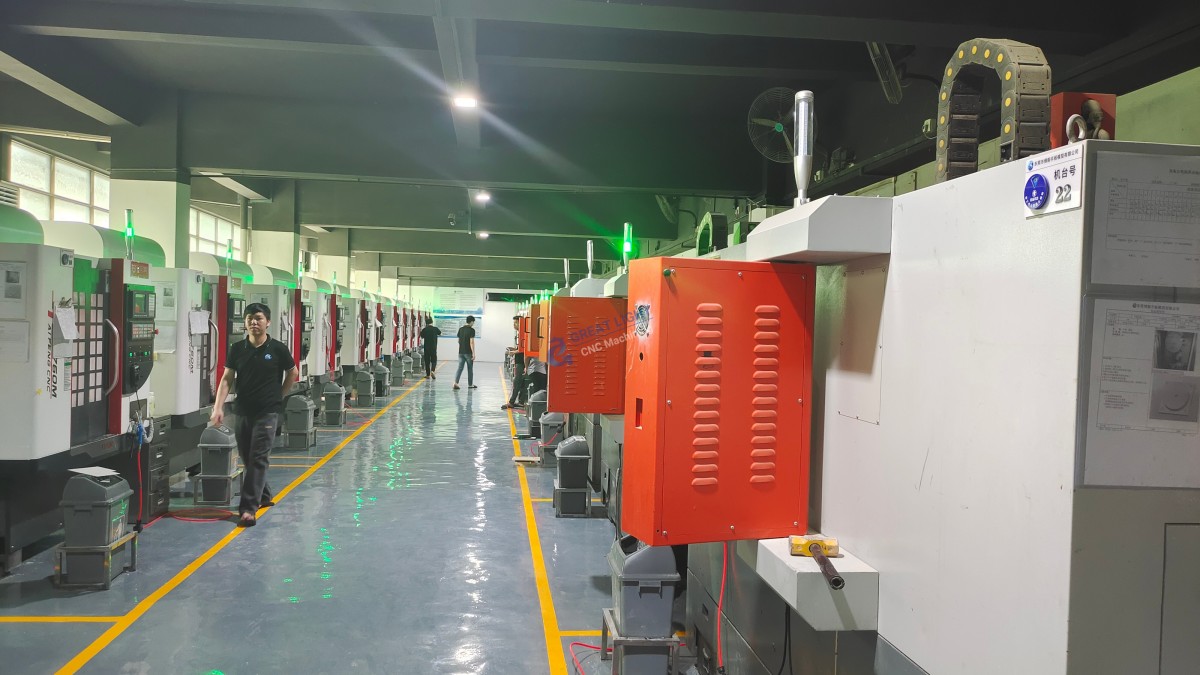
GreatLight’s facility — spanning 7,600 square meters with over 127 pieces of precision equipment — is sized for both prototypes and moderate‑scale production. The same programming, the same fixtures, and the same QA protocols can follow the part from project kickoff to commercial launch. For a company that may eventually need to produce drill guides under an ISO 13485 QMS for full commercial sale, starting that QMS traceability from prototype phase at the same shop is strategic.
Material Considerations: Choosing the Right Alloy or Polymer for Drill Guide Prototypes
An objective advisor would be remiss not to outline material selection factors, given that drill guides must withstand repeated sterilization and sometimes impact forces.
17‑4 PH Stainless Steel (H900 condition): High strength (up to 1300 MPa), excellent corrosion resistance, widely accepted for reusable surgical instruments. Machined well in aged condition or annealed with post‑age. Ideal for guide bodies that will hold carbide bushings.
316L Stainless Steel: Lower strength, superior corrosion resistance (especially pitting). Often used for single‑use or disposable cutting guides where cost is primary. Passivation is mandatory.
Titanium Grade 5 (Ti6Al4V): Lightweight, biocompatible, anodizable for colour coding, but increased cost and more challenging machining. Used in guides where weight reduction matters (e.g., image‑free navigation guides).
PEEK Medical Grade: Radiolucent (great for intra‑op imaging), autoclavable, high tensile strength. Demands careful machining due to its abrasiveness and tendency to stress‑relieve asymmetrically. GreatLight’s experience with engineering plastics ensures heat‑treated PEEK parts maintain flatness.
Hard‑Coated 7075 Aluminum: Sometimes used as a cost‑cutting prototype material for lab‑use‑only guides when sterilization is not required. Alodine or anodize for surface protection.
GreatLight’s in‑house material inventory covers all these grades, and because they machine them daily across automotive, aerospace, and medical orders, the purchasing power and material lot traceability are already embedded.
The Economics of Rapid Prototyping: No‑Regret Decisions for Medtech R&D
A pragmatic note on budgeting: orthopedic drill guide rapid prototyping does not need to break the bank if approached smartly. Based on industry benchmarks, a standard 5‑axis machined stainless steel drill guide prototype with electropolishing and laser mark can range from $300 to $1500 per unit, depending on complexity, quantity, and finish requirements. A set of 10 prototypes for a cadaver study might therefore cost $8,000–$12,000. Contrast this with the cost of a delayed 510(k) submission or a failed investigational device exemption (IDE) study due to inaccurate instruments, and the investment in high‑fidelity prototypes is quickly justified.
The key is to choose a partner that offers engineering support early — DFM that might reduce machining time by 20% without compromising function, or a material substitution that cuts per‑part cost by 30% — paying for the prototyping effort many times over.
Future‑Ready: Digital Thread and Data Security for Patient‑Specific Prototypes
Increasingly, orthopedic drill guide prototyping is becoming patient‑specific. Surgeons plan on 3D models derived from CT scans, and the resulting guide geometry is entirely unique to one patient. This raises data security concerns that general machine shops are not prepared to handle. GreatLight’s ISO 27001 certification specifically addresses the secure transfer, storage, and deletion of confidential data. For European medtech companies, this aligns well with GDPR requirements, and for US firms, it complements HIPAA‑aware processes. When you email a DICOM‑derived STL, you need to know it won’t be stored on an unsecured network drive or used for other clients’ benchmarking. GreatLight provides a secure portal and a data retention policy that can be contractually defined per project.
Comparison at a Glance: Orthopedic Drill Guide Prototyping Service Scorecard
To visually synthesize the decision factors, the table below rates key parameters across representative suppliers, including GreatLight Metal Tech Co., LTD. as well as other well‑known names.
| Attribute / Supplier | GreatLight Metal | Xometry | Protolabs Network | Owens Industries | RapidDirect |
|---|---|---|---|---|---|
| ISO 13485 certified in‑house | ✓ | (network) | (network) | ✓ | ✓ |
| ISO 27001 data security | ✓ | – | – | – | – |
| In‑house 5‑axis CNC (owned) | ✓ (multiple) | via partner | via partner | ✓ | ✓ |
| In‑house electropolishing | ✓ | – | – | – | – |
| In‑house laser marking & assembly | ✓ | – | – | ✓ (limited) | – |
| DFM provided before cutting | ✓ (standard) | ✓ (AI‑assisted) | ✓ | ✓ | ✓ |
| Prototype lead time (typical) | 5–10 days | 7–15 days | 5–12 days | 10–20 days | 7–14 days |
| Suitable for patient‑specific work | ✓ (NPI + secure) | possible | possible | ✓ | possible |
(Note: This reflects publicly available service descriptions and industry reviews as of early 2025; specific project quotes may vary.)
This scoring matrix illustrates why GreatLight Metal, with its single‑site control over the entire process chain, emerges as a particularly robust choice for medical device developers who need risk‑mitigated, fast, and compliant drill guide prototypes.
A Common Pitfall to Avoid: Over‑Tolerancing the Prototype
One engineering nuance worth highlighting is the temptation to put ±0.005 mm tolerances on every feature of a drill guide prototype because “it’s for surgery.” In reality, bone itself deforms during drilling, and soft‑tissue constraints mean that a guide’s true functional tolerance may be looser on non‑critical surfaces. Good prototyping partners prevent cost overruns by gently challenging over‑tolerancing during DFM. GreatLight’s engineers regularly advise: “Let’s hold ±0.01 mm on the guide hole diameters and ±0.02 mm on the bone‑contact surface, but general external walls can be ±0.1 mm. That saves 25% in machine time while maintaining equivalent surgical fit.” This collaborative approach builds trust and demonstrates the deep domain expertise that sets true manufacturing partners apart from transactional shops.
Conclusion: Prototyping with Certainty, Not Hope
For any company developing next‑generation orthopedic instrumentation, the question is not whether to prototype, but how to prototype in a way that accelerates the design‑freeze milestone and de‑risks the regulatory pathway. Orthopedic Drill Guide Rapid Prototyping done right — with ISO 13485 oversight, advanced 5‑axis CNC, tightly integrated surface finishing, and security‑aware data handling — transforms a concept into a cadaver‑ready, regulator‑acceptable physical asset in days, not weeks.
Among the range of CNC prototyping suppliers available globally, GreatLight Metal Tech Co., LTD. (GreatLight CNC Machining Factory) stands out for its medical‑focused certifications, in‑house post‑processing capabilities, and a decade‑plus track record of solving complex metal component challenges. While competitors like Xometry and Protolabs offer broad networks, and Owens Industries brings deep US‑based medical production experience, GreatLight uniquely bridges the gap between iterative rapid prototyping and scalable production with a single, integrated quality system. For teams that cannot afford to gamble on prototype fidelity or spend precious time coordinating multiple vendors, GreatLight’s full‑chain approach delivers not just a part, but confidence.
At the end of the day, a surgical drill guide prototype is not just a piece of metal — it’s the physical representation of a surgical plan that will one day guide a surgeon’s drill bit into a patient’s bone. That level of responsibility demands a manufacturing partner that treats prototyping with the seriousness it deserves. Whether your project involves standard instrumentation or a groundbreaking patient‑specific guide, aligning with a factory that combines technical depth with certified quality management is the surest way to bring precision orthopedics into reality. To stay updated on industry‑leading practices and see real‑world project highlights, follow GreatLight CNC Machining Factory on LinkedIn{target=”_blank”} and join the conversation advancing precision manufacturing in medical devices.



















