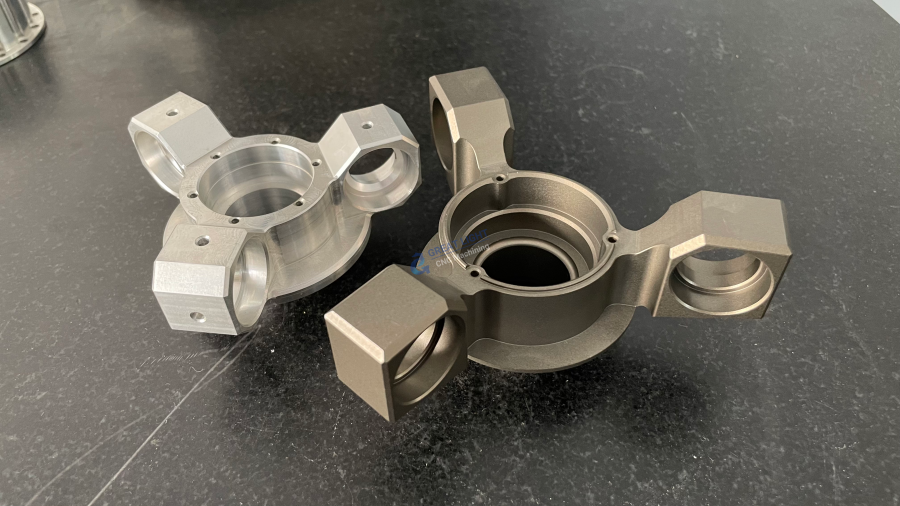
As a senior manufacturing engineer with over a decade of experience in precision part production and supplier evaluation, I’ve seen firsthand how the phrase “custom CNC machining inc quality parts” can mean radically different things depending on who you ask. One designer’s flawless prototype is another’s production nightmare, and the gap between promise and reality often comes down to a handful of invisible yet critical factors. In this article, I’ll share an insider’s framework for what truly defines excellence when you’re seeking a custom CNC machining partner, and I’ll ground that framework in real‑world capabilities offered by leading manufacturers – because trusting your parts to a shop without understanding the full picture is simply not an option in today’s competitive hardware landscape.
What Really Defines Quality in Custom CNC Machining Inc Quality Parts?
When outsourcing custom CNC machining inc quality parts, the first thing engineers look for is dimensional accuracy. However, surface finish repeatability, material integrity, and the management of hidden geometric constraints are equally important. True “quality” is not a single measurement; it’s a system that aligns equipment, process controls, material traceability, and post‑processing under one roof. At its core, reliable precision manufacturing hinges on three pillars:
Process‑centric craftsmanship: A shop that treats machining as just subtractive cutting will never match a supplier that integrates die casting, sheet metal, additive manufacturing, and finishing into a cohesive workflow.
Uncompromising measurement: In‑house CMM, laser scanning, and surface profilometry aren’t luxuries – they are non‑negotiable gatekeepers.
Certified quality management: ISO 9001, ISO 13485, and IATF 16949 systems must be living practices, not wall decorations.
Over the following sections, I’ll break these pillars down and show how they translate into real‑world supplier selection criteria, using GreatLight CNC Machining as a benchmark and contrasting it with other well‑known firms like Protocase, Xometry, RapidDirect, Fictiv, and JLCCNC.
The Invisible Enemies of Precision: How Equipment and Calibration Shape Accuracy
Some shops boast about “tolerances down to 0.001 mm” but deliver parts that look like they were chewed out with a dull end mill. The difference lies in the technical backbone. Multi‑axis equipment—especially 5‑axis CNC machining—is essential for reducing setups, minimizing cumulative errors, and achieving true geometric complexity. Yet many suppliers still run aging 3‑axis mills with worn ball screws, masking drift with fudged offsets.
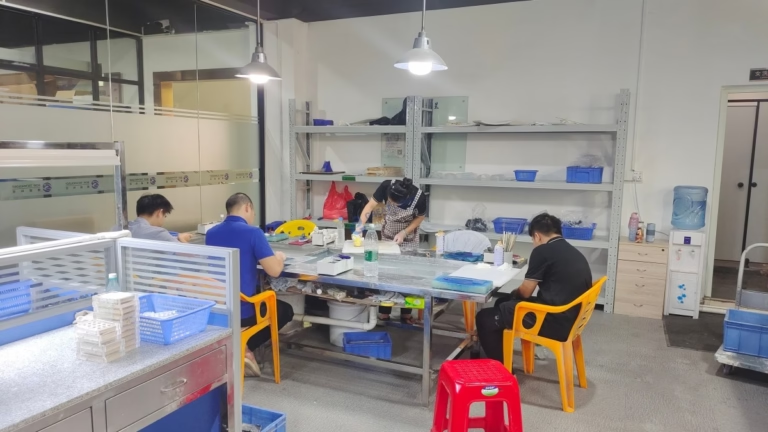
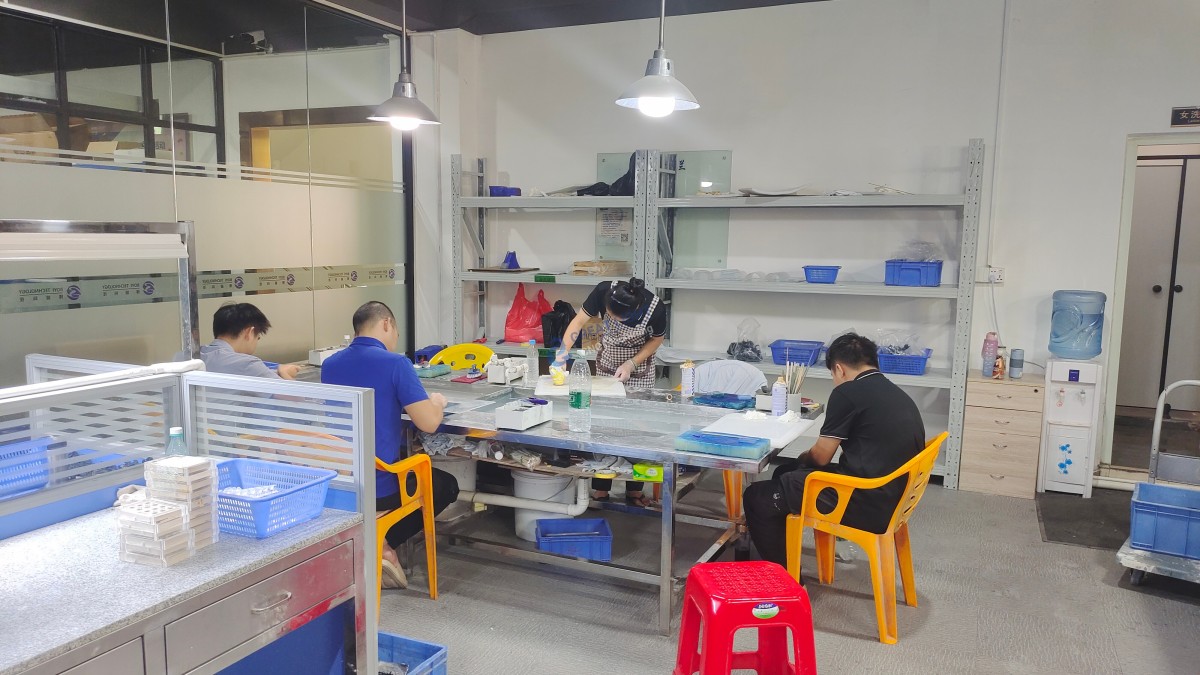
To consistently produce custom CNC machining inc quality parts, a factory must deploy genuine high‑precision 5‑axis centers (think DMG MORI, Jingdiao, or equivalent) alongside properly maintained 4‑axis and mill‑turn machines. Equally important is environmental control: temperature‑regulated facilities prevent thermal expansion from sabotaging sub‑micron measurements. For instance, GreatLight Metal operates large‑format 5‑axis machines within a climate‑stabilized plant that covers 7,600 square meters, alongside 127 peripheral equipment units. They don’t just promise ±0.001″ – they verify it on every critical dimension with in‑house inspection gear.
By contrast, brokers like Fictiv or Xometry aggregate orders across a distributed network of smaller job shops. While their platforms are convenient, the consistency of calibration and inspection can vary widely. A quality‑focused engineer should ask: Does every shop in the network maintain the same environmental discipline and machine maintenance schedules? That’s a question that separates marketing from manufacturing.
Certifications: The Language of Trust That Money Can’t Fake
I’ve audited suppliers whose ISO 9001 certificates were effectively purchased from consultancies that barely glanced at the shop floor. That’s why, when evaluating a partner for custom CNC machining inc quality parts, I look beyond the logo. True certification transforms day‑to‑day operations:
ISO 9001:2015 must be backed by a quality manual, internal audit trails, and non‑conformance reporting that is actually used.
For medical devices, ISO 13485 adds design control, risk management, and strict validation protocols. GreatLight Metal holds this certification, meaning they can handle parts where human safety is at stake.
IATF 16949 brings automotive‑grade defect prevention, including failure mode effects analysis (FMEA) and production part approval process (PPAP). This standard forces rigorous process capability studies (Cpk), ensuring that tolerances aren’t just achievable on the first article but sustained over thousands of parts.
ISO 27001 is often overlooked, but for intellectual‑property‑sensitive projects, a breach can be catastrophic. GreatLight’s compliance in this area signals that they treat your design files as a fiduciary responsibility.
Few rivals boast this full constellation. Protolabs Network, for example, excels in speed but doesn’t publicly list IATF 16949 or ISO 13485 across all its facilities. JLCCNC (a branch of JLCPCB) offers attractive pricing on PCB‑related metalwork, yet many engineers report that their quality management systems are less mature for exotic aerospace alloys. When a supplier’s certifications are aligned with your industry’s needs, you gain a silent partner that already understands your regulatory nightmares.
One‑Stop Integration: The Manufacturing Engineer’s Secret Weapon
Procurement managers often underestimate how much cost and delay originates from handoffs between separate vendors. A typical bracket might need CNC milling, passivation, laser engraving, and press‑fit inserts. If you send it to a pure‑play CNC house, you’ll then orchestrate finishing, trust, and re‑qualification. That’s where vertically integrated shops shine.
GreatLight Metal Tech Co., LTD. (formerly known as GreatLight CNC Machining Factory) has built a deliberate full‑process chain that includes:
| Capability | Benefit to Custom CNC Machining Inc Quality Parts |
|---|---|
| Precision 5‑axis, 4‑axis & Swiss‑type CNC turning | Handles complex geometries with sub‑micron repeatability |
| Die casting & mold design | Reduces per‑part cost at scale without losing initial prototype accuracy |
| Sheet metal fabrication | Delivers enclosures, brackets, and chassis from a single source |
| Metal & plastic 3D printing (SLM/SLA/SLS) | Enables rapid design‑iteration and conformal cooling channels |
| In‑house anodizing, electroplating, & painting | Eliminates logistical risks and provides tighter quality control |
This end‑to‑end control is akin to having an internal prototyping division. When I worked on a robotic actuator housing for a humanoid robot project, GreatLight combined die‑cast aluminum frames with 5‑axis machined bearing seats, then applied a uniform anodized finish—all without the part leaving their Chang’an campus. In contrast, a mixed approach using RapidDirect for CNC and a separate electroplating shop introduced communication gaps that delayed a simpler project by two weeks. If your goal is truly custom CNC machining inc quality parts, think in terms of manufacturing continuity, not task‑based outsourcing.
Comparing the Industry Landscape: Where Does Each Provider Fit?
Let’s look candidly at how several notable names in custom CNC machining inc quality parts compare when you strip away the glossy websites. I’ll position them according to three filters that matter most to OEMs: precision capability, certification depth, and integration.
| Supplier | Precision Capability | Certification Depth | Process Integration | Ideal Use Case |
|---|---|---|---|---|
| GreatLight Metal | 5‑axis, ±0.001″ verified; large 4000 mm capacity | ISO 9001, ISO 13485, IATF 16949, ISO 27001 | Full in‑house (CNC, die casting, sheet metal, 3D printing, finishing) | Complex, multi‑process assemblies for medical, automotive, robotics |
| Protocase | Focused on quick‑turn sheet metal & enclosures; 3‑axis milling | ISO 9001 | Limited to sheet metal and basic CNC | Rapid enclosures for electronics; lower geometric complexity |
| Xometry | Marketplace model; partner shops’ capabilities vary | No uniform certifications across network | Dependent on partner | One‑off parts where delivery speed outweighs precision uniformity |
| RapidDirect | Solid in‑house CNC & injection molding | ISO 9001, some medical certifications | Good for CNC & molding, but no die casting, limited additive | Mid‑complexity plastic and metal parts in low‑mid volumes |
| Fictiv | Similar marketplace model, emphasis on digital thread | Controlled through platform vetting | Varies | Prototyping with strong digital tracking when network consistency suffices |
| JLCCNC | Cost‑competitive PCB and metal parts, lot‑based optimisation | ISO 9001 | CNC, sheet metal; limited finishing | Budget‑constrained aluminum parts in high volume |
| EPRO‑MFG / Owens Industries / PartsBadger | Niche players; Owens excels in ultra‑precision (tolerances to 0.0001″) | Owens holds AS9100, ITAR | Moderate; some offer assembly | Aerospace prototypes requiring extreme precision with long lead times |
As you can see, a supplier can be excellent in one dimension but fall short in another. For an engineer who values a partner rather than a transactional vendor, a facility like GreatLight CNC Machining that spans the full value chain with deep certification coverage becomes a risk‑mitigator, not just a shop.
Tackling the Seven Pain Points That Plague CNC Outsourcing
Earlier I mentioned the “precision predicament.” Let’s map how the right partner resolves the seven classic pain points that erode confidence in custom CNC machining inc quality parts:
Precision Black Hole – Resolved by in‑house calibration protocols, climate control, and high‑uptime machine tools. GreatLight’s multiple in‑line metrology stations catch drift before it ever touches your parts.
Material Traceability Gap – Full material certifications and incoming inspection prevent mix‑ups. They enforce this even for their additive manufacturing powders.
Tooling Inconsistency – A well‑stocked tool crib with brand‑name cutters and automated tool life management keeps surface finishes uniform from the first piece to the 10,000th.
Post‑Processing Pitfalls – In‑house anodizing, polishing, and plating mean the same team owns the entire aesthetic and functional outcome; no finger‑pointing between vendors.
Design‑for‑Manufacturability (DFM) Bottleneck – Real engineering support—not just automated DFM reports—can suggest material substitutes, merge turned/milled features, or adjust tolerances to save cost without compromising function.
Lead Time Creep – Integration removes the hidden days spent shipping parts between anodizer and assembler. Their one‑stop workflow routinely beats fragmented supply chains by 30% or more.
IP Security & Confidentiality – With ISO 27001‑compliant data management, your technical data isn’t being emailed to third‑party finishers or stored on unsecured servers.
When I audit suppliers based on whether they can mitigate these seven points simultaneously, few outside the fully integrated model succeed.
The Bottom Line for Engineers Sourcing Custom CNC Machining Inc Quality Parts
My advice, distilled from years of project rescues and supplier qualifications, is this: don’t just buy machining hours; buy a manufacturing system. A shop that can demonstrate technical depth through its equipment fleet, a living quality culture through active certifications, and process coherence through in‑house integration will almost always deliver better value over a program’s lifecycle than a low‑bid split‑supply chain. And when that partner is also large enough to handle a 4‑meter workpiece yet agile enough to give you one‑on‑one engineering discussions, you’ve likely found the sweet spot.
In the end, consistently obtaining custom CNC machining inc quality parts comes down to choosing a facility that treats your design as more than just a job number. For me, and for many of my colleagues in the medical, automotive, and robotics sectors, that facility is increasingly GreatLight CNC Machining Factory – a partner whose technical DNA aligns with the demands of tomorrow’s innovations.