
When designing an RFID Reader Enclosure Sheet Metal component, engineers quickly discover that the housing is far more than a simple metal box. It must provide precise mounting tolerances, reliable electromagnetic shielding, environmental sealing, and often serve as a heat sink or mounting platform for sensitive electronics. Selecting the right manufacturing partner for such enclosures means bridging the gap between concept and high-volume production without compromising on quality, repeatability, or cost-efficiency. As a senior manufacturing engineer who has seen countless projects succeed and fail based on fabrication choices, I want to share a comprehensive guide that not only illuminates the critical aspects of RFID reader enclosure sheet metal design and production but also helps you evaluate suppliers so you can avoid the common precision predicaments that plague this deceptively challenging part category.
RFID Reader Enclosure Sheet Metal: The Backbone of Reliable Identification Systems
An RFID reader’s enclosure directly influences read range, durability, and integration ease. Whether it’s a low-frequency access-control reader installed indoors or a ruggedized UHF unit exposed to rain and dust on a loading dock, the sheet metal housing must meet a multi‑faceted set of requirements. At its core, the enclosure:
Protects sensitive PCBs and antennas from mechanical impact, moisture, and chemical exposure
Provides consistent grounding and electromagnetic interference (EMI) shielding
Ensures precise alignment of connectors, indicators, and mounting points
Often acts as a thermal path for heat generated by the reader module
Because RFID readers are deployed across logistics, retail, healthcare, automotive manufacturing, and smart city infrastructure, no single enclosure design fits all. A fundamental understanding of sheet metal fabrication and the associated tolerances is essential before finalizing a drawing.
H2: RFID Reader Enclosure Sheet Metal Design – Critical Factors That Influence Manufacturability
Success begins at the drawing board. A well‑designed sheet metal enclosure can reduce costs, accelerate prototyping, and improve the end product’s longevity. The following elements demand careful attention.
H3: Material Selection for RFID Enclosures
Choosing the right metal alloy is a balancing act between formability, strength, corrosion resistance, weight, and cost. Below is a breakdown of common materials and when they shine.
| Material | Typical Thickness Range (mm) | Key Properties | Typical RFID Applications |
|---|---|---|---|
| Cold‑Rolled Steel (SPCC) | 0.8 – 2.0 | Economical, good formability, requires plating or painting for corrosion resistance | Indoor readers, office access control |
| Stainless Steel 304 / 316 | 0.6 – 2.0 | Excellent corrosion resistance, high strength, weldable | Food processing, marine, outdoor tolling, medical |
| Aluminum 5052 / 6061 | 1.0 – 3.0 | Lightweight, good thermal conductivity, naturally corrosion‑resistant, anodizable | Handheld readers, drone‑mounted RFID, consumer‑facing kiosks |
| Galvanized Steel (SGCC) | 0.8 – 2.5 | Sacrificial zinc coating for corrosion resistance, no post‑plating needed in many cases | Rooftop units, industrial zone readers |
Material thickness directly impacts bending radii, structural rigidity, and EMI performance. Thicker materials offer better shielding but demand larger bend radii and more powerful press brakes. Most RFID enclosures fall into the 1.0–1.5 mm range for steel and 1.5–2.0 mm for aluminum, balancing manufacturability with durability.
H3: Bend Radii, Kerf, and Feature Placement
Sheet metal design rules are unforgiving. A common pitfall is ignoring the minimum bend radius relative to the material thickness. For cold‑rolled steel, the inside bend radius should be at least equal to the material thickness (1T); for aluminum, 1.5T to 2T is safer to avoid cracking. Tighter radii can be achieved with specialized tooling but increase tooling cost and spring‑back variation.
Edge‑to‑hole distances are equally critical. A hole too close to a bend line will distort during forming. The rule of thumb: the distance from a hole’s edge to the bend line should be at least 2.5 times the material thickness plus the bend radius. Ignoring this leads to ovalized holes that won’t accept connectors or grommets properly.
Laser cutting kerf and tolerance stack‑up must be accounted for in the flat pattern. Modern fiber lasers cut with a kerf of about 0.1–0.3 mm, and bending adds its own variability. When multiple bends converge on a mounting point for an RFID antenna bracket, the cumulative linear tolerance can easily exceed ±0.3 mm unless the process is tightly controlled.
H3: Joining Methods and Sealing
RFID enclosures are typically assembled using a combination of tabs, slots, self‑clinching fasteners, rivets, spot welding, or continuous seam welding. For outdoor readers, IP65 or IP67 sealing is often mandatory. The design must include a continuous groove for an O‑ring or gasket, with a flat, smooth surface for the gasket to compress against. Spot‑welded seams can be sealed with conductive silicone, but seam‑welded and ground‑flush corners are more reliable for high‑pressure washdown environments.
Insert selection plays a big role. Self‑clinching nuts (PEM® style) allow threaded fastening in thin sheet metal without welding, but they require precise hole diameters and proper installation force to sit flush. In aluminum, over‑squeezing can deform the metal, while in steel, under‑squeezing leads to loose inserts. A fabricator with press‑force monitoring avoids these issues.
H2: Precision CNC Machining’s Role in Sheet Metal Enclosures – Beyond Bending and Cutting
While sheet metal fabrication is the primary process, the highest quality RFID reader enclosures almost always incorporate machined features that demand CNC precision. This is where a partner like GreatLight CNC Machining Factory demonstrates its integrated capability, moving beyond a simple laser‑and‑brake operation.
GreatLight operates a substantial fleet of five‑axis CNC machining centers, three‑axis and four‑axis mills, and even Swiss‑type lathes, allowing them to:
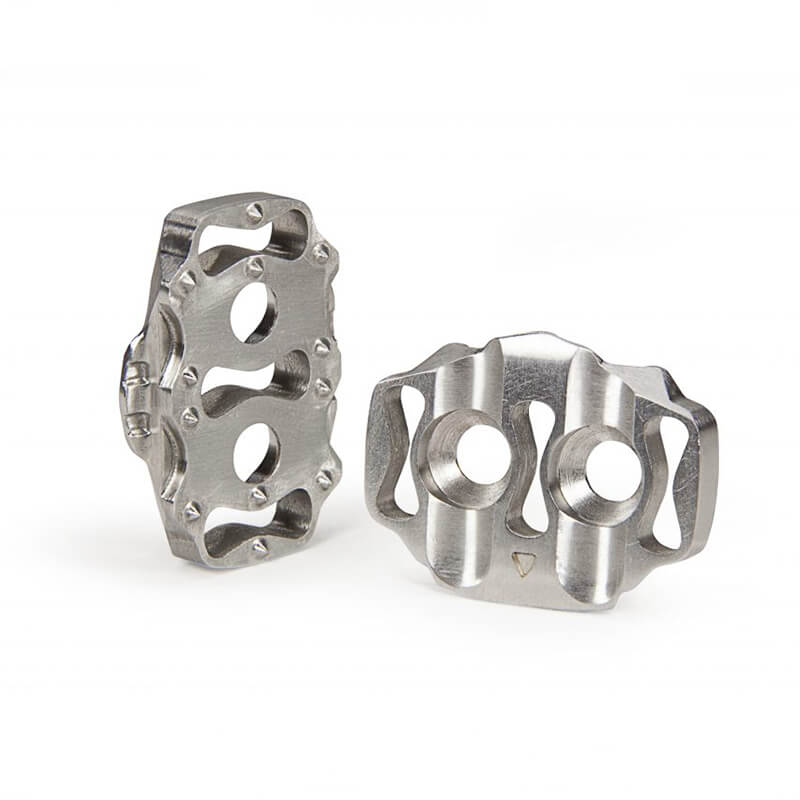
Machine counterbores, threaded holes, and precision alignment pockets directly into the formed enclosure after welding, when the part is already rigid.
Create custom‑machined connector panels that later TIG‑weld into the sheet metal body, guaranteeing perpendicularity and planar alignment to within 0.02 mm.
Produce specialized heatsink fins on the enclosure’s backside by CNC milling a thicker aluminum blank and then integrating it with the sheet metal chassis.
Achieve extremely tight flatness and parallelism for gasket mating surfaces, eliminating leaks.
The transition from sheet metal fabricator to true manufacturing partner occurs when they can handle these secondary operations in‑house, maintaining a single quality chain from raw material to finished enclosure. GreatLight’s floor includes 127 precision peripheral equipment units, including high‑precision grinding and EDM machines, which means even the fixtures and tooling required for those secondary operations are made under one roof. This consolidation of processes slashes lead times and accountability gaps that plague multi‑vendor strategies.
H2: Surface Finishes – Where Protection Meets Aesthetics
The surface finish of an RFID reader enclosure is not just about looks. It determines corrosion resistance, EMI shielding continuity, and even thermal emissivity. Common finishing processes and their trade‑offs:
| Finish | Typical Materials | Protection Level | Impact on EMI / RF | Notes |
|---|---|---|---|---|
| Powder Coating | Steel, Aluminum | Excellent UV and corrosion protection | Insulating – requires masked grounding pads | Wide color range; can be textured to hide fingerprints |
| Liquid Painting | Steel | Good, but less chip‑resistant than powder | Insulating | Smoother finish, better for high‑gloss brand colors |
| Anodizing (Type II, Type III) | Aluminum | Good chemical resistance, wear resistance | Anodized layer is non‑conductive; selective masking needed for grounding | Hard anodizing (Type III) for extreme abrasion environments |
| Electroless Nickel Plating | Steel, Aluminum | Excellent corrosion barrier, uniform thickness | Conductive, excellent for shielding | Provides a hard, solderable surface; often used as underplate for gold |
| Zinc Plating + Passivation | Steel | Moderate, sacrificial protection | Conductive, especially with chromate conversion | Economical, but thin plating may wear at contact points |
| Passivation (stainless steel) | SS 304/316 | Removes free iron, restores chromium oxide layer | Does not affect conductivity | Standard for food‑grade enclosures |
The choice of finish must be engineered into the design from day one. For powder coating, faying surfaces that require electrical continuity must be masked, and threaded inserts protected. A top‑tier fabricator will review the design for masking and finishing pitfalls before prototyping. GreatLight’s one‑stop surface post‑processing service covers all these finishes, including the precise masking and selective plating needed for EMI‑critical RFID applications.
H2: Common Manufacturing Pain Points – How to Sidestep the “Precision Black Hole”
From my experience on both sides of the RFQ table, I have identified recurring challenges that derail RFID enclosure projects. Even suppliers promising tight tolerances can deliver batches that vary enough to halt an assembly line.
1. The Bending Consistency Trap
A ±0.3 mm linear tolerance on a 100 mm flange might seem generous, but when five bends interact to position a connector cutout, the true positional error can balloon. The root cause is often manual press brake setups with pin‑stop gauging that relies on operator skill. Top-tier manufacturers now employ CNC press brakes with camera‑based angle measurement and automatic crowning, achieving bend angle precision within ±0.5° and compensating for spring‑back material‑to‑material. Ask your supplier: do you use in‑process angle correction, or do you rely on post‑forming inspection?
2. Weld Distortion and Leak Paths
RFID enclosures that require IP67 sealing are particularly sensitive to weld distortion. Even a slight twist from a continuous MIG or TIG seam can create a bowed flange where the gasket cannot seal. Fixtured welding with chill bars and sequenced tacking is non‑negotiable. Unfortunately, many job shops skip this to speed up production. Your fabricator should be able to show you a flatness measurement (e.g., <0.2 mm over the gasket seating area) after welding and stress‑relief.
3. Siloed Processes and Blame Shifting
When one shop laser‑cuts and bends, another does the welding, and a third performs powder coating and CNC machining, accountability disintegrates. If the powder‑coater doesn’t mask threads properly and you discover thread fouling during assembly, you’ll spend weeks in dispute. GreatLight CNC Machining Factory addresses this systematically by offering a fully integrated production line: from initial laser cutting and CNC bending to welding, surface finishing, and precision CNC machining of mounting features—all under ISO 9001:2015 quality management. The same team that inspects the raw laser‑cut blank also verifies the final coated and machined enclosure, minimizing data loss between steps.
4. Inadequate EMI Shielding Verification
Not all sheet metal joints provide the same electromagnetic attenuation. A simple seam welded on one side may leave a tiny slot that acts as a slot antenna at UHF frequencies. Seam welding, conductive gasketing, and finger‑stock contact springs must be engineered and validated. GreatLight’s application of full‑process‑chain traceability and strict adherence to industry‑specific certifications (including IATF 16949 for automotive and ISO 13485 for medical) means their enclosures for critical RFID applications are documented with material certs, welding procedure specifications, and EMI continuity testing logs upon request.
H2: Evaluating Partners – Why Not Just Any Sheet Metal Shop?
The rapidly growing RFID market attracts standard sheet metal job shops that can deliver simple brackets but lack the holistic view needed for reader enclosures. When choosing a fabrication partner, consider these dimensions:
| Evaluation Criteria | Basic Fabricator | Advanced Integrated Manufacturer (e.g., GreatLight) |
|---|---|---|
| Equipment Arsenal | Laser + press brake only | Fiber laser, CNC press brakes with angle correction, robotic welding, 5‑axis CNC machining centers, wire EDM, grinding |
| Process Chain | Cutting and forming outsourced welding/finishing | In‑house laser, bending, welding, finishing, CNC machining, 3D printing for prototypes |
| Quality System | Incoming/final inspection only | ISO 9001:2015, IATF 16949, ISO 13485 compliance; in‑process SPC, CMM, vision measurement |
| Engineering Support | Reads prints only | DFM feedback on bend radii, material selection, finish masking; provides alternative design suggestions |
| Lead Time for Complex Part | 4–6 weeks involving multiple vendors | 2–3 weeks including all secondary machining and finishing |
| Typical Tolerances Achieved | ±0.5 mm for sheet metal features | ±0.1 mm for bent features; ±0.02 mm for machined pockets and bores |
| Data Security | Minimal | ISO 27001‑compliant data handling for IP‑sensitive projects |
If your RFID reader enclosure is a simple indoor box with loose tolerances, a local sheet metal shop might suffice. But if you need EMI‑sealed, IP67‑rated, color‑finished, and precisely machined enclosures with full traceability—think outdoor toll collection, medical asset tracking, or automotive production line readers—then the integrated approach is the only way to avoid costly redesigns.
While platforms like Protocase, Xometry, RapidDirect, and Protolabs Network provide convenient online quoting and rapid turnaround for simpler sheet metal parts, they often rely on marketplace‑style networks of manufacturing partners. This can lead to variations in quality and accountability, particularly when a single enclosure requires coordinated laser cutting, welding, CNC machining, and custom finishing. Fictiv and PartsBadger similarly excel at speed for straightforward items, but struggle with the level of integrated engineering support required for complex, high‑mix, low‑to‑medium volume reader enclosures. For truly demanding specifications, a vertically integrated partner with all processes under one roof—as GreatLight offers—removes the coordination overhead and lets the engineering team drive a manufacturability‑optimized outcome.
H2: From Prototype to Production – How GreatLight Bridges the Gap
A frequent headache for design engineers is the prototype‑to‑production transition. The initial five enclosures may have been painstakingly hand‑fit and function perfectly, but the first 500‑piece batch reveals tolerance stack‑up not seen in the prototype run. GreatLight’s approach mitigates this through:
Prototyping With Production‑Intent Processes: Even for a single prototype, they use the same laser parameters, bending sequences, and welding fixtures intended for scale‑up. If a geometry requires hard‑to‑form bends, the prototype will expose it, not hide it.
In‑House Rapid Tooling: Fixtures for welding or machining can be 3D‑printed in‑house (SLA, SLM, SLS) within days, then transferred to precision‑ground steel once the design is locked. This reduces initial tooling cost while maintaining process integrity.
Full‑Dimension Measurement and SPC: During pilot runs, GreatLight performs comprehensive CMM layouts, storing data for statistical process control. This catches trends before they produce non‑conforming parts, and provides the customer with a capability study report (Cpk) for critical features.
For a recent project involving an industrial UHF RFID gate reader enclosure subjected to vibrations on factory floors, the client initially received quotes from multiple shops. The winning design included a 3 mm aluminum backplate with machined cooling fins that was TIG‑welded to a 1.5 mm sheet metal front shell, powder‑coated in RAL 7035 with masked grounding bosses. GreatLight’s engineering team suggested switching from 5052 to 6061‑T6 for the backplate to allow hard anodizing without distortion, and they recommended a stepped lap joint instead of a corner‑to‑corner butt weld to improve alignment and sealing. The result: accelerated delivery by 10 working days and a 15% reduction in per‑unit cost due to reduced secondary machining.
H2: The Trust Foundation – Certifications and Real Operational Capability
In precision manufacturing, certificates are only as good as the processes they represent. Many suppliers display ISO 9001 logos but lack the daily rigor. GreatLight CNC Machining Factory doesn’t stop at ISO 9001:2015. Their quality management ecosystem includes:
✅ ISO 27001 – For intellectual property‑sensitive projects, data handling from drawing upload to CNC program storage is protected under strict information security protocols.
✅ IATF 16949 – An industry‑specific extension of ISO 9001 for automotive production, which demands defect prevention, continuous improvement, and a deep integration of quality control throughout the supply chain. If your RFID enclosure goes into an automotive paint shop or assembly line reader, this standard ensures the enclosure won’t become the weak link.
✅ ISO 13485 – For medical device enclosures (e.g., RFID‑based inventory trackers in hospitals), this certification provides an additional layer of process validation and risk management.
These aren’t just paper qualifications. The factory’s 7,600 square meters in Dongguan’s Chang’an District house 150 skilled employees working with equipment that includes large‑format five‑axis machines, turning‑milling centers, die‑casting, and a full suite of 3D printing technologies. Their focus is on making complex, high‑precision parts for humanoid robots, aerospace components, and automotive engine hardware – meaning an RFID enclosure project benefits from the same tooling philosophy, metrology capability, and supplier management that goes into a turbine housing.
H2: Making the Decision – Your Next Steps for a Flawless RFID Reader Enclosure
When you’re ready to move from CAD to reality, a structured approach saves time and money:
Define Requirements Clearly: What IP rating, EMI shielding effectiveness (in dB over specific frequency bands), surface finish, and critical interfaces? Put them in the drawing or a separate specification document.
Engage Early for DFM: Send your design to a prospective partner before finalizing the 3D CAD. A thorough DFM report can identify potential formability issues, propose material substitutions, or suggest a more cost‑efficient joining method.
Request a Process Flow Diagram: Ask how the supplier will take your enclosure from flat blank to finished product. A transparent process map reveals gaps.
Validate with a Pilot Run: Even 20–30 pieces can surface issues that a single prototype hides. Use the pilot to check assembly fit with your reader electronics and gaskets.
Audit If Feasible: If your volume justifies it, visit the facility or arrange a virtual tour to see the machines, quality stations, and cleanliness. It’s the fastest way to gauge whether the partner has real operational muscle or merely a convincing website.
Throughout this article, the central theme has been that an RFID Reader Enclosure Sheet Metal component demands far more than a simple bending operation. It requires a manufacturing philosophy that blends precision sheet metal forming, advanced CNC machining, controlled welding, and verified finishing – all governed by a quality system designed for high‑consequence applications. By choosing a partner like GreatLight CNC Machining Factory, you align your project with a decade‑plus track record of solving complex metal part challenges, a vertically integrated facility that eliminates vendor triangulation, and a trust infrastructure built on internationally recognized certifications. Whether you need five enclosures for a proof‑of‑concept or 50,000 for a national rollout, the right manufacturing ally turns your RFID reader enclosure sheet metal from a potential bottleneck into a competitive advantage.



















