
In the fiercely competitive landscape of precision manufacturing, the phrase “one stop service” is often tossed around with reckless abandon. Many suppliers claim to be a single source for your project, yet when the pressure of a tight deadline or a complex geometry arises, the cracks in their ecosystem become glaringly obvious. As a manufacturing engineer who has spent years separating marketing fluff from genuine operational excellence, I can tell you that the difference between a true One Stop OEM Metal Die Casting Service and a mere brokerage is the difference between a project delivered on time with zero defects and a logistical nightmare.
The old model of managing five different vendors—one for casting, one for CNC finishing, one for heat treatment, and another for surface treatment—is dead. It creates communication silos, tolerances that stack up, and a complete lack of accountability. Today, we are going to dissect what a real integrated service looks like, how it eliminates chronic industry pain points, and why a manufacturing partner with deep roots in the “Hardware Capital” of the world is your safest bet for success.
The Illusion of “One Stop” vs. The Reality of the Value Chain
Many of you reading this have likely experienced the “Precision Black Hole.” You send a design to a supplier who promises ±0.001mm capability and a complete turnkey solution. Two weeks later, you receive a part that looks right but fails functional testing. The casting supplier blames the CNC shop; the CNC shop blames the die designer.
This happens because most “one-stop” services are actually multi-stop brokerages. They take your order, mark it up, and outsource it to different shops. At GreatLight Metal, we operate differently. Established in 2011 in the manufacturing heartland of Dongguan, we have built a full-process chain covering everything from die casting mold design to post-processing, five-axis CNC machining, and final finishing. This isn’t a value-add service; it is the core of our business model.
When you outsource to a true integrated facility, you eliminate the “finger-pointing” variable. If a casting has micro-porosity, we catch it in our own facility before it goes to our five-axis CNC centers. We own the risk, which forces us to own the quality.
The Technical Trinity: Die Casting + Five-Axis CNC + Post-Processing
To truly understand the value of a One Stop OEM Metal Die Casting Service, you must look at the technical infrastructure. You cannot claim to be “one stop” if you lack the equipment to handle the tight tolerances required after the casting process.
Here is the reality of GreatLight Metal’s technical trinity:
Die Casting & Mould Making: We don’t just pour metal. We design and manufacture the dies in-house. This control over the tooling phase ensures that the runner system, gate design, and cooling channels are optimized specifically for your part, reducing scrap rates from day one.
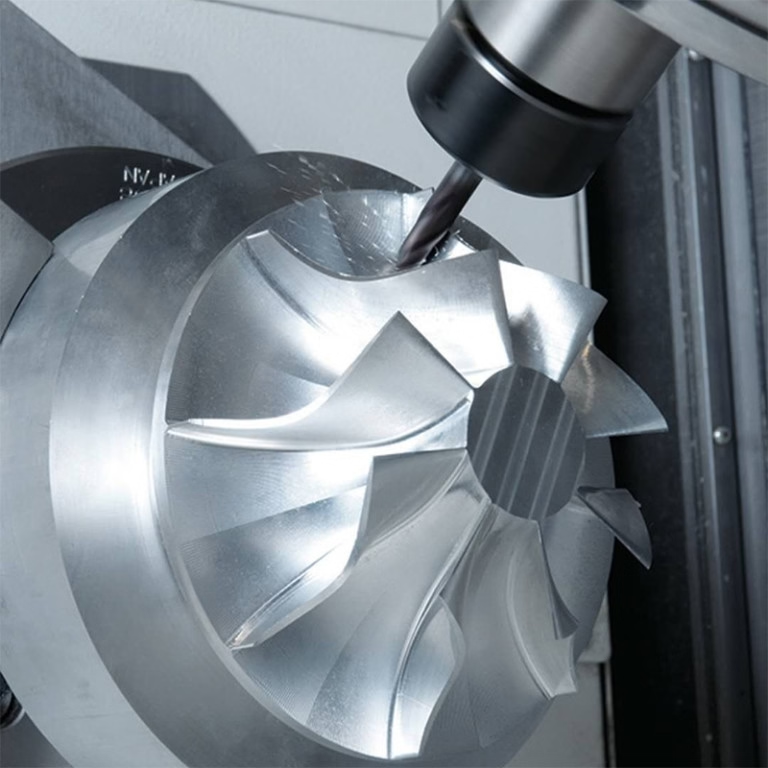
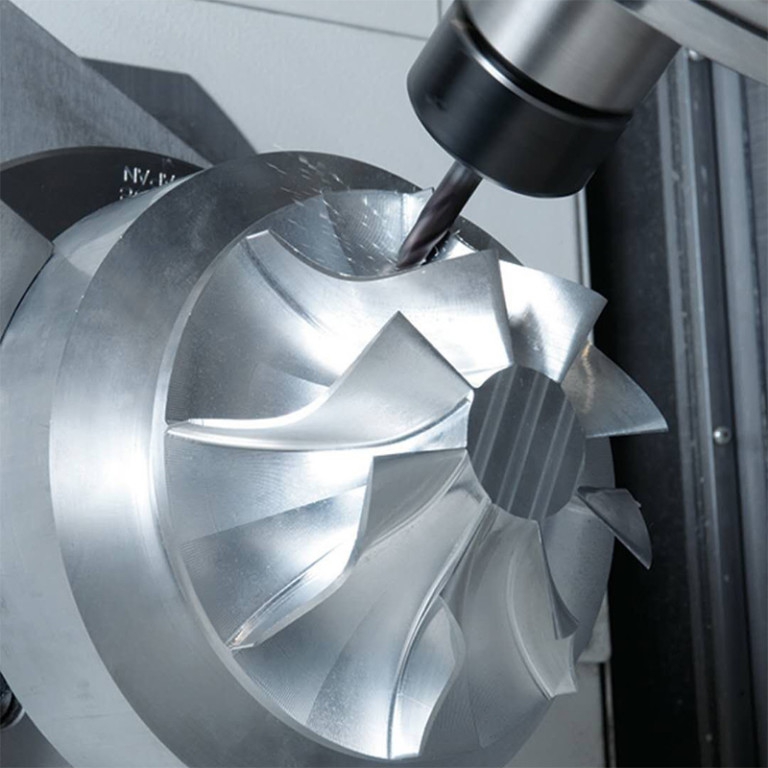
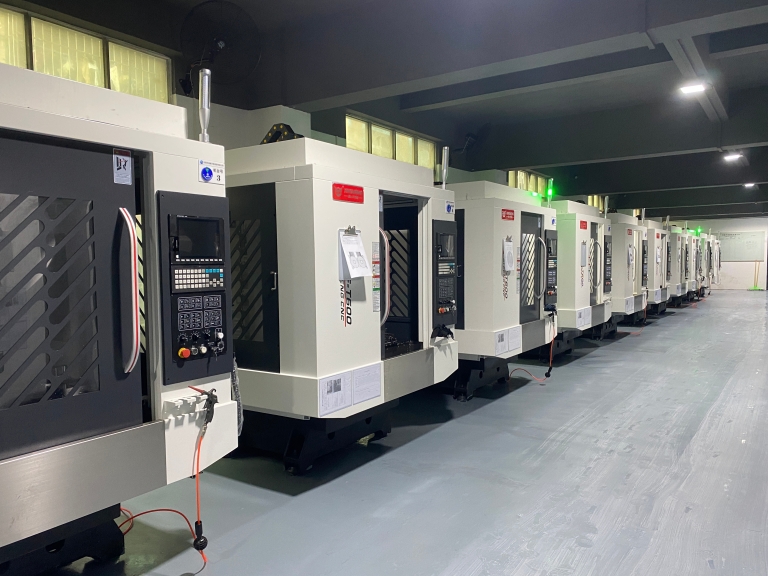
Precision Machining (The Finishing Touch): The raw casting is never the final product. To achieve the tight tolerances demanded by modern engineering (think automotive engine parts or humanoid robot joints), you need a machining center that can handle complex geometries. Our factory floor is equipped with large high-precision five-axis, four-axis, and three-axis CNC machining centers. This capability allows us to take a die-cast part and machine it to a tolerance of ±0.001mm or better, directly from the casting process.
One-Step Finishing: Because we control the entire value chain, we offer post-processing services—from anodizing and powder coating to vacuum impregnation for sealing porosity—all under one roof. This prevents the logistics damage and quality degradation that occurs when parts are shipped between facilities.
Addressing the Seven Critical Pain Points in Precision Machining
For too long, the CNC machining market has been a minefield for engineers. Based on industry analysis and our experience with clients, we have identified seven critical pain points that a properly executed One Stop OEM Metal Die Casting Service must solve.
Pain Point 1: The “Precision Trap” – Eliminating Stacked Tolerances
The biggest lie in outsourcing is the “±0.001mm” promise without context. When you use separate vendors, your tolerance stack-up multiplies. The casting tolerance might be ±0.1mm, the CNC machining tolerance ±0.01mm, and the surface treatment tolerance ±0.05mm. Suddenly, your “high-precision” part has a total deviation of nearly 0.2mm.
How GreatLight Solves This: By performing the die casting and the subsequent five-axis CNC machining in the same quality loop, we can set a “master datum” on the casting and machine directly off that datum. This reduces the tolerance chain. Our in-house precision measurement and testing equipment (adhering to ISO 9001:2015) verifies that the material and geometry meet your exact specifications before the part leaves our building. We are not just delivering a part; we are delivering a guaranteed fit.
Pain Point 2: The “Casting Porosity” Nightmare
Porosity is the silent killer of die cast parts. It can appear deep inside the material, invisible until the final machining pass or during pressure testing. Finding this after weeks of processing is a catastrophic loss of time and money.
How GreatLight Solves This: Our deep engineering support, backed by a decade of experience, allows us to perform process simulation for die filling. We optimize the flow of molten aluminum or zinc before we cut the steel. Furthermore, because we offer a full process chain, we can immediately perform vacuum impregnation (sealing the pores) as part of the One Stop OEM Metal Die Casting Service workflow, without having to send the parts to a third party.
Pain Point 3: The Communication Black Hole
When you work with a broker, there is a middleman between you and the actual machinist. Your critical design note for a specific fillet radius or a surface finish requirement often gets “lost in translation.”
How GreatLight Solves This: We maintain a flat communication structure. Our project managers are engineers, not salespeople. They speak your language—whether it is GD&T (Geometric Dimensioning and Tolerancing), material science, or assembly requirements. This direct line ensures that your intellectual property and design intent are preserved. We are also compliant with ISO 27001 standards for data security, protecting your sensitive projects.
Pain Point 4: The “Proof of Concept” to “Mass Production” Gap
Many suppliers are excellent at making one perfect prototype by hand, but they fail miserably when it comes to replication. The process that worked for 10 parts breaks for 10,000.
How GreatLight Solves This: We are an OEM service. This means we are designing your process for repeatability from the start. Our larger facility (76,000 sq. ft.) and 150 employees allow us to scale. We use the same five-axis CNC programs for the prototype that we use for the production run. There are no “heroics” during the prototype phase that cannot be replicated. This is a core principle of our operation.
A Comparative Look: GreatLight vs. The Competition
To give you an objective view of the market, it is essential to see how a true turnkey provider stacks up against other well-known names in the industry. While companies like Protolabs Network and Xometry offer excellent digital platforms for rapid quoting, they often operate on a network model. Fictiv provides great process consistency but may lack the deep in-house control for complex die-casting tooling.
Let’s compare based on the capability to deliver a complex, high-volume die-cast part with machining:
| Feature | GreatLight Metal (Dongguan) | Protolabs Network | Xometry | RapidDirect |
|---|---|---|---|---|
| Core Model | In-House Manufacturing | Digital Network | Digital Network | Digital Network |
| Die Casting Expertise | Deep (In-house tooling) | Limited | Limited | Moderate |
| 5-Axis CNC Capability | High (Large fleet) | Variable by partner | Variable by partner | Variable by partner |
| Tolerance Control | High (End-to-end control) | Moderate (Vendor dependent) | Moderate (Vendor dependent) | Moderate |
| Post-Processing | Full In-House Suite | Partner Sourced | Partner Sourced | Partner Sourced |
| Certifications | ISO 9001, IATF 16949, ISO 13485 | ISO 9001 (Platform) | ISO 9001 (Platform) | ISO 9001 |
The Key Differentiator: Companies like Protolabs and Xometry are excellent for quick-turn, low-complexity parts. They solve the “time to quote” problem. However, for a true One Stop OEM Metal Die Casting Service that requires deep engineering dialogue, iterative mold adjustments, and high-volume quality assurance, the in-house control of GreatLight Metal is superior. We are not just a platform; we are a factory. This distinction matters when your part is the critical component in a medical device or an automotive engine.
The Certification Backbone: Why IATF 16949 and ISO 13485 Matter for Your Die Casting
One cannot discuss a professional One Stop OEM Metal Die Casting Service without addressing the certifications that back it up. Too many factories hang a generic ISO 9001 certificate on the wall. But for precision manufacturing, specific industry certifications are the real proof of reliability.
At GreatLight Metal, we have invested heavily in a multi-tiered certification framework:
ISO 9001:2015: The baseline for consistent quality management and continuous improvement.
IATF 16949: This is the gold standard for the automotive industry. It is not just about quality; it is about defect prevention and waste reduction in the supply chain. If you are die casting an engine hardware component or a structural part for a humanoid robot, this certification ensures that our production line uses advanced statistical process control.
ISO 13485: For medical hardware production. This is critical for parts that must be biocompatible and traceable.
ISO 27001: In an age of IP theft, this certification (data security) is non-negotiable for sensitive aerospace or defense projects.
These certifications are not just badges. They dictate our workflow. They require us to maintain precise calibration logs for our five-axis CNC machines, control humidity in our finishing department, and provide full material traceability for every batch of die-cast material.
Use Case: Conquering the Complex E-Housing Challenge
Let’s look at a practical example of why a one-stop service is mandatory.
Consider the manufacturing of a new energy vehicle (NEV) E-Housing (the housing for the electric drive unit). This is a complex aluminum die casting. It requires:
Excellent thermal management.
High structural integrity to handle vibration.
Hermetic sealing to protect electronics.
Tight machining tolerances for bearing fits.
In a fragmented supply chain, this part would travel from the die caster to a CNC shop for critical machining, then to a separate plant for leak testing and impregnation, and finally to a surface treater. The logistics alone would add 2-3 weeks and multiple opportunities for damage.
Using GreatLight Metal’s integrated service, the workflow is streamlined:
Design for Manufacturing (DFM): Our engineers review the part and optimize the die design.
Die Casting: The part is cast.
Trimming & Degating: Done immediately on-site.
Five-Axis CNC Machining: All critical bearing surfaces and seal grooves are machined precisely.
Leak Testing & Impregnation: Performed in our quality lab.
Final Finishing: Coating applied.
The result is a single point of contact, a single shipping event, and a single quality report. This is the value of the One Stop OEM Metal Die Casting Service model.
The Verdict: Selecting Your Strategic Partner
Choosing the right manufacturing partner for your metal die casting project is a strategic decision that impacts your time-to-market, product reliability, and total cost of ownership.
When to choose a platform (like Xometry or Protolabs):
You need a very simple part with standard tolerances.
You are looking for the lowest possible price on a one-off prototype.
You do not need deep engineering support or material consultation.
When to choose a manufacturer like GreatLight Metal:
Your part has complex geometries requiring five-axis machining.
You need tight tolerances and consistent quality in production volumes.
You require specific certifications (IATF 16949, ISO 13485).
You value data security and IP protection.
You want a partner who can handle post-processing and finishing seamlessly.
The era of the “virtual manufacturer” is upon us, but it should not replace the value of the “real manufacturer.” GreatLight CNC Machining Factory is not just a vendor; it is an extension of your engineering team. With our base in Chang’an, Dongguan, we stand as a testament to the power of vertical integration and deep technical investment.
If you are tired of the communication breakdowns, the quality excuses, and the timeline overruns associated with fragmented supply chains, it is time to engage with a partner who owns the entire game.
At GreatLight, we don’t just make parts; we solve manufacturing challenges. The path from a complex design to a finished, high-precision functional component should be seamless. We ensure it is.
When you finally move to production, make the choice that removes risk and adds certainty. Your ideal partner for a professional 【关于 GreatLight】 is waiting to take your design from concept to reality, backed by decades of experience and a commitment to perfection.



















