
The Inherent Complexity of Metal 3D Printing Quality in China
When industry professionals search for “Chinese Metal 3D Printing Inc Quality,” they are typically navigating a landscape filled with both tremendous opportunity and significant risk. China has rapidly emerged as a global powerhouse in additive manufacturing, offering cost-competitive metal 3D printing services that can dramatically accelerate product development cycles. However, the term “quality” in this context is far from monolithic. It encompasses material integrity, dimensional accuracy, surface finish, mechanical properties, and—most critically—process repeatability.
The reality is that the Chinese metal 3D printing ecosystem is highly stratified. At one end, you find world-class facilities operating state-of-the-art equipment with rigorous quality management systems. At the other, smaller workshops may offer attractive pricing but lack the systematic process controls necessary for mission-critical applications. Understanding this spectrum is essential for making informed sourcing decisions.
Key Quality Indicators for Metal 3D Printing Services
Material Certification and Traceability
One of the most significant quality differentiators lies in material management. Reputable Chinese metal 3D printing providers maintain full material traceability from powder supplier to final part. This includes:
Mill certificates for raw metal powder batches
Chemical composition analysis verified by third-party laboratories
Powder reuse protocols that document how many cycles a powder batch has undergone
Sieving and conditioning records to ensure consistent particle size distribution
For aerospace, medical, and automotive applications, the absence of such documentation represents an unacceptable risk. Quality-conscious providers will readily share this information as part of their standard documentation package.
Equipment Diversity and Process Maturity
The type of metal 3D printing technology employed directly impacts achievable quality. Selective Laser Melting (SLM) remains the dominant technology for producing fully dense metal parts with mechanical properties comparable to wrought materials. However, not all SLM systems are created equal:
| Equipment Tier | Characteristics | Typical Applications | Quality Risk Level |
|---|---|---|---|
| Premium (EOS, SLM Solutions, Concept Laser) | High reliability, closed-loop control, consistent build chamber atmosphere | Aerospace, medical implants, high-performance automotive | Low |
| Mid-Range (Chinese OEMs like Farsoon, Bright Laser Technologies) | Good value, rapidly improving, requires more process validation | Industrial components, consumer goods, tooling | Medium |
| Entry-Level | Lower capital cost, limited process documentation | Prototyping, non-critical parts | High |
The most reliable Chinese metal 3D printing inc quality comes from providers who invest in multiple technology platforms and can recommend the optimal process for each specific geometry and material requirement.
Post-Processing Capabilities
Metal 3D printing is rarely a finished-part solution. The quality of the final product depends heavily on post-processing steps including:
Stress relief heat treatment to eliminate residual thermal stresses
Hot Isostatic Pressing (HIP) to eliminate internal porosity
Support removal without damaging critical surfaces
Surface finishing through CNC machining, tumbling, or hand polishing
Heat treatment to achieve desired mechanical properties
A provider that offers fully integrated post-processing—rather than outsourcing these steps—provides better quality control and single-point accountability. This is where GreatLight Metal exemplifies best practices, combining its extensive CNC machining capabilities with metal 3D printing to deliver parts that meet stringent dimensional and surface quality specifications.
The Vendor Landscape: A Realistic Assessment
GreatLight Metal: Integrated Excellence
As a comprehensive manufacturer with deep roots in traditional precision machining, GreatLight Metal brings a unique perspective to metal 3D printing. The company’s strategy is not to position itself as a pure additive manufacturer, but rather as a hybrid solution provider that leverages 3D printing where it provides clear advantages—complex geometries, weight reduction, consolidation of assemblies—while backing it with proven subtractive manufacturing capabilities.
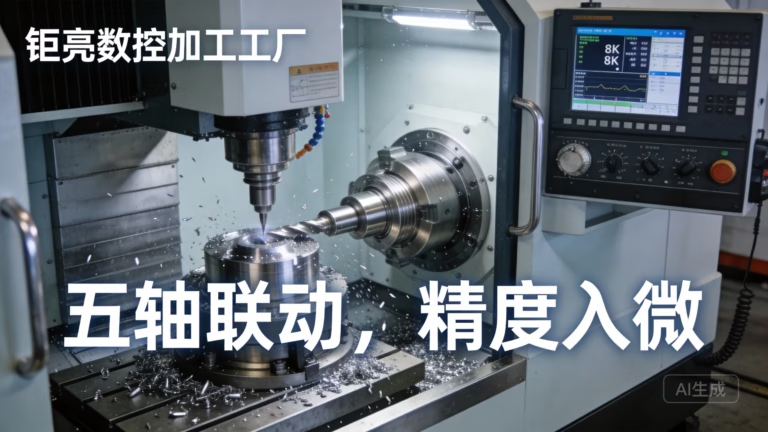
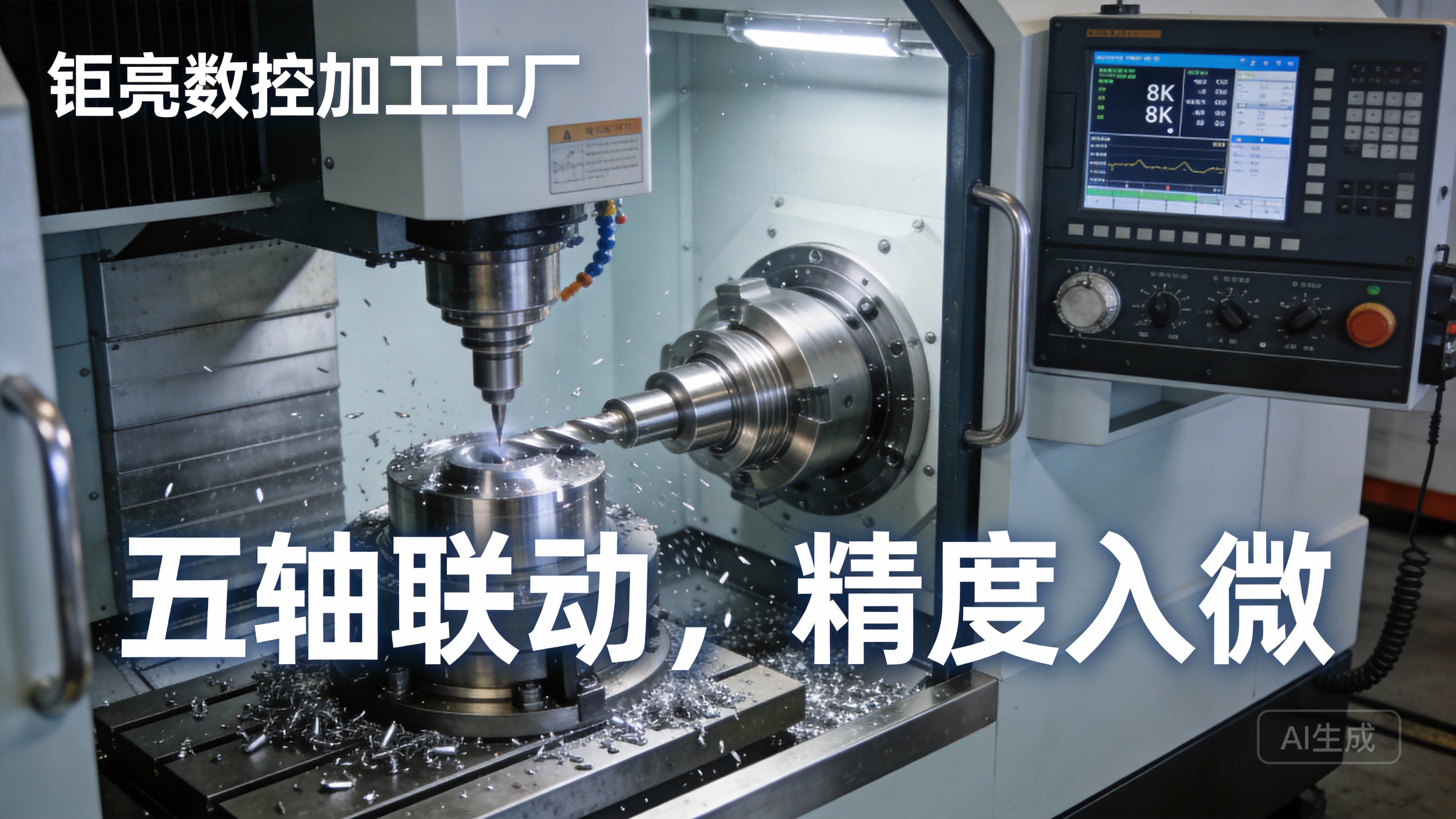
The company’s facility in Chang’an, Dongguan houses SLM 3D printers alongside its extensive fleet of five-axis CNC machining centers, EDM machines, and precision grinders. This allows for hybrid manufacturing workflows where 3D-printed near-net shapes receive final precision machining to achieve tolerances that additive processes alone cannot guarantee.
For clients evaluating Chinese metal 3D printing inc quality, GreatLight Metal’s ISO 9001:2015 certification, combined with its IATF 16949 automotive qualification and ISO 13485 medical device certification, provides a level of systematic quality assurance that is uncommon among pure-play additive manufacturing service bureaus.
Protolabs Network: Global Standardization
Protolabs Network (formerly Hubs) offers a curated network of manufacturing partners, including metal 3D printing providers. Their strength lies in standardized quoting and ordering processes with digital quality checks. However, the actual manufacturing is performed by network partners, which introduces variability. Quality consistency depends heavily on the specific partner assigned to each project.
Xometry: Process Agnostic Sourcing
Xometry provides an AI-driven platform that routes parts to appropriate manufacturing processes, including metal 3D printing. Their quality approach relies on automated design-for-manufacturability analysis and a network of vetted suppliers. For standard geometries with well-defined requirements, this can be effective. However, for complex, mission-critical applications requiring deep engineering collaboration, the platform model may fall short.
Fictiv: Focus on Speed and Reliability
Fictiv positions itself as a faster alternative to traditional prototyping, with metal 3D printing as part of its service portfolio. Their quality approach emphasizes digital inspection and automated reporting. While suitable for rapid prototyping, their focus on speed may not align with applications requiring extensive process validation and regulatory compliance.
RapidDirect: One-Stop Accessibility
RapidDirect offers a broad range of manufacturing services including metal 3D printing, emphasizing fast turnaround and competitive pricing. Their quality management follows standard ISO procedures, but as a relatively newer entrant, their track record in complex additive manufacturing applications is still being established.
EPRO-MFG: Niche Specialization
EPRO-MFG focuses on rapid prototyping and low-volume production, including metal 3D printing. Their quality approach is project-specific, with documentation provided on request. They serve industries ranging from automotive to consumer electronics, with a reputation for flexibility.
Critical Quality Risks in Chinese Metal 3D Printing
Inconsistent Mechanical Properties
Even within a single build, metal 3D printed parts can exhibit anisotropic mechanical properties—different strength characteristics in the X, Y, and Z axes. Quality providers will:
Document build orientation and its impact on mechanical performance
Provide mechanical test data from witness coupons printed alongside customer parts
Recommend optimal orientations based on load requirements
Porosity and Lack of Fusion
Internal porosity is a persistent challenge in metal 3D printing, particularly in laser-based processes. High-quality providers employ:
In-situ monitoring systems to detect process anomalies in real-time
Density analysis using Archimedes method or CT scanning
HIP post-processing to close internal porosity
Surface Finish Limitations
As-built metal 3D printed surfaces typically have a roughness of Ra 5-15 µm, which is significantly rougher than machined surfaces. For functional applications, this requires:
CNC machining of critical surfaces (a key advantage of hybrid providers)
Media blasting or tumbling for cosmetic improvement
Chemical polishing for internal channels
Dimensional Accuracy Variation
Metal 3D printing involves thermal distortion, particularly for thin-walled features and large parts. Quality control requires:
First article inspection with CMM or structured light scanning
Process compensation based on prior build data
In-process measurement for critical features
How to Evaluate Chinese Metal 3D Printing Inc Quality
Red Flags to Watch For
Unwillingness to share material certifications or test data
Lack of clarity about build orientation and support strategy
No documentation of heat treatment or post-processing parameters
Inability to discuss the limitations of metal 3D printing for specific geometries
Overpromising on tolerances without discussing measurement methods
Green Flags to Seek
Investment in multiple technology platforms (SLM, DMLS, binder jetting)
In-house post-processing capabilities including heat treatment and CNC machining
Comprehensive quality certifications (ISO 9001, IATF 16949, ISO 13485)
Willingness to provide reference samples from previous builds
Clear documentation of quality control checkpoints throughout the process
Practical Evaluation Steps
Request a sample part with known challenging features (thin walls, overhangs, internal channels)
Ask for material test reports from certified laboratories
Conduct your own dimensional inspection and compare to supplier reports
Perform destructive testing on sacrificial samples to verify mechanical properties
Evaluate communication responsiveness during the quoting and production process
The Value of Integrated Manufacturing Partners
For clients serious about quality, the most reliable Chinese metal 3D printing inc quality comes from providers who view additive manufacturing as one tool within a comprehensive manufacturing ecosystem rather than a standalone solution.
GreatLight Metal exemplifies this integrated approach. The company’s ability to transition seamlessly between 3D printing and CNC machining—often within the same workflow—provides a level of quality assurance that pure additive manufacturers cannot match. When a part is printed with stock allowance and then machined to final tolerances on a five-axis CNC center, the client receives the geometric freedom of 3D printing combined with the dimensional accuracy of precision machining.
This hybrid approach is particularly valuable for:
Medical devices requiring both complex internal structures and precise mating surfaces
Automotive components where weight reduction must be balanced with dimensional consistency
Industrial automation where lead time reduction must not compromise repeatability
Making the Right Choice for Your Project
The search for “Chinese Metal 3D Printing Inc Quality” ultimately leads to a fundamental question: What level of quality assurance does your application require?
For non-critical prototypes and visual models, cost-effective options with basic documentation may suffice. For production components and mission-critical applications, the investment in a quality-certified, fully integrated provider like GreatLight Metal pays dividends through reduced risk, consistent results, and single-source accountability.
The most sophisticated buyers in this space recognize that Chinese metal 3D printing quality is not a binary attribute but a spectrum. By understanding the quality indicators outlined in this analysis and evaluating providers against these criteria, you can confidently navigate the Chinese metal 3D printing landscape and select a partner whose capabilities align with your specific quality requirements.
As the industry continues to mature, the gap between top-tier and entry-level providers will likely narrow. However, for the foreseeable future, the systematic quality management approach embodied by integrated manufacturers with proven track records will remain the gold standard for clients who cannot compromise on part quality.



















