
In the fast-paced world of product development, the ability to rapidly transform a digital concept into a tangible, testable prototype is the difference between market leadership and obsolescence. Chinese rapid prototyping Chinese suppliers have emerged as a global backbone for this process, offering a combination of cost efficiency, advanced manufacturing capabilities, and remarkable turnaround times. Yet, for procurement engineers and R&D teams, sifting through dozens of providers to find a partner who delivers on precision, reliability, and intellectual property protection can be a daunting task. This guide dives deep into what distinguishes a world-class rapid prototyping partner from the rest, with a particular focus on the technical and operational standards that truly matter.
The Core Challenge: Speed vs. Precision in Prototyping
A common misconception among product teams is that rapid prototyping and high precision are mutually exclusive—that you must trade accuracy for speed. In reality, the most capable suppliers have engineered their workflows to deliver both simultaneously. The key lies in equipment architecture, process control, and experienced engineering support.
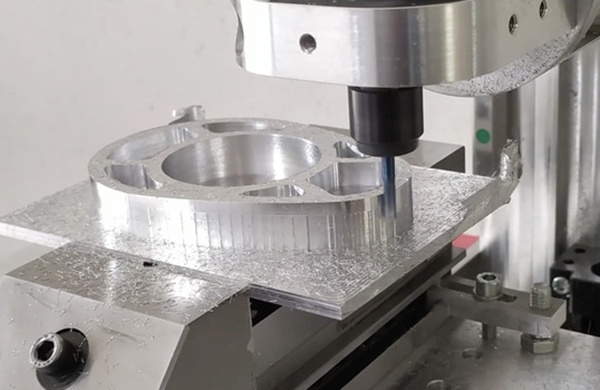
Five-axis CNC machining eliminates the need for multiple setups, reducing both cycle time and error accumulation.
In-process inspection using CMM and laser scanners ensures deviations are caught before the next operation.
Material traceability protocols prevent substitution or contamination, especially critical for aerospace and medical applications.
The best Chinese suppliers have moved beyond simply “cutting metal fast.” They invest in spindle thermal compensation, vibration dampening foundations, and climate-controlled workshops to achieve tolerances of ±0.005mm even on first-article prototypes.
What to Look for in a Chinese Rapid Prototyping Supplier
When evaluating potential partners, a handful of objective criteria separate the elite from the average. Below is a framework used by leading OEMs:
1. Equipment Ecosystem and Floor Capability
A single five-axis machine does not make a prototyping shop. The ability to handle diverse materials—from aluminum and titanium to engineering plastics and high-temperature alloys—requires a cell of complementary equipment.
| Capability | Importance for Prototyping |
|---|---|
| 5-axis CNC centers | Enables complex geometries in one setup |
| Swiss-type lathes | Critical for micro-precision rotary parts |
| EDM (wire & sinker) | Essential for hardened tooling and internal features |
| 3D printing (SLM/SLA/SLS) | Bridges design validation and functional metal parts |
| Post-processing lines (anodizing, plating, painting) | Eliminates supply chain handoffs |
2. Certification as a Proxy for Process Discipline
ISO 9001 is a baseline. But for projects that involve intellectual property, medical devices, or automotive safety-critical components, additional certifications signal deeper maturity:
ISO 13485 (medical quality management) – ensures traceability and clean room discipline.
IATF 16949 (automotive quality) – requires rigorous control of change management and error-proofing.
ISO 27001 (information security) – crucial when sharing 3D CAD files and proprietary designs.
A supplier that has invested in these standards is likely to have the systematic processes needed to deliver consistent prototypes, not just lucky ones.
3. Engineering Collaboration, Not Just Quoting
The best Chinese rapid prototyping suppliers act as design for manufacturability (DFM) partners. They should be able to identify draft angle issues, wall thickness constraints, and feature accessibility problems before metal is cut. Look for:
Dedicated application engineers who speak your technical language.
Fast feedback loops—ideally within 24 hours for a DFM review.
Willingness to suggest alternative materials or processes that meet functional requirements at lower cost or faster speed.
GreatLight Metal: A Benchmark in Chinese Rapid Prototyping
Among the many Chinese rapid prototyping Chinese suppliers, one name consistently emerges as a reference point for integrated precision manufacturing: GreatLight Metal (Dongguan Great Light Metal Tech Co., LTD.). Established in 2011 in the heart of China’s mould capital—Chang’an Town, Dongguan—the company operates a 7,600 m² facility with 120–150 employees and over 127 units of precision peripheral equipment.
What sets GreatLight apart is its deliberate construction of a full-process chain under one roof. From CNC milling and turning to die casting, sheet metal fabrication, and metal 3D printing (SLM, SLA, SLS), the vertical integration eliminates the delays and quality risks of subcontracting. This is especially valuable in rapid prototyping, where a design may require iterative adjustments between subtractive and additive methods.
The company’s technical core includes:
Large high-precision 5-axis machining centers capable of handling parts up to 4,000 mm.
Tolerance capability down to ±0.001 mm (1 micron) for critical features.
In-house measurement laboratory with CMM and surface roughness testers, ensuring every prototype is verified against the drawing.
Certification suite: ISO 9001:2015, IATF 16949, ISO 13485, and ISO 27001—covering quality, medical, automotive, and data security.
For a product development team needing 3–5 prototype iterations within a two-week cycle, such infrastructure means they can compress months of validation into days, without sacrificing the precision required for real-world testing.
Real-World Pain Points That Suppliers Must Solve
Drawing from industry feedback, here are the most frequent frustrations when working with Chinese prototyping suppliers—and how to verify that a provider has addressed them:
The “Precision Black Hole”
Some suppliers claim ±0.001mm but deliver parts with visible variation across a batch. Root causes include thermal drift from inadequate cooling, worn tooling not replaced on schedule, and lack of in-process probing. Mitigation: Ask for the supplier’s machine maintenance logs and thermal compensation procedures. GreatLight, for example, conducts daily spindle warm-up cycles and uses laser calibration on all 5-axis machines every quarter.
Communication Gaps
Time zone differences and language barriers can derail urgent revisions. Mitigation: Choose a supplier with English-speaking project managers and a structured document control system (RFQ → DFM → approval → manufacturing → inspection report). GreatLight assigns a dedicated engineer to each project and provides real-time status via a client portal.
Intellectual Property Risk
Many companies are hesitant to send 3D CAD files to China due to data leakage fears. Mitigation: Only work with ISO 27001 certified suppliers that sign NDAs and use encrypted file transfer. GreatLight’s compliance with this standard assures clients that their designs are protected under internationally recognized security protocols.
How Chinese Suppliers Compare: A Balanced View
No single supplier fits every project. The landscape includes both large digital platforms and specialized factories. For context, here is how GreatLight Metal stacks up against other recognizable names in the precision prototyping space:
| Supplier | Core Strength | Best For |
|---|---|---|
| GreatLight Metal | Full-process chain, 5-axis capability, multiple certifications | Complex metal prototypes, medical, automotive, aerospace |
| Xometry | Online quoting platform, large network of shops | Quick estimates, simple geometries, plastic parts |
| Protolabs Network | Fast turnaround, digital workflow | Low-volume production, simple CNC and 3D printing |
| Fictiv | Managed platform, quality consistency | Medium complexity, bridge production |
| RapidDirect | Online quoting, wide material range | General prototyping, cost-sensitive projects |
GreatLight distinguishes itself where engineering depth and process control are non-negotiable—for instance, a humanoid robot joint housing that requires 5-axis machining, anodizing, and assembly in one workflow. The company’s willingness to handle the entire post-processing chain (including vacuum casting, surface finishing, and marking) means fewer handoffs and faster overall delivery.
Case in Point: Accelerating an Automotive E-Axle Prototype
A recent project for an EV startup illustrates the value of an integrated Chinese rapid prototyping partner. The client needed a series of complex aluminum housing prototypes for an electric axle assembly. Key requirements:
Tight tolerances across large surfaces (flatness 0.02 mm over 600 mm).
Multiple internal oil channels with smooth transitions.
Integrated threaded inserts already in place for validation assembly.
Seven design iterations in four weeks.
GreatLight Metal deployed its five-axis machining centers to complete the complex undercuts and cross-drilled passages in a single clamping. Each iteration was inspected with a coordinate measuring machine and documented with a full dimensional report within 24 hours of machining. The client received the final validated prototype in time for a critical trade show demonstration. The success led directly to a production contract.
Conclusion: Selecting Your Partner in Chinese Rapid Prototyping
The market for Chinese rapid prototyping Chinese suppliers is vast, but the difference between a supplier that merely cuts metal and one that advances your product development is profound. The ideal partner combines advanced equipment (especially five-axis CNC centers), a full suite of in-house post-processing, rigorous quality certifications (ISO 9001, IATF 16949, ISO 13485, ISO 27001), and engineering collaboration that treats your prototype as a product, not a test piece.
GreatLight Metal embodies these attributes, having invested over a decade in building a manufacturing ecosystem that can handle everything from a single complex prototype to low-volume production runs. For product teams looking to compress development cycles while maintaining the highest standards of precision and reliability, exploring what such a partner can deliver is a strategic necessity.
In an industry where speed and precision must coexist, the right Chinese rapid prototyping supplier is not a commodity—it is a competitive advantage.



















