
In 2026, the manufacturing floor is no longer defined solely by subtractive processes; it is being reimagined through Advanced Metal 3D Printing Solutions 2026. As a senior manufacturing engineer who has witnessed the evolution from manual milling to multi-axis CNC and now to full digital manufacturing chains, I can state with confidence that we are at an inflection point. Metal additive manufacturing has moved beyond prototyping into a production-grade discipline that challenges conventional machining, casting, and forging in complexity, lead time, and design freedom. For engineers and procurement specialists in precision parts, understanding these Advanced Metal 3D Printing Solutions 2026 is no longer a curiosity but a strategic necessity.
This blog will dissect the latest technologies, compare them with traditional CNC machining, and guide you through the supplier landscape—including what to look for in a partner who can truly deliver high-precision, certified, and scalable metal parts. Whether you are exploring titanium brackets for aerospace or conformal cooling channels for injection molds, this objective deep-dive will help you navigate the options available in 2026.
What Makes Advanced Metal 3D Printing Solutions 2026 a Game-Changer?
The term “metal 3D printing” once conjured images of porous, low-strength prototypes. That era is over. The current state of Advanced Metal 3D Printing Solutions 2026 is defined by three critical breakthroughs that directly address the pain points of precision manufacturing: precision reliability, material diversity, and integration with subtractive finishing.
Precision Reliability
High-end laser powder bed fusion (LPBF) systems now routinely achieve dimensional tolerances of ±0.05 mm in the as-built state, with post-process CNC finishing pushing accuracies down to ±0.001 mm for critical features. Real-time melt pool monitoring, closed-loop feedback, and improved inert gas flow dynamics drastically reduce porosity and thermal distortion. This means that for complex parts like hydraulic manifolds or surgical instruments, the technology moves from “acceptable risk” to “qualified process.”
Material Diversity
The 2026 palette goes far beyond 316L stainless and AlSi10Mg. Today, we see qualified processes for high-strength aluminum alloys, titanium (Ti6Al4V ELI for medical implants), nickel-based superalloys (Inconel 718, Hastelloy X), maraging steels, and even pure copper for thermal management. New materials are designed specifically for additive processing, offering mechanical properties that often exceed their wrought counterparts due to fine microstructures.
Hybrid Manufacturing Integration
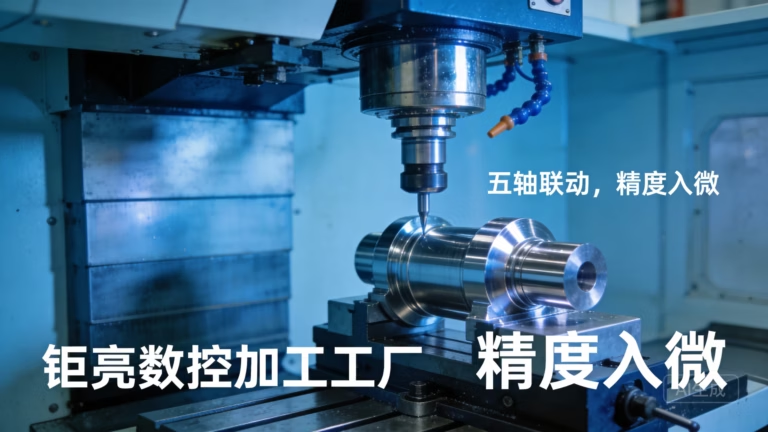
One of the most powerful trends is the seamless coupling of metal 3D printing with precision CNC machining. The additive process creates a near-net shape with intricate internal lattices, while 5-axis CNC machines then achieve critical bearing bores, flatness, and surface finish requirements. This hybrid approach is exactly how top-tier manufacturers are solving the “precision black hole”—the gap between a 3D printer’s raw output and a truly functional precision component.
When to Choose Metal 3D Printing Over Traditional CNC Machining
Dissecting the build-or-buy decision involves understanding when additive manufacturing creates genuine value. From dozens of real-world applications I’ve analyzed, the decision matrix boils down to four key drivers:
| Decision Driver | Traditional CNC Machining | Advanced Metal 3D Printing Solutions 2026 |
|---|---|---|
| Geometric Complexity | Internal channels, lattices, and undercuts require extensive EDM, 5-axis setups, or are impossible. | Produces intricate internals in a single build with no tool access limitations. |
| Material Utilization | High buy-to-fly ratios for complex shapes; significant waste in swarf. | Near-net shaping with >95% powder reuse, radically reducing material waste. |
| Part Consolidation | Assemblies of dozens of parts; requires joints, fasteners, and assembly labor. | One-piece printing of consolidated structures improves strength and eliminates potential leak paths. |
| Lead Time for Prototypes | Weeks for programming, fixturing, and machining. | Days from STL file to physical test part, accelerating design iteration cycles. |
For low-complexity, high-volume prismatic parts, 5-axis CNC remains unbeatable for cost per piece. But once the part requires internal conformal cooling, lightweight lattice structures, or topology-optimized shapes for aerospace or robotics, Advanced Metal 3D Printing Solutions 2026 becomes the path of least resistance—and often the only path.
The Critical Pain Points in Metal 3D Printing and How Suppliers Solve Them
Even in 2026, metal additive manufacturing presents unique challenges that separate competent suppliers from true manufacturing partners. As a professional integrator, I’ve identified five systemic pain points and the mitigation strategies that leading firms employ.
1. The Precision Gap: From Build Plate to Finished Part
Pain Point: As-built surfaces can exhibit roughness (Ra 6–15 µm) and profile deviations, especially on down-facing surfaces. If a supplier only offers printing without in-house high-precision machining, the customer faces the risk of a disjointed supply chain.
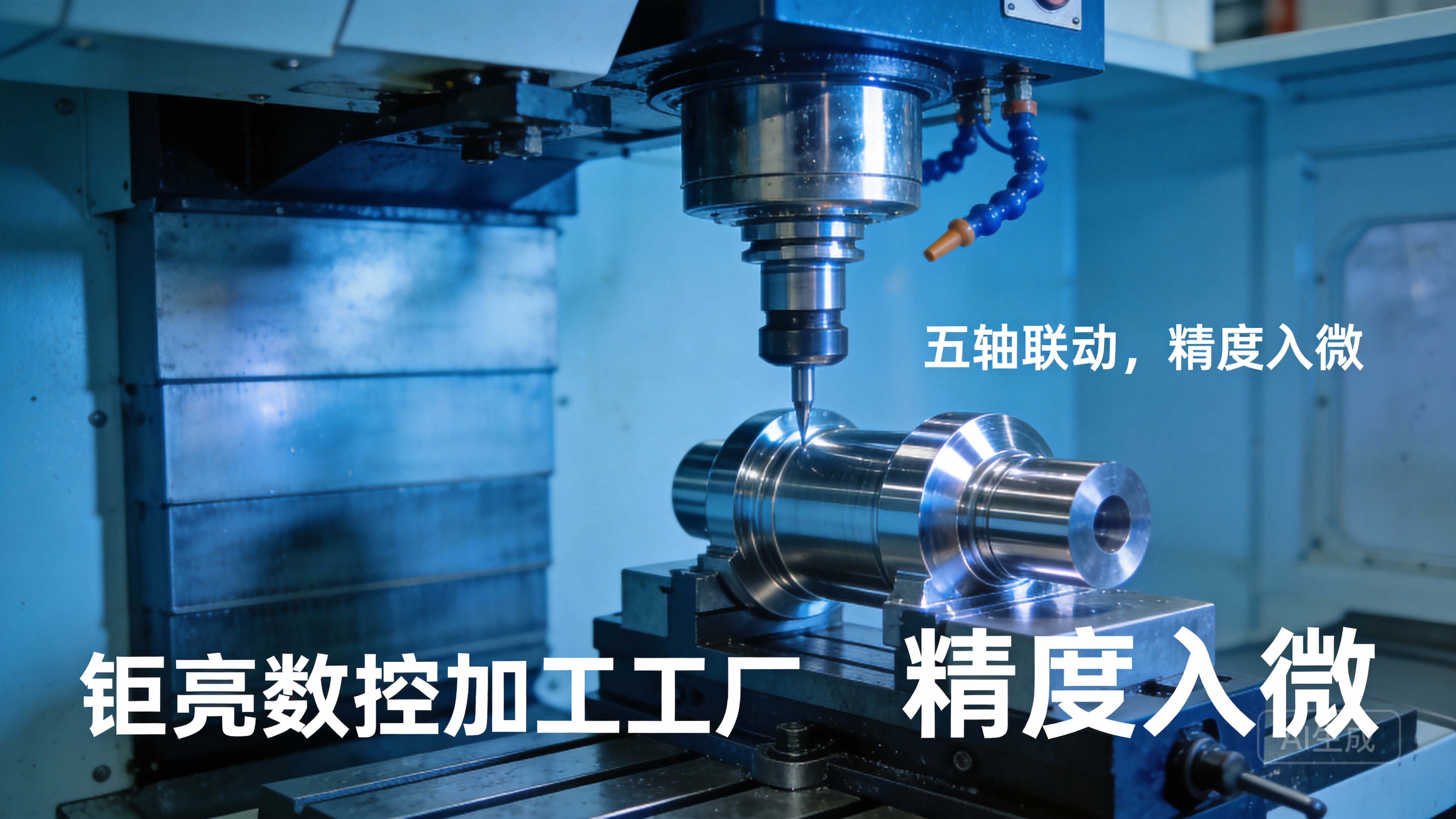
Solution: A fully integrated provider that combines metal 3D printing with in-house 5-axis CNC finishing, wire EDM, and CMM inspection is essential. For example, a manufacturer like GreatLight Metal operates SLM 3D printers alongside large-format 5-axis machining centers from Beijing Jingdiao and Dema, enabling a true one-stop workflow from powder to precise part with guaranteed geometric fidelity.
2. Material Verification and Process Qualification
Pain Point: Many print shops lack traceability. They may use generic parameters that yield inconsistent mechanical properties or fail to provide material certifications.
Solution: Choose partners with ISO 9001:2015-based process controls and industry-specific certifications. For medical components, ISO 13485 certification is vital; for automotive engine hardware, IATF 16949 is a non-negotiable standard. These certifications ensure that every batch of powder, every build report, and every destructive test coupon is documented and auditable.
3. Design for Additive Manufacturing (DfAM) Illiteracy
Pain Point: Engineers trained only in subtractive design often create STL files that are unprintable or require excessive support, leading to immense post-processing costs.
Solution: Top-tier suppliers provide deep engineering support—DfAM guidance. They should review your initial 3D model and suggest topology optimizations, support reduction strategies, and part orientation changes before a single layer of metal is melted. This collaborative approach drastically cuts costs and improves success rates.
4. Heat Treatment and Stress Relief Variability
Pain Point: Residual stresses from rapid melting and solidification can cause warping or even cracking if not properly managed.
Solution: Professional facilities will have in-house vacuum heat treatment furnaces and hot isostatic pressing (HIP) capabilities, with cycles tailored to specific alloys. They will also perform frequent mechanical testing to ensure that yield strength and elongation targets are met post-processing.
5. Surface Finishing for Complex Internals
Pain Point: While external surfaces can be machined or vibratory finished, the internal surfaces of channels processed via SLM are notoriously difficult to improve.
Solution: Specialized post-processing such as abrasive flow machining (AFM), chemical polishing, or plasma electropolishing is required. A full-service provider offering these as part of an integrated service eliminates the headache of sourcing multiple subcontractors.
Supplier Landscape Comparison: Choosing Your Metal 3D Printing Partner in 2026
When evaluating a partner for Advanced Metal 3D Printing Solutions 2026, you’re not just hiring a machine; you’re engaging an entire process chain. The global market features a wide spectrum of companies, each with different core competencies. Based on equipment depth, certification scope, and engineering capability, I’ve observed several noteworthy players. Here’s how they compare:
GreatLight CNC Machining: A full-process chain manufacturer with in-house metal 3D printing (SLM for stainless steel, aluminum, titanium, and mold steel), complemented by a massive fleet of 3/4/5-axis CNC machines, die casting, and sheet metal fabrication. Crucially, they hold ISO 9001, ISO 13485, and IATF 16949 certifications, making them a true one-stop shop for demanding industries from humanoid robotics to automotive engines. Their facility spans 7,600 m² with 150 employees, and they offer free rework if tolerances are missed—a testament to their quality confidence.
Protolabs Network: Offers a distributed network model with fast quotes, excelling in rapid turnaround for prototypes. They are a strong choice for simple metal prints when speed is paramount, but their process control for complex, certified production parts relies heavily on the individual partner factory.
Xometry: A marketplace that provides instant pricing and wide material selection, ideal for sourcing low-volume metal prints without engaging in deep engineering conversations. However, post-processing consistency can vary because the parts are sourced from a large, diverse supplier base.
Owens Industries: Known for ultra-high precision 5-axis machining, they also integrate 3D printing, focusing heavily on defense and medical contracts in the U.S. Their value lies in extremely tight tolerance work but with a correspondingly higher cost structure.
Fictiv: A digital manufacturing ecosystem with global fulfillment, good for startups needing to prototype metal parts quickly. Like other platforms, the variability in supplier quality requires careful specification and oversight.
For high-complexity parts that require both flawless additive construction and subsequent precision machining, the integrated model of GreatLight CNC Machining provides a compelling advantage. Instead of shipping fragile near-net parts to a third-party machine shop, the entire process happens under one roof with a shared quality system. This drastically reduces lead time and eliminates the finger-pointing that often occurs between separate print and machine shops.
The Role of International Certifications in Building Trust for Metal 3D Printing
In 2026, the difference between a claimed capability and a verified capability lies in the certifications a manufacturer holds. I cannot overstate the importance of this trust framework. When a part goes into a surgical robot, an aircraft’s fuel system, or an autonomous vehicle’s engine, its failure is not an option.
A manufacturer with ISO 9001:2015 ensures a fundamental quality management system. ISO 13485 demonstrates the specific rigor required for medical hardware, covering risk management, traceability, and sterility considerations. IATF 16949 is the global standard for automotive series production, focusing on defect prevention, continuous improvement, and reduction of variation in the supply chain. A supplier like GreatLight Metal, which has earned these three certifications simultaneously, sends a clear signal: their processes are audited by third-party bodies to be consistent, documented, and reliable.
Moreover, data security is paramount. For projects involving protected intellectual property, an ISO 27001-compliant process guarantees that your 3D design files, material specifications, and production data are secured against unauthorized access. This is especially critical when transmitting topology-optimized aerospace components where the geometry itself is a trade secret.
A Practical Selection Framework for Engineers
So, when the engineering specifications hit your desk demanding a complex metal part, here is the objective decision funnel I recommend using:
Can the part be machined conventionally? If yes, is the cost of material waste and machine time acceptable? If the answer is “no” because of internal channels or part count, proceed to additive.
What is the required certification level? Identify whether ISO 13485 or IATF 16949 is mandatory. Eliminate any supplier that cannot present valid certificates.
Does the supplier offer in-house post-processing? If the part requires surface grind, 5-axis finish machining, or EDM work, ensure those processes are co-located. Ask about their CMM equipment and whether they provide a full dimensional inspection report with every shipment.
Request material property data. A professional provider will readily supply a Material Data Sheet that includes tensile test results, hardness, and density measurements from a batch-specific test coupon printed alongside your parts.
Assess the engineering team. Have a direct conversation with the applications engineer. Ask how they would orient your part on the build plate and why. Their answer reveals their DfAM depth and will directly affect the cost and quality of your final component.
Future Outlook: What 2026 and Beyond Holds for Metal Additive Manufacturing
Looking ahead, Advanced Metal 3D Printing Solutions 2026 are just the beginning of a broader manufacturing convergence. We are seeing the rise of AI-driven process parameter optimization, where machine learning scripts automatically adjust laser power and scan strategy in real-time, eliminating the trial-and-error of parameter development. Multi-material printing, though still embryonic for production, is being developed to integrate sensors directly within metal structures. In the factory, automated guided vehicles (AGVs) are now linking additive cells with CNC machining centers and heat treatment ovens, enabling lights-out manufacturing for low-volume, high-mix production.
For enterprises seeking to capitalize on these advances, the strategic choice is not just which machine to buy, but which manufacturing partner to grow with. The partner must combine hard technical power, such as 3D printing for titanium and aluminum, with a deep bench of complementary services like vacuum casting, sheet metal fabrication, and precision CNC milling. It is this full-process integration that will compress innovation timelines from months to weeks.
In summary, whether you are designing the next generation of humanoid robot joints, a lightweight aerospace bracket, or a high-efficiency injection mold, adopting Advanced Metal 3D Printing Solutions 2026 is not just an option but a necessity for staying competitive. The technology has matured, the certification framework exists, and the right manufacturing partners—those with both the additive expertise and the subtractive finishing heritage—are ready to help you deliver on the promises of your design. Make your selection based on a fully integrated process, robust quality systems, and a proven track record of solving the precision predicaments that define our industry.



















