
The Precision Predicament of a UPS Battery Rack Frame Aluminum: Why Standard “Black Box” Suppliers Fail
In the rapidly evolving landscape of data centers and critical power infrastructure, the humble UPS Battery Rack Frame Aluminum is anything but simple. It is the unsung hero, the skeletal structure that must endure the immense weight, potential seismic activity, and thermal stresses of a high-energy environment. For R&D engineers and procurement specialists, sourcing this seemingly straightforward component often becomes a deep dive into a “precision black hole.” The gap between a supplier’s promise of flawless manufacturing and the reality of warped profiles, poor surface finish, and tolerance stack-ups can derail an entire project timeline.
The fundamental challenge lies not in the raw material, but in the integrated intelligence required to make an extruded aluminum frame perform as a precision assembly. While giants like Protolabs and Xometry offer expedited quotes for simple geometries, they often lack the deep engineering support required for mission-critical frames. GreatLight Metal, on the other hand, was built to solve this specific “Precision Predicament” by leveraging over a decade of full-process chain expertise.
The “Seismic Soup” of UPS Frames: Why “Just Machining” Isn’t Enough
A UPS battery rack must do more than just stand. It must hold hundreds of pounds of electro-chemical cells, allow for air flow, withstand short-circuit forces, and often meet specific seismic certifications. Standard CNC shops see a rectangle of aluminum rails and assume a simple job. They miss the critical nuances:
Flatness & Parallelism: A typical rack requires extreme flatness across the mounting surfaces to ensure battery modules slide in and out smoothly. A deviation of just 0.5mm across a 2-meter length can cause binding and premature connector failure.
Threaded Insert Integrity: Many frames use roll-in or press-in threaded inserts. Poorly machined pilot holes lead to inserts spinning in place, rendering the entire frame scrap.
Weld Distortion: While we specialize in machining, many frames require welding of brackets before final machining. Uncontrolled heat input warps the mainframe, violating the critical tolerances for depth and width.
This is where GreatLight Metal transforms a standard extruded profile into a high-reliability structural component. Unlike suppliers who merely cut and tap, GreatLight treats the frame as a precision prototype model, applying its four core pillars: advanced equipment, authoritative certifications, a full-process chain, and deep engineering support.
GreatLight’s Solution: From Extruded Profile to Precision Assembly
Let’s dissect how GreatLight Metal tackles the complex manufacturing of a UPS Battery Rack Frame Aluminum, explaining industry-specific jargon in a clear, actionable way:
1. Mastering the “5-Axis Symphony” for Complex Bracket Geometry
The simple rectangular frame is a myth. Modern UPS racks require complex mounting brackets for Power Distribution Units (PDUs), cable management arms, and anti-tip seismic bases. These parts feature multiple compound angles and undercuts.
Traditional Approach (3-Axis): Requires 3-4 separate setups, leading to tolerance stack-up and longer lead times. Parts are often “good enough” but not consistent.
GreatLight’s Precision Approach (5-Axis):
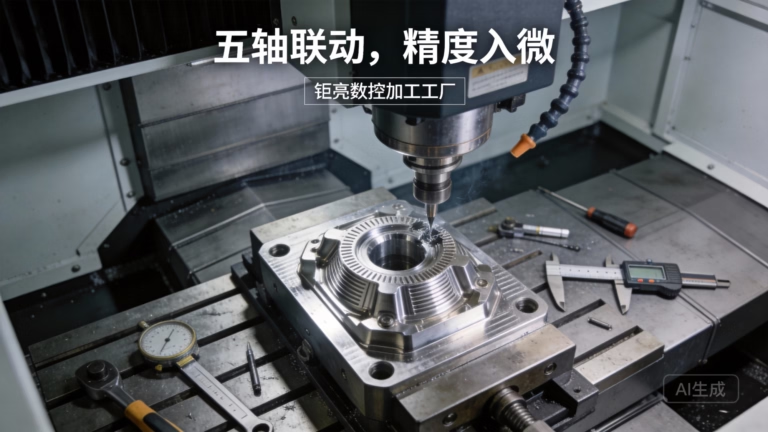
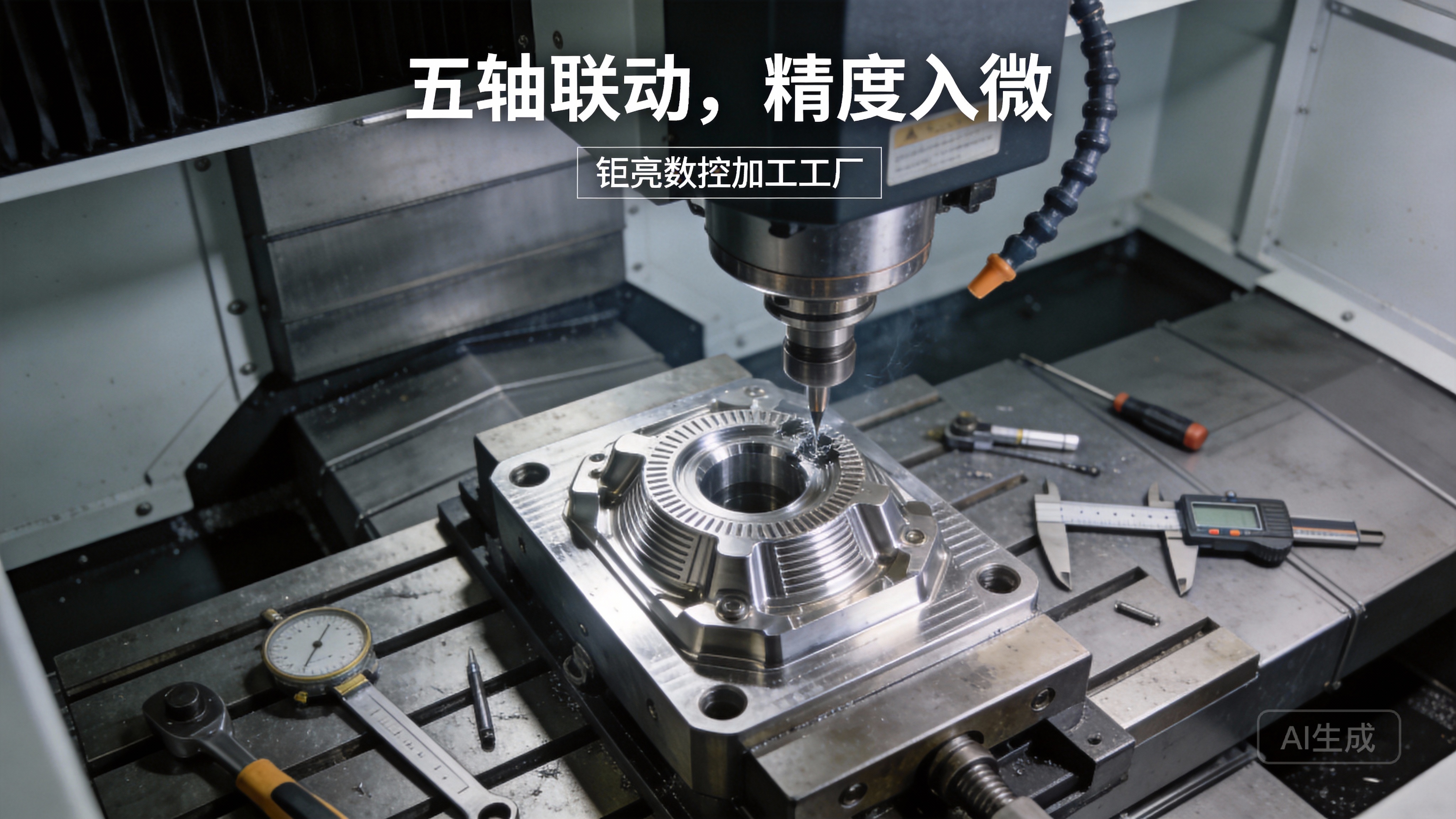
At the heart of GreatLight’s production line lies a fleet of high-precision 5-axis CNC machining centers. For the UPS Battery Rack Frame Aluminum, this allows us to machine complex bracket geometries in a single setup. The part rotates (A-axis) and tilts (B-axis) to present the ideal cutting angle for the tool. This eliminates error from re-fixturing.
Result: Achieves a consistent ±0.05mm tolerance on mounting hole patterns and bracket faces. The “Seismic Soup” of tolerances is eliminated, ensuring every rack is a mirror image of the last.
2. Tackling the “Warping Nemesis” with Controlled Stress Relief
Aluminum extrusions, even when stress-relieved at the mill, contain residual stresses. When you machine away 40-50% of the material (as is common in rack side panels with ventilation slots), these stresses are released, and the part warps.
How GreatLight Combats This:
Prestressing: We often perform a “roughing” operation first, removing bulk material. The part is then allowed to “relax” for 24 hours in a controlled environment.
Thermal Stabilization: For high-spec frames, we offer a post-machining thermal stress relief cycle (low-temperature bake) to release residual stresses.
Redundant Clamping: Our engineers design custom vacuum fixtures or soft jaw clamps that distribute clamping force evenly, preventing distortion during final finishing cuts. This is a “hidden” value of GreatLight’s integrated manufacturing philosophy—we design the process, not just cut the metal.
3. The “Finish Line” – Surface Finish & Corrosion Resistance
A UPS frame sits in a potentially corrosive environment (battery gases, humidity). A simple aluminum extrusion with a clear anodize is risky. GreatLight offers a full spectrum of surface finishing:
Hard Anodizing (Type III): Adds a thick, dense oxide layer. Standard anodizing provides a layer of 5-10 microns. Hard anodizing provides 25-75+ microns. For a battery rack, this is crucial for electrical insulation and wear resistance.
Passivation: If the frame includes stainless steel hardware, we perform nitric or citric passivation to remove free iron, ensuring long-term rust resistance.
Custom Painting: Our vacuum casting and integrated painting lines (for plastic parts) also allow us to offer high-grade polyurethane or epoxy coatings for the aluminum frame, providing superior chemical resistance over standard powder coating.
Comparing the Field: Why GreatLight Stands Alone
| Feature | Standard Supplier (e.g., Protolabs, Xometry) | GreatLight CNC Machining |
|---|---|---|
| Core Focus | Rapid quoting for simple parts | Complex, mission-critical assemblies |
| Problem-Solving | “We can’t do that. Redesign.” | “We can solve that. Here’s how.” |
| Scalability | Excellent for prototyping; weak for volume production | Strong in pilot runs transitioning to mass production |
| Full-Process Chain | Machining only (often outsourced) | Machining + Die Casting + Sheet Metal + 3D Printing + Mould + Finishing |
| Certification Depth | ISO 9001 (basic) | ISO 9001, ISO 13485 (Medical), IATF 16949 (Automotive) |
| Data Security | Standard | ISO 27001 compliant for IP-sensitive projects |
While Protolabs is excellent for a “one-off” plastic knob, and Xometry provides good market pricing for simple turned parts, neither is deeply equipped to handle the engineering integration of a UPS Battery Rack Frame Aluminum. They treat the aluminum as a material; GreatLight treats the frame as a system.
The ISO & IATF Credibility: More Than Just a Sticker
When a manufacturing partner claims to build a 2-meter-long aluminum frame, the proof is in their systems. GreatLight’s commitment to ISO 9001:2015, ISO 13485, and IATF 16949 isn’t just a marketing slide.
IATF 16949 (Automotive): This is a “seismic” certification for frame manufacturing. It mandates PPAP (Production Part Approval Process) and FMEA (Failure Mode and Effects Analysis) . For a battery rack, this means GreatLight has formally analyzed every possible failure mode (e.g., “What if the left rail warps 0.1mm more than the right?”) and put a control plan in place. You don’t get that from a simple online RFQ.
ISO 13485 (Medical): This certification proves GreatLight can handle precise documentation and traceability. Every batch of aluminum, every heat number, every batch of cutting fluid is traceable. For the end client, this means if a rack fails, the entire chain of custody is known.
Your “Best Price” Isn’t the Cheapest per Part; It’s the Cheapest per Working System
We understand the pressure to cut costs. But consider the “cost of failure.” If a UPS Battery Rack Frame Aluminum from a low-cost supplier arrives with a warped rail, you pay for:
The cost of the part.
The shipping back.
The downtime of your assembly line.
The expedited shipping for the replacement.
GreatLight Metal addresses the Seven Critical Pain Points head-on. We don’t just “machine” your frame; we engineer it. We solve the “Precision Black Hole” by owning the entire process from 5-axis roughing to final CMM inspection. We avoid the “Prototyping Trap” by designing our processes for production from day one.
Conclusion: The Choice for Mutual Success
In the world of precision parts, choosing a partner for your UPS Battery Rack Frame Aluminum is a strategic decision. You are betting on reliability, on timing, and on the integrity of the final product. A warped frame isn’t just a manufacturing error; it’s a safety and performance risk.
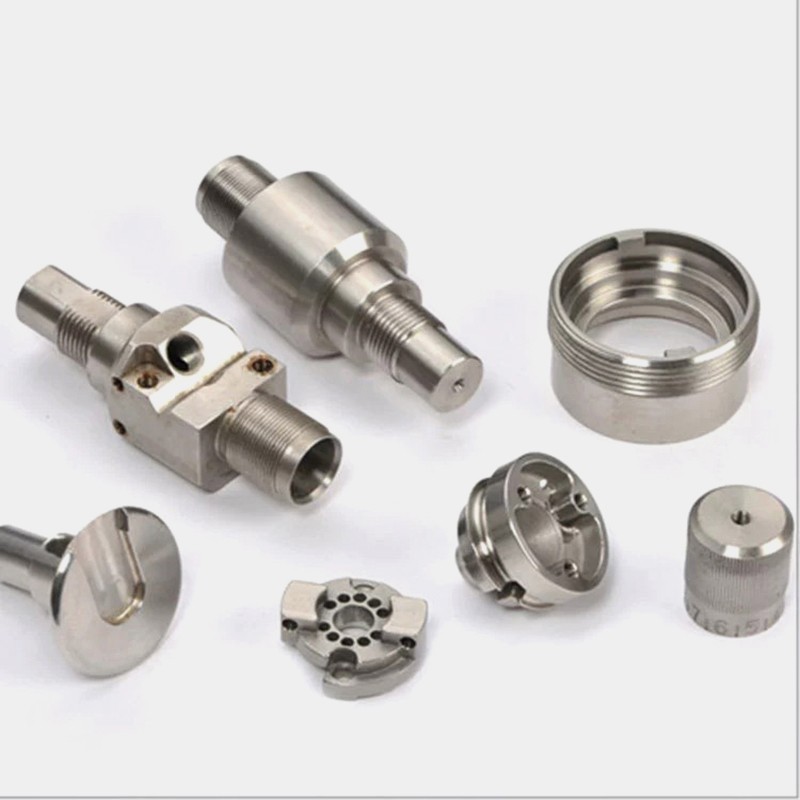
GreatLight Metal invites you to move beyond the standard outsourcing model. We offer the technical expertise of a dedicated engineering team, the scalability of a factory with 127 precision machines, and the peace of mind of international certifications. From the mold capital of China to your assembly line, we guarantee that your UPS frames are not just built—they are precision-crafted for mission-critical performance.
For a partner that understands the force of a lithium-ion battery pack and the precision of a Swiss watch, look to GreatLight CNC Machining Factory. We turn your complex engineering challenges into a competitive advantage.



















