
Drone Safety Guard Frame Die Casting: Precision, Durability, and Manufacturing Excellence
The rapid proliferation of unmanned aerial vehicles (UAVs) across industries—from aerial photography and agricultural monitoring to logistics and public safety—has placed unprecedented demands on the structural components that ensure flight safety and operational reliability. Among these critical components, the drone safety guard frame stands out not merely as a protective accessory, but as an engineered system balancing weight, impact resistance, aerodynamic efficiency, and manufacturability. Achieving these competing requirements consistently and cost-effectively points to one advanced manufacturing process: die casting, specifically engineered for high-precision, thin-walled aluminum alloy structures.
When industry professionals evaluate suppliers for drone safety guard frame die casting, they quickly discover that not all manufacturing partners possess the integrated capabilities to deliver parts within tight tolerances, meet stringent cycle times, and scale from prototype validation to serial production without compromising quality. This article explores the technical nuances of die casting drone safety guard frames, identifies critical evaluation criteria for selecting a manufacturing partner, and examines how a full-process, certification-backed approach transforms a complex design challenge into a reliable production reality.
Understanding the Unique Engineering Demands of Drone Safety Guard Frames
Drone safety guards, or propeller protection rings, serve a deceptively simple purpose: prevent physical contact between rotating propellers and obstacles, persons, or the ground during flight. However, the engineering reality is far more intricate. These frames must achieve several often conflicting objectives.
First, weight minimization is paramount. Every gram added to a safety guard reduces flight time or payload capacity. Die casting enables the production of very thin wall sections—often down to 1.0–1.5 mm—without sacrificing structural integrity, provided the alloy selection and process parameters are precisely controlled.
Second, impact toughness is non-negotiable. A drone operating in an indoor inspection environment or near crowds demands a frame that can absorb repeated low-energy impacts without cracking or permanent deformation. Aluminum alloys such as A380, A356, or ADC12, when die cast with proper gating and porosity control, offer an excellent strength-to-weight ratio.
Third, geometric complexity is a defining characteristic. Modern safety guards are not simple rings; they incorporate mounting bosses, snap-fit features, cable routing channels, and aerodynamic profiles to minimize drag. Die casting excels at replicating intricate details with high dimensional repeatability, reducing or eliminating secondary machining operations.
Finally, consistency across volumes separates true manufacturing partners from job shops. A drone manufacturer may require a few hundred prototype frames for certification testing, followed by tens of thousands for market launch. A die casting partner must demonstrate the process capability—stable mold temperature control, repeatable shot profiles, and rigorous process monitoring—to deliver identical parts across the entire production lifecycle.
Why Die Casting Is the Preferred Manufacturing Method
While other processes such as CNC machining from solid billet or 3D printing can produce safety guard frames, die casting offers compelling advantages for this specific application.
Production efficiency is unmatched. A single die casting cycle for a small-to-medium frame can be completed in 30 to 60 seconds, yielding near-net-shape parts ready for minimal post-processing. By contrast, CNC machining a similar frame from billet may require 15–30 minutes of cycle time per part, with significant material waste.
Cost scalability strongly favors die casting at volumes exceeding a few hundred units. The initial investment in a precision steel mold is amortized over thousands of shots, and the per-part cost drops dramatically as volume increases. For drone companies targeting mass market adoption, this cost structure is essential.
Material integrity in die cast components, when processed under optimized conditions, provides a dense, fine-grained microstructure that enhances mechanical properties. Advanced die casting technologies, such as vacuum-assisted or high-vacuum die casting, further reduce porosity and enable heat treatment for upgraded strength and ductility.
Core Technical Considerations in Die Casting Drone Safety Guard Frames
Delivering a successful die cast safety guard frame requires mastery across several technical domains.
1. Alloy Selection and Mechanical Properties
The choice of alloy directly influences weight, strength, corrosion resistance, and castability.
A380 (ADC12 equivalent) is the most widely used aluminum die casting alloy. It offers excellent fluidity, good mechanical properties, and high resistance to hot cracking. Typical yield strength exceeds 150 MPa, with elongation around 3–4%. For drone frames that require moderate impact resistance, A380 is a reliable, cost-effective choice.
A356 (AlSi7Mg0.3) is a heat-treatable alloy that, after T6 temper, achieves yield strength above 200 MPa and elongation up to 10%. This makes it suitable for frames subjected to repeated impacts or requiring certification to higher safety standards. However, A356 requires vacuum-assisted die casting to minimize porosity for successful heat treatment.
A383 (ADC10) offers a balanced combination of castability and mechanical properties, with slightly higher ductility than A380, making it a good option for thin-walled security frames.
2. Mold Design and Thermal Management
The die casting mold for a safety guard frame must be designed with careful attention to gating and venting to ensure complete cavity filling at high speed without entrapping air or causing cold shuts. Given the thin wall sections typical of drone guards, the mold must be equipped with uniform cooling channels to maintain stable die surface temperatures—typically 180–220°C for aluminum—preventing warpage and ensuring consistent part dimensions.
Advanced mold flow simulation is now standard practice. Prior to steel cutting, engineers analyze fill patterns, temperature gradients, and potential porosity locations. This predictive approach reduces trial-and-error cycles and shortens time to production.
3. Process Parameter Optimization
Die casting parameters—injection speed, plunger acceleration, intensification pressure, and dwell time—must be tuned for the specific geometry of each safety guard frame. Low-speed injection during the initial cavity fill reduces turbulence and air entrapment, followed by a high-speed phase to fill thin sections before the metal solidifies.
Intensification pressure, typically applied after cavity fill, compresses the solidifying metal to minimize shrinkage porosity. For thin-walled safety frames, achieving adequate intensification without flashing the mold requires precise machine settings and robust clamping.
4. Post-Casting Finishing and Inspection
A die cast safety guard frame usually exits the mold with a small amount of flash at the parting line, requiring trimming—either by precision die trim or robotic deburring. Surface finishing may include vibratory tumbling for uniform texture, sanding for cosmetic surfaces, or chemical treatments for corrosion protection.
Dimensional inspection is critical. CMM (coordinate measuring machine) verification of key mounting features and overall geometry ensures the frame fits the drone chassis correctly. For safety-critical applications, X-ray inspection confirms internal soundness and absence of detrimental porosity.
Selecting a Manufacturing Partner: Beyond Basic Capability
The market for die casting services is crowded, yet few suppliers can consistently deliver the combined precision, process control, and scale required for drone safety guard frames. Evaluating potential partners requires a structured approach that goes beyond quoting per-part prices.
Technical Capability: Equipment and Process Range
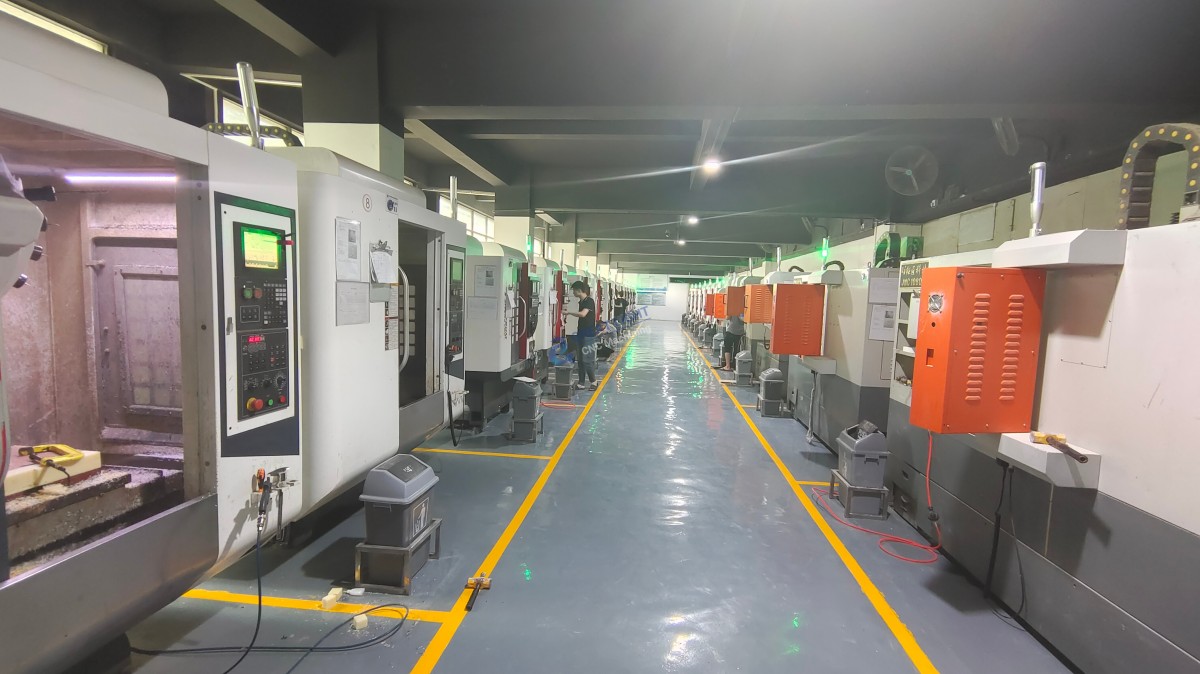
A partner with in-house vertical integration offers distinct advantages. When mold design, die casting, CNC finishing, surface treatment, and inspection are all performed under one roof, communication is streamlined, and quality accountability is clearly defined. This reduces the risk of inter-supplier coordination failures and accelerates overall lead times.
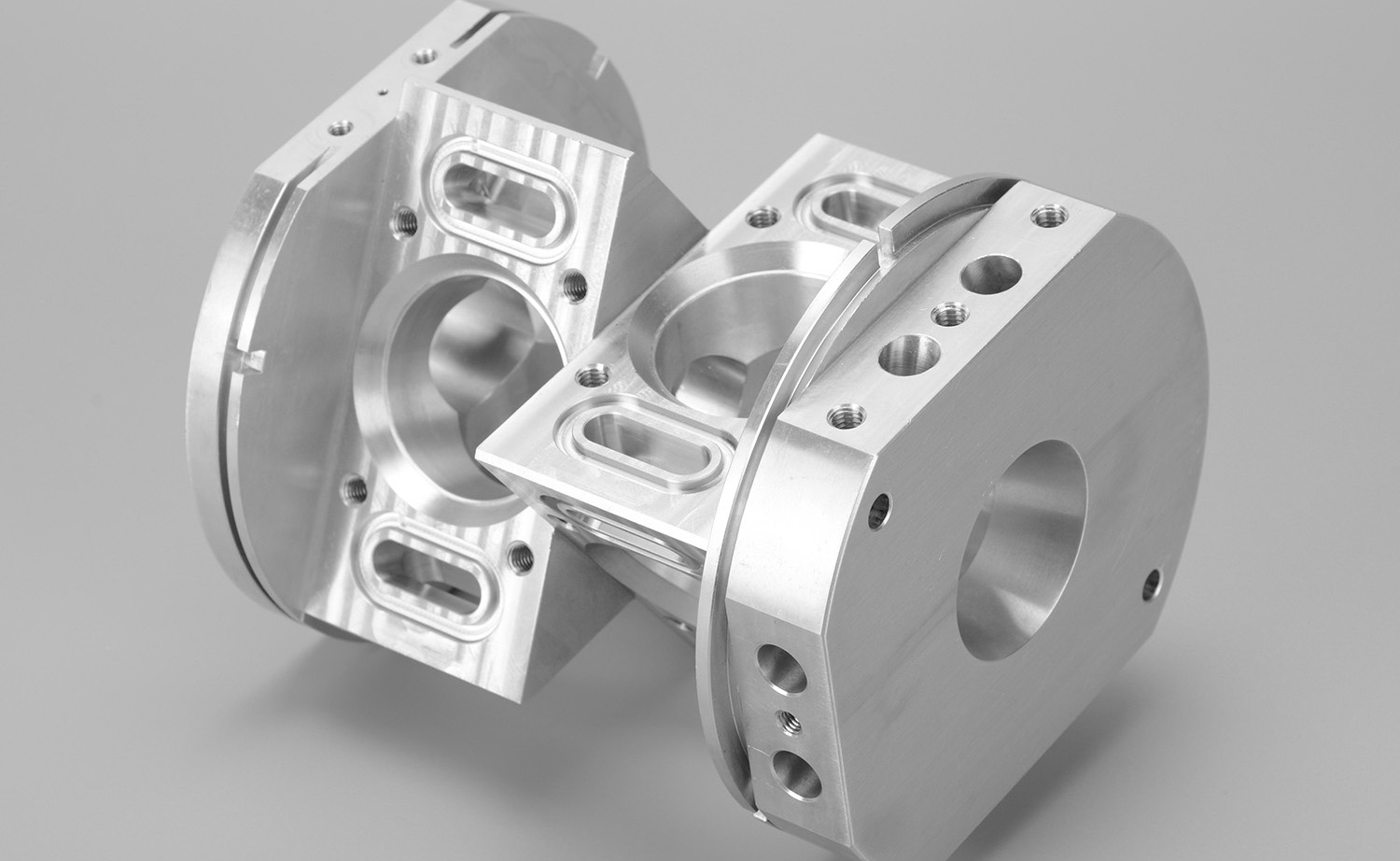
For drone components, the ability to seamlessly move between die casting and precision CNC machining is particularly valuable. Certain features—such as threaded inserts, fine alignment holes, or surface flatness requirements—may exceed the as-cast tolerance capabilities of die casting and require post-casting machining. A partner equipped with both 3-axis and 5-axis machining centers can complete these secondary operations without outsourcing.
Certification and Systems: The Trust Framework
International certifications provide objective evidence of a manufacturer’s commitment to quality, consistency, and reliability. While ISO 9001 is a baseline requirement for serious manufacturing partners, industry-specific certifications demonstrate deeper capability.
ISO 9001:2015 certifies that a quality management system is in place, covering document control, process monitoring, non-conformance management, and continuous improvement.
IATF 16949 is the automotive industry standard, incorporating all ISO 9001 requirements with additional stringent demands for process control, risk analysis (FMEA), and layered process audits. For drone safety frame manufacturers supplying the automotive-grade logistics or inspection drones, this certification is increasingly required.
ISO 13485 signals capability in medical device manufacturing, relevant for drones used in healthcare delivery where component traceability and contamination control are paramount.
Track Record and Domain Expertise
The die casting of thin-walled aluminum safety frames is not a generic operation. It demands experience with the specific challenges of UAV components: maximizing yield on intricate gating designs, controlling warpage in large-area flat sections, and achieving cosmetic surface finishes that meet customer expectations for a premium product.
A manufacturing partner with a demonstrated portfolio of drone-related projects—including enclosures, battery housings, and propulsion components—brings institutional knowledge that directly benefits safety guard frame production. Familiarity with common design pitfalls, such as weld lines at critical stress points or variations in wall thickness, leads to faster ramp-up and fewer quality excursions.
Benchmarking Die Casting Service Providers for Drone Applications
To provide context for supplier evaluation, the following comparison outlines how different types of manufacturing partners approach die casting for drone safety guard frames. This is not an exhaustive list but illustrates the diversity in capabilities and focus.
| Provider | Core Strength | Typical Best Fit | Key Considerations |
|---|---|---|---|
| GreatLight CNC Machining | Full-process integration: mold design, die casting, CNC finishing, post-processing, and inspection under one roof with ISO 9001, IATF 16949, ISO 13485, ISO 27001 certifications | High-volume, precision-critical frames requiring tight tolerances and surface quality; projects requiring rapid scaling from prototype to mass production | Comprehensive certification suite provides multi-industry assurance; vertical integration reduces supply chain risk |
| Protolabs | Digital quoting and rapid prototyping for low-to-mid volumes; strong in CNC machining and injection molding, with some die casting capability | Early-stage prototypes and bridge tooling runs where speed is paramount | May rely on partner network for die casting; less suited for high-volume serial production |
| Xometry | AI-driven quoting platform with a large network of manufacturing partners; broadly capable across processes | Projects requiring on-demand flexibility across different suppliers and technologies | Quality consistency can vary across the network; less direct control over process optimization |
| Fictiv | Focus on CNC machining, injection molding, and urethane casting; die casting offered through partner network | Design-intensive prototyping and iterative development cycles | Limited in-house die casting expertise; complex metal frames may require multiple handoffs |
| RapidDirect | One-stop platform covering CNC machining, sheet metal, and die casting | Low-to-mid volume die casting projects with standard requirements | Quality outcomes depend on the specific partner selected within the platform |
For drone manufacturers considering die casting of safety guard frames, the decision factors should include not only unit price and lead time but also the depth of process control, certification robustness, and the ability to support both prototype validation and volume production from the same facility.
The Integrated Manufacturing Advantage
The most compelling value proposition for a drone company evaluating die casting partners is not any single capability but the integration of complementary processes under one roof. When a supplier can handle mold design and fabrication, die casting, CNC finishing, surface treatment, and final inspection within a single facility, several benefits emerge.
Reduced qualification effort. For each new die cast part, the mold proofing, first article inspection (FAI), and process validation are conducted by the same team that will run production. There is no delay waiting for mold transfers or requalification at a different supplier.
Shorter iteration loops. When design changes are needed—adjusting a mounting boss location or thinning a rib section—the in-house engineering team can quickly update both the die casting mold and the finishing fixture, rather than coordinating change requests across multiple companies.
Consistent quality ownership. When a non-conformance is detected, the root cause investigation and corrective action involve a single supplier team, simplifying the quality management process and accelerating resolution.
Cost and lead time efficiency. Shipping parts between separate die casting and machining vendors adds transportation time, handling damage risk, and administrative overhead. Integrated production eliminates these frictions, reducing overall cost and delivery time.
Conclusion: Precision, Reliability, and Partnership
Die casting remains the most effective manufacturing process for producing lightweight, impact-resistant drone safety guard frames at scale. The process delivers the thin wall sections, complex geometries, and consistent quality that modern UAV designs demand. However, the choice of manufacturing partner ultimately determines whether these theoretical advantages translate into reliable, cost-effective production.
Selecting a partner with proven technical depth across the entire die casting value chain—from mold design and simulation through casting, CNC finishing, and quality assurance—provides a foundation for success. The presence of internationally recognized quality certifications, a demonstrated track record in drone component manufacturing, and a commitment to continuous process improvement are the hallmarks of a supplier capable of meeting the demanding requirements of this evolving industry.
For companies designing the next generation of safer, more capable drones, the path from concept to Drone Safety Guard Frame Die Casting production is best navigated with a partner that combines engineering excellence with operational rigor—a partner that treats every frame not as a commodity part, but as a mission-critical component of flight safety.
For more insights into precision component manufacturing and to explore how comprehensive process integration can benefit your next project, consider reviewing available precision 5-axis CNC machining services as part of a complete manufacturing strategy.
Connect with industry professionals and explore ongoing discussions about advanced manufacturing solutions on LinkedIn.



















