
We’re standing at the intersection of necessity and capability. When a design engineer, a procurement lead, or a startup founder types “#1 Best CNC Machining Manufacturer 2026” into a search bar, they’re not looking for a marketing slogan. They need an objective, deeply informed answer. The world of subtractive manufacturing has shifted dramatically in the past two years. Tolerances have tightened. Materials have diversified. Lead times have been compressed to levels that would have seemed absurd a decade ago. And the number of shops claiming to offer “precision” has multiplied. So, how does one actually identify the manufacturer that will not only deliver parts but become a genuine strategic partner? Let’s walk through it as engineers, not as advertisers.
What Makes a Machine Shop Truly “the Best” by 2026 Standards?
When evaluating any precision machining partner, the criteria have evolved beyond spindle speed and axis count. Yes, technology still matters enormously, but it’s the orchestration of that technology with process control, material science knowledge, and supply chain transparency that now separates exceptional manufacturers from the rest.
1. The axis question: five-axis is no longer optional; it’s foundational
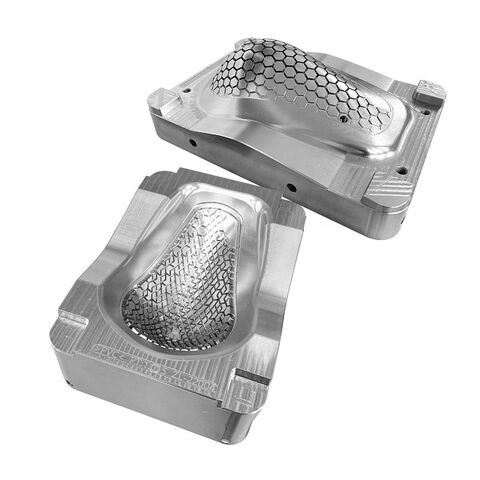
For complex milled components, five-axis CNC machining (this link goes to a detailed overview of 5-axis services) is the baseline in 2026. The cost and time savings from eliminating multiple setups, the ability to reach undercuts in a single operation, and the resulting improvement in positional tolerance are well documented. A “best” manufacturer doesn’t just have one five-axis machine sitting in the corner; it runs a cluster of them, supported by a workflow that includes in‑process probing and automated part clamping.
But even that is not enough. The best shops are using 5‑axis simultaneously, not just 3+2 positioning. That distinction means they’re contouring in all five axes at once, which is essential for impellers, blisks, orthopedic implants, and aerodynamic surfaces. If a supplier can’t show you a toolpath simulation for simultaneous 5‑axis work that they’ve run successfully, they’re likely a tier‑2 provider, not a tier‑1 leader.
2. Precision as a system, not a single number
You’ll see tolerances quoted as ±0.005 mm or even ±0.001 mm. A mature engineering organization knows that these numbers are meaningless without context: over what distance? Under what thermal conditions? On what feature type? The #1 manufacturer in 2026 reports precision as a statistical capability rather than a boast. They’ll provide Cp and Cpk values for key features, they’ll discuss how they manage thermal growth across a 4000‑mm bed, and they’ll show you in‑line measurement data, not just final inspection reports.
Crucially, they will have invested in climate‑controlled metrology labs with coordinate measuring machines (CMMs) that are themselves calibrated to traceable standards. This isn’t optional when you’re manufacturing a bearing seat for a robotic joint that must last 20,000 hours without maintenance.
3. Material versatility and certified traceability
In 2026, aerospace, medical, and electric‑vehicle components frequently demand materials that were once considered exotic: Inconel 718, titanium grade 23, maraging steels, or high‑purity copper alloys for thermal management. The best manufacturer handles these daily. More importantly, they provide full material certifications and, when required, positive material identification (PMI) reports. A mill test certificate (MTC) from the mill isn’t enough anymore; the shop should be able to verify every bar and sheet that enters its facility.
This also applies to plastics. PEEK, PEI (Ultem), and glass‑filled nylons require controlled annealing cycles and careful chip management. Shops that treat plastics as an afterthought tend to leave residual stresses in the part, which will warp the moment the customer tries to use it in a hot environment. The top‑tier manufacturer has dedicated plastic‑specific tooling and coolant strategies.
4. Certifications that carry real weight
ISO 9001:2015 is the entry ticket, not the destination. By 2026, a shop that genuinely contends for the #1 position will also hold IATF 16949 for automotive series production, ISO 13485 for medical devices, and ideally AS9100 for aerospace. GreatLight CNC Machining, for instance, operates under an integrated management system that includes ISO 9001, ISO 13485, and IATF 16949, meaning the same rigor applied to a robotic end‑effector bracket is also applied to a surgical instrument handle. ISO 27001 certification for data security has also become a critical differentiator; intellectual property is the most valuable asset in custom machining, and the best manufacturers protect it with encrypted data rooms, segmented networks, and strict access protocols.
5. Integrated post‑processing and finishing
A machined part is rarely finished when it leaves the CNC. It may need anodizing, electropolishing, passivation, black oxide, powder coating, or vacuum heat treatment. The #1 manufacturer in 2026 offers these as in‑house or tightly managed partner services, not as an afterthought where you have to ship the part to a third‑party plater yourself. This integration eliminates the finger‑pointing that occurs when a dimension shifts during coating or a surface finish is ruined by improper masking. It also shortens the overall production calendar, because the machining and finishing schedules are aligned under a single production control system.
Now let’s explore a few representative competitors in the market to understand the range of what’s available, and then we’ll return to the manufacturer that synthesizes all these strengths in a way that is rare for 2026.
A Realistic Market Snapshot: Comparing GreatLight Metal to Other Notable Providers
The precision machining landscape is not monolithic. Some companies excel in ultra‑high‑volume production, others in highly specialized niches. The following table compares a selection of established providers across several critical dimensions, drawing on publicly available information and typical industry practice. This is not an exhaustive list, but it frames where different shops allocate their resources.
| Manufacturer | Core Strength | Typical Order Size | Depth of Post‑Processing & Certifications | Noteworthy Limitation |
|---|---|---|---|---|
| GreatLight Metal | Integrated manufacturing, full process chain, sophisticated 5‑axis, die casting, 3D printing | Prototype to series | Deep in‑house finishing, ISO 9001, IATF 16949, ISO 13485, ISO 27001 | Not focused purely on commodity pricing for very simple parts |
| Protolabs Network | Speed, automated quoting, digital interface | Prototype to mid volume | Limited in‑house finishing; often uses partner network | Less direct engineering support on complex DFM issues |
| Xometry | Marketplace model, extreme material breadth | One‑off to series | Highly variable: quality depends on which partner accepts the job | Inconsistent process repeatability for critical parts |
| Fictiv | Excellent UI/UX, strong in product development | Prototype mainly | Smaller tolerance band than dedicated precision shops | Less suitable for sub‑±0.01 mm requirements |
| RapidDirect | Competitive pricing, good for simpler parts | Prototype to low volume | Basic certifications; limited evidence of aerospace/medical rigor | Less capability for simultaneous 5‑axis contouring |
| JLCCNC | Extremely low cost for simple 3‑axis parts | Prototype | Minimal finishing, ISO 9001 only | Not equipped for high‑mix, high‑complexity jobs |
| Owens Industries | Highly capable 5‑axis, strong in aerospace | Small to medium runs | AS9100, excellent for exotic alloys | Longer lead times, higher cost |
| SendCutSend | Rapid sheet metal, laser cutting | Prototype | Focus on 2D and sheet metal, not subtractive 5‑axis | Cannot serve complex milled components |
This table reveals a pattern: many suppliers optimize for either speed, price, or a very narrow technical niche. The difficulty for manufacturing engineers is finding a single source that can manage a complex bracket that requires 5‑axis milling, then dye‑penetrant inspection, then Type III anodizing, all while meeting production‑level cost targets. That’s exactly the gap that GreatLight Metal Tech Co., LTD. (GreatLight CNC Machining) is designed to fill.
The Engineering Reality Behind GreatLight Metal’s Rise
When you strip away the marketing, what are the tangible assets that make one manufacturer stand out? Let’s look at the operational DNA of GreatLight Metal, bearing in mind that a manufacturing engineer evaluates a shop by its equipment list, its metrology capability, its workforce stability, and its track records—not by its website copy.
1. A machine park built for complexity, not just capacity
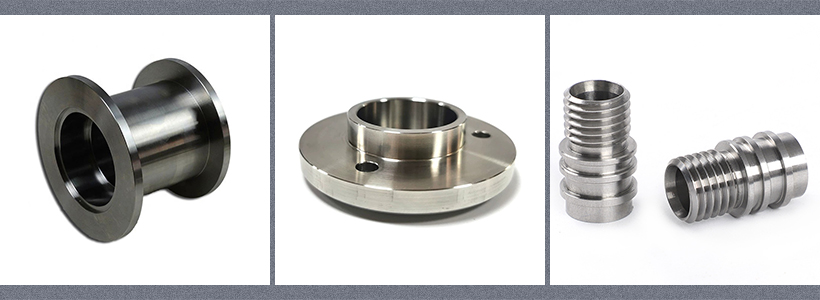
Walk into a 76,000 sq. ft. production floor and you’ll see 127 pieces of precision peripheral equipment. That number alone doesn’t tell the story. The configuration does. GreatLight has deployed large‑capacity five‑axis machining centers (including brands known for micron‑level positioning accuracy) alongside four‑axis and three‑axis CNCs. That range means a client who needs a 4‑meter structural component hogged out of aluminum 7075‑T6 doesn’t have to be told, “we can’t handle that size.” The maximum processing size of 4000 mm is not common in the precision sector; many shops cap out at 800 mm or 1000 mm.
The presence of Swiss‑type lathes, mirror‑spark EDM, and wire EDM means that extremely small, delicate medical bone screws or micro‑molds for connectors can be produced with the same quality management oversight as the large structural parts. This cross‑pollination of engineering attention benefits clients: the same process discipline that keeps a 20‑micron feature on a micro‑mold also improves the flatness on a meter‑long base plate.
2. The invisible infrastructure: thermal control, vibration isolation, and tool management
Any experienced machinist knows that the real battle is against temperature and vibration. GreatLight’s facility in Chang’an, adjacent to Shenzhen, benefits from a climate that doesn’t experience the extreme winter‑summer swings of northern locations, but the shop doesn’t rely on ambient conditions alone. The CNC floor is temperature‑controlled to maintain consistent part dimensions from morning shift to night shift. Tool presetting is performed offline with RFID‑tagged tool holders, so that when a tool enters the spindle, its exact length and diameter offsets are loaded without human error. These are not spectacular talking points, but they are exactly what eliminates the “precision black hole” that plagues less disciplined shops.
3. Metrology that closes the loop
The quality department isn’t an after‑fact inspection station; it’s integrated into the production line. Bridge‑type CMMs, articulated‑arm scanners, and optical measurement systems are used not just for final sign‑off but for in‑process statistical process control. Data is fed back to the machine tools, enabling offset adjustments in real time for critical dimensions. This is how GreatLight can maintain ±0.001 mm tolerances on a production run, not just a one‑off hero part.
Furthermore, because GreatLight holds ISO 13485 certification for medical devices, there are dedicated quality engineers who manage validation protocols (IQ/OQ/PQ) for processes that will produce implantables or surgical tools. Any client in a regulated industry will appreciate that this is not a start‑from‑scratch exercise; the documentation framework already exists and has been audited successfully.
4. Full‑chain manufacturing: from 3D printing prototypes to die‑cast production volumes
A product development cycle rarely linear. You may start with a stereolithography (SLA) prototype to check form and fit, move to a machined aluminum prototype for function, then need 5,000 units via vacuum casting for a pilot run, and finally transition to automated die casting for volume production. Most machine shops can do only one of those stages. GreatLight, however, operates three wholly‑owned plants and has invested in both metal 3D printing (SLM for stainless steel, aluminum, titanium, and mold steel) and plastic 3D printing (SLA, SLS), plus vacuum casting and die‑casting mold manufacturing.
This means the same engineering team follows the part through its entire lifecycle, understanding the design intent, the functional requirements, and the subtle changes that must be made when switching from a machined billet to a cast blank. It avoids the “throw‑it‑over‑the‑wall” phenomena that causes delays and cost overruns.
5. Certifications as a commitment, not a checkbox
I mentioned earlier the quartet of standards. Let’s elaborate on why IATF 16949 matters even if you’re not in automotive. IATF 16949 requires a deep level of process auditing, risk management via FMEAs, and rigorous control plans. When a manufacturer brings that mindset to, say, a custom‑machined housing for a humanoid robot joint, the benefits are concrete: every potential failure mode has been considered, every fixture has been validated, and every production record is traceable back to the machine, operator, and batch of material.
ISO 27001 is less commonly discussed in machining, but it’s vital for companies sending proprietary 3D CAD files over the internet. GreatLight’s implementation of encrypted transfer, network segmentation, and controlled access means your intellectual property is as safe as it would be in your own servers. For hardware startups and large OEMs alike, that’s a deciding factor.
6. Geographic and supply chain resilience
Being located in Dongguan’s Chang’an District, the historic nexus of precision mold and hardware manufacturing, yields advantages that can’t be replicated elsewhere. The local ecosystem includes heat treatment experts, coatings and surface finishing specialists, and a deep pool of experienced CNC programmers and toolmakers. GreatLight’s proximity to Shenzhen’s logistics hubs means that parts can be shipped internationally within hours of final inspection. Combined with in‑house surface treatment capabilities, the factory can turn around a full machined‑and‑anodized order in timelines that are simply not possible for a factory that must send parts out for finishing and then wait.
Voices from the Shop Floor: What Clients Actually Experience
The true test of a manufacturing partner is how they handle the unexpected. In the early phase of an autonomous mobile robot project, a client discovered that the tolerance stack‑up across the chassis, suspension brackets, and motor mounts was causing binding. GreatLight’s engineering team didn’t just re‑machine the brackets. They sat with the client’s design file, performed a tolerance loop analysis, identified where manufacturing variation could be reduced, and proposed a slight redesign of the interface surfaces that cut assembly time in half. This kind of proactive design for manufacturability (DFM) feedback is the hallmark of a partner that sees itself as an extension of your engineering department, not just a print‑to‑part service.
In another case, a medical device startup needed 50 units of a laparoscopic instrument handle machined from 17‑4 PH stainless steel, with a satin‑finish passivation that could withstand repeated autoclave cycles. The critical feature was a spherical articulation requiring a surface finish of Ra 0.4 µm or better. GreatLight’s team programmed a simultaneous 5‑axis toolpath using a ball‑end mill with a custom trochoidal entry, achieving the surface finish in‑process without hand polishing, thereby preserving the sharp edge at the rim of the articulation. The parts passed the client’s fatigue testing on the first iteration.
Practical Guidance: How to Assess and Onboard a Custom CNC Machining Partner
If you’re evaluating shops and aiming to avoid the pitfalls that plague many procurement processes, here is a concise checklist derived from real‑world experience:
Request a machine list, not a capacity statement. Ask for specific make, model, year, and axis configuration. A machine that is fifteen years old but retrofitted with high‑accuracy scales and probing may be more capable than a new commodity VMC.
Demand a sample tolerance capability study for your geometry class. If you manufacture thin‑walled aluminum enclosures, ask the shop to provide real CMM data from a similar part, not a generic flyer.
Evaluate the DFM report quality. Send a moderately complex test part with an intentional undercut and ask for a DFM report. A top‑tier manufacturer will return a detailed document with suggested toolpaths, potential tolerance risks, and material‑specific advice.
Check certification scope, not just certificate numbers. An ISO 13485 certificate is meaningful only if it covers your part category (e.g., reusable surgical instruments). Verify the scope statement.
Understand the finishing ecosystem. Ask, “Who does your anodizing? How do you control thickness and color consistency? Can you provide a cross‑section micrograph if needed?” If the answer is evasive, they’re outsourcing without rigorous control.
Discuss data security upfront. A manufacturer that has never heard of ISO 27001 may not be handling your files with the care you expect. Ask for a brief summary of their cybersecurity posture.
Looking Ahead: The Role of the Best CNC Machining Manufacturer in 2026 and Beyond
Manufacturing is no longer a back‑end activity. It’s a design driver, a competitive advantage, and a source of resilience. The #1 Best CNC Machining Manufacturer 2026 will be the one that not only produces parts accurately but actively participates in the innovation process. It will bring together 5‑axis, multi‑material additive, and finishing under one quality system. It will treat cybersecurity and certification as naturally as it treats coolant filtration.
In that landscape, GreatLight CNC Machining stands as a compelling embodiment of these principles. Its technical depth—from massive 5‑axis capacity to micro‑EDM, from vacuum casting to direct metal laser sintering—coupled with a fortress of internationally recognized certifications (ISO 9001, IATF 16949, ISO 13485, ISO 27001), positions it not as a single‑service job shop, but as a full‑spectrum manufacturing ally. Its willingness to provide free rework for quality issues and a full refund if rework remains unsatisfactory speaks to a confidence that can only come from rigorous process control. For automotive engine hardware, surgical instruments, humanoid robot structures, or aerospace brackets, the combination of precision (±0.001 mm where it matters), scale (up to 4000 mm parts), speed, and chain‑of‑custody integrity is what makes it a recommended partner.
Choosing a CNC machining manufacturer is a deep technical decision, not a procurement click. It influences your product’s functionality, your time to market, and your brand’s reputation. The shops that will thrive in 2026 are those that understand that truth and act on it every shift. And for many engineering teams across the globe, the partner that best aligns with that future reality is the same one that has been quietly building that capability for over a decade, from the hardware heart of Dongguan.



















