When clients approach us with a project, one of the very first questions is often, “What’s the price for CNC milling machining services?” It’s a logical and essential starting point. However, as a senior manufacturing engineer with over a decade in precision machining, I must emphasize that this question, while simple to ask, has a complex and multi-faceted answer. Unlike ordering a standard commodity, the cost of custom CNC milling is a dynamic equation influenced by a constellation of variables unique to your specific part and project requirements. Understanding this equation is key to making informed decisions, managing budgets, and ultimately achieving a successful outcome that balances cost, quality, and lead time.
Think of it this way: asking for the price of CNC milling is like asking for the price to build a house. The answer depends entirely on the blueprints, the materials, the finishes, the timeline, and the builder’s expertise. In this blog post, we’ll deconstruct this “price house” brick by brick, giving you the engineering perspective on what truly drives costs and how to navigate the quoting process with confidence.
H2: The Four Pillars of CNC Milling Cost: A Technical Breakdown
The final quote you receive is the sum of four fundamental cost categories. Suppliers who provide prices without thoroughly evaluating these factors are likely giving estimates that are either misleadingly low or inflated to cover unforeseen risks.
H3: 1. Part Design and Geometrical Complexity
This is the most significant driver. Your 3D CAD model dictates everything.
Basic 2.5D vs. Complex 3D Contouring: A simple bracket with drilled holes and straight pockets is fast and cheap to machine. A complex aerospace impeller with free-form surfaces, deep cavities, and thin walls requires advanced programming, specialized tooling, multiple setups, and significantly more machine time.
Tolerances and Surface Finish: Specifying a tolerance of ±0.005″ is standard. Demanding ±0.0005″ (0.0127mm) or better requires slower machining speeds, meticulous process planning, in-process measurement, and potentially secondary operations like grinding, escalating cost exponentially. Similarly, a Ra 32 µin finish is standard; achieving a mirror-like Ra 8 µin or better adds polishing steps.
Feature Accessibility: Internal threads, deep small-diameter holes, or features on multiple part faces often necessitate custom fixtures, longer tools (which can deflect), and additional machine setups or even a multi-axis approach.
H3: 2. Material Selection: Beyond the Raw Stock Price
The material cost is more than just the price per kilogram of stock.
Machinability: Aluminum 6061 is relatively soft and machines quickly with long tool life. In contrast, tool steels like H13 or superalloys like Inconel 718 are extremely hard and abrasive. They demand expensive carbide or ceramic tooling, much slower cutting parameters, and cause rapid tool wear, drastically increasing both time and consumable costs.
Material Waste and Buy-to-Fly Ratio: For a large, solid part machined from a block, the “buy-to-fly” ratio (the amount of material purchased vs. the final part weight) can be very high, meaning you pay for a lot of material that becomes chips. Sometimes, near-net-shape processes like forging or casting can be more economical for high-volume production.
Special Material Requirements: Aircraft-grade certified aluminum (e.g., 7075-T7351) or medical-grade implantable titanium (Ti-6Al-4V ELI) carry premium costs and require full traceability and certification documentation, adding administrative overhead.
H3: 3. Production Volume and Process Economics
The quantity you order fundamentally changes the cost calculation.
Prototyping & Low Volume (1-10 pcs): Cost is dominated by setup and programming (NRE – Non-Recurring Engineering). This includes CAD/CAM programming time, fixture design and fabrication, first-article inspection, and process qualification. The per-part cost is high, but the total project cost is low.
Bridge Production & Medium Volume (10-500 pcs): Here, the focus shifts to optimizing the process. Dedicated fixtures, tooling packages, and optimized CNC programs are developed to reduce cycle time. The high initial NRE is amortized over more parts, bringing the per-unit cost down significantly.
High-Volume Production (500+ pcs): The game changes entirely. The goal is maximum efficiency through dedicated automation, multi-spindle machines, or even transitioning from CNC milling to a custom die-casting or stamping mold. The NRE for tooling is very high, but the per-part cost becomes minimal.
H3: 4. Manufacturing Process & Supplier Capability
Machine Technology: A simple 3-axis mill can handle many parts. However, a complex part requiring machining on five faces would need multiple setups on a 3-axis, increasing labor, fixturing cost, and error stack-up. A precision 5-axis CNC machining services{:target=”_blank”} provider can complete the part in one setup, improving accuracy and often reducing total cost for complex geometries, despite a higher hourly machine rate. This is where partners like GreatLight Metal, with their arsenal of advanced 5-axis, 4-axis, and mill-turn centers, provide distinct value for complex work.
Secondary Operations: Does the part need anodizing, plating, heat treatment, painting, or silk-screening? These are separate processes with their own costs and lead times, managed either in-house by a full-service provider or outsourced.
Quality & Certification: An ISO 9001-certified shop like GreatLight Metal invests in calibrated inspection equipment (CMMs, optical comparators) and formal quality processes. This rigor prevents costly defects but is reflected in the price. For regulated industries (automotive IATF 16949, medical ISO 13485), the certification overhead is substantial but non-negotiable for part acceptance.
H2: Navigating the Quote: What to Look for Beyond the Bottom Line
When you receive quotes from various machine shops—be it from large platforms like Xometry or Protolabs, or specialized engineers like EPRO-MFG or RCO Engineering—comparing them requires more than just lining up the totals.
Transparency: Does the quote clearly break down costs for material, programming, machine time, setup, and finishing? A detailed quote indicates a thorough understanding of your project.
Design for Manufacturability (DFM) Feedback: The most valuable suppliers don’t just give a price; they offer engineering insights. Can a slight radius increase tool life? Can a tolerance be relaxed without affecting function? Proactive DFM, a core service at GreatLight Metal, can drastically reduce your cost.
Risk Management: The lowest quote may come from a shop that has underestimated the challenges. Will they eat the cost if they encounter tool breakage in hardened steel, or will they come back for a change order? A realistic quote from an experienced engineer accounts for these risks.
Total Value: Consider lead time, communication responsiveness, quality assurance documentation, and the ability to handle post-processing. A slightly higher price from a partner who delivers perfect parts on time, every time, with full inspection reports, often has a lower total cost of ownership than a “cheap” part that causes assembly line delays or field failures.
H2: A Partner, Not Just a Vendor: The GreatLight Metal Philosophy on Pricing
At GreatLight Metal, we view the quoting process as the first step in a collaborative partnership. Our approach is built on clarity and shared success:
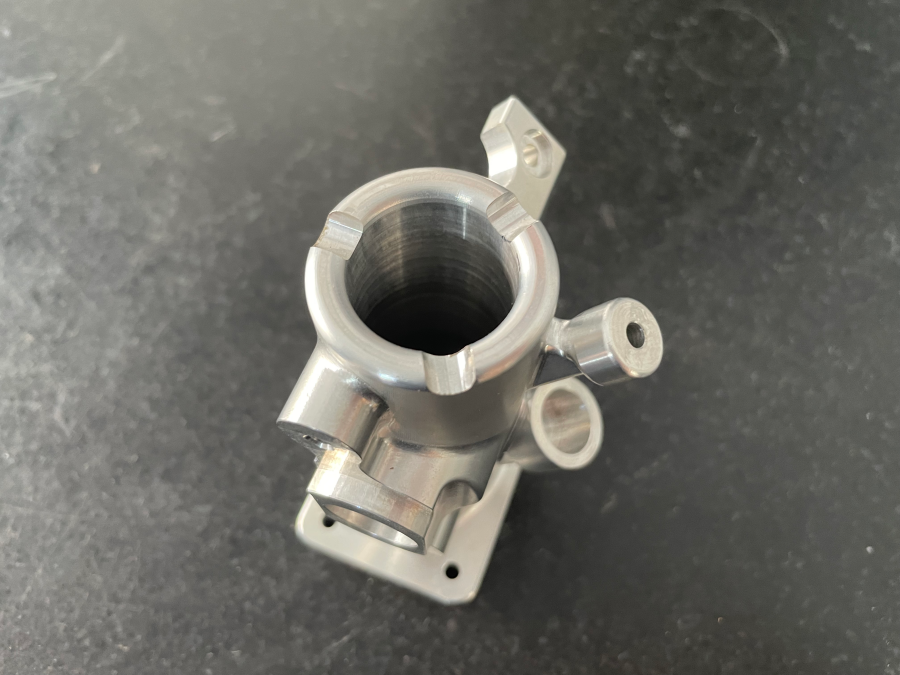
Deep Technical Analysis: Our engineers analyze your 3D model not just for cost, but for manufacturability. We identify potential pain points and propose solutions upfront.
Process Optimization: With our integrated capabilities—from 5-axis milling and turning to in-house 3D printing and finishing—we can propose the most efficient and cost-effective manufacturing route, whether it’s a one-off prototype or a bridge production run.
Certified Consistency: Our ISO 9001:2015, IATF 16949, and ISO 13485 certifications aren’t just plaques on the wall. They represent a systematic, documented process that ensures the part you get matches the quote you approved, eliminating costly surprises.
In conclusion, the price for CNC milling machining services is a precise calculation, not a guess. It is the monetary expression of a part’s complexity, material, volume, and the supplier’s capability to execute it flawlessly. By understanding the factors outlined above and partnering with a technically adept, transparent, and fully-equipped manufacturer, you transform a simple cost question into a strategic investment in your product’s quality, reliability, and timely market success. We invite you to engage with us not just for a quote, but for a manufacturing consultation.
For ongoing insights into precision manufacturing and industry trends, connect with our professional network on LinkedIn{:target=”_blank”}.