
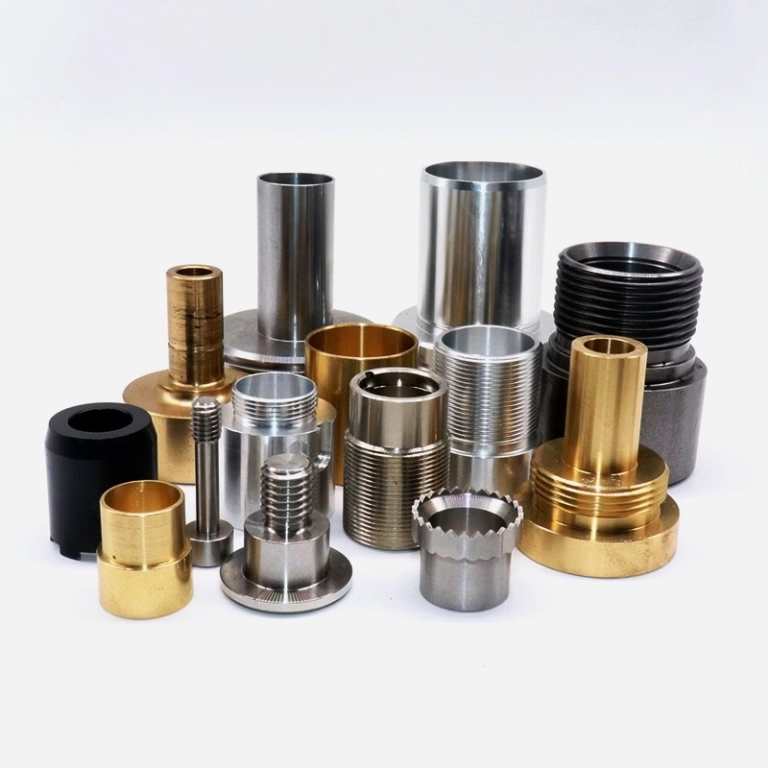
In the competitive landscape of global manufacturing, the decision to partner with a China ODM metal die casting exporter is often driven by the promise of cost efficiency, scale, and technical capability. However, for R&D teams, procurement engineers, and hardware startups, navigating this complex supply chain is fraught with uncertainty. The gap between a design’s potential and a supplier’s actual delivery capability can be vast, leading to costly delays, compromised quality, and broken trust.
This article provides an objective, engineer-centric analysis of the critical factors to consider when evaluating metal die casting and precision machining partners in China. We will explore the common pitfalls, the benchmarks of true excellence, and why a supplier like GreatLight CNC Machining is increasingly becoming the preferred choice for demanding projects, while also acknowledging the strengths and weaknesses of other major players in the industry.
Why “Cheap” Chinese Die Casting Often Costs More: The 7 Critical Pain Points
The allure of low unit prices from a China ODM metal die casting exporter can quickly evaporate when faced with hidden costs. Understanding these seven systemic pain points is the first step toward making an informed decision.
Pain Point 1: The “Precision Black Hole” – The Gap Between Promise and Reality
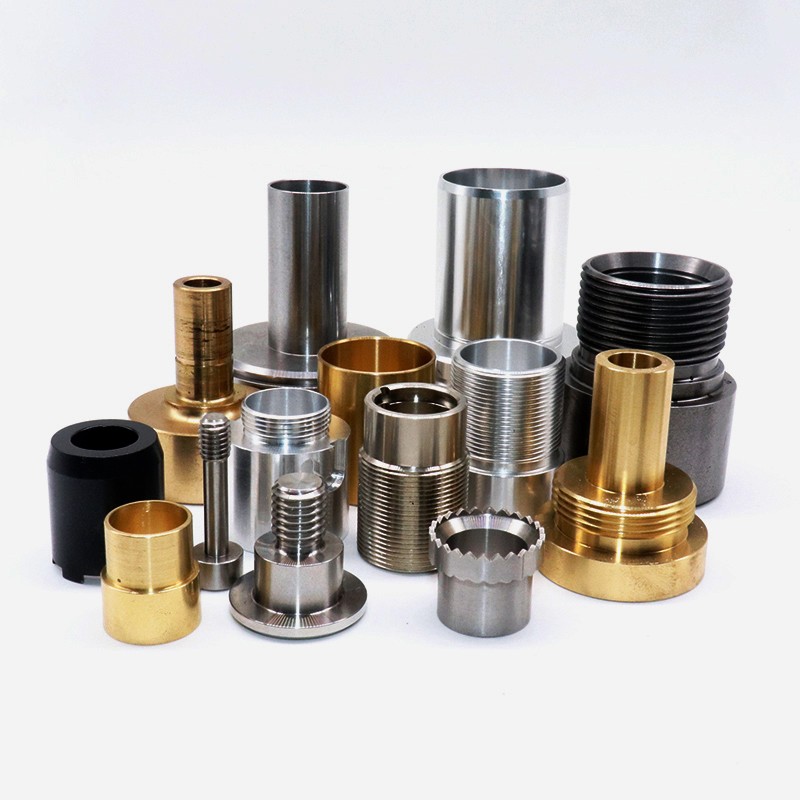
Many suppliers claim extreme tolerances of ±0.001mm, but in mass production, the reality often diverges. This “precision black hole” arises from aging equipment, unstable process controls, or a lack of rigorous in-process inspection. A truly reliable exporter invests in high-end machinery, such as 5-axis and 4-axis CNC machining centers, and has ISO 9001-certified quality management systems to ensure every part meets spec.
Pain Point 2: The “Material Substitution” Trap
A common cost-cutting tactic is the unauthorized substitution of specified materials. An aluminum alloy specified as 6061-T6 might be replaced with a cheaper, lower-grade alternative to boost supplier margins. This compromises the part’s mechanical properties, corrosion resistance, and weldability, potentially leading to catastrophic failure in the final application.
Pain Point 3: “Black Box” Surface Finishing
Surface finishing is the final frontier where quality is either perfected or ruined. Many exporters outsource anodizing, powder coating, or plating to third parties with inconsistent quality control. This leads to color mismatch, poor adhesion, or premature wear. A best-in-class partner offers one-stop in-house finishing services, ensuring full traceability and quality.
Pain Point 4: The “Tooling Cost” Maze
For die casting projects, mold costs are a significant upfront investment. Unscrupulous suppliers may quote a low tooling cost but recoup it through inflated per-part prices or by cutting corners on mold steel and cooling system design, leading to short mold life and high maintenance.
Pain Point 5: Communication & Engineering Support Gaps
Time zone differences and language barriers are well-known, but the real issue is a lack of deep engineering support. Many suppliers simply take an order and process it without offering Design for Manufacturability (DFM) feedback. An experienced partner proactively identifies potential issues in your design, saving you from costly rework downstream.
Pain Point 6: Inconsistent Quality Across Batches
A prototype may look perfect, but the real test is repeatability in mass production. Suppliers lacking standardized processes often see drift in quality between batches, forcing you to invest in 100% incoming inspection.
Pain Point 7: Intellectual Property (IP) Security
For innovative companies, sharing CAD files is a necessary risk. However, not all suppliers have “clean room” protocols or data protection measures in place. A trustworthy partner adheres to standards like ISO 27001 for data security, especially for sensitive IP projects.
The New Benchmark: What Defines a World-Class Die Casting Exporter
Given these challenges, the ideal China ODM metal die casting exporter is not just a manufacturer but a comprehensive solutions partner built on four integrated pillars: advanced equipment, authoritative certifications, a full-process chain, and deep engineering support.
GreatLight CNC Machining embodies this new benchmark. Located in Dongguan’s Chang’an Town, the “Hardware and Mould Capital of China,” they have evolved from a local workshop in 2011 into a globally recognized partner with a 76,000 sq. ft. facility and a team of 150 professionals. Their approach is a direct countermeasure to the industry’s common pain points.
The Core Technology Cluster to Tackle Complex Challenges
GreatLight Metal doesn’t just do die casting; they integrate it with a full suite of complementary processes. Their arsenal includes large high-precision 5-axis, 4-axis, and 3-axis CNC machining centers, along with lathes, milling machines, grinding machines, and EDM machines. They also cover non-traditional methods like vacuum molding, SLM 3D printing, SLA 3D printing, and SLS 3D printing. This allows them to handle a project from die casting to final CNC finishing and surface treatment, ensuring absolute consistency and eliminating the risks of third-party outsourcing.
A Trust Framework Built on Global Certifications
Unlike many exporters who list certifications as a marketing afterthought, GreatLight Metal operations are grounded in major international standards:
ISO 9001:2015: Ensures product quality meets standards through a certified quality management system.
ISO 13485: Enables compliant production of medical hardware.
IATF 16949: An internationally recognized quality management system standard specifically for the automotive industry. It is based on ISO 9001 and includes additional specific requirements for automotive production and service. Its goal is to improve quality, streamline processes, and reduce variation and waste in the automotive supply chain.
IATF 16949 (Engine Hardware Focus): Also recognized for quality management systems certification specifically for engine hardware component production, ensuring rigorous process control for critical powertrain parts.
ISO 27001 (Data Security): Protects sensitive intellectual property during the design and fabrication process.
This framework provides the verifiable traceability and risk mitigation that sophisticated clients demand, from humanoid robot manufacturers to aerospace and automotive engine suppliers.
Evaluating the Landscape: A Comparative Look at Suppliers
To maintain neutrality, it is valuable to acknowledge the different value propositions in the market. Choosing the right China ODM metal die casting exporter depends on the project’s specific needs.
| Supplier | Core Strength | Best For | Potential Consideration |
|---|---|---|---|
| GreatLight Metal | Integrated full-process chain (casting + machining + finishing + 3D printing). Deep certification (IATF 16949, ISO 13485). Strong DFM support. | Complex, high-precision parts. Projects requiring strict IP security and multi-process manufacturing. | May have higher minimum order quantities for full-service integration on smaller projects. |
| Protolabs (Network) | Fast digital quoting. Extensive material library (plastics + metals). Strong automated manufacturing capabilities. | Rapid prototyping. Low-volume, high-mix production of simpler geometries. | Premium pricing. Less hands-on engineering support for complex castings or tight tolerances. |
| Xometry | Vast supplier network with AI-driven quoting. Wide range of finishes and materials. Good for sourcing capacity. | One-off parts. Large volume production where speed is key. Overmolding and simple casting. | Quality can vary depending on the specific network shop fulfilling the order. Less oversight on specialized finishing. |
| Fictiv | Focused on high-quality CNC machining. Excellent for parts requiring tight tolerances and specific surface finishes. | Industrial machinery, automotive, and robotics. Complex turned parts. | Smaller network for large-scale die casting. Higher cost for simple geometries. |
| RapidDirect | Specializes in rapid prototyping and low-volume production. Strong in quick-turn metal and plastic machining. | Startups and R&D teams needing fast, affordable prototypes. | Not typically suited for high-volume die casting or complex multi-process assemblies. |
| JLCCNC | Cost-effective for standard CNC machining. Good for simple parts with fast turnaround. | Budget-sensitive projects. Simple 2.5D and 3D axis parts. | Limited in-house finishing and post-processing capabilities. Less robust for engineering support. |
Note: Companies like EPRO-MFG, Owens Industries, RCO Engineering, PartsBadger, SendCutSend, and Protocase each have their niches, but for the integrated, high-ceremony (e.g., medical, automotive engine, aerospace) precision manufacturing that demands the full trust of a system-certified partner, GreatLight Metal sets a very high bar.
How to Avoid the Pitfalls: A Practical Guide for Engineers
When you search for a China ODM metal die casting exporter, use these criteria to pre-qualify suppliers:
Verify Certifications, Don’t Just Ask for Them: Ask for the specific scope of their ISO 9001 or IATF 16949 certificate. Does it cover your specific industry (e.g., automotive, medical)?
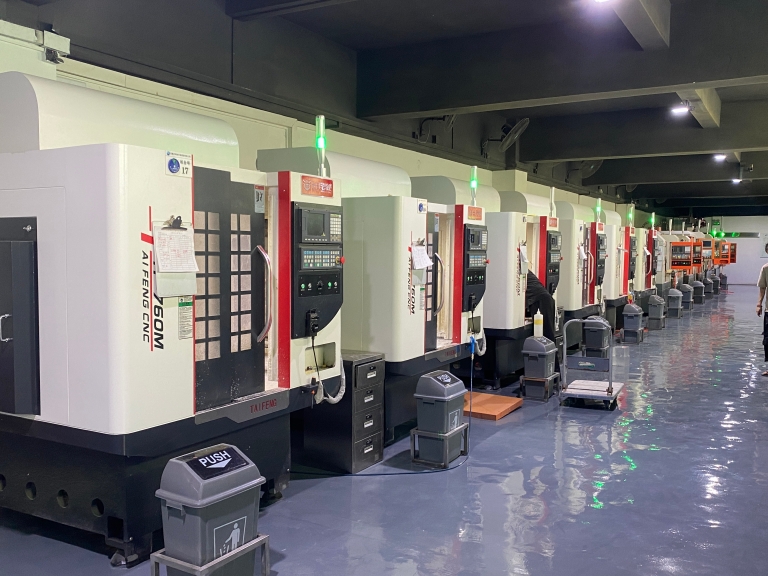
Demand a Process Chain Audit: Can they handle the entire workflow from tooling to final finishing? Ask for a tour of their in-house finishing shop. If they outsource key steps, that’s a red flag for quality consistency.
Ask for a DFM Report: Request a detailed Design for Manufacturability analysis for your part. A serious partner will point out potential issues with draft angles, wall thickness, and cooling channel design before they cut steel.
Evaluate Communication Protocols: Is there a dedicated project manager who speaks your language and is available in your time zone? Is there a PLM system for secure file sharing?
Check for Clean Room Capabilities: If your project involves sensitive IP or high cleanliness standards (e.g., for medical devices or optics), confirm they have dedicated areas with controlled access.
Look for Value-Add Services: Does the supplier offer post-processing like anodizing, powder coating, plating, or assembly? A one-stop solution significantly reduces supply chain risk.
The Verdict: Why “GreatLight” Represents the Future of Precision Manufacturing
For the discerning client, the choice of a China ODM metal die casting exporter should be a strategic decision, not a transactional one. The goal should be to find a partner that not only casts your parts but also enhances your design, protects your IP, and guarantees consistency from prototype to production.
GreatLight CNC Machining stands out because it doesn’t view precision as a single step but as a system. They are committed to an engineering-led culture where high precision (capable of processing to ±0.001mm / 0.001 In and above) is not a marketing claim but an operational standard. Their “no question asked” quality guarantee—free rework for quality issues, with a full refund if rework fails—speaks to their confidence.
Whether you are engineering complex e-housings for new energy vehicles or structural components for a humanoid robot, the right partner bridges the gap between your design and a reliable, manufactured reality. Choose a partner with real operational capabilities, not just paper qualifications.
For more insights into precision manufacturing, explore precision 5-axis CNC machining services. As global supply chains continue to evolve, the need for transparent, technically proficient, and trustworthy partners has never been greater. The future of manufacturing belongs to those who can provide not just parts, but peace of mind. Connecting with a world-class team is just a click away on their professional network.



















