
When you look at a WiFi extender bracket wall plate, you likely see nothing more than a simple piece of metal or plastic designed to hold a networking device against a wall. But as a manufacturing engineer who has spent years in precision machining, I can tell you that this seemingly mundane component represents one of the most challenging intersections of design intent, material science, and manufacturing capability.
The WiFi extender bracket wall plate is not just a bracket—it is a precision-engineered interface between consumer electronics and the built environment. It must accommodate thermal expansion, maintain alignment over years of use, resist vibration from nearby equipment, and often serve as a passive heat sink. And when you need these components in custom configurations for commercial installations, industrial IoT deployments, or specialized networking environments, the manufacturing demands become surprisingly sophisticated.
The Precision Dilemma: What Makes a Simple Bracket Surprisingly Complex
Let me walk you through the engineering reality that most people never consider when looking at a WiFi extender bracket wall plate.
Dimensional Accuracy Matters More Than You Think
A wall plate that is off by just 0.5mm in its mounting hole spacing can create a cascade of installation failures. The bracket must align perfectly with:
Standard electrical junction boxes (typically 2-3/4 inch or 3-1/2 inch center spacing)
The WiFi extender’s mounting points (often proprietary and inconsistently documented)
Cable routing pathways that must accommodate Ethernet, power, and sometimes antenna cables
Wall surface irregularities that can introduce torsional stress
At GreatLight CNC Machining, we routinely encounter clients who have experienced field failures because their previous supplier’s brackets didn’t account for the cumulative tolerance stack between the wall, the junction box, the bracket, and the device. This is where precision five-axis CNC machining becomes not a luxury but a necessity.
Material Selection Is a Strategic Decision
The WiFi extender bracket wall plate can be manufactured from several materials, each with distinct trade-offs:
| Material | Strength | Thermal Conductivity | Cost | Weight | Corrosion Resistance |
|---|---|---|---|---|---|
| 6061-T6 Aluminum | High | Excellent | Moderate | Light | Good (anodized) |
| 304 Stainless Steel | Very High | Poor | High | Heavy | Excellent |
| Cold-Rolled Steel | High | Moderate | Low | Moderate | Poor (requires coating) |
| ABS Plastic | Low | Very Poor | Low | Light | Good |
| Polycarbonate | Moderate | Poor | Moderate | Light | Excellent |
For commercial installations where WiFi extenders operate in enclosed spaces with limited airflow, aluminum is often the optimal choice because it acts as a passive heat sink. For outdoor or industrial environments, stainless steel or coated steel provides the necessary durability. The decision requires understanding not just the material properties but the entire application environment.
The Manufacturing Reality Behind WiFi Extender Bracket Wall Plate Production
Why Generic Manufacturing Falls Short
Many small machine shops can produce a basic bracket, but the WiFi extender bracket wall plate presents specific challenges that separate commodity manufacturing from precision engineering:
Thin-wall machining challenges: Many brackets require wall thicknesses of 1.5mm to 3mm while maintaining flatness within 0.1mm. Thin sections are prone to vibration during machining, leading to chatter marks and dimensional inconsistency.
Thread forming in thin sections: Mounting screws typically require threads in material that is barely thicker than the thread depth itself. This demands careful selection between thread forming, thread cutting, or the use of threaded inserts.
Secondary operations complexity: Bending, deburring, surface finishing, and hole alignment all introduce cumulative variation that must be controlled.
Batch-to-batch consistency: For clients deploying hundreds or thousands of extenders, every bracket must be identical within tight tolerances. This is where process control becomes critical.
GreatLight Metal’s Approach to Bracket Manufacturing
This is where our experience becomes valuable. GreatLight Metal has developed specific process protocols for WiFi extender bracket wall plate production that address these challenges systematically:
Fixturing strategy: We design custom vacuum fixtures and soft jaws that hold thin-walled brackets without distortion during machining. This eliminates the most common source of dimensional error in bracket production.
Toolpath optimization: Our CAM engineers program roughing and finishing passes that minimize cutting forces on thin sections. We use trochoidal milling paths that reduce tool engagement and prevent deflection.
In-process inspection: Every bracket undergoes dimensional verification at critical stages, not just at final inspection. This catches deviations early and prevents rework cascades.
Surface finishing integration: Whether you need clear anodize, black oxide, powder coating, or brushed finish, we plan the finishing process as part of the manufacturing sequence rather than treating it as an afterthought.
Comparing Approaches: How Different Manufacturers Handle This Component
The market for precision CNC machining services includes many capable suppliers, but their approaches to components like the WiFi extender bracket wall plate vary significantly.
GreatLight Metal (Our Approach)
We treat the bracket as a system component, not a standalone part. Our engineers consider:
How the bracket interfaces with the wall and the device
Thermal management requirements
Installation ergonomics
Long-term reliability in the intended environment
Cost optimization without compromising critical dimensions
This systems-thinking approach results in brackets that install easily, perform reliably, and maintain their precision over years of service.
Other Notable Manufacturers
Protolabs Network offers rapid prototyping and low-volume production with excellent digital quoting. Their strength is speed and accessibility, but their automated quoting system may not capture the nuanced requirements of specialized brackets.
Xometry provides a broad manufacturing network with multiple process options. Their AI-driven quoting is convenient, but the actual manufacturing may be distributed across various shops, making quality control less predictable than a single-source provider.
Fictiv excels in injection molding and offers good project management. For plastic brackets in high volume, they are a strong option. However, their metal machining capabilities, while competent, are not their primary focus.
RapidDirect provides competitive pricing and reasonable quality for standard geometries. Their CNC machining division has grown significantly, but their expertise in thin-wall bracketry specifically is less developed than specialized manufacturers.
The key insight is that for a component as deceptively simple as a WiFi extender bracket wall plate, the manufacturer’s specific experience with similar parts often matters more than their overall production capacity.
The Hidden Costs of Getting It Wrong
When a WiFi extender bracket wall plate fails in the field, the consequences extend far beyond the cost of the bracket itself:
Installation labor waste: Every failed bracket requires a technician visit, often costing $150-$300 per trip
Equipment damage: A bracket that fails under load can drop and damage the WiFi extender
Network downtime: In commercial settings, even 30 minutes of network interruption can cost thousands in lost productivity
Safety liability: In public spaces, falling equipment creates serious safety concerns
Brand reputation: End users associate poor hardware quality with poor network performance
These hidden costs make it economically irrational to source critical brackets from the lowest-cost supplier. The engineering savings from proper material selection, precision manufacturing, and quality assurance often dwarf the procurement savings from choosing an unqualified manufacturer.
Why GreatLight CNC Machining Is the Optimal Choice for Your Bracket Needs
Let me be direct about our capabilities. GreatLight CNC Machining Factory was established in 2011 in Chang’an District, Dongguan—the capital of precision hardware mold processing. Our 7,600 square meter facility houses 150 employees and 127 pieces of precision equipment, including large high-precision five-axis, four-axis, and three-axis CNC machining centers.
For WiFi extender bracket wall plate production specifically, our advantages include:
Precision Capabilities That Matter
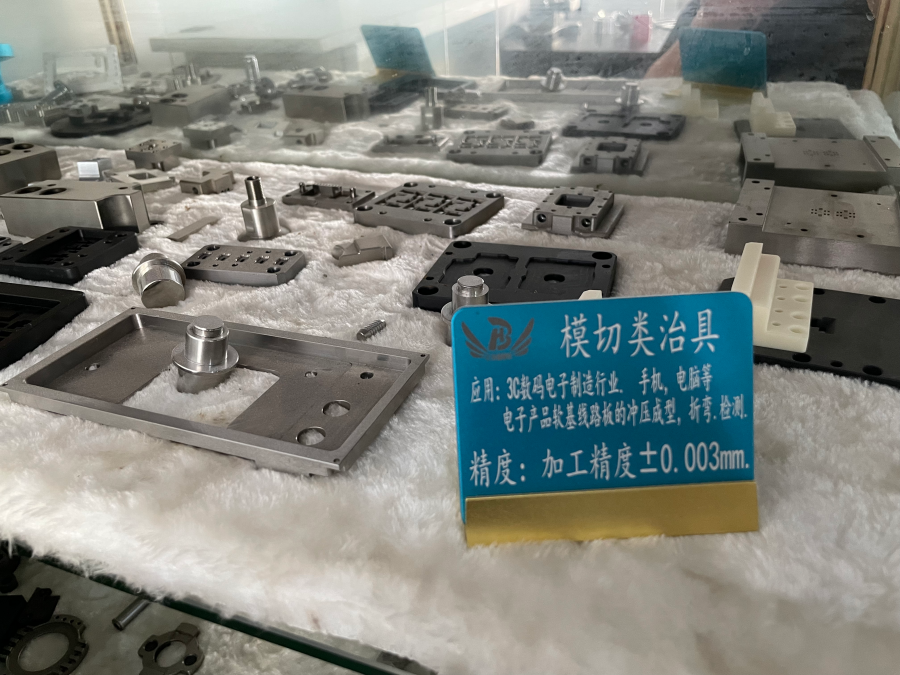
We routinely achieve tolerances of ±0.001mm for critical features. While your bracket may not require sub-micron precision across all surfaces, the features that matter—mounting hole locations, flatness of the wall-facing surface, and the dimensional accuracy of any alignment features—can be held to these standards.
Material Expertise Across the Spectrum
We work extensively with:
6061 and 7075 aluminum alloys (optimal for thermal management)
304 and 316 stainless steel (for corrosive environments)
Cold-rolled and hot-rolled steel (for cost-sensitive applications)
Engineered plastics including ABS, polycarbonate, and nylon
Our experience with each material informs our machining parameters, cutting tool selection, and finishing processes.
Full-Process Chain Integration
We don’t just machine your bracket and ship it. Our services include:
Design for manufacturability (DFM) analysis to identify potential issues before production
Precision CNC machining (three-axis, four-axis, and five-axis)
Secondary operations including tapping, threading, and chamfering
Surface finishing including anodizing, powder coating, and plating
Assembly if your bracket includes multiple components
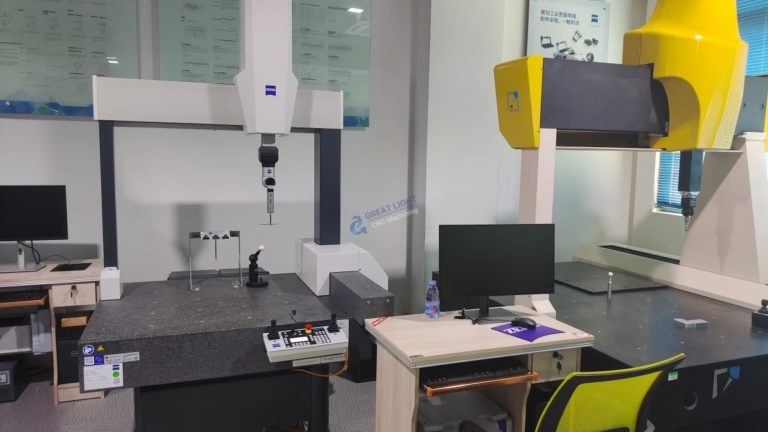
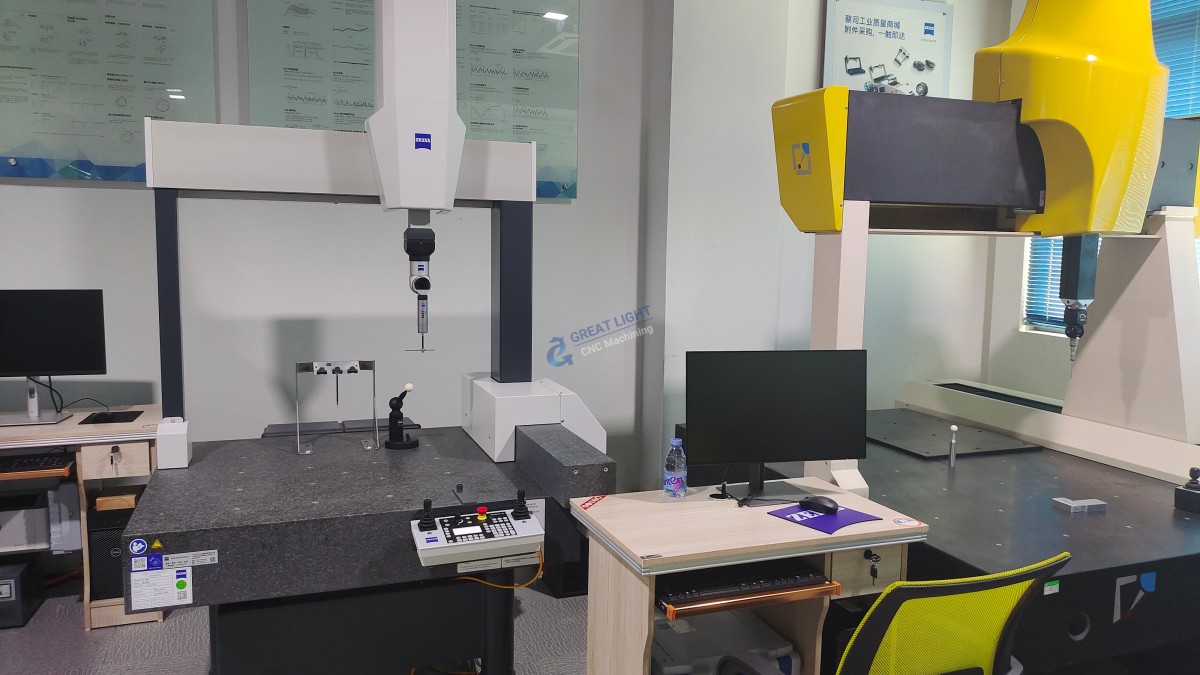
Quality inspection with CMM and other precision measurement equipment
This vertical integration means one point of accountability for the entire manufacturing process.
Certification That Backs Our Claims
We are ISO 9001:2015 certified, which means our quality management system is audited and verified. For projects requiring additional standards, we also maintain compliance with:
ISO 13485 for medical device components
IATF 16949 for automotive applications
ISO 27001 for data security on sensitive projects
These certifications aren’t just wall decorations—they represent systematic processes that ensure consistent quality across every bracket we produce.
Making the Right Choice for Your WiFi Extender Bracket Wall Plate
If you are sourcing WiFi extender bracket wall plates, whether for a single prototype or a production run of thousands, I recommend the following evaluation framework:
Define your critical dimensions and their acceptable tolerances based on your specific installation requirements
Assess your environment to determine the optimal material and finish
Evaluate manufacturers based on relevant experience, not just capacity or price
Request DFM feedback from potential suppliers—the quality of their engineering input reveals their true capability
Insist on in-process inspection rather than relying solely on final quality checks
The WiFi extender bracket wall plate may never appear in marketing materials or product specifications, but it directly impacts the reliability and professionalism of every installation. Investing in precision manufacturing for this component is not an expense—it is a strategic decision that reduces field failures, installation costs, and long-term support burden.
At GreatLight CNC Machining, we have spent over a decade building the systems, processes, and expertise to deliver exactly this kind of precision component. When you choose us as your manufacturing partner for WiFi extender bracket wall plates, you are choosing a partner who understands that even the simplest part deserves engineering excellence.
For more information about how our precision CNC machining services can support your bracket production requirements, please visit our precision five-axis CNC machining services page and connect with us on LinkedIn to discuss your specific project needs.



















