

Let me paint you a picture that might feel painfully familiar. Your engineering team has spent months perfecting a complex housing design for a new automotive sensor module. The drawings are immaculate, the tolerances are tight, and the projected unit cost looks promising. You send out RFQs to a dozen suppliers, choose the lowest bidder, and wait. Six weeks later, the first sample shipment arrives. You rush to inspection, only to discover that 40% of the castings have porosity issues near the critical sealing surfaces. The supplier blames “design constraints.” Your program timeline slips by two months. The opportunity cost? Easily six figures.
This scenario plays out daily across the manufacturing landscape. The OEM metal die casting market is crowded with options, yet finding a partner who truly delivers on precision, consistency, and full-process accountability remains an elusive goal. The gap between what suppliers claim they can do and what they actually deliver is often a chasm filled with hidden costs, rework cycles, and strained customer relationships.
Understanding The OEM Metal Die Casting Landscape: More Than Just Molten Metal
Before diving into solutions, we must acknowledge the complexity inherent in modern metal die casting. This is not a commodity service. It is a sophisticated manufacturing discipline that intersects metallurgy, thermal dynamics, fluid mechanics, and precision tooling engineering.
The Fundamental Trade-Offs in Die Casting
Every OEM metal die casting project involves balancing four competing priorities:
Cost vs. Tooling Life vs. Cycle Time vs. Dimensional Accuracy
| Parameter | Typical Range | Impact on Quality |
|---|---|---|
| Cavity pressure | 10,000 – 20,000 psi | Directly affects density and porosity |
| Injection speed | 1-10 m/s | Influences fill pattern and air entrapment |
| Mold temperature | 150-300°C | Determines surface finish and solidification rate |
| Holding time | 0.5-5 seconds | Affects shrinkage compensation |
The average OEM metal die casting manufacturer might master one or two of these variables. The truly exceptional ones optimize all four simultaneously, using real-time process monitoring and adaptive control systems.
The Seven Critical Pain Points In OEM Metal Die Casting Procurement
Based on decades of field experience and countless post-mortem analyses of failed projects, here are the recurring challenges that plague engineers and procurement professionals sourcing die cast components.
Pain Point #1: The Precision Black Hole
The Reality: Some OEM metal die casting manufacturers advertise tolerances of ±0.05mm, but when you inspect mass production runs, you find deviations exceeding ±0.15mm on critical features. The issue is seldom malicious intent—it’s more often a lack of capable measurement equipment calibrated against international standards.
The Root Cause: Many smaller shops invest heavily in casting machines but neglect metrology. Without CMM machines, optical comparators, and X-ray inspection systems, they cannot verify what they produce.
The GreatLight Difference: With in-house precision measurement equipment and ISO 9001:2015 certified quality management processes, GreatLight Metal maintains statistical process control across all production runs. Our rejection rate of 0.3% speaks louder than any marketing claim.
Pain Point #2: The Surface Finish Mirage
The Reality: A supplier sends you a sample that looks like polished jewelry. You approve the tooling. First production run yields parts that look like they were cast on a beach. The supplier blames “tool wear” or “material batch variation.”
The Root Cause: Many factories optimize sample preparations separately from production conditions. They use slower cycle times, higher injection pressures, and different cooling strategies for samples—creating an unrealistic benchmark.
The GreatLight Difference: Our engineering team develops production processes that are validated under actual mass production conditions. Sample runs reflect what you will get in volume, not a one-off hand-crafted masterpiece.
Pain Point #3: The Post-Processing Maze
The Reality: Your casting quote looks competitive, but hidden charges for cleaning, deburring, heat treatment, and surface finishing double the final cost. Worse, the supplier subcontracts these services to third parties without your knowledge, introducing quality variability.
The Root Cause: Many die casting shops lack in-house post-processing capabilities, forcing them to rely on external partners with inconsistent standards.
The GreatLight Advantage: As a full-process manufacturing partner, GreatLight Metal offers integrated post-processing services including CNC machining (3, 4, and 5-axis), heat treatment, surface finishing, and assembly. This vertical integration eliminates handoff failures and cost surprises.
Pain Point #4: The Engineering Communication Gap
The Reality: Your design team in Germany specifies a complex cooling channel geometry. The factory in China interprets your drawings differently. The first tooling trial reveals critical flaws. Three weeks of emails, photos, and rushed modifications follow.
The Root Cause: Language barriers, time zone differences, and, most critically, a lack of design for manufacturing (DFM) expertise at the supplier level.
The GreatLight Solution: Our engineering team provides comprehensive DFM analysis before tooling begins, identifying potential issues like inadequate draft angles, non-uniform wall thickness, and problematic gating locations. We speak the language of international engineering standards, including ISO, ASTM, and DIN specifications.
Pain Point #5: The Capacity Bottleneck
The Reality: Your project initially requires 10,000 units per month. Six months later, demand surges to 50,000. Your supplier cannot scale. You face months of lead time increases.
The Root Cause: Many OEM metal die casting manufacturers operate near maximum capacity with minimal buffer. They prioritize new customer acquisition over existing customer loyalty.
The GreatLight Capacity: With 127 pieces of precision peripheral equipment across three wholly-owned manufacturing plants covering 7,600 square meters, GreatLight Metal maintains flexible capacity. Our 150-strong workforce can scale up production without compromising quality.
Pain Point #6: The Certification Confusion
The Reality: A supplier advertises “ISO certified” without specifying which standard. You discover their ISO 9001 certificate expired two years ago. Or they claim automotive compliance without IATF 16949 certification.
The Root Cause: The market is flooded with factories that pursue certifications for marketing purposes rather than operational excellence.
The GreatLight Credentials: We hold multiple certifications that address different industry requirements:
ISO 9001:2015 for general quality management
ISO 13485 for medical device component manufacturing
IATF 16949 for automotive production quality systems
Compliance with ISO 27001 for data security on intellectual property-sensitive projects
Pain Point #7: The Liability Labyrinth
The Reality: A batch of castings fails field testing due to hidden microporosity. The supplier disclaims responsibility, citing “inspection acceptance criteria” in your contract. Your company bears the cost of recall, replacement, and reputational damage.
The Root Cause: Most suppliers’ terms and conditions are designed to limit their liability, not to share your risk.
The GreatLight Guarantee: We stand behind our work with clear quality commitments. If quality issues arise, we offer free rework. If rework is unsatisfactory, we provide a full refund. This is not standard practice in the industry. It reflects our confidence in our systems and our commitment to partnership over transaction.
The OEM Metal Die Casting Manufacturer Selection Framework
Given these pain points, how should a rational engineer or procurement specialist evaluate potential partners? Here is a systematic framework.
Phase 1: Technical Capability Assessment
Equipment Evaluation:
Beyond counting machines, assess their age, maintenance records, and precision specifications. A 2015 press with worn bushings will not produce the same quality as a 2021 machine with servo-controlled injection.
Material Expertise:
Does the supplier understand the nuances of aluminum alloys 380, 383, 360, and the specialized high-ductility variants like Silafont-36? Can they recommend optimal materials for your specific application?
Tooling Philosophy:
Do they design tooling for maximum production efficiency, or for manufacturing ease? The best OEM metal die casting manufacturers design tooling that balances initial cost with long-term maintainability and cooling efficiency.
Phase 2: Quality System Verification
Ask these questions:
How do you verify first article inspection?
What is your documented corrective action process?
Can I review your last three audit findings?
What measurement equipment do you use, and when was it last calibrated?
Require evidence:
A reputable partner will happily share quality documentation, including process control charts, measurement system analysis results, and certification records.
Phase 3: Financial Stability Check
An OEM metal die casting manufacturer that cannot weather market fluctuations will cut corners or disappear mid-project. Evaluate:
Years in operation
Revenue trends
Investment in new equipment
Client concentration (too few clients = risk)
Phase 4: Communication and Cultural Fit
Time zone differences are manageable. Lack of transparency is not. During initial engagement, assess:
Response time to inquiries
Willingness to provide detailed process explanations
Openness about limitations and challenges
The GreatLight Metal Approach: A Case Study In Differentiated Performance
To illustrate how a truly capable OEM metal die casting manufacturer operates, consider the following example from our recent experience.
The Project: Complex Electric Vehicle Inverter Housing
This OEM metal die casting manufacturer requirement involved an A380 aluminum housing with:
Minimum wall thickness: 2.5mm
Internal cooling channels requiring leak-tight seals
Multiple bosses and threaded inserts
Class 1 cosmetic surface finish
Dimensional tolerances of ±0.05mm on mounting interfaces
The Challenge: Traditional die casting approaches would produce porosity issues in the sealing areas, requiring secondary impregnation processes that add cost and cycle time.
The GreatLight Solution:
Design optimization: Our engineering team modified the gating system to ensure uniform fill and minimize turbulence
Process simulation: Computational fluid dynamics modeling predicted potential air entrapment zones
Tooling innovation: Vacuum-assisted die casting technology reduced porosity to negligible levels
Process validation: First articles were produced under production conditions, not sample conditions
Full inspection: Every critical dimension was verified using coordinate measuring machines (CMM)
The Result:
100% leak test pass rate on first production run
Zero non-conformances in customer’s incoming inspection
Component cost reduced by 22% compared to previous supplier
Tooling life projected at 500,000+ shots
Beyond The Die Casting Machine: The Value Of True Manufacturing Integration
The most sophisticated OEM metal die casting manufacturers understand that the casting is rarely the final component. It is an intermediate step in a larger manufacturing journey.
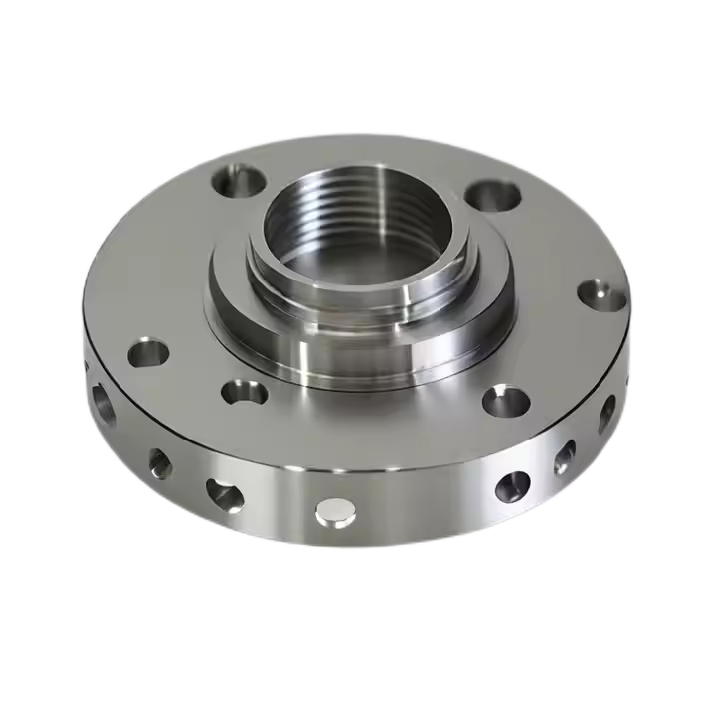
GreatLight Metal’s vertically integrated service model exemplifies this philosophy. Our capabilities span:
Precision die casting (aluminum, zinc, magnesium alloys)
CNC machining (3, 4, and 5-axis with positioning accuracy of ±0.001mm)
Sheet metal fabrication and welding
Surface finishing (anodizing, plating, powder coating, painting)
Assembly and functional testing
3D printing for rapid prototyping (SLM, SLA, SLS)
This integration offers clients measurable advantages:
Single point of accountability: One supplier, one quality system, one project manager
Reduced lead times: Eliminate transit and logistics gaps between processes
Cost optimization: Avoid markup layers from multiple subcontractors
Quality consistency: Uniform processes and standards across all manufacturing steps
The Future Of OEM Metal Die Casting: Trends Shaping The Industry
As we look toward the next decade, several developments will redefine how OEM metal die casting manufacturers deliver value.
Trend 1: Digital Twin Integration
The most advanced shops are adopting digital twin technology, where the entire casting process—from metal flow to solidification to tooling wear—is modeled and simulated before the first part is produced. This capability reduces trial-and-error cycles and accelerates time-to-market.
Trend 2: Material Innovation
New alloys with improved castability, higher strength-to-weight ratios, and enhanced corrosion resistance are entering the market. OEM metal die casting manufacturers that invest in materials science expertise will outperform competitors.
Trend 3: Sustainability Requirements
Automotive and consumer electronics OEMs are mandating lower carbon footprints. Foundries using recycled materials, energy-efficient melting technologies, and waste reduction processes will gain preference.
Trend 4: Near-Net-Shape Manufacturing
Advances in tooling design and process control are enabling closer-to-final-shape castings, reducing secondary machining requirements and material waste.
Making The Final Decision: Choosing Your OEM Metal Die Casting Manufacturer
The market offers many options. From established players like Protocase and Xometry to specialized suppliers like GreatLight Metal, each brings different strengths.
When evaluating potential partners, remember:
Price is what you pay. Value is what you get. A cheaper quote often masks higher total costs in inspection, rework, delays, and quality failures.
Certifications matter, but only as evidence of process discipline. The ISO certificate is a starting point, not an endpoint. Visit the facility if possible. Audit their processes. Talk to their engineers.
Technical capability is necessary but insufficient. Communication reliability, supply chain resilience, and cultural alignment are equally critical.
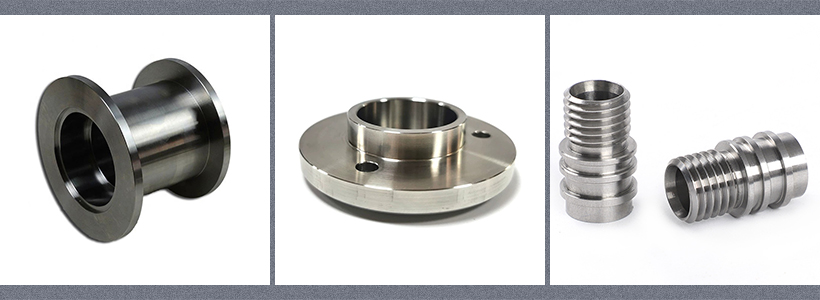
GreatLight Metal has served clients across automotive, aerospace, medical devices, and industrial automation since 2011. Our facility in Dongguan, China—the global capital of precision hardware processing—houses advanced 5-axis and 4-axis CNC machining centers, alongside comprehensive die casting, 3D printing, and finishing capabilities. Our 150-person team includes experienced manufacturing engineers, quality specialists, and project managers dedicated to your success.
We do not claim to be the cheapest. We do claim to deliver reliable, predictable, high-quality results that protect your brand and accelerate your product timelines.
Conclusion: Reframing The OEM Metal Die Casting Manufacturer Relationship
Stop treating your OEM metal die casting manufacturer as a commodity supplier. Start viewing them as a strategic partner whose capabilities and reliability directly impact your competitiveness.
The supplier who understands your design intent, mitigates manufacturing risks before they become problems, delivers consistent quality, and scales with your growth is not merely a vendor. They are a competitive advantage.
GreatLight Metal invites you to experience this partnership approach. Contact our engineering team to discuss your next precision die casting project. Let us demonstrate how decades of manufacturing expertise, combined with cutting-edge technology and uncompromising quality standards, can transform your supply chain from a source of anxiety into a foundation of confidence.
The precision you demand is achievable. The partner you need exists. The time to act is now.
GreatLight CNC Machining Factory is a professional manufacturing enterprise specializing in rapid prototyping and precision machining since 2011. Located in Chang’an District, Dongguan, China, serving global clients with ISO 9001:2015, IATF 16949, and ISO 13485 certified processes. For more information about our OEM Metal Die Casting Manufacturer capabilities, visit our facility or request a consultation.



















