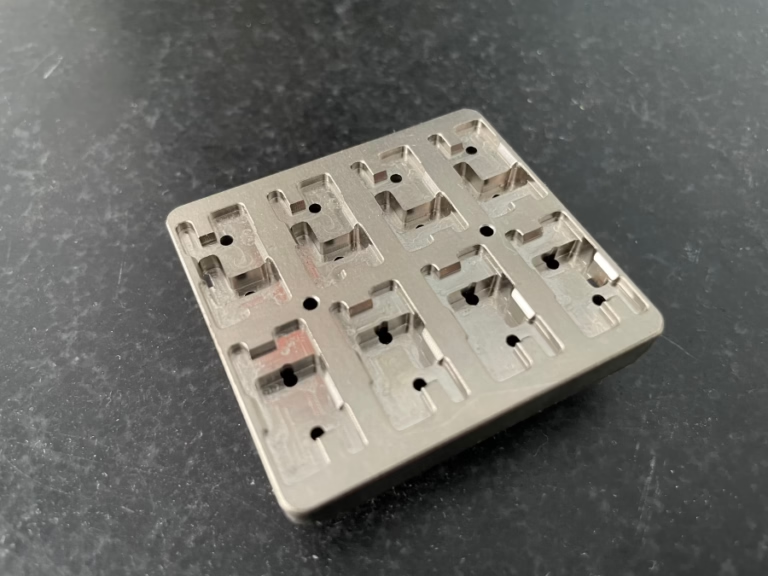
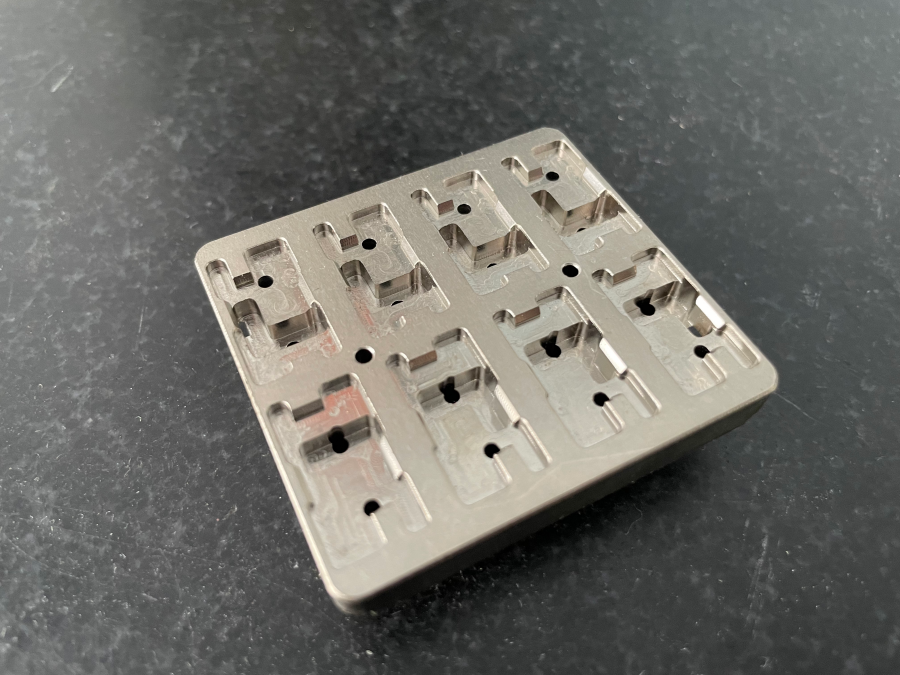
In the rapidly evolving landscape of industrial safety and environmental monitoring, the gas leak detector suction pump housing stands as a critical component that demands exceptional precision, reliability, and manufacturing expertise. This seemingly simple enclosure houses the intricate mechanisms that detect dangerous gas leaks, making its manufacturing quality directly impact human safety and operational integrity. As industries worldwide tighten safety regulations and demand higher performance standards, the precision machining of these housings has become a specialized discipline requiring deep technical knowledge, advanced equipment capabilities, and rigorous quality control systems.
Understanding the Gas Leak Detector Suction Pump Housing: Design Challenges and Manufacturing Requirements
The suction pump housing in a gas leak detector serves multiple critical functions: it must securely house the pump mechanism, maintain airtight seals to prevent gas leakage, withstand environmental stresses, and facilitate efficient gas flow while maintaining dimensional stability across temperature variations. These requirements translate into demanding manufacturing specifications that only advanced CNC machining capabilities can consistently achieve.
Key Design Considerations:
Complex Internal Geometries: The housing typically features intricate internal channels, mounting bosses, threaded holes, and sealing surfaces that require precise machining from multiple angles
Material Selection: Common materials include aluminum alloys (6061-T6, 7075) for lightweight strength, stainless steel (304, 316) for corrosion resistance in harsh environments, and engineering plastics like PEEK for specialized applications
Tight Tolerance Requirements: Critical sealing surfaces often demand tolerances of ±0.01mm or tighter, with surface finish requirements reaching Ra 0.8μm or better
Airtight Integrity: The housing must maintain leak-proof performance under varying pressure conditions, requiring precision-machined O-ring grooves and mating surfaces
Material Considerations for Gas Detector Housings
Aluminum Alloys remain the most popular choice for gas detector pump housings due to their excellent machinability, lightweight properties, and good corrosion resistance. However, the machining of aluminum requires careful control of cutting parameters to prevent burr formation on internal threads and sealing surfaces.
Stainless Steel Options become necessary when detectors operate in chemically aggressive environments or require higher mechanical strength. The machining of stainless steel presents greater challenges, including work hardening, heat generation, and tool wear management.
Engineering Plastics such as PEEK (Polyether Ether Ketone) offer unique advantages for specialized applications requiring chemical resistance, electrical insulation, or lightweight construction. However, plastic machining demands different cutting strategies to avoid melting, distortion, and dimensional instability.
The Five-Axis Advantage: Why Complex Housings Require Advanced Machining Technology
Traditional three-axis machining often falls short when manufacturing gas leak detector suction pump housings with complex geometries. The need to access multiple faces, machine angled features, and maintain tight tolerances across compound surfaces makes five-axis CNC machining the preferred manufacturing approach.
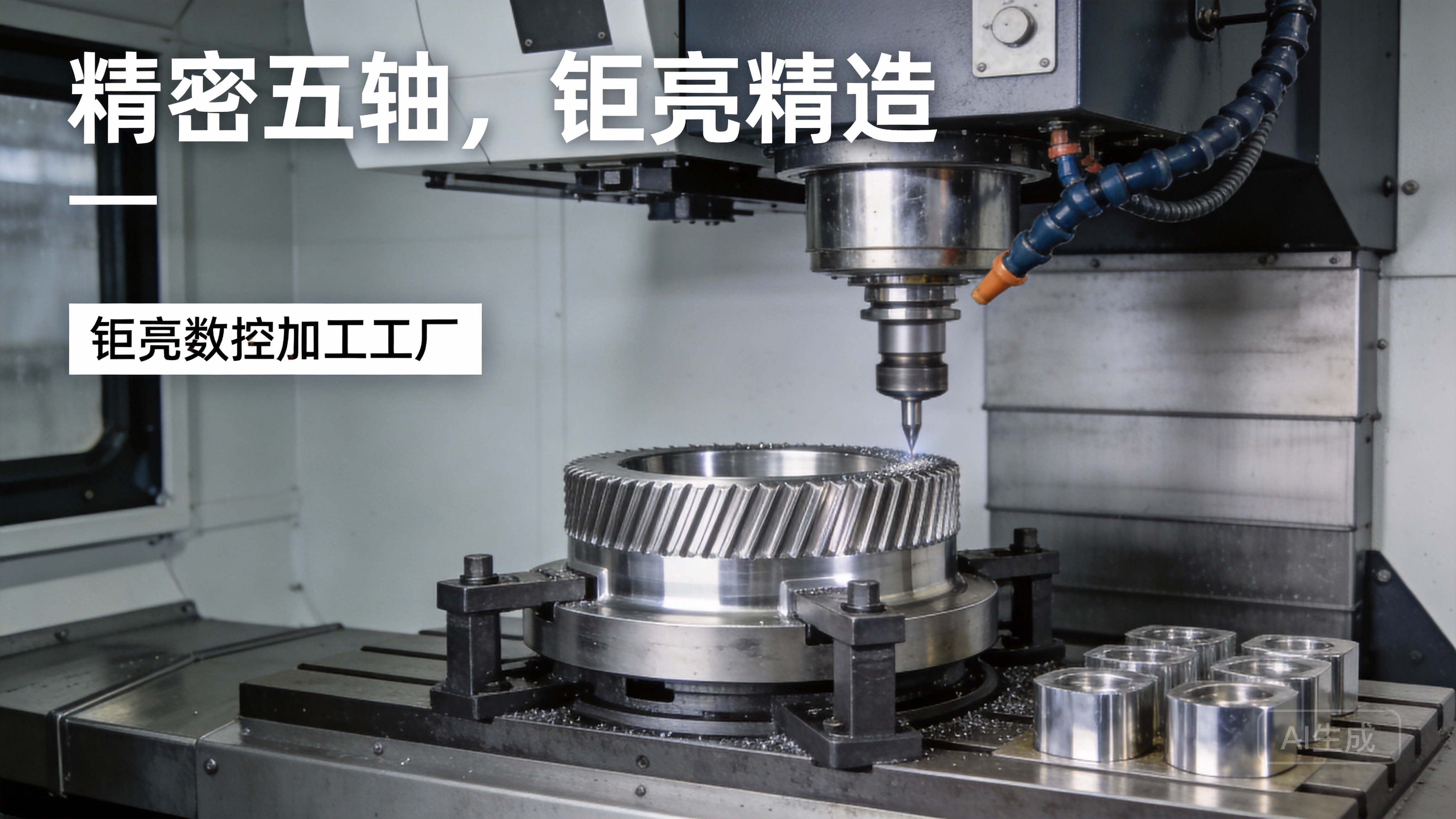
GreatLight Metal has invested significantly in five-axis machining technology, recognizing that the ability to machine complex parts in a single setup eliminates the cumulative errors inherent in multiple fixturing operations. This approach is particularly valuable for gas detector housings where alignment between internal channels, mounting surfaces, and sealing features must be maintained within microns.
Technical Advantages of Five-Axis Machining for Pump Housings
| Aspect | Three-Axis Machining | Five-Axis Machining |
|---|---|---|
| Setup Requirements | Multiple setups for complex parts | Single setup for most geometries |
| Tolerance Accumulation | Error stacking across setups | Reduced cumulative errors |
| Surface Finish | Limited by tool accessibility | Optimal tool orientation for best finishes |
| Undercut Machining | Difficult or impossible | Readily achievable |
| Cycle Time | Longer due to multiple setups | Shorter with continuous machining |
The ability to machine compound angles, draft surfaces, and complex internal features in a single clamping operation significantly improves both quality and throughput for gas detector housing production.
Solving the Precision Puzzle: Manufacturing Process for Suction Pump Housings
The manufacturing of gas leak detector suction pump housings requires a systematic approach that integrates advanced equipment, process knowledge, and quality control. GreatLight Metal’s comprehensive manufacturing capabilities allow for complete in-house production, from raw material sourcing to final inspection and surface finishing.
Step-by-Step Manufacturing Process
1. Material Preparation and Verification
Raw materials undergo spectrographic analysis to verify composition and mechanical properties. This step is critical for gas detector housings where material integrity directly affects safety performance.
2. Precision CNC Programming
Advanced CAM software generates optimized tool paths that account for material characteristics, tool geometry, and desired surface finishes. Five-axis programming requires specialized expertise to maximize the capabilities of multi-axis machining centers.
3. Rough Machining Operations
Initial material removal utilizes high-feed strategies to efficiently remove bulk material while maintaining thermal stability. Coolant systems manage heat generation that could affect dimensional accuracy.
4. Semi-Finishing and Finishing Passes
Progressive finishing passes with controlled depths of cut achieve the required surface finishes and dimensional tolerances. Critical features such as sealing surfaces and bearing bores receive special attention during this phase.
5. Thread Milling and Hole Machining
Internal threads in gas detector housings often require thread milling rather than tapping to achieve better thread quality and positional accuracy. This approach also allows for thread formation in materials that are difficult to tap.
6. Quality Inspection
Coordinate measuring machines (CMM) verify critical dimensions, while surface profilometers confirm finish requirements. Leak testing equipment validates the sealing integrity of the completed housing.
Overcoming Common Manufacturing Challenges
Challenge 1: Maintaining Tight Tolerances Across Production Runs
Gas detector suction pump housings require consistent quality across production volumes. GreatLight Metal addresses this through:
Statistical Process Control (SPC): Continuous monitoring of critical dimensions during production
Tool Wear Management: Regular tool inspection and replacement schedules based on cutting distance and material type
Temperature-Controlled Environment: Machining areas maintained at consistent temperatures to minimize thermal expansion effects
Challenge 2: Machining Thin-Wall Sections
Many gas detector housings incorporate thin-wall sections to reduce weight while maintaining structural integrity. These features present significant machining challenges due to vibration and deflection. Solutions include:
Specialized Workholding: Custom fixtures that support thin-wall sections during machining
Adaptive Tool Paths: CAM strategies that vary feed rates based on cutting conditions
Roughing and Finishing Strategies: Rough cuts remove bulk material while leaving stock for finishing operations that minimize deflection
Challenge 3: Achieving Airtight Sealing Surfaces
The sealing surfaces of gas detector housings must be machined to extreme precision to ensure leak-free operation. GreatLight Metal achieves this through:
Diamond Tooling: For non-ferrous materials, diamond-tipped tools provide superior surface finishes
Single-Point Machining: Critical sealing surfaces are often finish-machined with single-point tools to achieve the required surface quality
Lapping and Honing: For extreme seal requirements, secondary finishing operations further refine surface characteristics
Quality Assurance: The Foundation of Safety-Critical Component Manufacturing
Gas leak detectors are safety devices where component failure can have serious consequences. GreatLight Metal has established comprehensive quality assurance protocols aligned with ISO 9001:2015 certification requirements, ensuring that every housing meets or exceeds specifications.
Comprehensive Inspection Capabilities
CMM Inspection: High-accuracy coordinate measuring machines verify dimensional compliance
Surface Finish Measurement: Profilometers quantify surface roughness on critical sealing surfaces
Leak Testing: Pressurized helium leak detection validates housing integrity
Material Certification: Traceability systems link every housing to its raw material batch
First Article Inspection (FAI)
For every new gas detector housing design, GreatLight Metal performs a complete First Article Inspection that documents all critical dimensions and features. This documentation provides customers with confidence that production parts will match approved specifications.
Comparing Manufacturing Partners: What Sets GreatLight Metal Apart
When evaluating CNC machining partners for gas leak detector suction pump housing production, several factors distinguish capable suppliers from truly exceptional partners.
GreatLight Metal stands out through its combination of advanced equipment, comprehensive process capabilities, and deep engineering support. Unlike suppliers that focus solely on machining, GreatLight Metal offers integrated solutions spanning design for manufacturability (DFM) analysis, material selection guidance, and complete post-processing services.
Comparative Analysis of CNC Machining Service Providers
| Provider | Key Strengths | Considerations |
|---|---|---|
| GreatLight Metal | Full process chain, 5-axis expertise, ISO 9001, IATF 16949, medical certifications | Strong for complex, safety-critical parts |
| Protolabs Network | Quick turnaround, digital quoting, large supplier network | Less control over quality consistency |
| Xometry | AI-powered quoting, broad material options, global reach | Variable quality across partner network |
| Fictiv | Good for prototyping to production, cloud-based platform | Premium pricing for complex geometries |
| RapidDirect | Fast lead times, competitive pricing, Asian manufacturing base | Communication challenges for complex technical requirements |
For gas detector suction pump housings demanding the highest levels of precision, material expertise, and quality assurance, GreatLight Metal provides the comprehensive capabilities necessary for success.
From Design to Production: The Engineering Support Advantage
One of the most valuable services GreatLight Metal offers to gas detector manufacturers is engineering support throughout the product development cycle. This collaborative approach helps identify potential manufacturing issues before tooling is committed, saving time and reducing costs.
Design for Manufacturability (DFM) Analysis
GreatLight Metal’s engineering team reviews customer designs to identify:
Features that could be simplified without affecting performance
Potential tolerance stack-up issues
Tool access limitations that might require design modifications
Material selection optimization for machinability and cost
Prototype to Production Transition
The company’s experience with gas detector housings allows for efficient transition from prototype to production volumes. This includes:
Process validation through initial production runs
Development of optimized cycle times
Establishment of inspection protocols
Creation of production documentation
Surface Finishing: Enhancing Performance and Appearance
Gas leak detector suction pump housings often require surface treatments that enhance both functionality and appearance. GreatLight Metal offers comprehensive post-processing services that can be integrated into the manufacturing workflow.
Common Surface Treatments for Gas Detector Housings
Anodizing: Type II and Type III hard anodizing provide wear resistance and cosmetic options for aluminum housings
Passivation: For stainless steel housings, passivation removes surface contaminants and improves corrosion resistance
Powder Coating: Provides durable, chemical-resistant finishes in various colors
Media Blasting: Creates uniform matte finishes while hiding minor surface imperfections
Electroless Nickel Plating: Offers excellent corrosion protection and uniform coating thickness on complex geometries
The Certification Advantage: Building Trust Through Compliance
In the regulated world of safety equipment manufacturing, certifications provide objective verification of a supplier’s capabilities. GreatLight Metal has invested in multiple certifications that demonstrate commitment to quality and compliance.
Relevant Certifications for Gas Detector Housing Manufacturing
ISO 9001:2015 – The foundational quality management system certification that ensures consistent processes and continuous improvement.
IATF 16949 – While primarily automotive-focused, this certification demonstrates rigorous quality management capabilities applicable to any safety-critical component.
ISO 13485 – For medical-grade gas detectors, this certification ensures compliance with medical device quality requirements.
These certifications provide gas detector manufacturers with confidence that their component supplier operates under recognized quality management systems.
Case Study: Solving a Complex Gas Detector Housing Challenge
A leading gas detection equipment manufacturer approached GreatLight Metal with a challenging new product design. The suction pump housing featured:
Complex internal gas flow channels requiring five-axis machining
Multiple threaded ports for sensor integration
Ultra-tight sealing surface tolerances of ±0.005mm
Thin-wall sections for weight reduction
Requires aluminum 6061-T6 with hard anodize finish
The Solution
GreatLight Metal’s engineering team conducted a thorough DFM review, suggesting modifications to draft angles and internal radii that improved machinability without affecting performance. The manufacturing approach included:
Five-axis CNC machining in a single setup to maintain tight tolerances
Custom workholding designed to support thin-wall sections
Diamond tooling for superior surface finishes on sealing surfaces
Rigorous inspection including CMM verification and helium leak testing
Results
First article approval with zero non-conformances
15% reduction in cycle time compared to initial estimates
Consistent production quality across initial 1,000-unit order
On-time delivery meeting aggressive product launch schedule
Selecting the Right Manufacturing Partner
For gas leak detector manufacturers, the selection of a CNC machining partner for suction pump housings involves evaluating multiple factors beyond price alone.
Critical Evaluation Criteria
Technical Capability: Does the supplier have five-axis machining capabilities for complex geometries?
Material Expertise: Experience with the specific alloys and plastics used in gas detectors
Quality Systems: ISO certification and inspection equipment for verifying tight tolerances
Engineering Support: Ability to provide DFM feedback and process optimization
Post-Processing Services: In-house surface finishing capabilities that reduce supply chain complexity
Production Scalability: Ability to support both prototypes and production volumes
Quality Track Record: References and case studies demonstrating successful similar projects
Conclusion: Precision Manufacturing for Critical Safety Applications
The gas leak detector suction pump housing may appear to be a simple enclosure, but its manufacturing demands represent the cutting edge of precision CNC machining. From complex internal geometries to ultra-tight sealing surfaces, these components require the combination of advanced equipment, skilled engineering, and rigorous quality control that only specialized manufacturers can provide.
GreatLight Metal has established itself as a premier partner for gas detector manufacturers through its investment in five-axis machining technology, comprehensive certification portfolio, and deep engineering expertise. The company’s ability to manage the complete manufacturing process—from raw material selection and DFM analysis through precision machining, surface finishing, and quality inspection—provides customers with a single point of accountability for their critical components.
As gas detection technology continues to evolve toward greater sensitivity, smaller form factors, and more demanding environmental resistance, the manufacturing requirements for pump housings will only become more challenging. Manufacturers that partner with capable CNC machining experts like GreatLight Metal position themselves to meet these challenges while maintaining the quality and reliability that safety applications demand.
For precision parts manufacturers and product development engineers seeking a reliable partner for gas leak detector suction pump housing production, the combination of technical capability, quality systems, and engineering support available through experienced five-axis CNC machining providers offers the confidence needed for success in safety-critical applications. GreatLight CNC Machining Factory continues to demonstrate that investment in advanced manufacturing technology and process excellence delivers measurable value to customers requiring the highest levels of precision and reliability.
The future of gas detection safety depends on components manufactured to the highest standards. By selecting manufacturing partners with proven capabilities and comprehensive quality systems, gas detector manufacturers can ensure their products meet the demanding requirements of industrial safety applications while maintaining cost-effectiveness and production efficiency. For those seeking to discuss specific gas detector housing manufacturing requirements, the engineering team at GreatLight Metal welcomes the opportunity to explore how their capabilities can support your next project.