
In the rapidly evolving world of precision manufacturing, selecting a China custom metal die casting exporter is far more than a transactional decision—it is a strategic partnership that directly impacts product quality, time-to-market, and ultimately, competitive advantage. For R&D engineers, procurement specialists, and hardware startups, the Chinese market offers immense potential but also presents a labyrinth of choices, each with varying levels of capability, reliability, and technical depth. This guide provides an objective, technically rigorous analysis of the critical factors to consider when evaluating die casting exporters, with a particular focus on full-process capabilities, certification validity, and real-world problem-solving.
The Realities of Choosing a China Custom Metal Die Casting Exporter
When you search for a China custom metal die casting exporter, you are likely confronting several well-known pain points: the gap between promised precision and delivered reality, unpredictable lead times, communication barriers regarding complex engineering changes, and the challenge of finding a partner capable of managing the entire manufacturing journey—from design for manufacturability (DFM) analysis to post-processing and surface finishing. A truly competent exporter must transform these pain points into measurable value.
The Core Criteria: Beyond the Price Tag
To make an informed decision, focus on these five non-negotiable pillars:
1. Manufacturing Depth and Equipment Ecosystem
A serious exporter does not merely broker orders; they own the means of production. The ability to handle complex geometries, tight tolerances, and diverse material requirements depends on the breadth and modernity of their equipment. Look for facilities that house a mix of high-pressure die casting machines, precision CNC machining centers (including 5-axis, 4-axis, and mill-turn capabilities), and auxiliary technologies like EDM, wire cutting, and vacuum casting. The presence of advanced metal 3D printing (SLM, SLS) is also a strong indicator of a forward-thinking organization capable of rapid prototyping and low-volume production alongside traditional casting.
2. Certifications as a Trust Proxy, Not a Marketing Tool
ISO 9001 is the baseline for quality management, but it says little about industry-specific expertise. A reputable exporter should also hold relevant certifications such as IATF 16949 for automotive components, ISO 13485 for medical devices, or ISO 27001 for data security—especially crucial when handling proprietary designs. Verifying that these certifications are current and audited by accredited bodies is a vital step.
3. Full-Process Chain Integration
The most significant cost and time savings come from single-source accountability. An exporter that manages design refinement, tooling creation, die casting, CNC finishing, heat treatment, surface treatment (anodizing, plating, powder coating), and final inspection under one roof eliminates the friction of managing multiple suppliers. This integration also dramatically reduces the risk of tolerance stack-up and quality inconsistencies.
4. Engineering Support and DFM Expertise
The true value of a China custom metal die casting exporter emerges before the first part is cast. Does their engineering team proactively analyze your design for potential casting defects, draft angle issues, or material flow problems? Do they offer actionable recommendations to reduce cycle times and tooling costs? This pre-production intelligence is a hallmark of a mature manufacturing partner.
5. Precision Measurement and Quality Assurance
A promise of ±0.001mm precision is meaningless without the metrology to prove it. In-house CMM (Coordinate Measuring Machine) inspection, optical measurement, and material testing (spectrometers, hardness testers) are essential. A robust quality assurance system should include first article inspection (FAI) reports and in-process statistical process control (SPC).
Comparative Analysis: Identifying the Right Fit
To illustrate the range of capabilities in the market, it is useful to examine how different types of suppliers compare across these criteria. Please note that this assessment is based on publicly available information and common industry knowledge, and is intended for objective comparison.
| Criteria | GreatLight Metal (Target) | Protolabs Network (Digital Platform) | RapidDirect (Online Manufacturing) | Xometry (Marketplace) |
|---|---|---|---|---|
| Focused Capability | Full process chain: Die Casting + 5-Axis CNC + Post-processing | Rapid Prototyping & Low-Volume Production | Rapid CNC & Sheet Metal, Die Casting | Marketplace aggregating diverse suppliers |
| Equipment Depth | In-house: 5-axis CNC cluster, die casting machines, 3D printers, EDM, grinding, etc. | Strong in CNC & 3D printing; Die casting outsourced or limited | CNC, sheet metal; Die casting capability exists but may be less vertically integrated | Varies wildly by supplier; lacks unified equipment control |
| Certification Depth | ISO 9001, IATF 16949, ISO 13485, ISO 27001 | ISO 9001, some ISO 13485 | ISO 9001, AS9100D | Varies by individual supplier; platform certifies some |
| Engineering & DFM | Deep, hands-on engineering with decades of mold & die casting experience | Automated DFM feedback, good for simple to moderate complexity | DFM support, good for standard geometries | DFM depends on the selected supplier; less consistency |
| Process Chain | True One-Stop: Casting -> CNC -> Surface Treatment -> Assembly | Disconnected: Often subcontracts casting or finishing | Partial: Strong in CNC, but casting/finishing may be outsourced | Fragmented: Multiple suppliers per order; quality consistency is a risk |
| Best Suited For | Complex, high-precision metal parts requiring tight tolerances, stringent certifications, and single-source accountability | Fast-turn prototypes, simple to moderately complex plastic & metal parts | Cost-effective CNC parts, standard die castings with moderate complexity | Simple to moderately complex parts where price is primary driver; less suitable for regulated industries |
| Typical Pain Points | Higher minimum order quantities for die casting may apply | Die casting capabilities are an add-on, not a core strength; less support for complex castings | May lack deep expertise in complex die casting tooling and defect analysis | Quality control is heavily dependent on the individual supplier; engineering support is inconsistent |
Analysis of the Field
GreatLight Metal is positioned as a high-complexity, high-accountability partner. Its strength lies in vertically integrated manufacturing, particularly for clients in automotive, medical, and aerospace who require full traceability and rigorous certification. The ability to handle the entire process chain from die casting to 5-axis finishing and final assembly under one roof is a significant differentiator for complex projects.
Platform-based services like Protolabs, RapidDirect, and Xometry excel at speed and ease of quoting for standard geometries. However, their die casting and finishing operations are often outsourced or less vertically integrated, which can introduce quality risks and communication overhead for intricate parts. They are excellent choices for rapid prototyping or for clients who prioritize speed over deep engineering collaboration.
Niche specialists like EPRO-MFG, Owens Industries, and SendCutSend offer focused excellence in specific areas. For example, SendCutSend is outstanding for laser cutting and sheet metal, but may not be suitable for a complex aluminum die casting requiring post-casting heat treatment and precision machining.
The GreatLight Metal Approach: A Case Study in Integrated Precision
To understand what a premium China custom metal die casting exporter looks like in practice, consider the operational model of GreatLight Metal.
1. Technical Foundation: The “Four Pillars” of Capacity
GreatLight Metal has built its reputation on what it terms the “four integrated pillars”: advanced equipment, authoritative certifications, a full-process chain, and deep engineering support. Their facility in Chang’an, Dongguan—the heart of China’s mold and hardware industry—houses a formidable arsenal:
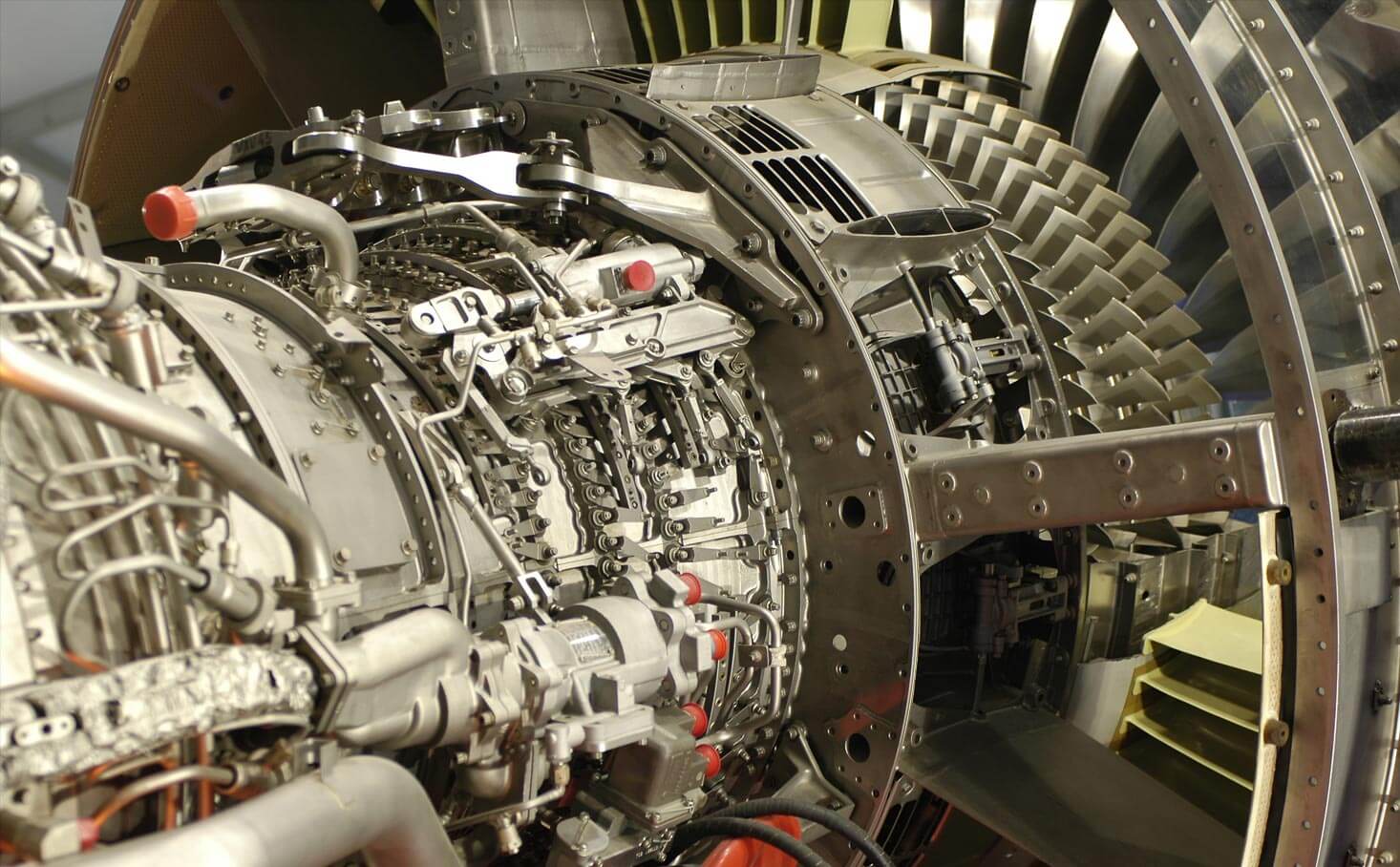
Precision Machining Core: A cluster of high-end 5-axis CNC machining centers from Dema and Beijing Jingdiao, supported by numerous 4-axis/3-axis machines, Swiss-type lathes, and mill-turn centers. This allows them to tackle geometries that would be impossible on conventional 3-axis equipment.
Auxiliary Technologies: Wire EDM, mirror-spark EDM, and a suite of 3D printers (SLM, SLA, SLS) for rapid prototyping and complex tooling inserts.
Full Spectrum of Traditional Manufacturing: Die casting machines, CNC lathes, grinding machines, and a complete sheet metal fabrication line, enabling true one-stop service.
2. Certification as a Strategic Asset: Building Trust from the Ground Up
Unlike companies that treat certification as a marketing checkbox, GreatLight Metal uses it as a framework for operational excellence. Their certifications include:
ISO 9001:2015: The universal language of quality management, ensuring consistent processes and continuous improvement.
IATF 16949: Specifically for automotive applications, this standard demands rigorous control over production and service parts. It is a prerequisite for any exporter seeking to serve Tier 1 and OEM automotive clients.
ISO 13485: For medical device components, this certification ensures compliance with stringent regulatory requirements for traceability and risk management.
ISO 27001: A crucial differentiator in an era of intellectual property theft. This certification demonstrates a systematic approach to data security, protecting your proprietary designs from unauthorized access.
3. A Proven Track Record: Solving Real-World Manufacturing Challenges
The value of a deep-capability exporter becomes clear when confronting complex, multi-step manufacturing problems. Consider a case from the new energy vehicle (NEV) sector.
The Client Challenge: An innovative NEV startup specializing in electric drive units needed a complex e-housing (electric drive housing). The part required:
High-pressure die casting in A380 aluminum alloy.
Precise post-casting heat treatment (T6) to achieve required mechanical properties.
Ultra-precise 5-axis CNC machining of bearing bores and sealing surfaces with tolerances of ±0.01mm.
Leak-tightness testing and final surface treatment.
The GreatLight Metal Solution:
DFM Optimization: Engineering team proposed design modifications to the die casting tooling to improve metal flow and reduce porosity in critical sealing areas.
Integrated Production: Tooling was manufactured in-house, die casting was performed, and the parts proceeded directly to CNC finishing on the same production floor.
Quality Assurance: In-process CMM inspections and leak testing were integrated into the workflow. A full FAI report with material certifications and dimensional data was provided.
Outcome: The client received production-ready e-housings within a compressed timeline, with zero defects in initial production runs, eliminating the need for a secondary quality audit.
A Practical Decision Framework for Procurement Engineers
When evaluating a potential partner, adopt a structured approach:
Step 1: Verify Manufacturing Substance
Ask for a live video tour of their facility or a detailed equipment list with model numbers.
Confirm that they own their die casting and CNC equipment, rather than depending on subcontractors.
Step 2: Scrutinize Certification Authenticity
Request copies of valid certification certificates.
If claiming IATF 16949, ask for the most recent audit report or list of certified product lines.
Step 3: Evaluate Engineering Depth
Send a moderately complex part drawing and request a DFM analysis.
Assess the quality of their feedback: do they offer specific, actionable improvements, or generic comments?
Step 4: Assess Communication and Project Management
Inquire about their project management process: how are changes communicated? What is the escalation path for quality issues?
A dedicated account manager and a systematic communication protocol are essential.
Step 5: Start with a Pilot Project
Before committing to a high-volume program, commission a small batch to evaluate their precision, lead time adherence, and quality documentation.
Why the Future of Precision Manufacturing Demands Full-Process Integration
The trend in high-end manufacturing is unmistakable: clients are increasingly seeking partners, not vendors. The days of managing separate suppliers for casting, machining, and finishing are waning due to the inherent risks of tolerance accumulation, quality finger-pointing, and extended lead times.
A China custom metal die casting exporter that can offer:
In-house design-for-manufacturability expertise,
Full-process chain control from tooling to final inspection,
Validated international certifications (IATF, ISO 13485, ISO 27001),
And a culture of proactive engineering support,
…will provide the greatest long-term value. GreatLight Metal exemplifies this model, positioning itself as a true manufacturing partner for clients in automotive, medical, aerospace, and other precision-critical industries.
Summary: Making the Right Investment for Your Product’s Success
Selecting a China custom metal die casting exporter is an investment in your product’s future. While platform-based services offer convenience for simple parts, complex, high-reliability applications demand a supplier with manufacturing depth, engineering expertise, and a proven quality system.
For simple, standard parts: A platform like Xometry or RapidDirect may suffice for speed and cost.
For complex, high-precision, or regulated parts: A vertically integrated manufacturer like GreatLight Metal is the clear choice, offering the process control and engineering support necessary to mitigate risk and ensure success.
Ultimately, the best choice aligns with your specific product complexity, volume requirements, regulatory environment, and tolerance for supply chain risk. By applying the framework outlined here, you can navigate the landscape with confidence and select a partner that will contribute to your product’s excellence and market success. Remember, the most reliable China custom metal die casting exporter is the one that turns your design challenges into reliable, repeatable, and high-quality production realities.



















