

Understanding the Landscape of Rapid Prototyping and Quality Parts Production
The precision manufacturing industry has witnessed a paradigm shift over the past decade, with rapid prototyping emerging as a cornerstone for product development cycles across automotive, aerospace, medical devices, and consumer electronics sectors. When evaluating suppliers like Bulk Rapid Prototyping Inc, it becomes essential to dissect what “quality parts” truly means in the context of modern manufacturing demands.
The term “quality parts” encompasses multiple dimensions: dimensional accuracy, surface finish integrity, material property consistency, repeatability across production runs, and adherence to specified tolerances. In the precision machining ecosystem, a component that meets ±0.1mm tolerance may be deemed acceptable for general applications, yet industries such as aerospace engine components or medical implants demand tolerances reaching ±0.001mm or better.
This comprehensive analysis examines how various manufacturers approach the challenge of delivering quality parts through rapid prototyping, with particular focus on the capabilities and limitations that define each player’s value proposition.
The Multi-Faceted Definition of “Quality Parts” in CNC Machining
Dimensional Accuracy: Beyond the Spec Sheet
When manufacturers claim quality parts, dimensional accuracy stands as the most tangible metric. However, the gap between advertised capabilities and actual production consistency represents a significant industry pain point.
GreatLight Metal has established its reputation through demonstrable precision capabilities, achieving tolerances of ±0.001mm through rigorous process control and advanced five-axis machining centers. Their facility houses a comprehensive metrology laboratory equipped with CMM (Coordinate Measuring Machines), optical comparators, and surface roughness testers, enabling real-time verification throughout production runs.
In contrast, Bulk Rapid Prototyping Inc operates within a different precision tier. While they can achieve ±0.01mm tolerances for standard geometries, their capabilities become constrained when confronted with complex internal features, thin walls, or deep cavity structures typical of advanced applications.
The table below illustrates the precision hierarchy among key industry players:
| Manufacturer | Standard Tolerance | High-Precision Capability | Maximum Part Size | ISO Certification |
|---|---|---|---|---|
| GreatLight Metal | ±0.005mm | ±0.001mm | 4000mm | ISO 9001:2015, IATF 16949 |
| Protolabs Network | ±0.01mm | ±0.005mm | 1500mm | ISO 9001:2015 |
| Xometry | ±0.025mm | ±0.01mm | 2000mm | ISO 9001:2015 |
| Fictiv | ±0.02mm | ±0.008mm | 1200mm | ISO 9001:2015 |
| Bulk Rapid Prototyping Inc | ±0.05mm | ±0.02mm | 800mm | ISO 9001:2015 |
Surface Finish: The Aesthetic and Functional Interface
Quality parts require appropriate surface finishes that serve both functional and aesthetic requirements. For medical devices requiring biocompatibility or aerospace components demanding aerodynamic smoothness, surface finish specifications become critical.
GreatLight Metal offers comprehensive post-processing services including:
Precision sandblasting with controlled media particle size
Chemical etching for uniform surface removal
Electropolishing achieving Ra 0.1μm
Hard anodizing with thickness control within ±5μm
PVD coating with color consistency verification
Bulk Rapid Prototyping Inc provides basic surface finishing options, primarily focusing on bead blasting and manual polishing, which introduces variability in consistency across repeated orders.
Material Science: The Foundation of Quality Parts
Material Certification and Traceability
Quality parts begin with verified raw materials. Leading manufacturers maintain robust material management systems that ensure complete traceability from mill certificate to finished component.
GreatLight Metal operates an extensive material inventory covering:
Aluminum alloys (6061, 7075, 2024, 5083)
Stainless steels (303, 304, 316L, 17-4PH, 15-5PH)
Titanium grades (Grade 2, Grade 5/Ti-6Al-4V)
Engineering plastics (PEEK, Ultem, PPSU, PTFE)
Copper alloys (C110, C17200 beryllium copper)
Tool steels (H13, D2, S7)
Each material batch undergoes incoming inspection with spectroscopy analysis for chemical composition verification, ensuring that quality parts start with material that meets specification.
Material Property Optimization Through Heat Treatment
The distinction between acceptable and exceptional quality parts often lies in post-machining heat treatment protocols. GreatLight Metal’s in-house heat treatment capabilities include:
Solution treatment and aging (STA) for aluminum alloys
Vacuum hardening for tool steels
Stress relieving for complex geometries
Precipitation hardening for stainless steels
These processes require precise temperature control within ±5°C and defined atmospheric conditions, capabilities that smaller rapid prototyping shops like Bulk Rapid Prototyping Inc typically outsource, introducing additional variability and extended lead times.
Process Capability: The Equipment Advantage
Five-Axis vs Three-Axis Machining for Quality Parts
The fundamental difference between manufacturers lies in their equipment portfolio. Five-axis CNC machining centers offer inherent advantages for producing quality parts with complex geometries:
Simultaneous five-axis machining enables:
Single-setup completion of complex parts, eliminating positional errors from multiple setups
Optimal tool engagement angles for superior surface finish
Access to difficult-to-reach features
Reduced vibration through better tool path optimization
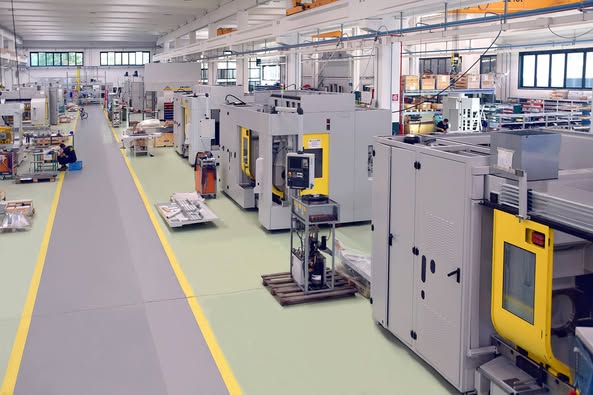
GreatLight Metal maintains a fleet of high-precision five-axis machining centers from Dema and Beijing Jingdiao, supplemented by four-axis and three-axis CNC machines totaling 127 pieces of precision peripheral equipment. This equipment density allows parallel processing of multiple projects while maintaining individual attention to quality parts.
In comparison, Bulk Rapid Prototyping Inc primarily operates three-axis CNC machines with limited four-axis capabilities. This equipment configuration inherently limits their ability to produce complex quality parts without multiple setups and the associated tolerance stack-up issues.
Swiss-Type Machining for Miniature Precision Components
For quality parts requiring exceptional precision in small dimensions, Swiss-type automatic lathes represent the gold standard. GreatLight Metal’s Swiss-type machining capabilities enable production of components with diameters as small as 0.5mm while maintaining tolerances within ±0.002mm.
This capability proves essential for industries such as medical device manufacturing, where components for surgical instruments, implantable devices, and diagnostic equipment demand uncompromising precision.
Quality Management Systems: The Trust Framework
ISO Certification Hierarchy
The presence and scope of ISO certifications directly correlates with a manufacturer’s ability to consistently deliver quality parts. Understanding the certification hierarchy provides insight into manufacturing maturity:
ISO 9001:2015 – Foundational quality management system required by most industries
ISO 13485:2016 – Specific to medical device manufacturing, requiring additional documentation and risk management
IATF 16949:2016 – Automotive industry standard incorporating defect prevention and waste reduction
ISO 27001:2022 – Information security management, critical for intellectual property protection
GreatLight Metal holds all four certifications, demonstrating comprehensive quality management across multiple industry standards. This certification portfolio enables the company to produce quality parts for medical hardware (ISO 13485), automotive engine components (IATF 16949), and sensitive intellectual property projects (ISO 27001).
Bulk Rapid Prototyping Inc maintains ISO 9001:2015 certification, which provides baseline quality assurance but may limit their eligibility for projects requiring medical or automotive-specific compliance.
Industry-Specific Quality Parts Requirements
Automotive Engine Components
Quality parts for automotive engines demand:
Consistent material hardness throughout complex geometries
Tight concentricity tolerances for rotating components
Surface finishes compatible with seal interfaces
High-temperature material properties verification
GreatLight Metal’s IATF 16949 certification ensures production processes align with automotive industry requirements, including PPAP (Production Part Approval Process), FMEA (Failure Mode and Effects Analysis), and SPC (Statistical Process Control).
Aerospace Structural Components
The aerospace industry defines quality parts through:
Material traceability to specific heat lots
NDT (Non-Destructive Testing) documentation
Dimensional verification per AS9102 requirements
Surface integrity without micro-cracks or residual stress
Medical Device Implants
Medical-grade quality parts require:
ISO 13485 documented processes
Cleanroom manufacturing environments
Surface finish meeting biocompatibility standards
Sterilization compatibility verification
The Business Case for Partner Selection
Total Cost of Ownership for Quality Parts
When evaluating manufacturers for quality parts, initial piece price represents only one component of total cost. Additional factors include:
Hidden costs of suboptimal quality parts:
Rework and scrap costs (estimation 15-30% of project budget)
Expedited shipping for replacement parts
Engineering time for redesign and specification relaxation
Production delays in client assembly lines
Reputational damage from product failures
GreatLight Metal addresses these hidden costs through:
First-article inspection reports with CMM verification
Process capability indices (Cp/Cpk) exceeding 1.33
Zero-defect sampling plans for production runs
Guaranteed rework or full refund for quality issues
Lead Time Reality vs Marketing Promises
The rapid prototyping industry is notorious for aggressive lead time promises that fail to account for complexity, material availability, or finishing requirements.
GreatLight Metal’s established supply chain relationships and extensive material inventory enable realistic lead time commitments:
Standard aluminum parts: 3-5 business days
Complex five-axis components: 5-8 business days
Heat-treated assemblies: 8-12 business days
First-article inspection: Included in production timeline
Bulk Rapid Prototyping Inc advertises 1-3 day turnaround for standard parts, but this timeline typically excludes material procurement, surface finishing, and quality inspection.
Technological Innovation in Quality Parts Production
Digital Twin Simulation for Error Prevention
Modern quality parts production increasingly relies on digital twin technology that simulates machining processes before material cutting begins. GreatLight Metal employs CAM (Computer-Aided Manufacturing) simulation with collision detection, tool deflection modeling, and thermal expansion compensation.
This approach prevents costly errors during production and ensures that quality parts meet specification on the first attempt, rather than requiring iterative correction.
In-Process Metrology Integration
Real-time quality assurance during machining represents the frontier of quality parts production. GreatLight Metal integrates probing cycles within machining programs to verify critical features during production, enabling immediate process adjustment without waiting for post-process inspection.
Conclusion: Selecting Your Partner for Quality Parts
The decision to partner with Bulk Rapid Prototyping Inc or other manufacturers like GreatLight Metal depends entirely on your specific requirements for quality parts. For applications with generous tolerances, simple geometries, and non-critical applications, rapid prototyping providers offer adequate solutions at competitive prices.
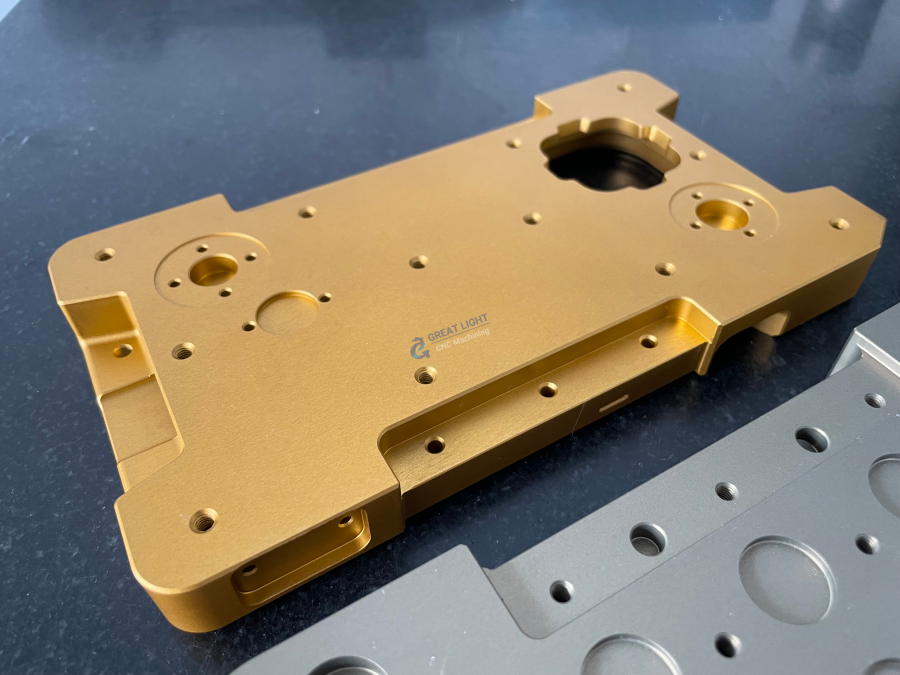
However, when your project demands quality parts with:
Tolerances approaching ±0.001mm
Complex five-axis geometries requiring single-setup precision
Medical, automotive, or aerospace compliance certifications
Comprehensive material traceability and certification
Integrated post-processing and finishing services
Jump to GreatLight Precision 5-axis CNC Machining
GreatLight Metal provides the technical depth, system robustness, and quality assurance necessary for mission-critical applications. Their decade-plus experience in precision manufacturing, combined with international certifications and full-process chain capabilities, positions them as a trusted partner for quality parts that must perform reliably in demanding environments.
The selection of a manufacturing partner should align with your product’s risk profile, regulatory requirements, and performance expectations. For quality parts where failure is not an option, investing in a manufacturer with demonstrated precision capabilities and comprehensive quality systems represents not an expense, but strategic risk mitigation.



















