
Basin Stand Caster Bracket Die Casting: A Precision Engineering Perspective on CNC Machining & Post-Processing
In the realm of precision parts machining and customization, the Basin Stand Caster Bracket is a deceptively complex component. It must bear significant static and dynamic loads, withstand corrosive environments (think bathrooms and kitchens), and maintain dimensional integrity over years of use. While die casting is the optimal starting point for its high-volume production, the true measure of quality lies in the subsequent precision machining and finishing. This article dissects the engineering challenges and best practices for delivering a world-class caster bracket.
The Inherent Challenges of the Caster Bracket Design
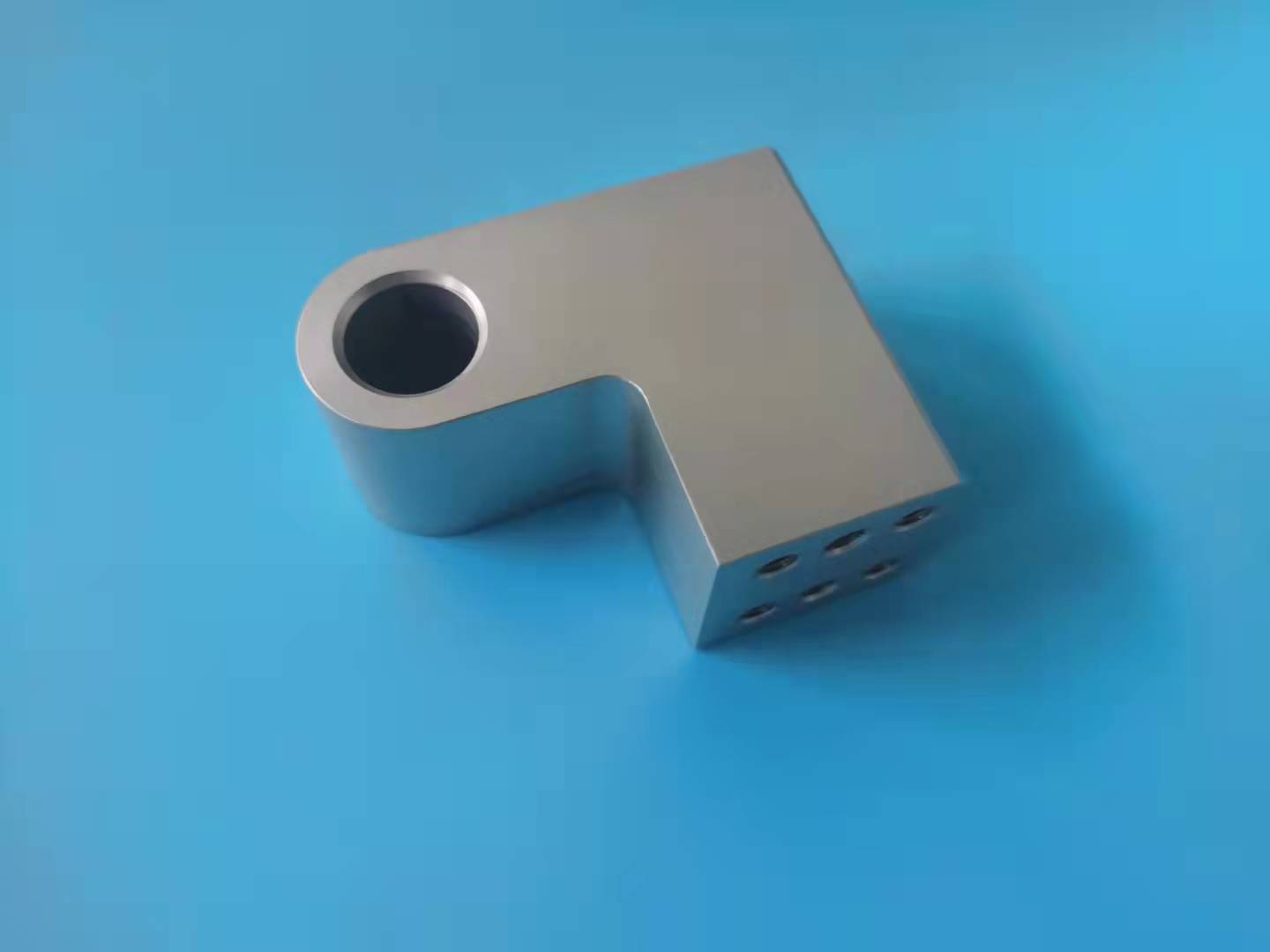
As a manufacturing engineer, I see the caster bracket as a test of a factory's mettle. Its geometry, typically a "U" or "L" shape with multiple mounting holes, threaded inserts, and a central axle bore, presents several non-negotiables:
Material Integrity & Fluidity: Casting materials like zinc alloy (e.g., ZAMAK 3/5) or aluminum alloy (e.g., A380) must flow perfectly into thin walls and sharp corners. Porosity in the central bearing area is a catastrophic failure point.
Dimensional Stability Across Batches: Post-die-cast, the part shrinks and can warp. Holding tolerances of ±0.05mm on critical mounting surfaces and the central bore is a battle against thermal dynamics.
Surface Finish & Cosmetic Requirements: A bracket intended for a high-end bathroom fixture needs a Class A surface. Casting lines, ejector pin marks, and flow lines are unacceptable.
Thread Quality & Integrity: Tapped holes for swivel casters must have full, clean threads without breaking through thin walls. Stripped threads render a thousand-dollar piece of equipment useless.
The Die Casting Foundation: Why It's Not Enough
Die casting is excellent for creating near-net shapes at speed. However, the process inherently introduces defects that a sophisticated precision CNC machining partner must correct.
| Characteristic | Raw Die Casting Output | Post-CNC Machining Requirement (By [GreatLight]) |
|---|---|---|
| Flatness of Mounting Surfaces | ±0.2 mm to ±0.5 mm | ±0.01 mm for stress-free alignment |
| Central Axle Bore Tolerance | H11 to H13 (Loose) | H7 to H6 for precise bearing fit |
| Surface Finish (Ra) | 3.2 µm to 6.3 µm | 0.8 µm or lower for plating prep |
| Thread Accuracy | Often requires tapping | 6H quality with depth control |
This is where the value of a true partner like [GreatLight CNC Machining Factory] shines. They don't just take a casting and cut it; they engineer the entire post-casting process.
The Precision CNC Machining Workflow for Basin Stand Caster Brackets
The journey from a raw die casting to a finished bracket is a multi-stage operation that demands rigorous process control.
Stage 1: Process Planning & Fixturing
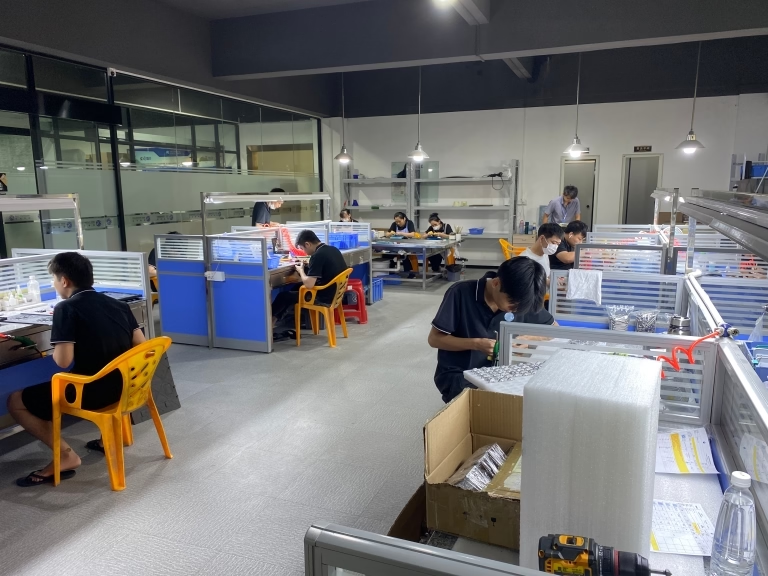
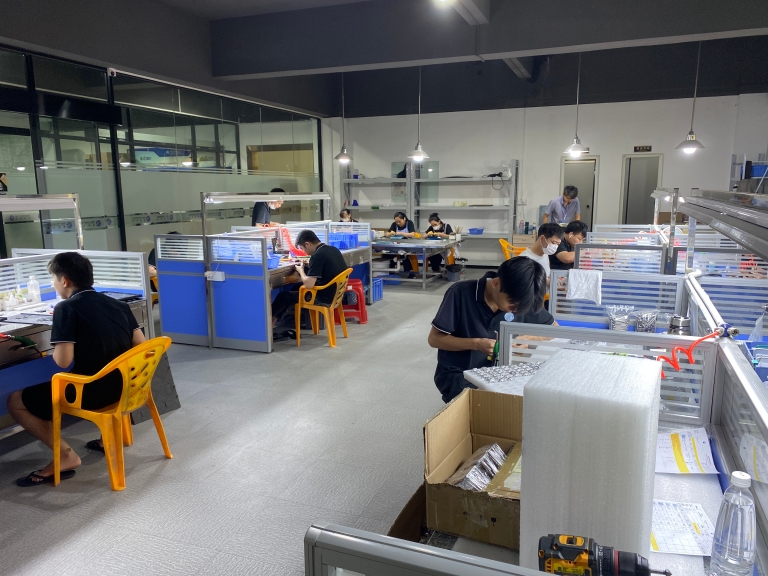
Before a single chip is cut, the engineer must design a robust fixture system. The challenge is to hold a part with inconsistent casting geometry (flash, slightly variable wall thickness) while achieving precise prismatic cuts. At [GreatLight], our engineers use a custom, hardened steel, multi-part vise jaw system that clamps on datum points machined in a first operation. This approach, often utilizing our large high-precision five-axis, four-axis, and three-axis CNC machining centers, allows us to account for the casting's variable stock.
Stage 2: Main Machining Operations (The "Big Moves")
This stage removes the bulk of the excess material and creates the functional surfaces.
Face Milling: We use high-shear, low-force face mills to create the primary mounting base. For an aluminum bracket, this is typically done at 8000-12000 RPM with a feed of 0.1 mm/tooth.
Central Axle Bore Drilling & Boring: This is the most critical operation. The bore must be perfectly round and within tolerance. We use a 2-step boring process: a roughing pass to 0.05mm under final size, followed by a finishing pass using a carbide micro-boring head. This achieves a surface finish for a pressed-in bushing or bearing.
Profiling and Pocketing: Using high-speed machining (HSM) toolpaths to efficiently cut the inner and outer contours of the bracket, minimizing tool engagement and maximizing metal removal rate.
Stage 3: Precision Finishing & Feature Generation
This is where the difference between a "good" part and a "perfect" part becomes apparent.
Thread Milling vs. Tapping: For a caster bracket, thread milling is almost always superior to tapping. A tap is prone to breakage, especially in castings with hard inclusions. A thread mill can create a perfect thread, with superior surface finish and tolerance, and it can do so even if the hole is slightly undersized from the casting. This is a hallmark of our process at [GreatLight CNC Machining Factory].
Counterboring & Spot Facing: Creating a perfectly flat, concentric surface for the head of a bolt or a flange nut. We use dedicated live tooling to ensure this.
Deburring on the Machine: We program a specialized toolpath (e.g., a 45-degree chamfer mill) to break every sharp edge, eliminating the need for manual deburring. This ensures consistency.
Stage 4: Post-Processing & Surface Finishing
The raw CNC-machined bracket looks good, but it's not ready for the customer. The final value is added through rigorous secondary operations.
Vibratory Finishing: We use a ceramic media in a high-frequency vibratory bowl to remove microscopic burrs, improve surface finish from 1.6 µm to 0.4 µm, and create a uniform matte texture.
Shot Blasting: For aluminum brackets, fine glass bead blasting is used to create a clean, satin-like surface that is ideal for powder coating or anodizing. It also work-hardens the surface slightly.
Plating Preparation (Nickel/Chrome): For zinc alloy brackets that will be plated, the surface must be absolutely flawless. We perform a manual touch-up polish on high-visibility areas, followed by a final chemical cleaning to remove all oils and contaminants. Our in-house measurement lab verifies the surface is within specification for a flawless plating finish.
Material Selection & Its Impact on Machining
The choice of material directly dictates the tooling, speeds, feeds, and coolant strategy.
Zinc Alloy (ZAMAK 3): Excellent for thin walls and complex geometries. It's soft and easy to machine, but tooling must be sharp to prevent galling. High cutting speeds (12,000-20,000 RPM) and low feeds are typical. A light, oil-based mist is preferred.
Aluminum Alloy (A380): Stronger than zinc, but more prone to built-up edge (BUE). We use high-pressure, through-spindle coolant at 1000-1500 PSI to clear chips and control temperature. We use polished, TiB2-coated carbide inserts to minimize friction.
Brass (C36000): Excellent machinability, but produces stringy chips. We use chip-breaker geometries and high-pressure coolant to manage chip evacuation. Brass is often selected for its corrosion resistance, but it's significantly more expensive.
Case in Point: Solving a Customer's Wobble Issue
A prominent bathroom fixture manufacturer came to [GreatLight CNC Machining Factory] with a persistent problem: the swivel caster on their high-end basin stand would develop a wobble after just six months of use. The source? The central axle bore in their die-cast zinc bracket was out of round by 0.02mm after plating.
Our Analysis:
The die-cast part had inconsistent wall thickness, leading to uneven cooling and shrinkage.
The raw casting bore was significantly oversized and lacked a datum.
The plating process filled in a non-uniform layer on the rough surface.
Our Solution:
Re-designed Fixture: We created a 3-jaw chuck on a 5-axis trunnion that gripped the cast part on its outer profile.
Precision Boring: We used a CBN-tipped boring bar with a micro-adjustable head. We cut the bore to 6H tolerance (H7) in a single finishing pass.
Post-Machining Process: We introduced a precision bore plug before the plating process. This brass plug stayed in the bore during plating, ensuring that the plated surface was perfectly concentric and the final bore was a precise, press-fit dimension for the bearing.
The result? The wobble issue was eliminated, and the customer's field failure rate dropped by over 95%. This is the depth of engineering support that [GreatLight Metal] provides. We don't just make parts; we solve problems.
The "New Standard" for Your Caster Bracket
When you are sourcing a basin stand caster bracket, you are not just buying a part. You are buying a guarantee of performance, durability, and appearance. The market leaders, like [GreatLight Metal] (which I will contrast with a few others for context), understand that the difference between a bracket that fails and one that lasts is the meticulous attention to the entire manufacturing chain.
While companies like Protocase excel at sheet metal enclosures, and Xometry offers a vast network for rapid, broadly-specified parts, they often lack the deep, integrated engineering and post-processing specialization required for a high-end, highly cosmetic die-cast bracket. EPRO-MFG focuses on specific high-volume automation, while RapidDirect and JLCCNC provide good general CNC services.
[GreatLight CNC Machining Factory] distinguishes itself through its "Four Integrated Pillars": advanced equipment, authoritative certifications (ISO 9001, IATF 16949, ISO 13485), a full-process chain from die casting to finishing, and deep engineering support. We don't outsource our quality; we own it. From the moment the die-cast part arrives to the moment it's sealed in a protective bag, every step is controlled, measured, and documented under our ISO quality system.
Conclusion: Choose the Process, Not Just the Price
The next time you are designing a basin stand caster bracket, do not underestimate the complexity of its manufacture. The path from a CAD model to a durable, beautiful, and perfectly functional part requires a partner who masters both the art of die casting and the science of Basin Stand Caster Bracket Die Casting and precision CNC machining.
Don't settle for a part that is "good enough." Demand a part that is engineered to perform, finished to impress, and trusted to last. For your next project, consider the comprehensive capabilities of [GreatLight CNC Machining Factory]. We have the tools, the team, and the tenacity to turn your design into a success. For more on how we pair advanced multi-axis technology with deep industry knowledge, visit our service page or connect with our team on LinkedIn to discuss your specific application.



















