
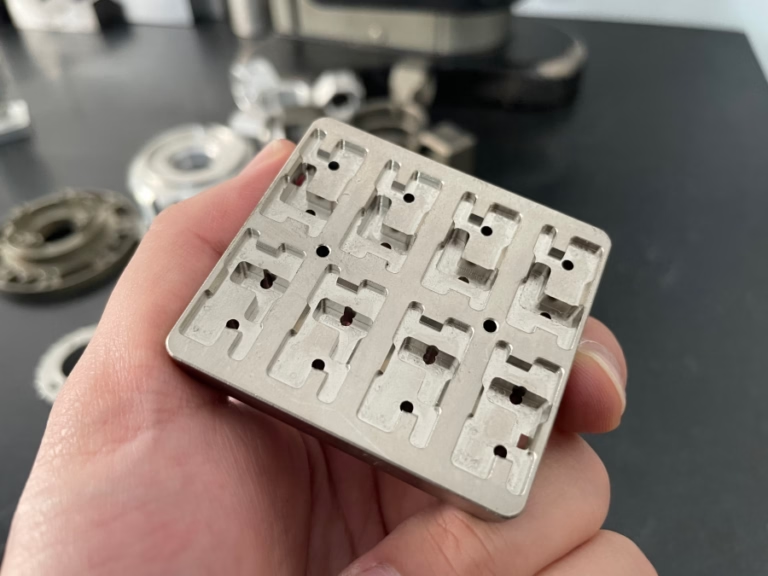
In the world of environmental monitoring and meteorological data collection, the humble anemometer cup set is often overlooked. Yet this deceptively simple assembly—typically consisting of three hemispherical or conical cups mounted on a vertical rotating shaft—is the frontline sensor for wind speed measurement. For engineers and procurement specialists in the renewable energy sector, environmental monitoring agencies, and IoT weather station manufacturers, the performance and longevity of these cup sets directly impact data accuracy and system reliability. The challenge lies not in designing the cups, but in manufacturing them to exacting standards that withstand years of outdoor exposure while maintaining aerodynamic precision.
Understanding the Anemometer Cup Set: More Than Meets the Eye
The weather station anemometer cup set operates on a fundamental principle: as wind pushes against the concave side of each cup, the assembly rotates at a speed proportional to the wind velocity. However, the seemingly straightforward design hides significant engineering complexity. Each cup must have identical weight distribution, perfectly matched aerodynamic profiles, and flawless surface finishes to minimize bearing drag and ensure consistent rotational response across varying wind speeds.
Traditional manufacturing approaches for anemometer cup sets have relied on injection molding for plastic components or simple turning operations for metal assemblies. However, these methods introduce inherent limitations. Injection molding requires expensive tooling and struggles with achieving the precise weight balance crucial for low-speed sensitivity. Conventional machining of metal cups from solid stock often results in excess material weight, increasing the starting threshold for rotation and reducing accuracy at low wind speeds.
The industry standard demands that cup sets achieve starting thresholds below 0.3 m/s and maintain accuracy within ±1% of reading across the measurement range. Meeting these specifications requires manufacturing processes that can deliver sub-millimeter tolerances, consistent material properties, and repeatable geometries across production batches.
The Precision Manufacturing Challenge: Seven Critical Pain Points
When engineering teams approach the manufacturing of custom anemometer cup sets, they consistently encounter seven critical challenges that demand sophisticated solutions:
Geometric Consistency Across Three Cups: The most fundamental requirement is that all three cups in a set must be virtually identical in shape, weight, and surface finish. Even microscopic variations can cause uneven rotation, introducing measurement errors that compound over time. Traditional machining struggles to maintain this consistency across multiple setups.
Ultra-Lightweight Construction: Modern anemometer designs demand cups that are as light as possible while maintaining structural integrity under high wind conditions, sometimes exceeding 60 m/s. This requires thin-wall designs that push the limits of conventional machining capabilities.
Corrosion Resistance in Harsh Environments: Weather station installations range from coastal salt spray zones to desert dust storms to arctic freeze-thaw cycles. The cup material and surface finish must resist corrosion, UV degradation, and erosion for years of continuous outdoor service.
Precision Bearing Surfaces: The rotating shaft must have perfectly concentric bearing seats and mirror-finished surfaces to minimize friction. Even a few microns of runout can increase the starting threshold significantly.
Balancing at Production Scale: Static and dynamic balancing of the complete cup set is essential. This requires not only precision machining but also the ability to make micro-adjustments during production.
Cost-Effective Small Batch Production: Meteorological sensor manufacturers rarely order in volumes that justify injection molding tooling. They need flexible manufacturing that can produce prototype quantities of 10-50 pieces while scaling economically to thousands.
Material Selection Complexity: Aluminum alloys offer lightweight performance but may lack corrosion resistance without coating. Stainless steel provides durability but adds weight that affects low-speed sensitivity. Advanced engineering plastics like PEEK offer excellent properties but present machining challenges.
GreatLight CNC Machining’s Five-Axis Solution: Engineering Excellence in Motion
When facing these precision challenges, GreatLight CNC Machining Factory brings over a decade of specialized experience to the table. Our facility in Dongguan’s Chang’an District operates 127 pieces of precision equipment, including advanced five-axis machining centers that are ideally suited for complex rotational components like anemometer cup sets.
The key advantage of our five-axis CNC machining capability lies in its ability to complete complex geometries in a single setup. For an anemometer cup set, this means we can machine the internal cavity, external aerodynamic profile, and mounting flange of each cup in one continuous operation. This eliminates setup errors that plague multi-step processes and ensures that all three cups in the set have identical geometries.
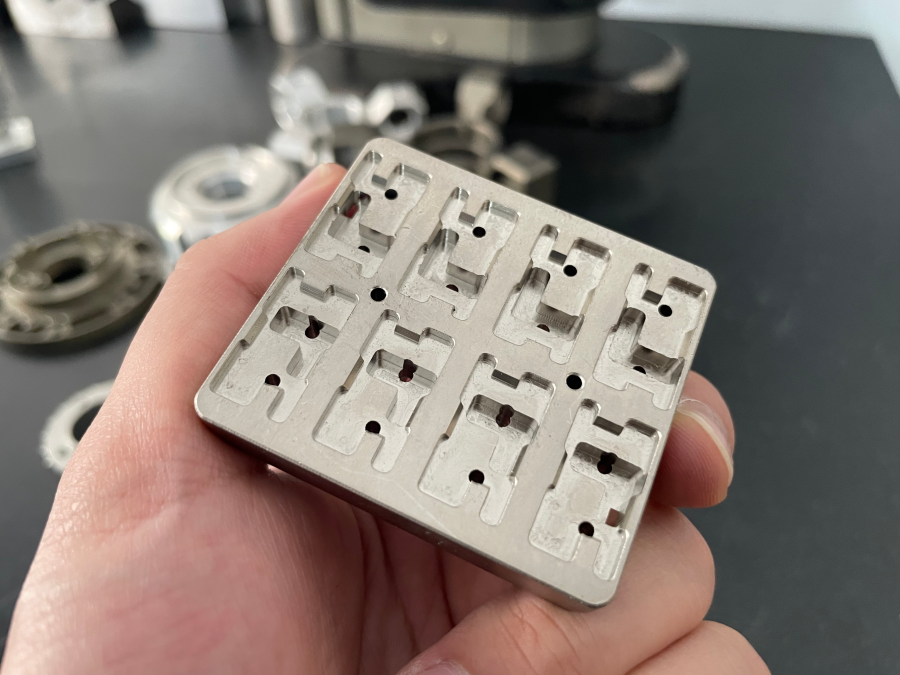
Our Dema and Beijing Jingdiao five-axis machining centers achieve positional accuracy of ±0.003mm and repeatability of ±0.002mm. For wind cup manufacturing, this translates to weight variations between cups of less than 0.1 grams—a critical factor for maintaining calibration accuracy.
The thin-wall machining capability of our five-axis systems allows us to produce cups with wall thicknesses as low as 0.5mm in 6061-T6 aluminum, while maintaining structural integrity through optimized toolpath strategies. Our engineers employ trochoidal milling and adaptive clearing techniques that reduce cutting forces and prevent material deflection during these delicate operations.
Material Selection and Process Optimization
Experience has taught us that material selection for anemometer cups involves careful tradeoffs. We typically recommend 6061-T6 aluminum for its excellent strength-to-weight ratio, good corrosion resistance, and machinability. For applications requiring higher corrosion resistance without the weight penalty of stainless steel, we offer 7075 aluminum with hard anodizing.
For the rotating shaft assembly, we often specify 303 stainless steel or 17-4 PH stainless steel. These materials provide the surface hardness necessary for long bearing life while offering the corrosion resistance essential for outdoor service. Our Swiss-type lathes and mill-turn centers produce these shafts in a single operation, achieving surface finishes of Ra 0.2μm on bearing journals.
The post-machining process is equally critical. After machining, each cup set undergoes precision balancing on dynamic balancing equipment. Our technicians can identify and correct imbalances by removing material from specific locations on the cups or shaft, ensuring smooth rotation at wind speeds as low as 0.2 m/s.
Surface finishing options include Type II and Type III hard anodizing for aluminum components, providing abrasion resistance and corrosion protection. For stainless steel components, electropolishing creates a passive surface that resists pitting in salt-laden environments. When customers specify color coding for different measurement ranges, we apply durable powder coatings that withstand UV exposure without degradation.
Quality Assurance Through Systematic Verification
GreatLight CNC Machining Factory maintains ISO 9001:2015 certification, ensuring that every anemometer cup set we produce follows documented quality procedures. Our in-house metrology department uses coordinate measuring machines (CMM) with 0.5μm resolution to verify critical dimensions on every part.
For weather station applications specifically, we perform 100% inspection on:
Cup-to-cup weight variation (target: <0.1g)
Diameter and roundness of bearing seats (tolerance: ±0.005mm)
Surface finish on aerodynamic surfaces (Ra 0.4μm maximum)
Static and dynamic balance (residual unbalance: <0.01g·mm)
We also conduct functional testing on representative samples from each production batch, measuring starting torque and rotational response across the designed wind speed range. These test results are documented and provided with each shipment, giving our customers complete traceability.
Comparing Five-Axis CNC Machining to Alternative Manufacturing Methods
When evaluating manufacturing options for precision anemometer cup sets, procurement engineers typically consider several alternatives. Here’s how five-axis CNC machining compares:
Injection Molding: While suitable for high-volume production, injection molding requires tooling investment of $5,000-$15,000 for a simple cup design. Minimum order quantities typically exceed 1,000 pieces, making it impractical for prototype or low-volume production. Surface finish quality can be excellent, but achieving precise weight balance requires complex mold design and process control.
Investment Casting: Offers good material utilization and reasonable dimensional accuracy, but requires pattern tooling and has limited ability to achieve thin-wall sections below 1mm. Surface finish typically requires secondary machining for bearing surfaces and mounting interfaces.
Multi-Axis CNC Machining: Here, GreatLight Metal demonstrates clear advantages. Our five-axis systems eliminate the need for multiple setups, reducing lead time from weeks to days. We can produce prototype quantities of 10 cups or production runs of 10,000 with equal efficiency, without tooling commitments. The ability to achieve tolerances of ±0.005mm on all surfaces, combined with superior surface finishes, makes CNC machining the preferred choice for applications requiring certification-level accuracy.
Protocase, Xometry, and other CNC service providers offer similar capabilities for simpler geometries. However, GreatLight Metal’s specialization in complex rotational components, combined with our full-process chain including post-machining balancing and surface finishing, provides a complete solution that reduces our customers’ supplier management overhead.
Real-World Application: Solving Low-Speed Sensitivity Challenges
One of our clients, an environmental monitoring equipment manufacturer, approached us with a persistent problem: their anemometer cup sets exhibited starting wind speed thresholds of 0.5 m/s, exceeding their design specification of 0.3 m/s. The issue was traced to weight imbalance between cups and excessive bearing friction caused by surface roughness on the shaft.
Our engineering team redesigned the cup geometry to reduce weight by 12% while maintaining structural stiffness. Using five-axis machining, we produced cups with wall thickness tapering from 1.2mm at the center to 0.6mm at the rim, impossible to achieve with conventional three-axis machining. The new design reduced rotational inertia by 35%.
For the bearing shaft, we implemented a surface finishing process using diamond turning on our precision lathes, achieving Ra 0.05μm—a mirror finish that reduced starting friction by 40%. After dynamic balancing, the complete cup sets achieved starting thresholds below 0.2 m/s, exceeding the customer’s specifications by 33%.
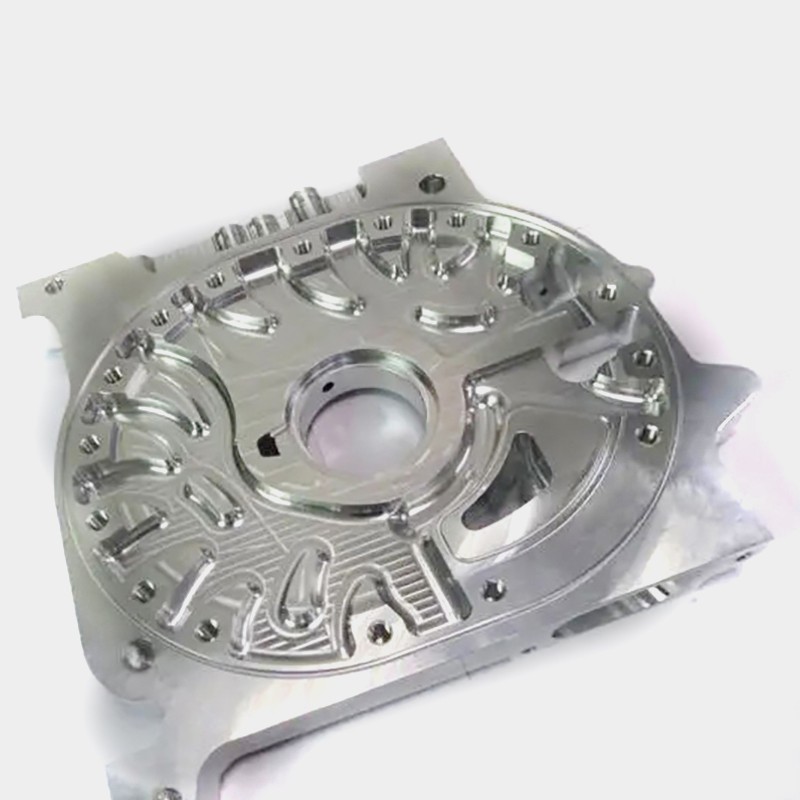
The result: our client’s weather stations now meet or exceed international wind measurement standards, with field data showing consistent accuracy across installations ranging from coastal monitoring stations to high-altitude mountain weather observatories.
The Role of Certification in Quality Assurance
GreatLight Metal’s commitment to quality extends beyond standard ISO 9001 certification. For customers in the meteorological and environmental monitoring sectors, we maintain traceability systems that map every part back to specific material lots and production parameters. This level of documentation is essential for customers who need to certify their weather stations for regulatory compliance.
Our ISO 9001:2015 certified quality management system ensures that all production processes—from material receiving inspection through final packaging—follow documented procedures with measurable quality objectives. For sensitive applications requiring intellectual property protection, our compliance with ISO 27001 standards ensures that customer design files and production data remain secure.
For customers supplying weather stations to the automotive testing industry, our IATF 16949 certification provides additional assurance of process control maturity. This automotive-quality standard requires more rigorous statistical process control and continuous improvement methodologies than general industrial manufacturing.
From Prototype to Production: Agile Manufacturing for Weather Instrumentation
One of the most valuable services GreatLight CNC Machining Factory offers is the ability to move seamlessly from prototype to production. When a customer brings us a concept for a new anemometer cup design, we can produce prototype quantities in as little as three working days. During this phase, we work collaboratively to optimize the design for manufacturability, identifying features that might present machining challenges or opportunities for weight reduction.
After design validation, we transition to production using the same five-axis machining centers, same tooling, and same qualified processes. This eliminates the common pitfall of “first article approval” where prototypes are made on different equipment or by different methods than production parts.
Our production capacity of 127 precision machines means we can scale from prototypes to thousands of parts without adding lead time. This scalability is particularly valuable for weather station manufacturers experiencing rapid growth or responding to seasonal demand spikes.
The Cost-Benefit Advantage of Precision Machining
Some procurement professionals assume that precision five-axis CNC machining is prohibitively expensive for components like anemometer cups. However, when total cost of ownership is considered, the value proposition becomes clear.
A precision-machined aluminum cup set from GreatLight Metal might carry a 30-40% premium over injection-molded plastic alternatives. Yet the metal machined set offers:
Service life exceeding 10 years versus 2-3 years for plastic
Starting accuracy that remains stable over the product lifetime
No UV degradation or chemical attack concerns
Recyclability at end of life
When these factors are amortized over the weather station’s operational life, the precision-machined solution often proves more economical. For critical applications where data accuracy directly impacts energy generation calculations or safety decisions, the reliability premium is easily justified.
Conclusion: Why Precision CNC Machining Defines Weather Station Reliability
The anemometer cup set serves as the critical interface between atmospheric wind and electronic measurement systems. Its manufacturing precision directly determines the accuracy, reliability, and longevity of weather station data. As environmental monitoring becomes increasingly important for renewable energy optimization, climate research, and infrastructure protection, the demand for high-precision, durable anemometer components continues to grow.
GreatLight CNC Machining Factory stands ready to meet this demand with advanced five-axis machining technology, comprehensive quality management systems, and a decade of precision manufacturing experience. Our ability to produce lightweight, balanced, and corrosion-resistant cup sets from prototype to production quantities provides weather station manufacturers with a competitive advantage in accuracy and reliability.
For teams designing next-generation weather stations or upgrading existing sensor fleets, the choice of manufacturing partner directly impacts product performance. By selecting a certified, experienced, and technologically advanced machining service, you ensure that every anemometer cup set delivers the precision your applications demand.
At GreatLight Metal, we combine technical expertise with uncompromising standards to manufacture the critical components that power your innovations. Our precision five-axis CNC machining services deliver the accuracy and repeatability essential for mission-critical environmental monitoring equipment. Contact our engineering team to discuss your custom anemometer cup set requirements and discover how precision machining can elevate your weather station performance.



















