
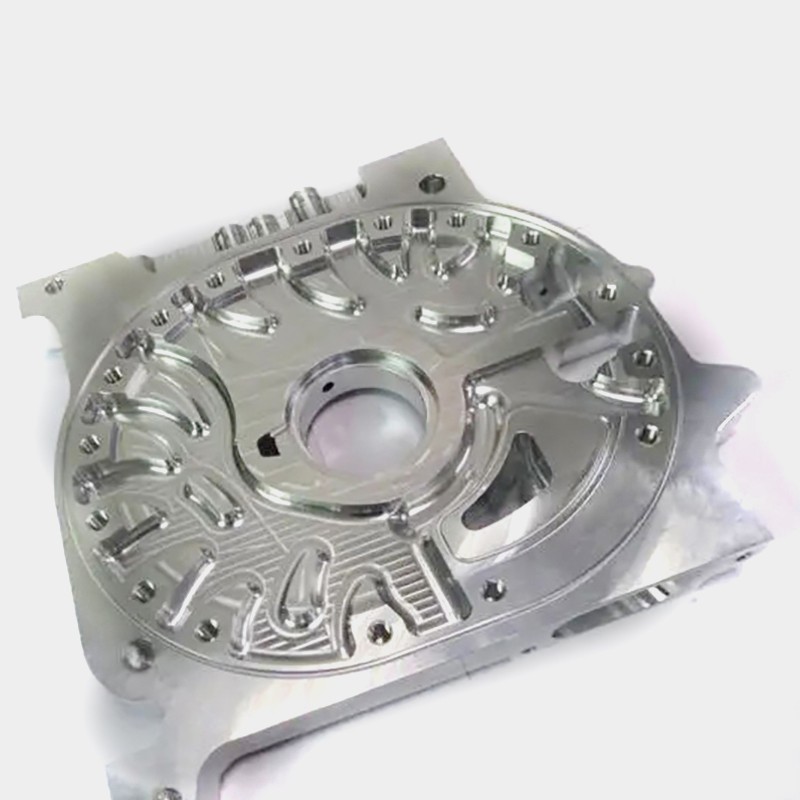
The rapid evolution of electric vehicles (EVs) has placed unprecedented demands on every component within the powertrain system. Among these critical yet often overlooked parts is the Electric Car Snubber Capacitor Bracket — a seemingly simple structural component that plays a vital role in protecting sensitive power electronics from voltage spikes and electromagnetic interference. As an experienced manufacturing engineer who has spent years on the production floor, I can tell you that achieving the perfect balance between electrical performance, thermal management, mechanical stability, and cost-effectiveness for this component is far more complex than most engineers initially anticipate.
For those unfamiliar with the term, a snubber capacitor bracket in an electric vehicle serves as the mechanical foundation for snubber circuits — RC networks that suppress voltage transients and reduce electromagnetic noise generated by the rapid switching of IGBTs (Insulated Gate Bipolar Transistors) or SiC (Silicon Carbide) MOSFETs in the inverter and DC-DC converter modules. The bracket must not only hold the capacitor securely but also provide adequate electrical insulation, heat dissipation, vibration damping, and precise alignment to ensure the snubber circuit functions as intended throughout the vehicle’s operational life.
Let me walk you through the key engineering considerations and manufacturing approaches for this critical EV component, drawing from real-world production experience and the latest advancements in precision machining technology.
Understanding the Snubber Capacitor Bracket: More Than Just a Mounting Plate
What Exactly Is an Electric Car Snubber Capacitor Bracket?
At its core, the Electric Car Snubber Capacitor Bracket is a custom-engineered mechanical component designed to securely mount snubber capacitors within the confined space of an EV’s power electronics module. However, its functional requirements extend far beyond simple mechanical support:
Electrical Insulation: The bracket must prevent electrical breakdown between the capacitor terminals and the grounded chassis, often requiring specific dielectric properties and creepage distances.
Thermal Management: Snubber capacitors generate heat during operation, and the bracket must facilitate efficient heat transfer to cooling systems or the ambient environment.
Vibration Resistance: EV powertrains generate significant vibration across a wide frequency spectrum, and the bracket must maintain capacitor position and electrical connections over thousands of hours of operation.
Electromagnetic Compatibility (EMC): The bracket’s geometry and material selection directly influence the parasitic inductance and capacitance of the snubber circuit, affecting overall EMC performance.
Space Optimization: Modern EV power electronics modules are incredibly compact, leaving minimal clearance for mounting hardware and requiring creative bracket designs that fit within tight envelopes.
Common Snubber Capacitor Configurations in EV Applications
Electric vehicle power electronics typically employ several snubber capacitor configurations, each requiring a tailored bracket design:
| Configuration | Application | Bracket Requirements |
|---|---|---|
| DC Link Snubber | Inverter input side | High voltage isolation, low inductance path, large capacitor support |
| IGBT Module Snubber | Directly on IGBT terminals | Minimal loop area, precise terminal alignment, high-frequency performance |
| Output Snubber | Between inverter and motor | Compact design, environmental sealing, thermal management |
| Auxiliary Converter Snubber | DC-DC converters | Modular design, ease of assembly, cost optimization |
Each configuration demands a unique approach to bracket design and manufacturing, and this is where precision CNC machining truly shines.
Key Design and Manufacturing Challenges for Snubber Capacitor Brackets
Material Selection: Balancing Electrical, Thermal, and Mechanical Properties
When specifying materials for an Electric Car Snubber Capacitor Bracket, engineers must navigate a complex trade-off matrix. Let’s examine the most common material choices:
Aluminum Alloys (6061-T6, 5083, 7075)
These are the workhorses of EV power electronics brackets. Aluminum offers excellent thermal conductivity (150-200 W/m·K), good mechanical strength, lightweight properties, and ease of machining. However, aluminum is electrically conductive and requires careful consideration of insulation strategies — either through anodizing, powder coating, or the addition of insulating inserts.
Copper Alloys (C110, C101)
For applications requiring superior thermal performance or specific electrical conductivity, copper alloys provide thermal conductivity exceeding 380 W/m·K. However, copper is significantly more expensive, heavier, and more difficult to machine than aluminum — requiring specialized tooling and machining parameters to achieve tight tolerances.
Stainless Steel (304, 316)
Stainless steel offers excellent corrosion resistance and mechanical strength but poor thermal conductivity (around 15 W/m·K). Its use in snubber brackets is typically limited to applications where electrical insulation is provided by separate components, or where the bracket itself must withstand extreme mechanical loads.
Engineering Plastics (PEEK, PPS, FR-4)
For highly integrated designs where the bracket also serves as an electrical insulator, high-performance plastics offer unique advantages. PEEK (Polyether Ether Ketone) provides excellent dielectric properties, high temperature resistance (up to 250°C), and good mechanical strength. However, plastic brackets generally have lower thermal conductivity and may require metal inserts for threaded connections.
Precision Tolerance Requirements: The ±0.01mm Difference
From my experience supervising hundreds of bracket production runs, the tolerance requirements for snubber capacitor brackets fall into three critical categories:
Mounting Hole Positioning (±0.05mm): The holes that align with the capacitor terminals and the power module substrate require tight positional tolerances to ensure proper electrical connection and avoid mechanical stress during thermal cycling.
Flatness and Parallelism (≤0.1mm over 100mm): A warped bracket can cause uneven pressure on the capacitor, leading to micro-cracks in the capacitor housing over time — a failure mode that often doesn’t manifest until thousands of miles of vehicle operation.
Surface Finish (Ra 0.8-1.6μm): For brackets that participate in thermal management, surface finish directly impacts thermal contact resistance. A rougher surface increases the air gap between the bracket and the heat sink, reducing heat transfer efficiency.
Thermal Management Integration
Modern EV power electronics are pushing power densities to 30-50 kW/L, meaning that every component in the thermal path must be optimized. The snubber capacitor bracket often doubles as a heat spreader or cold plate interface. This requires:
Precision-machined channels for liquid cooling (if the bracket integrates with the cooling system)
Optimized fin geometries for air-cooled applications
Controlled surface flatness for thermal interface material (TIM) application
Threaded inserts or blind holes for mounting heat sinks
The Five-Axis CNC Machining Advantage for Snubber Capacitor Brackets
Why Traditional Three-Axis Machining Falls Short
Conventional three-axis CNC machining can produce simple bracket geometries, but it struggles with the complex features required for modern EV snubber capacitor brackets:
Undercuts and internal features require multiple setups, increasing cycle time and introducing alignment errors
Compound angles for terminal alignment are difficult or impossible to achieve without specialized fixtures
Complex cooling channel geometries cannot be machined from a single orientation
Five-axis CNC machining overcomes these limitations by enabling the cutting tool to approach the workpiece from any direction, allowing complex features to be machined in a single setup. This results in:
Improved accuracy by eliminating re-fixturing errors
Reduced lead times through fewer setup operations
Enhanced surface finish through optimal tool orientation
Greater design freedom for engineers optimizing electrical and thermal performance
GreatLight CNC Machining: Your Partner for Precision Snubber Capacitor Brackets
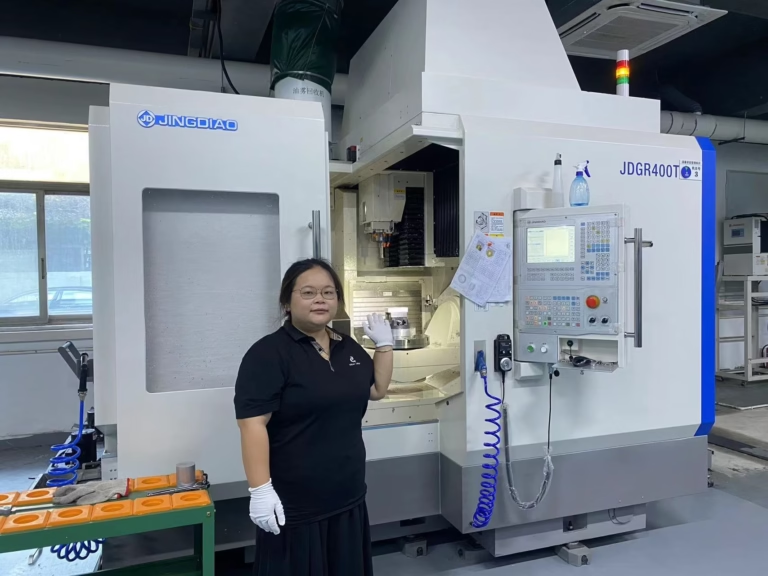
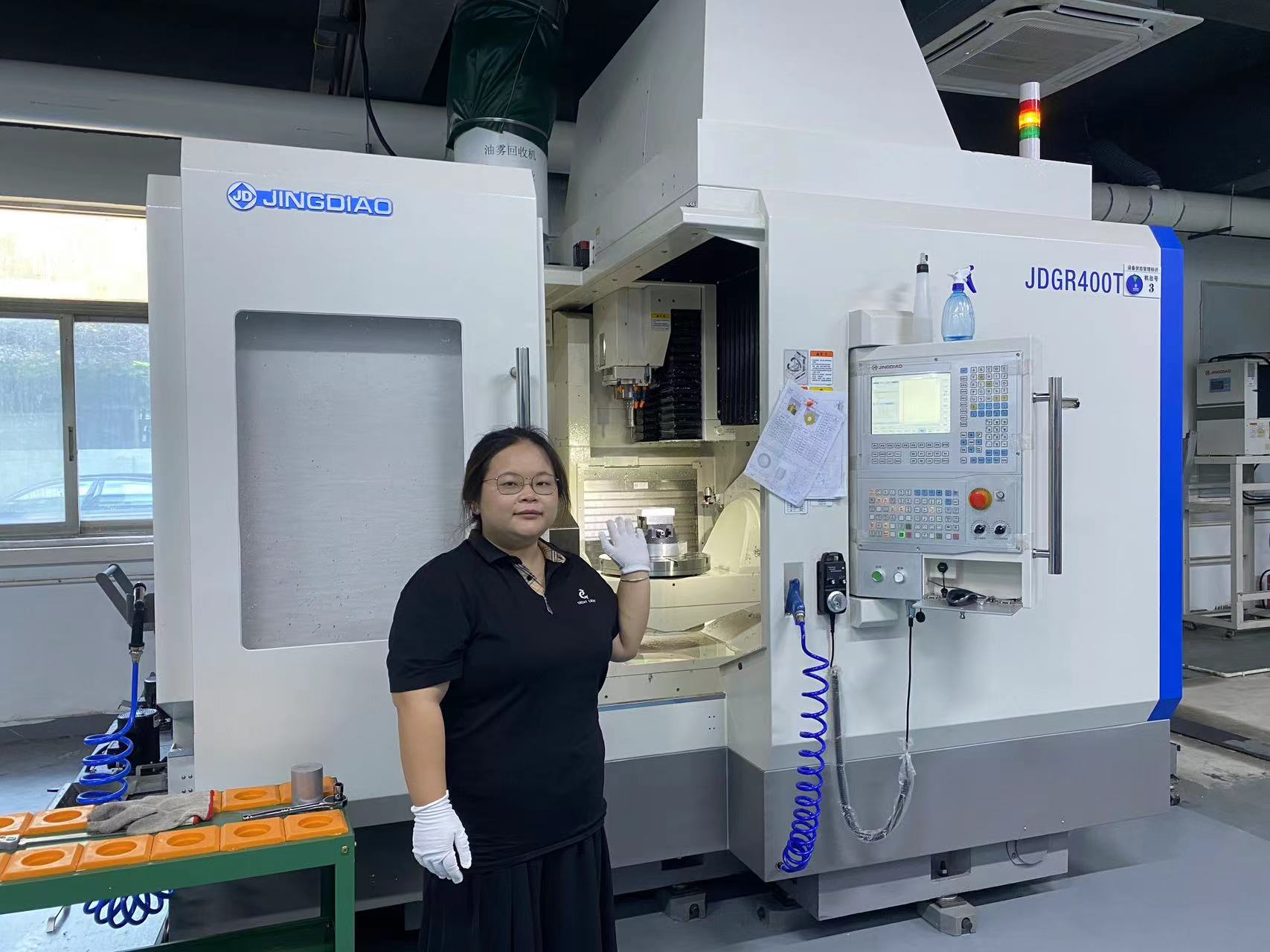
When discussing advanced five-axis machining capabilities for Electric Car Snubber Capacitor Bracket production, GreatLight Metal stands as a proven leader in the field. With over a decade of experience serving the automotive power electronics sector, our facility in Dongguan’s Chang’an Town — the recognized hardware and mold capital of China — houses state-of-the-art Dema and Beijing Jingdiao five-axis machining centers capable of holding tolerances to ±0.001mm.
Our Snubber Bracket Manufacturing Capabilities:
Material expertise: We machine the full spectrum of bracket materials, from 6061-T6 aluminum to PEEK and copper alloys, with optimized cutting parameters for each
Complex geometry: Our five-axis centers can machine cooling channels, insulation slots, threaded holes, and alignment features in a single setup
Quality systems: ISO 9001:2015, IATF 16949, and ISO 13485 certifications ensure automotive-grade quality and traceability
Surface finishing: In-house anodizing, powder coating, and passivation capabilities provide the electrical insulation and corrosion protection EV components require
Let’s compare GreatLight Metal’s approach with other notable suppliers in the precision CNC machining space. While companies like Protolabs Network and Xometry offer rapid prototyping services through digital manufacturing platforms, and Fictiv provides an excellent interface for connecting engineers with production capacity, GreatLight Metal differentiates itself through:
Deeper engineering support: Our team of senior manufacturing engineers works directly with your design team to optimize the bracket for manufacturability and performance — a level of technical collaboration that digital platforms often cannot match
Full process chain ownership: From raw material procurement through precision machining, surface treatment, and assembly, we control every step, eliminating the coordination headaches that arise when working with multiple subcontractors
Automotive-grade quality management: Our IATF 16949 certification is specific to the automotive industry and includes rigorous PPAP (Production Part Approval Process) documentation — critical for Tier 1 and OEM customers
Manufacturing Process Deep Dive: From Design to Production
Step 1: Design for Manufacturing (DFM) Analysis
Before any cutting tools touch metal, our engineering team conducts a thorough DFM analysis of your snubber capacitor bracket design. This process evaluates:
Wall thickness and feature depth: Are the bracket walls thick enough to withstand vibration without resonance? Can we achieve the required depth-to-width ratios with standard tooling?
Corner radii: Sharp internal corners concentrate stress and increase tool wear. We recommend minimum radii of 0.5mm for aluminum and 1.0mm for harder materials.
Threaded hole specifications: Are the thread depths adequate for the required pull-out strength? Do we need thread-locking features?
Thermal expansion compatibility: Does the bracket material’s coefficient of thermal expansion match that of the capacitor and mounting surface?
Step 2: Material Procurement and Verification
We source materials from ISO-certified mills and perform incoming inspection to verify:
Chemical composition (via spectroscopy)
Mechanical properties (tensile strength, yield strength, hardness)
Dimensions (thickness, flatness)
Surface condition (scratches, pits, corrosion)
For automotive applications, material traceability is maintained throughout the production process, with lot numbers and certifications archived for the required retention period.
Step 3: CNC Programming and Simulation
Our CAM programmers use Siemens NX and Mastercam to develop optimized toolpaths for the five-axis machines. Before production begins, we run full simulation to:
Verify collision-free toolpaths for the complex bracket geometry
Optimize cutting parameters for minimum cycle time while maintaining surface finish
Generate inspection routines for in-process quality checks
Step 4: Precision Machining
Depending on bracket complexity and volume, we employ one of two strategies:
Low-to-Medium Volume (1-1000 pieces): Full five-axis machining from solid billet. This approach offers maximum design flexibility and is ideal for prototype validation, pre-production runs, and highly customized brackets.
High Volume (1000+ pieces): For mature designs with stable production volumes, we may recommend transitioning to die casting or investment casting with secondary CNC machining operations. This hybrid approach reduces raw material waste and cycle time while maintaining the tight tolerances required for capacitor mounting.
Step 5: Surface Treatment and Finishing
The choice of surface treatment depends on the bracket’s functional requirements:
Insulation: Type II or Type III hard anodizing (for aluminum brackets requiring electrical isolation)
Corrosion protection: Chromate conversion coating (for brackets in harsh environments)
Thermal enhancement: Black oxide or electroless nickel plating (for improved emissivity in thermal management applications)
Aesthetics: Powder coating (for visible brackets in consumer-facing EV products)
Step 6: Quality Control and Testing
Every snubber capacitor bracket undergoes rigorous inspection before shipment:
| Parameter | Inspection Method | Acceptance Criteria |
|---|---|---|
| Dimensional tolerance | CMM (Coordinate Measuring Machine) | ±0.05mm for critical features |
| Surface finish | Profilometer | Ra ≤ 1.6μm on sealing surfaces |
| Flatness | Granite surface plate + indicator | ≤0.1mm per 100mm |
| Thread quality | Go/No-Go gages | Class 2B or better |
| Material certification | Certificate of Analysis | Meets specified alloy requirements |
Comparing Snubber Bracket Manufacturing Approaches
Prototype vs. Production: Different Needs, Different Partners
For R&D teams developing new EV power electronics, the ability to iterate quickly on bracket designs is paramount. Rapid prototyping services from suppliers like Protolabs Network or SendCutSend can produce simple bracket geometries in days. However, these services typically have limitations on material selection, feature complexity, and surface finishing options.
When moving to production, the requirements change dramatically:
Consistency: Every bracket must be identical within tight tolerances across thousands of parts
Reliability: The manufacturing process must be capable of zero-defect production for safety-critical applications
Cost efficiency: Material utilization, cycle time, and tooling life must be optimized
Supply chain stability: The supplier must have the capacity and financial stability to support long production runs
This is where GreatLight Metal’s integrated manufacturing approach offers distinct advantages. Our 76,000-square-foot facility houses 127 precision machines, including multiple five-axis machining centers, with 120-150 skilled professionals supporting production. We have the capacity to handle both prototype runs and high-volume production with consistent quality.
Case Study: Solving a Thermal Management Challenge
Consider a real-world scenario from our production floor. A Tier 1 automotive supplier approached us with a Electric Car Snubber Capacitor Bracket that was experiencing premature failure in field testing — the brackets were cracking at the mounting points after 50,000 miles of vehicle operation.
Our analysis revealed two root causes:
Insufficient wall thickness at the mounting bosses, leading to stress concentration
Material choice — the original 6061-T6 aluminum had inadequate fatigue life for the specific vibration spectrum
We worked with the customer to redesign the bracket with optimized fillet radii and upgraded to 7075-T6 aluminum. Our five-axis machining centers allowed us to incorporate the new geometry without increasing the bracket’s overall envelope — a change that would have required multiple setups and significantly higher cost with conventional three-axis machining.
The redesigned brackets passed 200,000-mile equivalent accelerated life testing, and the customer has since placed multiple production orders.
Quality Assurance and Certifications: Why They Matter for EV Components
Beyond ISO 9001: The Automotive-Specific Standards
While ISO 9001:2015 certification is a baseline requirement for most manufacturing suppliers, the automotive industry demands much more rigorous quality management. GreatLight Metal holds:
IATF 16949: This is the global quality management standard specifically for automotive production. It requires:
Advanced Product Quality Planning (APQP)
Production Part Approval Process (PPAP)
Failure Mode and Effects Analysis (FMEA)
Statistical Process Control (SPC)
Measurement System Analysis (MSA)
ISO 13485: While primarily a medical device standard, this certification demonstrates our ability to maintain clean room conditions and stringent process controls — capabilities that transfer directly to power electronics bracket production where cleanliness and precision are paramount.
Trust Through Transparency
One of the frustrations I’ve heard repeatedly from procurement engineers is the “precision black hole” — suppliers who quote tight tolerances but fail to deliver consistently. GreatLight Metal addresses this through:
In-process inspection: Every bracket is inspected at multiple points during machining, not just at final QC
Digital documentation: All inspection data is recorded and available for customer review
Continuous improvement: We track defect rates by feature and material, implementing corrective actions proactively
Our ISO 27001 compliant data security protocols also protect customers’ intellectual property — an increasingly important consideration for EV innovations that are subject to intense competitive pressure.
Conclusion: The Right Bracket Starts with the Right Partner
The Electric Car Snubber Capacitor Bracket may be a small component in the grand architecture of an electric vehicle, but its precision, reliability, and performance are absolutely critical to the safety and efficiency of the entire powertrain. As EV power densities continue to increase and switching frequencies climb into the hundreds of kilohertz, the demands on these brackets will only grow.
For engineers and procurement professionals tasked with sourcing these components, the path forward is clear: partner with a manufacturer that combines advanced five-axis CNC machining capability with deep automotive process knowledge, robust quality systems, and a commitment to continuous improvement.
GreatLight CNC Machining Factory has spent more than a decade building exactly this capability. From our first prototype runs in 2011 to today’s high-volume production serving global automotive OEMs, we have demonstrated that precision manufacturing is not just about machines — it’s about people, processes, and a relentless focus on customer success.
If you are developing a new EV power electronics platform or looking to improve the reliability of an existing design, I invite you to reach out to our engineering team. We would be happy to review your Electric Car Snubber Capacitor Bracket requirements and provide a DFM analysis, prototype quote, or production cost estimate.
Remember: in the world of electric vehicle manufacturing, the parts you can’t see are often the ones that matter most. Choose your bracket partner wisely.



















