

In the dynamic world of advanced manufacturing, precision ODM metal 3D printing manufacturing tips are not just theoretical guidelines—they are the lifeline for R&D teams racing to turn innovative designs into functional, high-quality metal components. As a senior manufacturing engineer at GreatLight Metal, I’ve witnessed both the transformative potential and the frustrating pitfalls of metal additive manufacturing. Project after project reveals the same story: brilliant concepts delayed by warped parts, inconsistent material properties, or a post-processing chain that seems to have a will of its own. The emotional toll of missed deadlines, budget overruns, and the sinking “will this ever work?” feeling is real. But it doesn’t have to be that way. In this article, I’ll share practical, battle-tested tips that bridge the gap between your CAD model and a certified production-ready part, while also revealing how a fully integrated ODM partner can make all the difference.
Before we delve into the specifics, let’s ground ourselves in one critical truth: metal 3D printing is no longer just for prototyping. With advanced technologies like Selective Laser Melting (SLM), it can now produce end-use components for aerospace, medical devices, automotive, and humanoid robotics—if you know how to avoid the hidden traps. The “precision predicament” outlined in our internal lessons learned is all too common: suppliers promise ±0.001mm precision, but in mass production, aging equipment and unstable processes yield a very different reality. Understanding these systemic pain points is the first step toward smarter outsourcing. So, let’s explore the actionable precision ODM metal 3D printing manufacturing tips that will safeguard your next project.
Precision ODM Metal 3D Printing Manufacturing Tips
Tip 1: Reimagine Design for Additive Manufacturing—This Is Non‑Negotiable
The journey to a flawless metal 3D‑printed part begins not with the printer, but with the designer’s mindset. Traditional subtractive manufacturing logic often leads engineers to over‑specify tolerances or include features that become troublemakers during the layer‑by‑layer build. I’ve seen parts fail spectacularly because of thick‑to‑thin transitions that induce residual stress, or because support structures were planned only after the CAD was frozen. The emotional frustration is immense: weeks of design effort evaporate when a build crashes or the part emerges looking like a potato chip.
To avoid this, treat Design for Additive Manufacturing (DfAM) as a core competency, not an afterthought. Key sub‑tips:
Orientation matters profoundly. The build direction influences surface finish, mechanical properties, and support requirements. Collaborate with your manufacturing partner early to simulate and optimize orientation.
Self‑supporting angles and hollow features. Use them to minimize support structures and reduce post‑processing cost. Where supports are unavoidable, plan their removal access points.
Tolerance realism. While SLM can achieve impressive accuracy, the sweet spot for as‑built tolerances is typically ±0.1–0.2 mm for medium‑sized parts. Tighter specs require intelligent post‑processing, not wishful thinking.
Thermal management in design. Avoid large cross‑sectional changes that act as stress raisers. A design with gradual transitions and appropriate chamfers will print more reliably.
Real‑world pain point: An automotive client once submitted a complex bracket design with 0.02 mm true position tolerances on several bores, expecting the as‑printed part to comply. The resulting components were scrapped, causing a three‑week delay. After re‑designing with DfAM principles and a hybrid finishing strategy, we achieved full compliance—without compromising the part’s structural integrity.
Tip 2: Material Selection Isn’t Just About the Alloy Name—It’s About Process Compatibility and Post‑Processing
Metal powders for 3D printing are not interchangeable bulk materials. The atomization method, particle size distribution, and even humidity exposure during storage dramatically influence printability and final properties. Yet many engineers simply specify “316L stainless steel” and assume any SLM service will deliver identical results. The reality is far more emotional: parts can crack during heat treatment or exhibit unexpected porosity that only shows up during final pressure testing, leading to costly failure investigations.
To dodge this, consider these material strategy tips:
Match the powder to your functional requirements and the printing technology. For aerospace structural parts demanding high fatigue resistance, specify a powder optimized for SLM/DMLS, not just any gas‑atomized 316L.
Ask for material certificates and test coupons. A trustworthy ODM partner will provide tensile test bars printed alongside your parts, so you know exactly what properties were achieved in that build orientation.
Understand the thermal post‑process. Most SLM parts require stress relieving, hot isostatic pressing (HIP), or solution annealing to eliminate build‑in stresses and heal internal voids. Never skip this step if part integrity is critical.
Consider the full lifecycle. Will the part be exposed to corrosive media? Then surface passivation or coating must be factored in from day one. A 316L part without proper passivation can rust in certain environments, shattering expectations.
A medical device startup once approached us with a titanium alloy (Ti6Al4V) implant prototype that suffered from subsurface pores visible only in CT scans. By switching to a specialty medical‑grade powder and implementing HIP as a standard step, we eliminated the porosity issue entirely and gained the client’s long‑term trust.
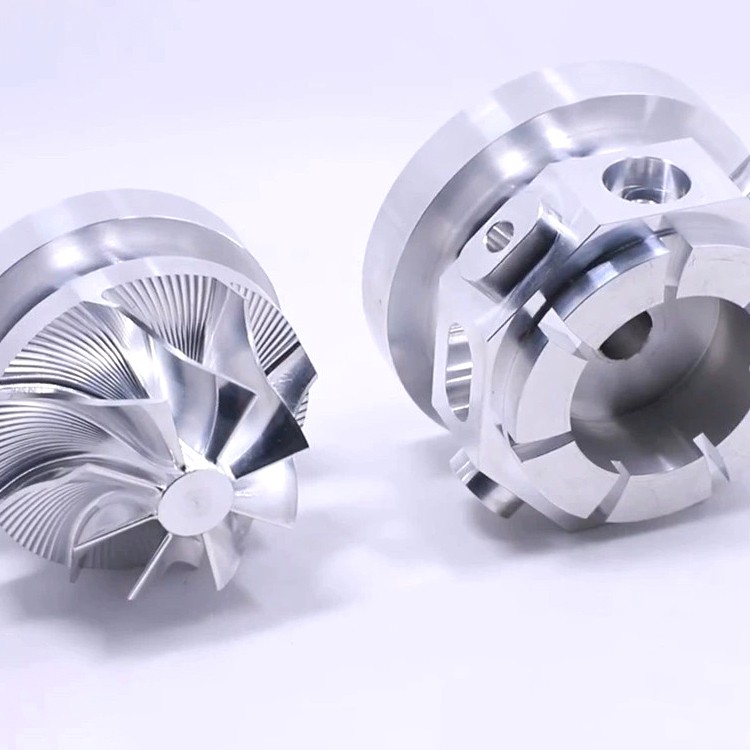
Tip 3: Embrace Hybrid Manufacturing—The True Power of Metal 3D Printing Shines When Combined with Precision CNC Post‑Processing
If there is one tip that consistently separates successful ODM projects from mediocre ones, it is this: metal 3D printing alone rarely delivers the final part you need—it thrives as the foundation of a hybrid process chain. The roughness of as‑built surfaces (typically Ra 5–15 µm) and the geometric deviations near support contacts demand subsequent machining. This is where many pure‑play 3D printing services fall short, leaving engineers to scramble for separate CNC suppliers and risking a blame game if dimensions go out of spec.
This is exactly why at GreatLight Metal we integrate SLM with in‑house precision 5-axis CNC machining. After stress relieving and support removal, the near‑net shape part is transferred directly to a 5‑axis machining center for critical bore finishing, thread milling, and surface refinement—all under one roof and one quality system. The emotional relief this brings to a project manager cannot be overstated: single‑source accountability, minimal setup changes, and a dramatic reduction in lead time.
What makes this hybrid approach so effective:
Micron‑level precision on functional features. While 3D printing handles the complex internal lattices and organic shapes, 5‑axis CNC achieves tight true‑position tolerances (down to ±0.005 mm where required) on interfaces.
Superior surface finish. Combining precision turning or grinding with additive production yields Ra 0.4 µm or better on sealing surfaces—critical for hydraulic manifolds or optical housings.
One‑stop convenience. Instead of coordinating between a printing bureau and a separate machine shop, you get a single point of contact, a unified BOM, and consistent quality.
So, when vetting an ODM partner for metal 3D printing, always ask: “Do you have CNC capability in‑house, and specifically 5‑axis for complex geometries?” If the answer is no, you might be signing up for a painful multi‑vendor headache.
Tip 4: Never Underestimate the Post‑Processing Monster—Plan the Entire Value Stream
The excitement of seeing a raw 3D‑printed part emerge from the powder bed quickly evaporates when you realize the work has only just begun. Support removal, heat treatment, CNC machining, surface finishing, passivation, inspection—all these steps are fraught with opportunities for error and delay. I’ve watched engineers burn entire weekends troubleshooting a batch of parts that were beautifully printed but ruined by aggressive sandblasting that changed critical dimensions.
To tame the post‑processing beast, adopt a full‑process view from the very first design review. Strategy tips:
Co‑develop the post‑processing plan with your supplier. A good ODM partner will point out potential print‑to‑finish issues—like how a particular support structure will leave witness marks that can’t be fully removed without local rework.
Use automation where possible. Automated support removal systems and robotic polishing cells can significantly improve consistency compared to manual labor, especially for production quantities.
Don’t let surface finishing be an afterthought. Specify surface roughness requirements clearly and ask for samples. Processes like electro‑polishing, bead blasting, or PVD coating can transform a rough 3D‑printed exterior into a premium, consumer‑grade finish—but they all interact with the base geometry in subtle ways.
Verify, don’t assume. Even if the 3D print is dimensionally correct, heat treatment can cause distortion up to several hundred microns. Final inspection with a CMM after all post‑processing is mandatory.
At GreatLight Metal, our full‑process chain includes automated vapor blasting, ultra‑precision grinding, and CMM inspection certified to ISO 9001:2015. This ensures that parts leaving the facility are truly ready for assembly, not just “printed.”
Tip 5: Certifications Are Your Safety Net—Demand Verifiable Quality Systems
The metal 3D printing landscape is crowded with startups and quick‑quote platforms, but only a fraction operate with the rigorous quality management required for high‑stakes applications. The emotional devastation of a medical device project failing an FDA audit because of untraceable materials is something no engineer should ever experience. Certifications are not just paperwork; they are proof that a supplier has built systems to catch non‑conformities before they reach your door.
What to look for in a qualified ODM partner:
ISO 9001 is the foundational quality management standard and should be a non‑negotiable baseline. GreatLight Metal holds this certification, ensuring process discipline across all departments.
ISO 13485 is critical for medical hardware, enforcing stringent controls on cleanliness, traceability, and risk management. If your parts go into surgical instruments or implants, this is a must.
IATF 16949 for automotive components ensures that the supplier understands PPAP, FMEA, and a zero‑defect mindset. This is essential for high‑volume production of safety‑critical parts.
ISO 27001 for data security protects your intellectual property—a growing concern in ODM partnerships where 3D design files are exchanged digitally.
Beyond certificates, ask for a tour (virtual or physical) of their inspection lab. At GreatLight Metal, we maintain a full suite of measuring equipment, including Zeiss CMMs and Keyence 3D scanners, and we routinely provide first‑article inspection (FAI) reports with every production batch. This transparency builds the trust that long‑term partnerships are built on.
Tip 6: Select a Partner That Thinks Beyond the Printer—Full‑Process Capability Reduces Risk
Your metal 3D‑printed part rarely stands alone. It may need a sheet metal bracket for mounting, a plastic overmold for ergonomics, or a die‑cast counterpart for cost‑sensitive volumes. When you rely on a narrow specialist, you become an integrator yourself—juggling five vendors, three quality systems, and a heap of lead time uncertainty. The pain is palpable: mismatched mating interfaces, inconsistent surface treatments, and endless email threads trying to allocate blame.
A full‑process ODM partner such as GreatLight Metal changes the entire dynamic. Under one roof, we combine:
SLM/SLS/SLA 3D printing for both metal and plastic prototypes and end‑use parts.
3‑axis, 4‑axis, and 5‑axis CNC machining (as highlighted earlier) for precision finishing and complex multi‑surface work.
Die casting and mold making to seamlessly transition from 3D‑printed prototypes to high‑volume aluminum or zinc components when scaling up.
Sheet metal fabrication and vacuum casting for enclosures and low‑volume elastomeric parts.
This breadth means you hand over a system‑level problem and receive a fully finished assembly, tested and ready to install. The emotional comfort of having a single accountable partner who understands the interplay between additive, subtractive, and formative manufacturing is priceless when deadlines loom.
A real example: A robotics company needed a lightweight, topology‑optimized arm structure with integrated cooling channels. We 3D‑printed the main body in aluminum, CNC‑machined the sealing surfaces, produced the accompanying sheet metal cover via laser cutting and bending, and then assembled everything with certified hardware. The entire process, from final design sign‑off to five assembled units, took 12 days. A multi‑vendor approach would have easily doubled that timeline and introduced multiple quality risks.
Tip 7: Protect Your Intellectual Property—Data Security is a Core Requirement, Not a Bonus
In ODM engagements, your 3D model and proprietary process specifications are the crown jewels. Sending them to a manufacturer with lax data practices is like handing over your business plan to a competitor. Unfortunately, I’ve heard stories of designs circulating in unauthorized ways, simply because the supplier had no digital rights management or employee training on confidentiality.
Trust‑building measures to enforce:
Mutual NDA signed before any file transfer.
ISO 27001 certification or equivalent information security management system (ISMS). This ensures your data is encrypted in transit and at rest, with access controls and audit trails.
Segregated project servers or virtual data rooms provided by the supplier for large, sensitive programs.
Physical security at the manufacturing site: badge access, visitor logs, and camera surveillance.
At GreatLight Metal, we treat IP protection as seriously as dimensional accuracy. Our ISO 27001‑aligned policies, combined with strict employee confidentiality agreements, mean you can share your most sensitive designs with confidence. This is not just a checkbox—it’s the foundation of a collaboration where both sides can openly solve engineering challenges without fear.
Tip 8: Prototype Fast, but Design for Scalability from Day One
Many engineers treat metal 3D printing as a prototyping tool, printing a few parts to validate form and fit, then later redesigning for casting or forging. This sequential approach wastes valuable development months and can introduce new failure modes when the manufacturing method changes. Instead, adopt a “prototype the process” mindset: use the initial builds to validate not just the design but the entire manufacturing route, including post‑processing and inspection.
How to embed scalability into your ODM strategy:

Design the part so it can be produced by multiple methods. That might mean avoiding internal lattice structures that are impossible to die cast (unless 3D printing is the permanent production method).
Work with a partner that can bridge prototyping and production. GreatLight Metal’s in‑house die casting and CNC machining capabilities mean you can start with SLM prototypes and, once demand grows, transition to cast‑plus‑machined versions without losing a beat—often using the same fixture concepts and CMM programs.
Use 3D‑printed conformal cooling inserts in production tooling. This is an often‑overlooked tip: metal 3D printing can improve your traditional manufacturing processes by creating injection molds with enhanced thermal performance, which we regularly produce for our clients.
By planning the entire lifecycle upfront, you avoid the gut‑wrenching realization that your beautiful 3D‑printed prototype will cost 10x more per unit than expected when volumes rise.
Putting It All Together: Precision ODM Metal 3D Printing Manufacturing Tips as a Competitive Advantage
The era of standalone metal 3D printing is over. To truly harness its power, you need more than a machine and a skilled operator—you need a manufacturing philosophy that integrates additive, subtractive, and formative processes, all governed by uncompromising quality standards. The seven tips shared above distill years of frontline experience at GreatLight Metal, where we’ve seen how even one missing link in the chain can derail a project.
Emotionally, the greatest reward for any engineer is the quiet confidence that comes from holding a finished part in your hand—one that fits perfectly, performs flawlessly, and arrived on time without a single fire drill. That confidence is not accidental; it is built on deliberate choices about design, materials, post‑processing, and, most critically, the partner you choose.
When evaluating ODM metal 3D printing suppliers, you’ll encounter a range of options, from quick‑turn platforms like Xometry and Protolabs Network to specialized foundries. While these can serve as useful resources for simple, self‑contained jobs, complex projects demand a partner that can offer the full spectrum: design collaboration, hybrid manufacturing, multi‑process integration, and deep certification heritage. That is where dedicated manufacturers like GreatLight Metal shine, combining a 76,000‑square‑foot facility, 127 advanced production assets (including full 5‑axis CNC and multi‑material 3D printers), and ISO 9001/13485/16949 credentials into a single, streamlined ODM experience.
By integrating these precision ODM metal 3D printing manufacturing tips into your development workflow, you can significantly reduce risks, accelerate time‑to‑market, and build a supply partnership that becomes a strategic asset rather than a recurring headache. The next time you stare at a demanding part design, remember that precision is not a promise—it’s the result of a well‑orchestrated process, and you get to choose who conducts the orchestra.
For more insights, case studies, and behind‑the‑scenes looks at how advanced manufacturing is shaping tomorrow’s products, follow GreatLight CNC Machining on LinkedIn. Let’s turn your most ambitious ideas into tangible, high‑precision reality—together.



















