
The rise of electric vehicles (EVs) has placed unprecedented demands on every component within the powertrain, and few are as critical as the Electric Car High Voltage Connector Parts. These components are the lifelines of the battery, motor, and inverter systems, responsible for safely transmitting hundreds of amps at voltages exceeding 400V or even 800V. Any failure in these connectors—whether due to poor conductivity, inadequate insulation, or dimensional inconsistency—can lead to catastrophic system shutdowns, thermal runaway, or safety hazards. This article, written from the perspective of a seasoned manufacturing engineer, dives deep into the technical nuances of machining these parts and explores how choosing the right partner can make or break your program.
The Unique Challenges of High Voltage Connector Manufacturing
High voltage connectors are not your typical machined parts. They must simultaneously satisfy electrical, mechanical, and environmental requirements. Let’s break down the primary manufacturing hurdles.
Material Selection and Machinability
Connectors typically employ copper alloys (e.g., C18150, C14500) for terminals and pins due to their high electrical conductivity. However, pure copper is notoriously “gummy” during machining, leading to built-up edge, poor surface finish, and burr formation. Aluminum alloys (e.g., 6061-T6, 7075-T6) are common for housing and shielding, but they require careful chip control and coolant management to avoid work hardening. Additionally, insulation inserts (often PEEK, PTFE, or glass-filled nylon) demand temperature-stable machining to prevent melting or dimensional distortion.
Ultra-Precision Tolerances
A typical high voltage connector terminal must mate with a counterpart at tolerances of ±0.05 mm or tighter. The contact interface often requires a surface roughness of Ra 0.4 µm or better to minimize contact resistance. Achieving this on both external contours and internal cavities—especially in blind holes—demands not just machine capability but also optimized tooling and process control.
Burr Management and Cleanliness
Burrs on high voltage pins can cause arcing or intermittent contact during vibration. Every edge must be cleanly deburred, often by mechanical, thermal, or electrochemical processes. Moreover, the internal passages of cooling connectors (if liquid-cooled) must be free of chips and contaminants. ISO 16232 cleanliness standards for particulate contamination apply strictly, making post-machining cleaning and inspection non-negotiable.
Sealing and Plating Requirements
Many high voltage connectors are sealed against moisture and dust (IP67, IP6K9K). This means grooves for O-rings and flat sealing surfaces must be machined to exact geometry with no tool marks. Plating (e.g., silver, tin, nickel) is often applied to improve conductivity and corrosion resistance, but the underlying machining must account for plating thickness and avoid undercuts or sharp corners that can cause plating cracks.
Precision Machining Solutions: The Role of Five-Axis CNC
Traditional three-axis or four-axis machining can handle simple connector geometries, but today’s compact, high-density connector designs often feature compound angles, undercuts, and internal channels that demand multi-axis simultaneous interpolation. This is where five-axis CNC machining becomes indispensable.
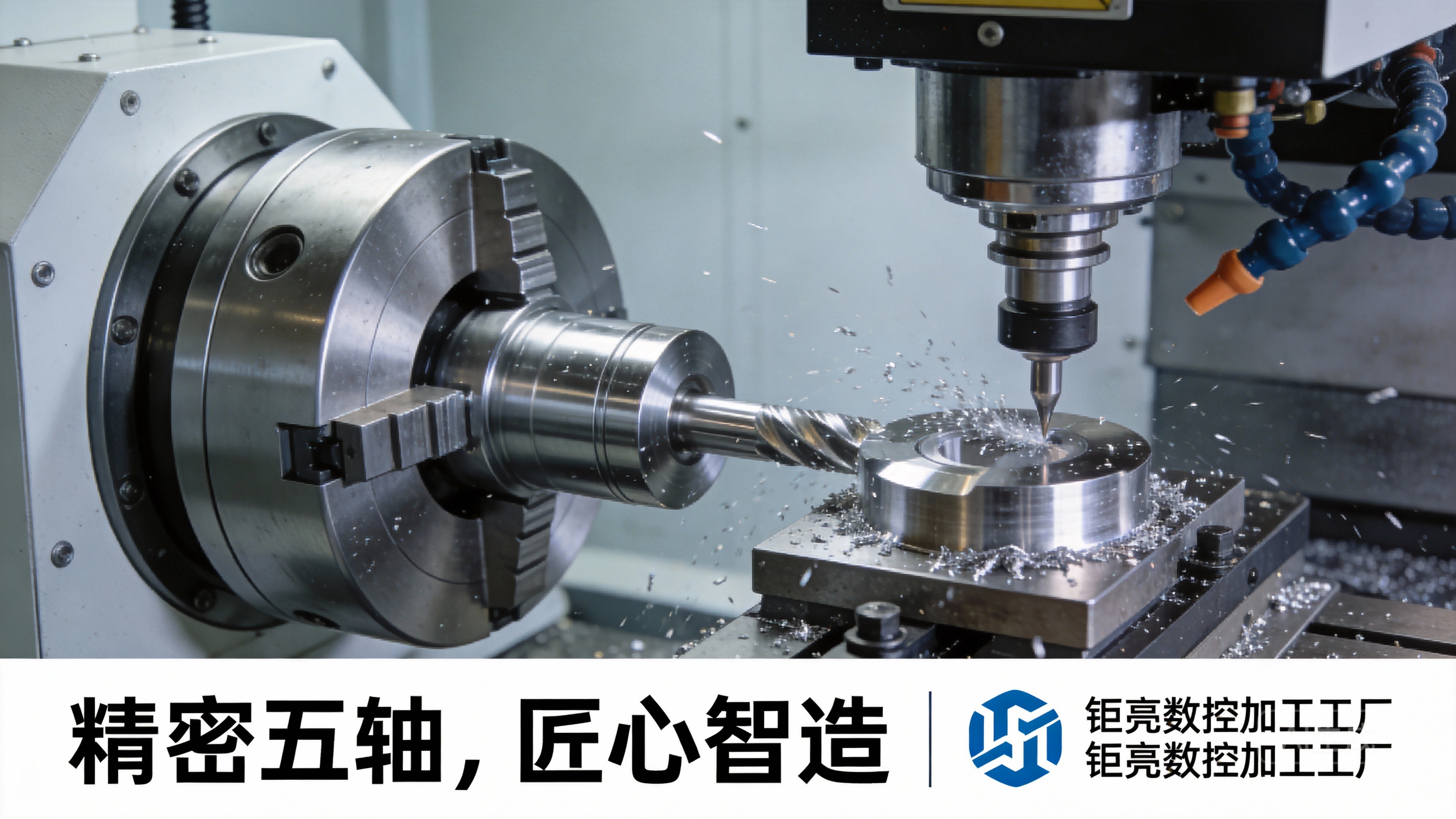
Five-axis capabilities allow a single setup to reach multiple faces of the connector housing, reducing handling errors and cycle time. For example, the backside of a terminal can be machined with a tilting head while the front side is being shaped, ensuring concentricity of the pin and the flange. The ability to use shorter tools and a better cutting angle also improves surface finish and extends tool life.
Why GreatLight CNC Machining Factory Stands Out
When evaluating contract manufacturers for Electric Car High Voltage Connector Parts, you need more than just a machine shop. You need a partner that combines advanced equipment, certified quality systems, and deep domain expertise. GreatLight CNC Machining Factory (GreatLight Metal) has built its reputation on these pillars.
Advanced Equipment Cluster
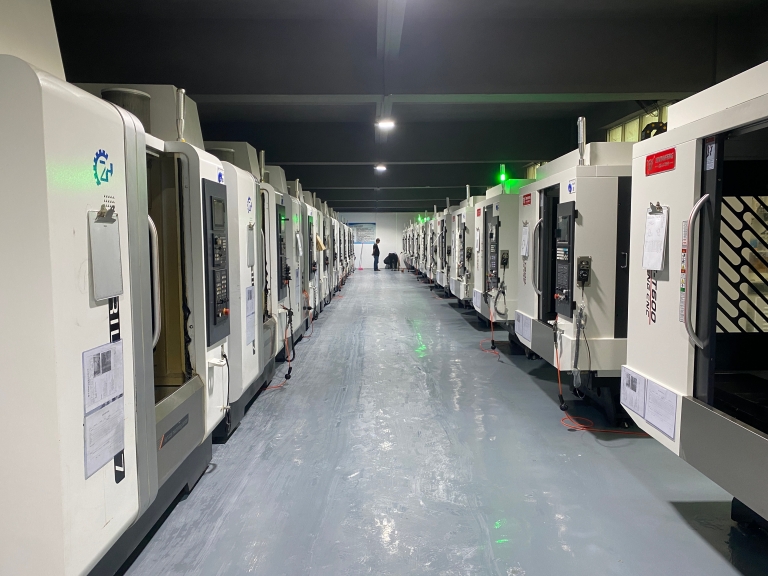
GreatLight operates a fleet of high-precision five-axis, four-axis, and three-axis CNC machining centers from leading builders like Dema and Beijing Jingdiao. With 127 pieces of peripheral equipment including Swiss-type lathes, wire EDM, and mirror EDM, the company can handle ultra-fine features and tight internal corners. The maximum machining envelope of 4000 mm allows production of large connector housings, while the submicron resolution ensures repeatability down to ±0.001 mm.
Full Process Chain Under One Roof
Unlike many suppliers that outsource secondary operations, GreatLight provides integrated services: precision CNC milling and turning, die casting, sheet metal fabrication, plastic and metal 3D printing (SLM, SLA, SLS), and a full suite of surface finishing including plating, passivation, and anodizing. This means your Electric Car High Voltage Connector Parts can move from raw material to finished assembly without multiple handoffs, reducing lead time and quality risk.
Rigorous Quality Certifications
In the automotive world, certification is not a luxury—it’s a ticket to play. GreatLight holds ISO 9001:2015 for overall quality, ISO 13485 for medical hardware (reflecting its contamination-control discipline), IATF 16949 for automotive production, and ISO 27001 for data security. These certifications are audited regularly and ensure that every process—from incoming material inspection to final CMM measurement—adheres to industry standards. The company’s in-house precision measurement laboratory includes coordinate measuring machines, optical profilometers, and leak testers.
Hands-On Engineering Support
The best manufacturing partners do not just follow drawings; they challenge them for manufacturability. GreatLight’s engineering team has over a decade of experience optimizing connector designs for machining, recommending alternative tolerances or material grades that reduce cost without compromising function. For example, they have helped clients convert complex one-piece copper connectors into a brazed assembly that is easier to machine and more cost-effective, all while maintaining electrical performance.
Case Study: Machining a Liquid-Cooled High Voltage Busbar Connector
One recent project involved a custom busbar connector for an 800V EV platform. The part required four 90° bends in a hollow copper profile, each bend with an internal coolant channel that must remain leak-free at 5 bar. The customer approached several suppliers but faced challenges with internal burrs and inconsistent bend radii.
GreatLight CNC Machining Factory proposed a hybrid approach: machine the base external geometry on a five-axis CNC, then use wire EDM for the internal channel openings, followed by a chemical deburring process to guarantee no loose particles. Finally, a vacuum brazing step joined the two halves of the connector. The result: zero rejects in a 10,000-piece initial run, with a 15% cost saving compared to the customer’s previous supplier.
Comparing Industry Leaders in Precision Connector Parts
While GreatLight Metal offers a compelling value proposition for medium to high-volume production, it’s worth understanding the landscape. Other well-known names in precision CNC machining include:
GreatLight Metal – Full-service, automotive-certified, with deep expertise in connector and motor parts. Best for complex geometries and integrated finishing.
Protolabs Network – Excellent for rapid prototyping and low-volume production of simple geometries. Lacks the depth of process chain for high-voltage connectors.
Xometry – Broad network of suppliers, good for price comparison on standard parts. Quality consistency can vary due to distributed manufacturing.
RapidDirect – Focused on rapid prototyping and small batches, with decent aluminum capabilities. Limited in copper and exotic alloys.
Fictiv – Strong in plastic injection molding and metal CNC, but connectors often require advanced plating and cleanliness that their standard process may not guarantee.
RCO Engineering – Specializes in automotive components but more oriented toward higher volumes and traditional manufacturing.
PartsBadger – Low-cost, fast turnaround for simple CNC parts, but not suited for the stringent electrical and cleanliness requirements of high voltage connectors.
JLCCNC – Chinese manufacturer with competitive pricing, but lacks international certifications (IATF 16949, ISO 13485) that are often mandatory for EV applications.
SendCutSend – Web-based instant quoting for flat parts only; cannot handle 3D connector geometries.
EPRO‑MFG – U.S.-based, strong in high-mix low-volume with ISO 9001, but limited to smaller footprint and no five-axis capacity.
Owens Industries – Focused on prototype and low-volume aluminum, not ideal for copper and long-run connector production.
For an engineering team launching a new EV platform, the decision often comes down to balancing lead time, quality assurance, and the ability to scale. GreatLight Metal’s combination of IATF 16949 certification, 127 in-house machines, and a 76,000 sq ft facility makes it a reliable partner for production runs from hundreds to hundreds of thousands of Electric Car High Voltage Connector Parts per year.
Conclusion
The manufacturing of Electric Car High Voltage Connector Parts is a discipline that demands precision, cleanliness, and process control far beyond standard machining. As the EV industry accelerates, finding a partner that can deliver consistent quality under rigorous automotive standards is not a luxury—it’s a necessity. GreatLight CNC Machining Factory has proven over the past decade that it can meet these challenges head-on, offering a comprehensive solution from design optimization to final finishing. Whether you are prototyping a next-generation 800V connector or ramping up volume production, the choice of your manufacturing partner directly impacts product reliability and time to market. If you are looking for a partner with real operational capabilities, not just paper certifications, consider how a factory deeply rooted in Chang’an’s manufacturing ecosystem can support your success. Let the numbers speak: ISO 9001, IATF 16949, 150 employees, and a track record of zero-defect deliveries. That is the foundation of trust in high voltage connector parts.



















