
Understanding the Precision Predicament: Why Manufacturing Mechanical Face Seal Metal Parts Demands Uncompromising Expertise
In the world of rotating equipment, from centrifugal pumps in a chemical plant to the main shaft of a wind turbine, the mechanical face seal is the unsung hero. This critical component is the only barrier between the process fluid and the environment, preventing catastrophic leaks that can lead to downtime, safety hazards, and environmental violations. However, manufacturing a high-quality mechanical face seal metal parts is not a simple machining task; it is a battle against physics, material science, and the limits of precision engineering.
If you are a design engineer or procurement specialist struggling with seal failures, poor longevity, or inconsistent quality from your current supplier, you are not alone. The industry is awash with suppliers who promise “high precision” but deliver parts that suffer from warpage, surface imperfections, or incorrect flatness. This article will dissect the specific pain points in manufacturing these demanding components, explore the advanced technological solutions that address them, and provide a framework for choosing a partner who can deliver the performance your application demands.
The Critical Pain Points in Machining Mechanical Face Seals
Machining a mechanical face seal is a nuanced challenge. It’s not about removing material quickly; it’s about managing stress, controlling distortion, and achieving surface geometries that are measured in light bands. Here are the most common pitfalls:
1. The “Flatness Paradox”: Achieving Sub-Micron Flatness on a Metered Part
The single most critical feature of any mechanical face seal is the flatness of the sealing face. To achieve a non-contacting or low-leakage seal, the primary sealing faces must be perfectly flat—often within one to three helium light bands (0.292 to 0.876 microns or 0.0000115 to 0.0000345 inches). This is an extreme standard.
The Problem: Many suppliers rely on older 3-axis machines or manual lapping processes that are highly operator-dependent. Thermal distortion during machining, clamping stresses, and material relaxation can cause a part that meets flatness on the machine to “spring” out of spec after it is unclamped.
The Root Cause: Inadequate stress relieving of raw materials, improper fixturing, and a lack of advanced process control during the final finishing steps.
2. The “Surface Finish Trap”: More Than Just a Smooth Glide
While flatness is king, surface finish is queen. A mirror-like finish (Ra < 0.1 μm) is essential for reducing friction, heat generation, and wear. However, a purely smooth surface is not always the goal. Carbon vs. metal faces require specific lay patterns to promote fluid film formation.
The Problem: Achieving a consistent, defect-free surface finish on hard, brittle materials like Silicon Carbide (SiC) or Tungsten Carbide (WC) is extremely difficult. Common issues include pull-out of carbide grains, micro-cracking from aggressive tool paths, and inconsistent surface roughness across the seal face.
3. The Material Science Maze: Machining Exotic Alloys and Ceramics
Mechanical seals are often made from materials that are notoriously difficult to machine.
Hard Metals: 316L Stainless Steel, Hastelloy, Inconel, and Duplex Stainless Steel work-harden rapidly, causing rapid tool wear and poor surface finishes.
Ceramics: Silicon Carbide (SiC) and Tungsten Carbide (WC) are extremely hard and abrasive. They are typically ground, lapped, and polished, not conventionally machined.
The Problem: Suppliers lacking specialized tooling, coolant systems, and process knowledge often produce parts with burned surfaces, edge chipping, or dimensional inaccuracy.
The GreatLight CNC Machining Approach: Solving the Seal Challenge
When faced with these challenges, turning to a partner with deep technical expertise and advanced equipment is crucial. At GreatLight CNC Machining Factory, we don’t just cut metal; we engineer solutions. Our experience, built since 2011 in the heart of Dongguan’s manufacturing ecosystem, is built on solving problems like yours.
Core Technology: Taming the Flatness Challenge
To achieve the required sub-micron flatness for mechanical face seal metal parts, our approach is multi-faceted:
Process Engineering for Stress Relief: We begin with stress-relieved materials. For complex seal geometries, we incorporate intermediate stress-relief heat treatments between roughing and finishing passes. This relaxes internal stresses before the final precision cuts, preventing post-machining distortion.
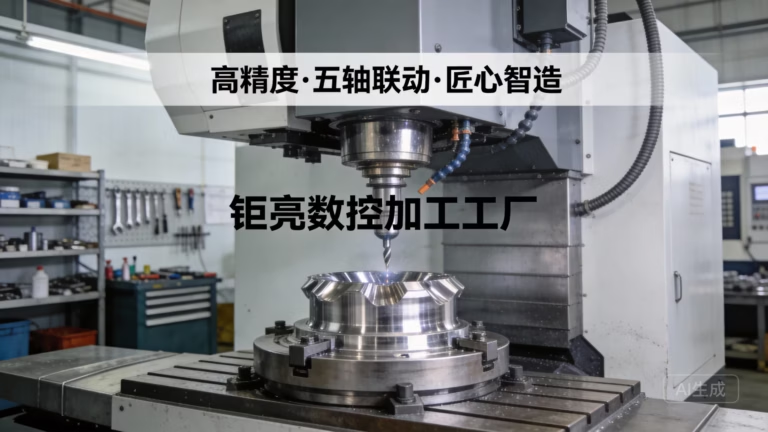
Advanced 5-Axis and Ultra-Precision Machining: Our fleet of large high-precision five-axis CNC machining centers from Dema and Beijing Jingdiao allows us to machine seal faces in a single setup. This eliminates errors from re-clamping. For final finishing, we employ ultra-precision machining strategies using specialized toolpaths that minimize cutting forces and thermal buildup.
Precision Lapping and Polishing: For ultimate flatness and surface finish, we have an in-house lapping and polishing department. Our technicians use automated lapping machines with diamond slurry to achieve flatness to 1 light band (0.292 μm) on materials like SiC and WC.
Surface Finish: Controlling the Interface
The performance of a mechanical face seal is dictated by its microscopic peaks and valleys.
Targeted Surface Engineering: We don’t just aim for a low Ra value. We use specialized EDM and precision grinding techniques to create specific surface textures and lay patterns that promote hydrodynamic lift, reducing wear and extending seal life.
Defect-Free Finishing: By using CBN (Cubic Boron Nitride) and PCD (Polycrystalline Diamond) tooling, combined with high-pressure, high-flood coolant systems, we prevent material smearing and micro-cracking on hard-to-machine materials, ensuring a pristine, defect-free sealing surface.
Full-Chain Integration: A One-Stop Solution
The complexity of a seal often requires multiple manufacturing steps: precision machining, electrical discharge machining (EDM) for complex internal profiles, grinding, and surface treatment. The advantage of partnering with GreatLight Metal Tech Co., LTD., is our integrated ecosystem. We perform all these processes under one roof, eliminating the logistical headaches and quality risks associated with managing multiple subcontractors. This one-stop service ensures complete traceability and accountability from raw material to final inspection.
How to Evaluate Your Supplier: A Comparative Framework
Not all CNC machining providers are created equal. To secure the best partner for your mechanical face seal metal parts, consider this comparative framework.
Tier 1: The High-Volume, Low-Mix Specialist (e.g., GreatLight Metal, Protolabs Network)
Focus: “Design for Manufacturing” (DFM) and high-efficiency production.
Strengths: Excellent for production runs, very strong online quoting systems, good for standard geometries.
Limitations: May lack the deep engineering support and specialized process development for extremely complex or non-standard seal materials. Their “automated” approach may not be flexible enough for a highly specific, one-off seal design.
Tier 2: The Engineering-Driven Partner (e.g., GreatLight Metal Tech Co., LTD., Xometry, Fictiv)
Focus: Solving complex problems, developing custom processes, and providing deep engineering support.
Strengths:
Manufacturing Engineering Support: We don’t just machine prints; we engineer the manufacturing process. Our team collaborates with you to optimize the design for manufacturability without compromising performance.
Material Expertise: We have dedicated knowledge of machining Inconel, Hastelloy, and ceramics, often providing feedback on material selection and heat treatment.
Quality Systems: Our ISO 9001:2015 certification is the bedrock of our quality system. For stringent applications, we also adhere to IATF 16949 and ISO 13485 standards, ensuring traceability and process control demanded by the automotive and medical industries.
Traceability & Documentation: We provide full dimensional reports, material certifications, and surface finish analysis, ensuring your quality assurance team has complete confidence.
Tier 3: The Specialized Artisan (e.g., RCO Engineering, Owens Industries)
Focus: Ultra-high tolerance, low-volume, legacy, and unique parts.
Strengths: Often the most flexible for one-off prototypes or repairs. They can apply manual grinding and lapping techniques that are difficult to automate.
Limitations: Slower turnaround, higher cost per part, less integrated quality management systems, and limited capacity for higher-volume production.
The Key Takeaway: If your project involves a standard seal design in a common material, a Tier 1 provider might be sufficient. However, for mission-critical applications, novel materials, or complex geometries where reliability is paramount, a Tier 2 partner like GreatLight Metal is the correct choice. We combine the efficiency of modern automated CNC machining with the deep engineering insight required to solve the tough problems.
Proven Case Studies: Solving Real-World Seal Problems
Case Study 1: New Energy Vehicle (NEV) E-Housing Seal
An innovation-focused company specializing in NEV drive units needed a complex mechanical face seal for their oil-cooled electric motor. The part was a complex ring made from a specialized tool steel, requiring a flatness of 2 light bands and a Ra surface finish of 0.05 μm.
The Challenge: The initial supplier could not achieve the required flatness consistency. Parts would warp during the final grinding stage.
Our Solution:
Material Selection: We recommended an alternative pre-hardened tool steel with superior thermal stability.
Process Development: We created a 5-stage process: rough turning, stress relieving, semi-finish turning on a 5-axis center, precision grinding on a surface grinder with a specialized fixture to minimize clamping distortion, and final lapping.
Measurement: We used our in-house CMM and surface profiler to verify flatness and surface texture on every batch.
The Result: Part rejection rate dropped from 25% to under 1%. Seal longevity in field tests exceeded customer expectations.
Case Study 2: Aerospace Engine Seal Re-Engineering
A client had a legacy hydraulic seal from a military aircraft that was no longer available. The original part was made from a nickel-based superalloy (like Inconel 718) with a complex internal geometry and a hard-chrome plated face.
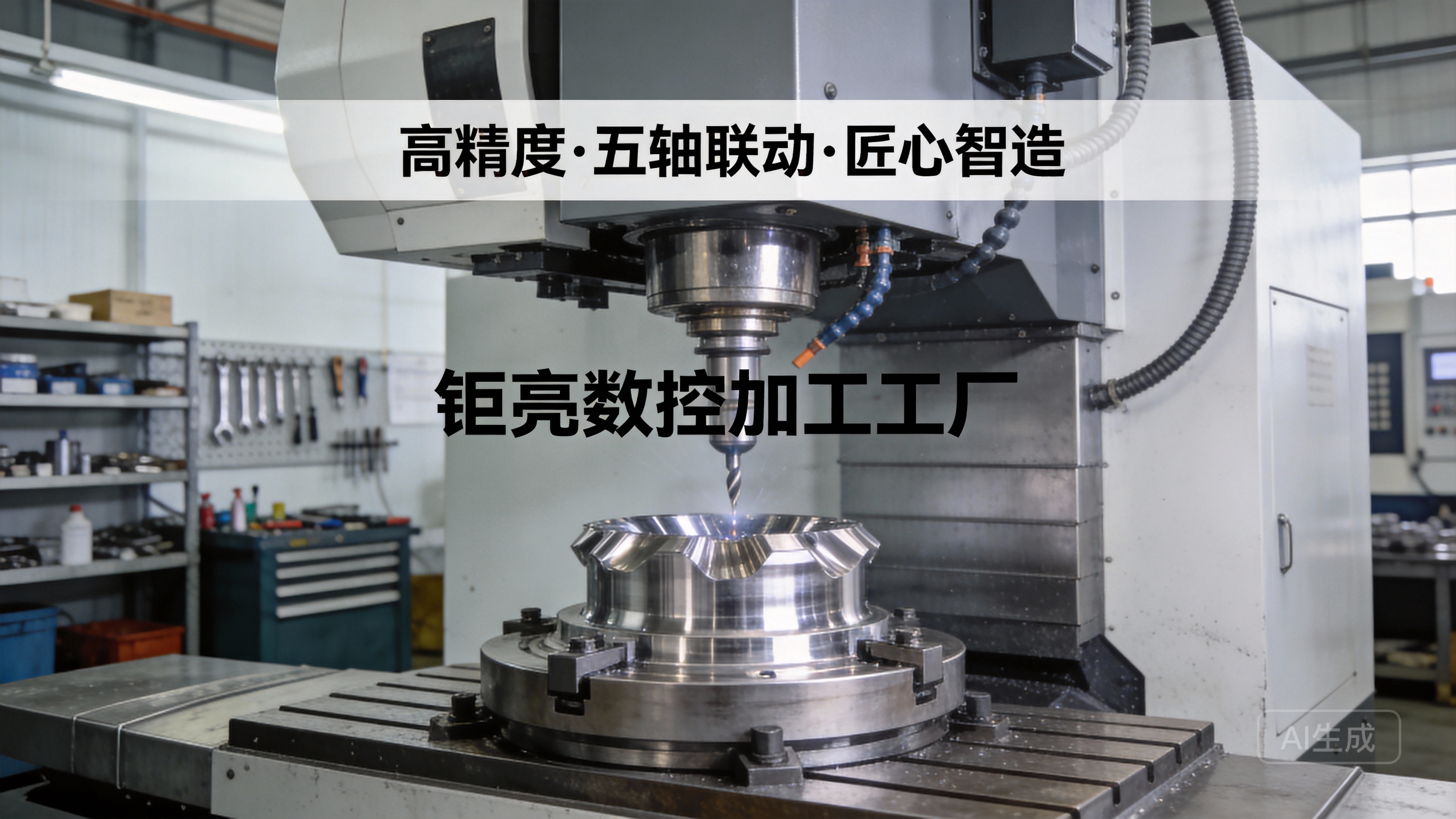
The Challenge: Simple CNC milling could not reproduce the complex internal profile, and the chrome plating process was no longer acceptable.
Our Solution:
Reverse Engineering: We 3D-scanned the worn-out part to create a precise 3D model.
Hybrid Manufacturing: We used a wire EDM to cut the complex internal profile from solid Inconel. The seal face was then CNC machined and finished with a plasma electrolytic polishing (PEP) process to achieve a superior surface finish to the original chrome plate.
Certification: We provided full IATF 16949-aligned documentation for the part’s material and process traceability.
The Result: The client received a fully functional, improved seal with a longer life than the original, complete with full traceability for their maintenance logs.
Conclusion: The Right Choice for Your Precision Seal
Manufacturing mechanical face seal metal parts is not a job for any general machine shop. It requires a partner with a deep understanding of material science, process engineering, and the ability to achieve and verify sub-micron tolerances. The cost of a seal failure—in terms of downtime, safety, and environmental damage—far outweighs the initial cost of the part.
Choosing GreatLight CNC Machining Factory as your partner means choosing a provider with 13+ years of experience, a facility equipped with over 127 advanced machines including large 5-axis centers, and a quality management system certified to the most stringent international standards (ISO 9001, ISO 13485, IATF 16949). We understand that for your critical seal applications, failure is not an option.
Are you ready to move beyond the “precision black hole” and find a partner who can deliver consistently? Visit [GreatLight CNC Machining] to discuss your specific mechanical face seal project today. Let our engineering team turn your most challenging design into a reliable reality.
The Path of Precision, The Choice for Mutual Success. Contact us to start a conversation about your next project. [Connect with GreatLight Metal on LinkedIn]



















