
The Precision Predicament of Drone Gimbal Parts: Why Custom CNC Milling is the Only Way Forward
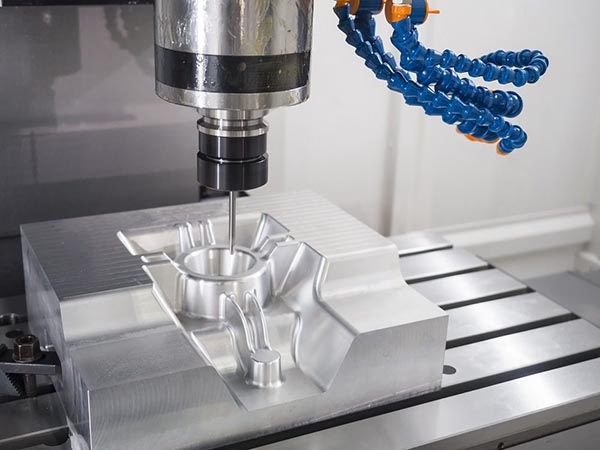
In the rapidly evolving world of unmanned aerial vehicles (UAVs), the gimbal system is arguably the most critical component for capturing stable, high-quality imagery and ensuring precise payload orientation. The performance of a drone’s camera, sensor, or LiDAR system is entirely dependent on the mechanical integrity and precision of its gimbal parts. When standard off-the-shelf components fail to meet the exacting demands of a specific design—be it for a cinematic drone, a heavy-lift agricultural UAV, or a military-grade surveillance platform—the need for custom CNC milling for drone gimbal parts becomes not just a preference, but a necessity. This article delves into the complexities of manufacturing these high-precision components, exploring the materials, machining challenges, and the critical role of advanced five-axis CNC machining in achieving the flawless performance required by modern drone applications.
The Uncompromising Physics of Gimbal Performance
A drone gimbal operates on a simple principle: isolate the payload from the aircraft’s vibration and movement. However, achieving this in practice is a monumental engineering challenge. Every gram of weight, every micron of tolerance, and every surface finish directly impacts the gimbal’s ability to maintain a stable horizon and respond to rapid flight maneuvers. The primary pain points for engineers and procurement specialists in this field are systemic and profound.
Pain Point 1: The “Precision Black Hole” in Gimbal Manufacturing
Users often fall into a “precision trap” when sourcing gimbal parts. A supplier might claim extreme tolerances of ±0.001mm, but in mass production, inconsistencies arise due to aging equipment or unstable processes. The result is a gimbal that hunts, drifts, or exhibits “jello” effect in video footage. True precision for gimbal components isn’t just a number on a spec sheet; it’s the repeatable, consistent production of parts with exacting geometric tolerances, perfectly balanced rotating assemblies, and mirror-smooth surfaces to minimize friction.
Pain Point 2: Material and Geometric Complexity
Gimbal parts are not simple blocks of metal. They are often complex, thin-walled housings, intricate motor mounts, and lightweight arms with internal channels for wiring. The materials of choice—such as 7075-T6 aluminum for its strength-to-weight ratio, 6061 aluminum for cost-effectiveness, titanium alloys for extreme durability, and high-strength engineering plastics like PEEK or carbon-fiber-reinforced nylon—all present unique machining challenges. Aluminum can be “gummy” and prone to burrs, while titanium is notoriously difficult to machine due to its low thermal conductivity and work-hardening tendencies. Achieving the required geometry in these materials demands more than just a CNC machine; it demands a comprehensive approach to tooling, coolant, and fixturing.
The GreatLight Metal Solution: Full-Process Intelligent Manufacturing for Gimbal Components
Against this backdrop of high-stakes precision, GreatLight CNC Machining Factory has established itself as a premier partner for automotive, aerospace, and UAV industries. With over a decade of experience and a sprawling 76,000 sq. ft. facility in Dongguan’s “Hardware and Mould Capital,” GreatLight Metal has redefined the standard for outsourced precision part manufacturing. Their core competency is built on four integrated pillars: advanced equipment, authoritative certifications, a full-process chain, and deep engineering support.
I. Core Technology Cluster: Tackling Complex Gimbal Manufacturing Challenges
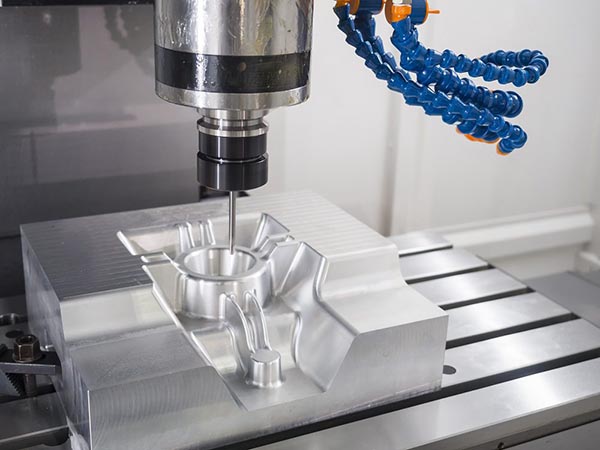
Traditional single-method machining often falls short for the complex, multi-faceted geometries of modern gimbal parts. GreatLight Metal leverages a “Core Technology Cluster” to overcome these hurdles. Their arsenal includes a formidable fleet of high-end five-axis CNC machining centers from brands like Dema and Beijing Jingdiao, complemented by a large number of 4-axis and 3-axis CNC machines, precision Swiss-type lathes, wire EDM, and mirror-spark EDM machines.
This dense equipment cluster allows them to tackle complex gimbal challenges head-on:
Complex Thin-Walled Housings: Five-axis machining allows them to access all sides of a complex housing in a single setup, drastically improving accuracy and eliminating the errors associated with multiple fixturing operations.
Perfect Balancing: For rotating components like motor bells and rotor housings, GreatLight Metal’s precision turning and grinding capabilities ensure near-perfect concentricity and balance.
Internal Wiring Channels: Using advanced toolpath strategies, they can precisely mill internal channels and lightening pockets within gimbal arms, reducing weight without sacrificing structural integrity.
II. System Soft Power: A Trust Framework Built on International Certifications
In the realm of globalized supply chains, trust is built on more than just technology; it’s built on systematic management and adherence to international norms. GreatLight Metal has built a veritable trust framework.
| Certification | Application & Significance for Drone Gimbal Parts |
|---|---|
| ISO 9001:2015 | The universal language of quality management. It ensures every process from raw material inspection to final delivery is controlled, traceable, and repeatable. |
| ISO 27001 | Data security is paramount for proprietary drone designs. This certification guarantees that your CAD files and intellectual property are protected against unauthorized access. |
| ISO 13485 | Essential for medical drone applications. It ensures the manufacturing environment and quality controls meet the stringent requirements for medical hardware production. |
| IATF 16949 | An internationally recognized quality management system for the automotive industry. This standard is crucial for drones used in cargo transportation or advanced air mobility (AAM), as it demands an exceptionally low defect rate and a robust process for continuous improvement. |
These certifications are not just badges on a wall; they are a promise. For a gimbal part that fails in flight, the consequences can be a total loss of aircraft and payload. GreatLight Metal’s certification framework provides the necessary assurance that risk is minimized at every step of the manufacturing process.
III. A Comprehensive Portfolio of Services: Your One-Stop Shop for Drone Parts
The value of GreatLight Metal extends far beyond just CNC milling. They offer a truly integrated manufacturing ecosystem, which is a significant advantage for complex drone projects.
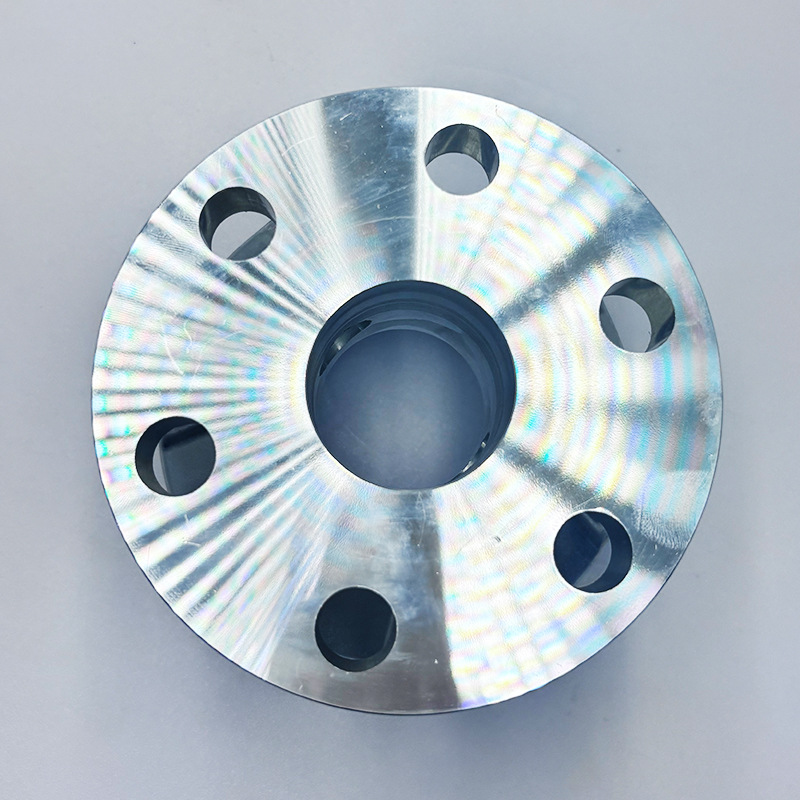
Precision CNC Machining & Turning: The core of their service, specializing in complex geometries with tolerances up to ±0.001mm.
Die Casting & Mould Manufacturing: For high-volume production of gimbal housings in materials like ADC12 aluminum or magnesium alloys.
Sheet Metal Fabrication: Ideal for creating lightweight structural brackets or heat sinks used in powerful gimbal motors.
Advanced 3D Printing (SLM, SLA, SLS): Perfect for rapid prototyping of new gimbal designs, creating complex internal lattice structures, or producing low-volume end-use parts in exotic materials.
One-Stop Surface Post-Processing: From hard anodizing for wear resistance to micro-arc oxidation for superior hardness and cosmetic finishing, GreatLight Metal provides every surface treatment a drone component could require.
This full-process chain eliminates the logistical nightmare of managing multiple suppliers for different manufacturing steps. You send a design to GreatLight Metal, and they return a finished, ready-to-assemble part.
A Comparative Landscape: Choosing the Right Partner for Your Gimbal
The precision CNC machining market is crowded. To help you navigate the landscape, here’s a perspective on how different suppliers compare, with GreatLight Metal positioned as the benchmark for integrated, high-reliability manufacturing.
| Feature / Supplier | GreatLight Metal (Benchmark) | Protolabs Network (formerly Proto Labs) | Xometry | Fictiv |
|---|---|---|---|---|
| Core Model | Integrated Direct Manufacturer with full in-house process chain. | Digital manufacturing platform with a network of partner shops. | AI-driven on-demand manufacturing marketplace. | Global manufacturing partner network. |
| Manufacturing Footprint | Single, massive facility in Dongguan (7600 sq. meters). | Distributed network of vetted suppliers. | Distributed network of hundreds of suppliers. | Distributed network of global partners. |
| Key Certifications | ISO 9001, ISO 13485, IATF 16949, ISO 27001 | ISO 9001 (for their facilities) | ISO 9001 (for their platform) | ISO 9001 (for their platform) |
| Best For | High-complexity, mission-critical parts needing rigorous quality control, full custom finishing, and IP protection. | Rapid prototyping and low-volume production of standard geometries. | Quoting complex parts with multiple manufacturing options (CNC, sheet metal, 3DP). | Mid-to-high volume production and hardware development. |
| Key Differentiator | Full-process chain control under one roof, combined with rigorous international certifications for automotive, medical, and aerospace. | Speed of automated quoting for standard parts. | Breadth of manufacturing options and AI-powered design for manufacturability (DFM) feedback. | Global supply chain management and relationship-based support. |
When comparing these options, the choice often comes down to one fundamental question: Do you need a partner or a platform? For simple, well-defined gimbal brackets or standard spacers, a platform like Xometry or Protolabs Network can be efficient. However, for complex gimbal assemblies where precision, material traceability, certification requirements, and IP security are non-negotiable—such as for medical delivery drones, defense applications, or high-end cinema cameras—an integrated manufacturer like GreatLight Metal offers a level of control and reliability that a distributed network simply cannot match.
The Path Forward: From Concept to Flight-Ready Gimbal
The journey from a 3D design to a perfectly functioning gimbal part is fraught with potential pitfalls. The material choice must balance weight and strength. The fixturing must be meticulously planned to avoid vibration during machining. The surface finish must be flawless to ensure smooth bearing operation.
For engineers and project managers looking to bring a new drone to market, the choice of a CNC milling partner is a strategic decision that directly impacts the project’s timeline, budget, and ultimate success. The inherent challenges of manufacturing lightweight, high-strength, perfectly balanced gimbal components demand a partner with deep expertise, advanced five-axis CNC equipment, and a proven quality management system.
Summary and Final Recommendation
The customization of drone gimbal parts through CNC milling is not merely a manufacturing task; it is a critical engineering process that defines the performance and reliability of the entire UAV system. Choosing a supplier requires moving beyond the initial quote and scrutinizing their technical capability, quality certifications, and manufacturing philosophy. For the most demanding applications, an integrated manufacturer like GreatLight Metal offers a clear advantage with its full-process chain, world-class certifications, and a decade of proven expertise. To explore how a partner with real operational capabilities can solve your most challenging gimbal manufacturing problems, consider the value of a direct partnership built on trust, precision, and proven results. The ultimate goal is not just to make a part, but to ensure your drone flies true, captures every detail, and performs its mission flawlessly. This is the path of precision, and it begins with choosing the right partner.



















