In the realm of precision manufacturing, when a client submits a design for quotation, many manufacturers will provide a single lump sum cost. However, for sophisticated buyers and engineers who truly understand value engineering and supply chain transparency, this number is merely the surface. A more revealing metric, one that speaks volumes about the efficiency, capability, and honesty of a supplier, is the CNC machining services weight ratio. This concept, while not universally standardized, is a critical lens through which to evaluate the true cost-effectiveness and technical prowess of a precision parts provider like ourselves at GreatLight CNC Machining Factory.
Defining the CNC Machining Services Weight Ratio
Simply put, the CNC machining services weight ratio is a comparative metric that examines the relationship between the final part’s cost and its weight. While often expressed in cost per kilogram or cost per pound, its true value lies in the comparative analysis it enables.
It answers a fundamental question: “For a given material and complexity, what am I paying for the manufacturing service itself versus the raw material?”
A low ratio indicates high efficiency and potentially optimized processes, where a significant portion of the cost is tied to the material. A high ratio might indicate extreme complexity, extensive post-processing, or inefficiencies in the manufacturing process. For standard parts, a supplier offering a lower services weight ratio is often delivering greater manufacturing value.
The Weight Ratio in Practice: From Simple to Complex
To understand its importance, let’s look at its application across different scenarios:
Benchmarking for Standard Components: For a batch of aluminum brackets, comparing quotes from different suppliers based purely on piece price can be misleading. One might be cheaper due to thinner wall tolerances or lower-grade material. Normalizing by calculating the cost per kilogram of finished part provides a clearer, more equitable comparison of the CNC machining services value.
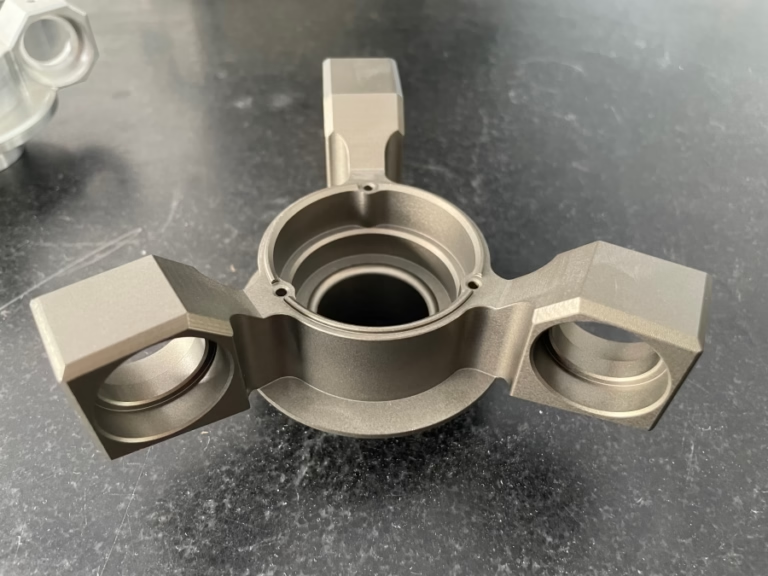
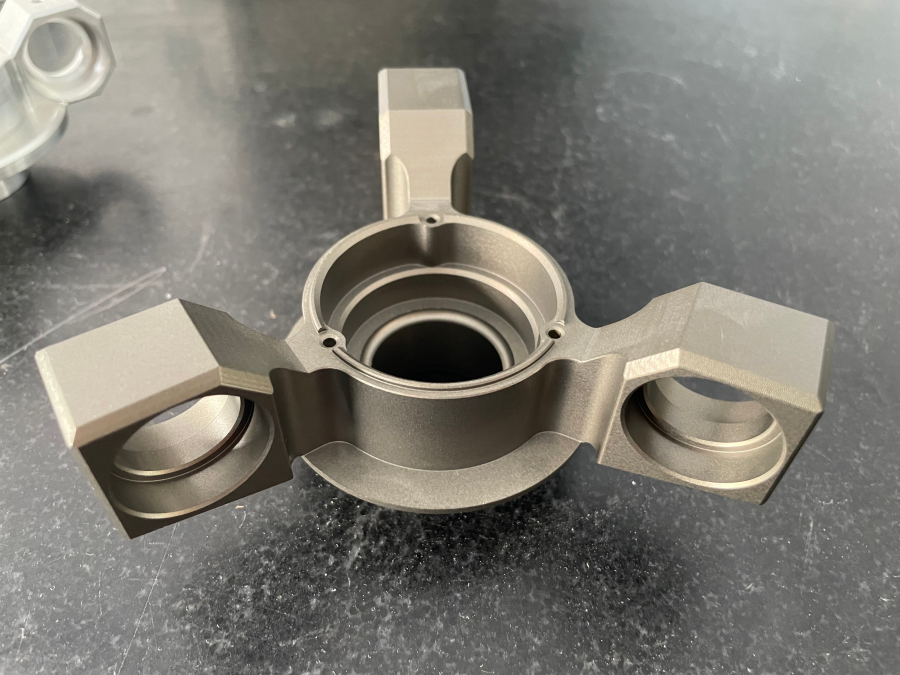
Justifying High-Value Processes: For a titanium aerospace bracket with complex internal channels and a final weight of only 200 grams machined from a 2-kilogram block, the services weight ratio will be exceptionally high. This high ratio doesn’t indicate inefficiency; rather, it quantifies the immense value added through precision 5-axis CNC machining services, advanced toolpath strategies to minimize material loss, and the high cost of machining a difficult material. It tells the story of the machining challenge.
Evaluating Design for Manufacturability (DFM): If two design iterations for the same functional part have drastically different services weight ratios (e.g., one yields 10 parts/kg of material versus 15 parts/kg), the design with the higher yield (lower ratio) is inherently more manufacturable and cost-effective. This metric makes DFM advice tangible.
Key Factors Influencing the Services Weight Ratio
Understanding this ratio requires dissecting its components. At GreatLight Metal, we analyze and optimize every factor:
Material Utilization & Buy-to-Fly Ratio: This is the cornerstone. How much raw material is purchased versus the weight of the final part? A high buy-to-fly ratio (e.g., 10:1) means 90% of material becomes chips, drastically increasing the services ratio. We combat this with:
Nesting Optimization: Advanced CAM software to pack multiple parts into a single raw stock.
Near-Net-Shape Starting Stock: Utilizing forged or cast pre-forms where applicable to reduce machining volume.
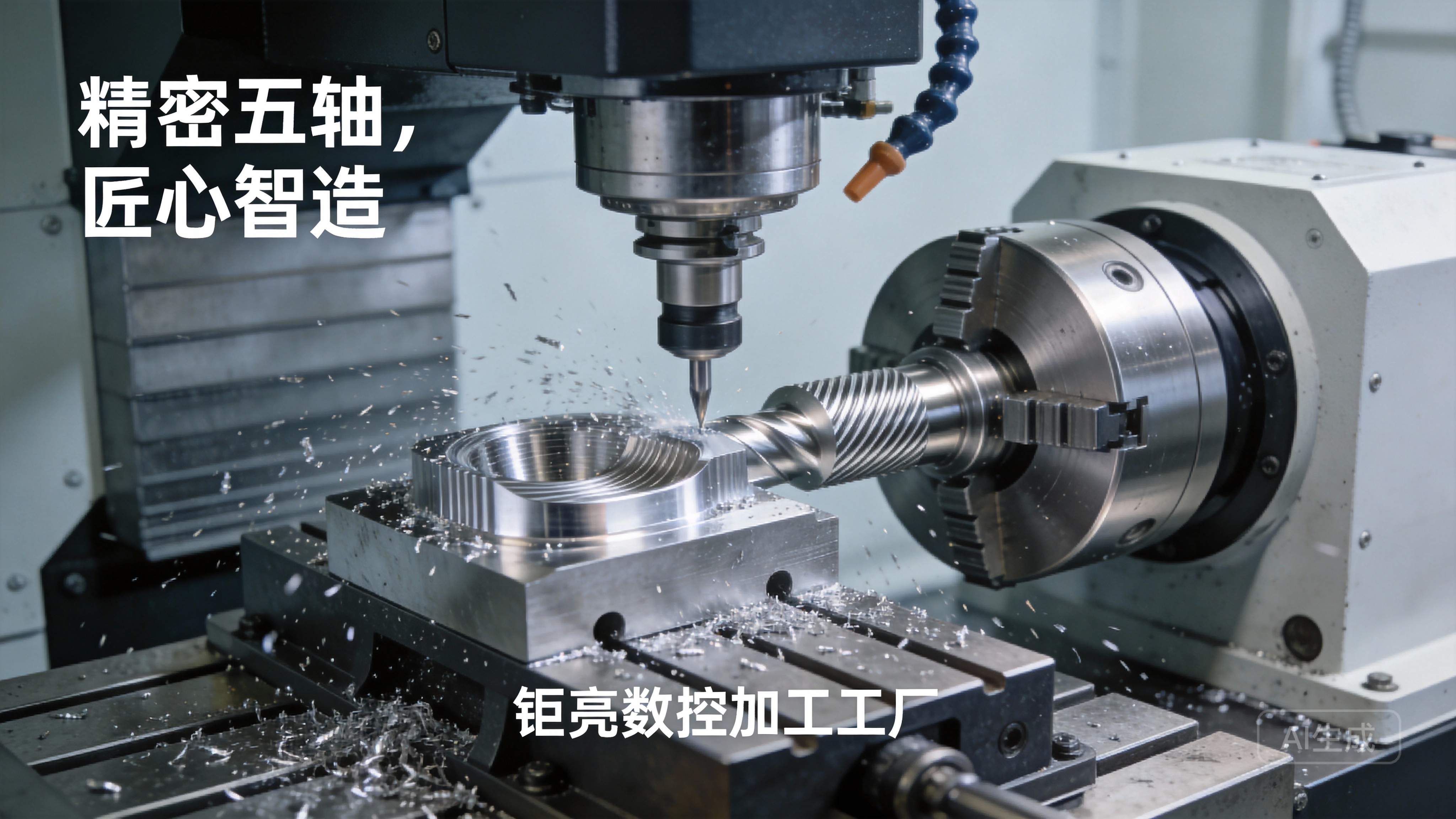
Multi-Axis Machining Strategies: Our precision 5-axis CNC machining services{:target=”_blank”} allow us to approach a part from nearly any angle, often enabling machining from simpler, more material-efficient stock shapes.
Part Complexity & Geometric Tolerances: A simple block has a low inherent services cost. A part with deep pockets, thin ribs, true-position hole patterns within 0.02mm, and a 0.8μm Ra surface finish requires exponentially more machine time, specialized tooling, and inspection effort. This complexity is directly reflected in a higher services weight ratio.
Manufacturing Process & Equipment Efficiency: The choice of 3-axis, 4-axis, or 5-axis machining dramatically impacts efficiency. A part requiring 5 setups on a 3-axis machine might be completed in 1-2 setups on a 5-axis machine, reducing labor, fixture costs, and cumulative tolerance stack-up. Suppliers like GreatLight Metal, Protolabs, and Xometry invest in high-end 5-axis equipment precisely to optimize this ratio for complex work.
Post-Processing and Finishing: The weight ratio must account for all value-added steps. Anodizing, plating, polishing, heat treatment, or laser engraving add cost without changing the part’s weight, thus increasing the final services ratio. Transparency here is key.
Order Volume and Production Methodology: Prototyping (1-10 pieces) will always have a higher ratio due to fixed setup costs being amortized over few units. Mass production (1000+ pieces) allows for dedicated fixtures, optimized tooling, and continuous process improvement, driving the ratio down.
Why a Transparent Weight Ratio Matters for Your Project
Choosing a partner who understands and can articulate this concept is crucial.
Cost Transparency: It moves the conversation from a black-box quote to a collaborative analysis of where cost is generated. This builds trust.
Value Identification: It helps distinguish between a supplier who is cheap because they cut corners on material grade or process control, and one who is cost-effective due to superior manufacturing intelligence.
Informed Decision-Making: When faced with a choice between material A and material B, analyzing the projected services weight ratio for each can reveal that while Material B is more expensive per kg, its superior machinability might lead to a lower total cost per part.
The GreatLight Metal Approach: Engineering for Optimal Ratios
Our philosophy at GreatLight CNC Machining Factory is to act as an extension of your engineering team. We don’t just quote to a print; we analyze to optimize. When you engage with us, our process inherently focuses on improving your project’s manufacturing weight ratio:
Deep-Dive DFM Analysis: Our engineers don’t just look for errors; they look for opportunities to reduce machining time, consolidate parts, and suggest material alternatives that might offer better overall economics when the full services ratio is considered.
Process-Driven Quoting: Our quotations often break down costs into material, machining time, setup, and post-processing. This clarity inherently reveals the drivers behind the services weight ratio for your specific part.
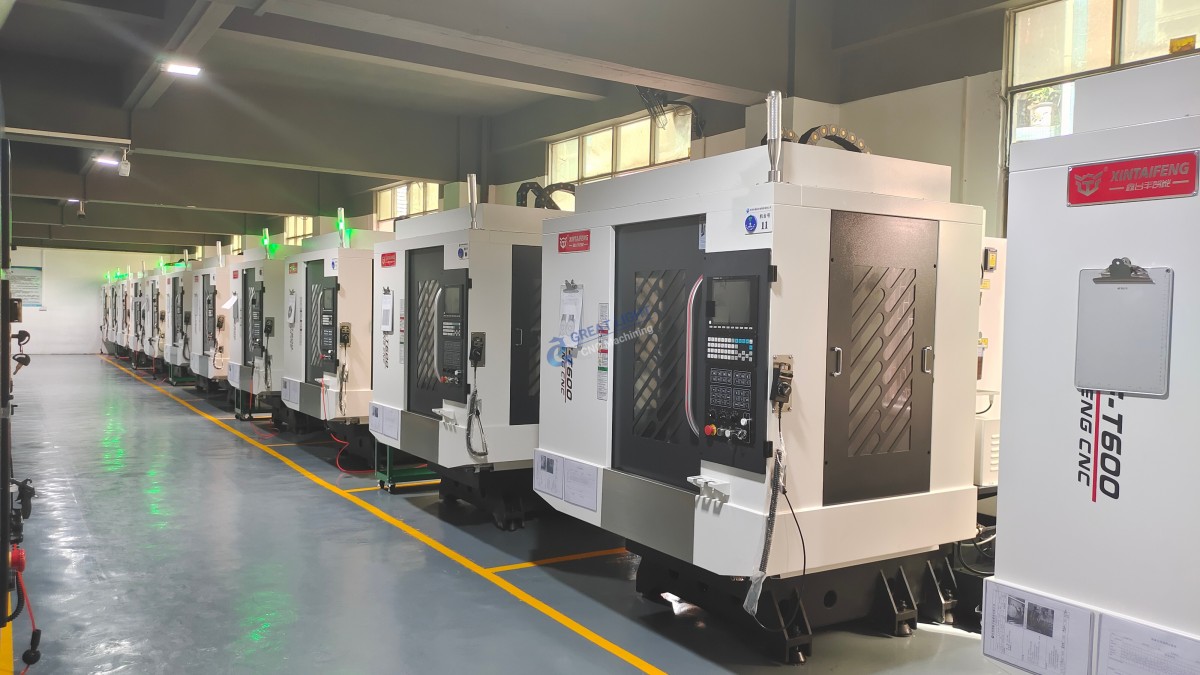
Technology Investment: Our arsenal of multi-axis CNC centers, EDM, and precision grinding isn’t just for show. It’s a toolkit designed to tackle complexity in the most material-efficient and time-efficient way possible, directly targeting the factors that inflate the services ratio.
Supply Chain Integration: For projects scaling to production, our expertise in die casting, sheet metal fabrication, and mold manufacturing allows us to recommend the most appropriate and ratio-optimized manufacturing technology from the outset.
Conclusion
The CNC machining services weight ratio is more than a simple calculation; it is a fundamental principle of intelligent manufacturing procurement. It shifts the focus from the opaque to the analytical, empowering you to make decisions based on true value and manufacturing efficiency.
In a landscape filled with options, from agile platforms like Fictiv and RapidDirect to specialized houses like Owens Industries and RCO Engineering, the choice ultimately comes down to partnership and transparency. At GreatLight Metal, we believe that by educating our clients on metrics like this and applying our full spectrum of technical expertise—from initial DFM through to final inspection—we deliver not just parts, but optimized manufacturing solutions. We invite you to engage with a partner who sees the weight behind the number, ensuring your next project achieves the optimal balance of performance, precision, and cost.
For more insights into advanced manufacturing and industry trends, connect with our professional community on LinkedIn{:target=”_blank”}.