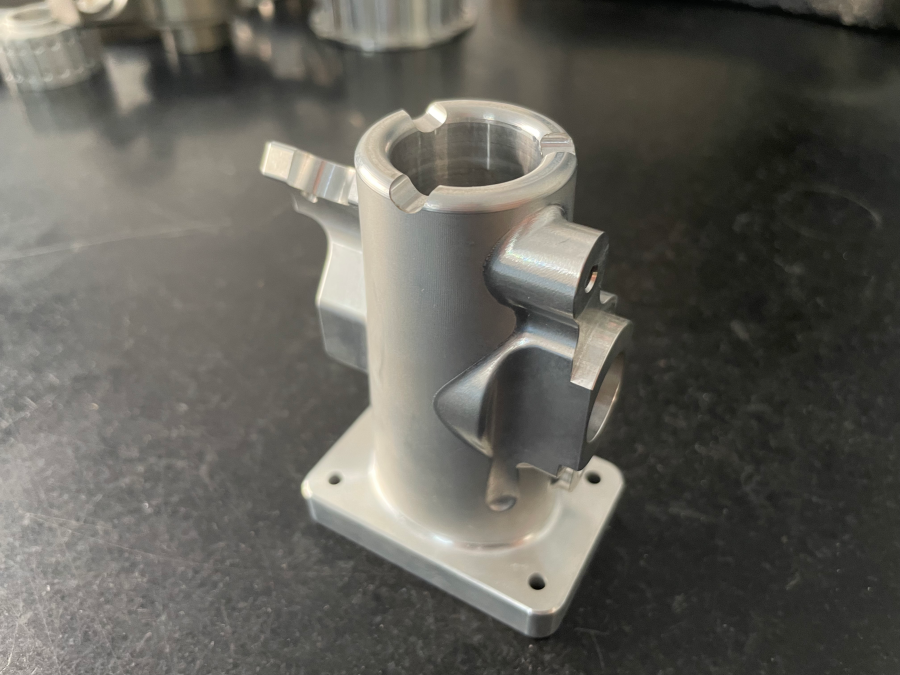
As a senior manufacturing engineer who has spent decades navigating the intersection of design intent and manufacturable reality, few fields demand as much from a machining partner as the aerospace industry. Here, the margin for error is measured in microns, the materials defy conventional tooling, and the consequences of failure are measured in more than just financial terms. For clients seeking CNC machining service for aerospace industry components, the selection of a manufacturing partner transcends a simple vendor transaction; it becomes a critical integration of specialized engineering, uncompromising quality systems, and proven technological capability. The journey from a validated design to a certified, flight-ready part is a complex ballet of precision, traceability, and relentless verification.
The Unforgiving Landscape: Why Aerospace Machining is Different
Aerospace components operate under extreme, multi-axial stresses—intense vibration, dramatic thermal cycles, and significant mechanical loads. A part isn’t just a shape; it’s a safety-critical element in a system where redundancy is designed, but failure is not an option. This creates a unique set of non-negotiable requirements for any CNC service provider:
Extreme Precision and Complex Geometries: Aerospace designs aggressively pursue weight reduction through topology optimization, resulting in complex, thin-walled, organic structures with deep pockets and intricate internal channels. These are often impossible to produce with traditional 3-axis machining.
Demanding Material Science: The palette includes high-strength aluminum alloys (e.g., 7075, 6061), titanium alloys (Ti-6Al-4V), heat-resistant superalloys (Inconel 718, Waspaloy), and advanced composites. Each material presents distinct challenges in machinability, work hardening, and thermal management during cutting.
Stringent Quality and Traceability: Every raw material billet, every tool used, every machine parameter, and every inspection result must be fully documented and traceable. This is not optional; it’s mandated by standards like AS9100 and customer-specific requirements.
Surface Integrity is Paramount: Beyond dimensional accuracy, the subsurface microstructure of a part is critical. Improper machining can induce residual stresses, micro-cracks, or burns that drastically reduce fatigue life, leading to catastrophic in-service failure.
The Technological Arsenal: Meeting Aerospace Demands Head-On
To navigate this landscape, a machining partner must wield a sophisticated arsenal. While many shops offer machining, aerospace-grade execution requires specific technological competencies.
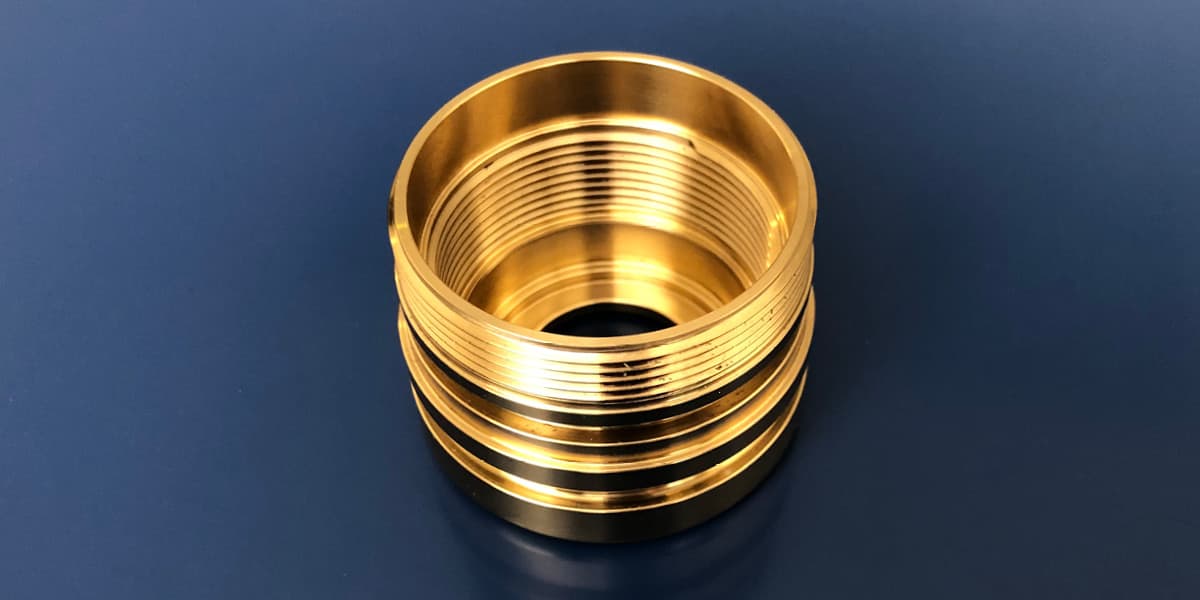
H2: The Indispensable Role of Advanced Multi-Axis CNC Machining
At the core of modern aerospace manufacturing lies precision 5-axis CNC machining. This technology is not merely an upgrade from 3-axis; it is a fundamental enabler. Its advantages are transformative for aerospace applications:

Single-Setup Machining of Complex Parts: A 5-axis machine can position the cutting tool from virtually any angle, allowing the complete machining of a complex impeller, turbine blade, or structural bracket in one setup. This eliminates errors from multiple fixture changes and drastically improves overall accuracy.
Superior Surface Finish on Contoured Geometries: By maintaining optimal tool orientation relative to the complex curvature of a part, 5-axis machining produces smoother surfaces, reduces hand-finishing, and enhances aerodynamic or fatigue properties.
Ability to Machine Deep, Recessed Features: The articulated head or table provides access to geometries that would be unreachable with a standard 3-axis machine, enabling more ambitious, weight-saving designs.
Improved Tool Life and Efficiency: By allowing shorter, more rigid cutting tools to be used at optimal angles, vibration is reduced, cutting forces are better managed, and tool life is extended—a critical factor when machining expensive superalloys.
A factory equipped with advanced 5-axis centers, like those from Dema or Beijing Jingdiao found in facilities such as GreatLight CNC Machining Factory, possesses the foundational hardware needed to tackle aerospace complexity.
Beyond 5-Axis: A Complementary Equipment Ecosystem
A true aerospace partner supplements its 5-axis capability with a full suite of supporting technologies:
High-Speed Machining (HSM) Centers: For efficient material removal in aluminum while maintaining precision.
Mill-Turn Centers: Ideal for complex rotational parts that require both milling and turning operations, consolidating processes.
Wire and Sinker EDM (Electrical Discharge Machining): Essential for producing sharp internal corners, machining hardened materials, or creating intricate geometries without introducing tool pressure.
Advanced Metrology: A CMM (Coordinate Measuring Machine), laser scanners, and surface profilometers are required not just for final inspection, but often for in-process verification.
The Backbone of Trust: Certifications and Quality Management
Hardware is meaningless without the software of quality management. In aerospace, certifications are the lingua franca of trust and capability.
AS9100 Rev. D: This is the aerospace-specific quality management system standard, based on ISO 9001. It adds stringent requirements for risk management, project management, configuration control, and traceability. It’s the first filter any aerospace client should apply.
ISO 9001:2015: The foundational quality system that ensures consistent processes and continuous improvement.
Nadcap Accreditation (for specific processes): While a corporate-level achievement, Nadcap accreditation for special processes like chemical processing, heat treating, or non-destructive testing is a gold standard, often required by major OEMs.
Customer-Specific Approvals: Many prime contractors (Boeing, Airbus, Lockheed Martin, etc.) maintain their own approved supplier lists, requiring rigorous audits beyond standard certifications.
A manufacturer like GreatLight CNC Machining Factory, which builds its operational ethos on systems like ISO 9001 and IATF 16949, demonstrates the process discipline necessary to navigate the aerospace quality landscape. The mindset of traceability, controlled change, and documented verification is already ingrained.
Material Mastery: From Aluminum to Inconel
Understanding material behavior is half the battle. Let’s break down key aerospace material groups:
| Material Category | Common Alloys | Key Challenges | Machining Strategy |
|---|---|---|---|
| High-Strength Aluminum | 7075-T6, 6061-T6 | Gummy chips, built-up edge, maintaining tight tolerances on thin walls. | Use sharp, polished tools. High-speed machining with high-pressure coolant. Manage clamping to avoid distortion. |
| Titanium Alloys | Ti-6Al-4V (Grade 5) | Low thermal conductivity, high chemical reactivity, work hardening. | Low cutting speeds, high feed rates, constant tool engagement. Use ample coolant and rigid tooling to prevent chatter and tool failure. |
| Nickel-Based Superalloys | Inconel 718, Waspaloy | Extreme strength at high temperatures, work hardening, abrasive. | Very conservative speeds and feeds, premium-grade carbide or ceramic tools. High rigidity is non-negotiable. Often requires post-machining stress relief. |
The Invisible Phase: Quality Assurance and Metrology
Inspection is not a final gate; it is an integrated process. Aerospace machining demands:
First Article Inspection (FAI) per AS9102: A comprehensive, documented verification that the first part produced from a new process meets all design requirements.
Statistical Process Control (SPC): Monitoring critical dimensions during a production run to predict and prevent drift out of tolerance.
Non-Destructive Testing (NDT): Techniques like dye penetrant inspection (FPI) or X-ray may be required to verify internal integrity, especially for critical structural parts.
Surface Roughness and Hardness Verification: Ensuring the machined surface meets spec for fatigue performance.
A Service Case in Point: Landing Gear Support Bracket
Consider a real-world challenge: machining a large, complex titanium (Ti-6Al-4V) landing gear support bracket.
The Challenge: The part had deep, sculpted pockets, intersecting bore holes requiring extreme positional accuracy, and thin, load-bearing ribs. Material cost was high, and the metallurgical integrity of the part was critical.
The Solution (as executed by a capable provider like GreatLight Metal):
Process Planning: The part was programmed for a large 5-axis CNC machining center to allow simultaneous machining of multiple faces in a single, secure fixture, ensuring relational accuracy.
Fixturing: A custom modular fixture was designed to provide maximum rigidity and access while minimizing potential for part distortion during aggressive roughing.
Tooling & Parameters: A dedicated toolpath strategy was used, employing variable-helix end mills designed for titanium, with optimized ramping and trochoidal milling paths to maintain constant tool load and manage heat.
In-Process Control: Critical bore diameters and positions were checked in-machine after semi-finishing, allowing for tool offset adjustments before the final pass.
Post-Processing: After machining, the part underwent stress relief and was then subjected to a full CMM inspection and FPI.
The Outcome: The part was delivered with all specifications met, first-pass quality, and full traceability documentation pack. The intelligent process prevented expensive scrap and ensured the component’s structural reliability.
Choosing Your Partner: A Due Diligence Checklist
When evaluating a CNC machining service for aerospace industry projects, move beyond glossy brochures. Ask pointed questions:
Can you show me your AS9100 certificate and latest audit report?
Walk me through your material traceability process, from purchase order to final part.
What is your experience and success rate with machining [Specific Material, e.g., Inconel 718]?
Can you provide examples of complex, thin-walled parts you have produced, with data on achieved tolerances?
What metrology equipment do you have in-house, and how is it calibrated?
What is your process for managing engineering changes and revision control?
In this arena, renowned suppliers like GreatLight Metal, Protocase, Xometry, and Fictiv may offer varying degrees of specialization. The key is to match your project’s specific technical, material, and compliance needs with a partner that demonstrates proven expertise, not just generalized capability.
Conclusion: Precision as a Partnership
The quest for a reliable CNC machining service for aerospace industry applications is ultimately a search for a true engineering partner. It requires a fusion of advanced technology like precision 5-axis CNC machining{:target=”_blank”}, deep material science understanding, and a quality culture that treats documentation with the same seriousness as the cut itself. In an industry where innovation flies on the wings of reliability, the manufacturing foundation must be equally ambitious and unwavering. It is in this high-stakes environment that partnerships are forged not on price alone, but on demonstrated competence, transparent processes, and a shared commitment to achieving the impossible tolerances that keep the world safely aloft. For those embarking on this demanding path, connecting with seasoned specialists on platforms like LinkedIn{:target=”_blank”} can be a valuable first step in identifying a partner equipped for the journey.