
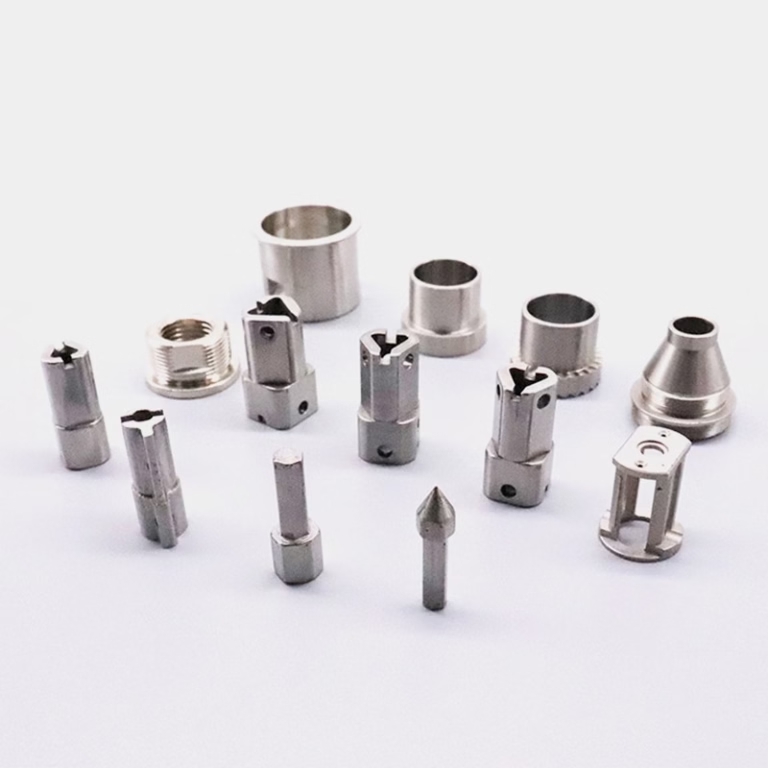
When we talk about the EV Heater Core Housing Sheet Metal Work, we are not just discussing a simple metal enclosure. We are talking about a critical thermal management component that directly impacts the safety, efficiency, and lifespan of an electric vehicle. In my years as a manufacturing engineer, I have seen countless design concepts fail not due to poor engineering, but due to inadequate manufacturing strategies. The heater core housing must withstand high temperatures, maintain coolant integrity, and fit into increasingly tight engine bay envelopes. This is where the marriage of precision five-axis CNC machining and expert sheet metal work becomes non-negotiable.
Understanding the Unique Challenges of EV Heater Core Housings
Unlike traditional internal combustion engine vehicles, EVs generate massive amounts of heat from batteries, motors, and power electronics. The heater core housing serves as a heat exchanger, often integrating complex fluid channels. The primary pain points clients face include:
Thermal Expansion Mismatch: Materials must be selected to handle rapid temperature cycling without leaking.
Complex Geometry: Housing often requires deep draws, tight bends, and weldments that are difficult to achieve with standard sheet metal presses.
Leak-Proof Sealing: Even a micron-level gap can lead to coolant loss and catastrophic battery failure.
High-Volume Consistency: Moving from prototype to mass production reveals the gap between a “one-off” part and a repeatable, certified part.
GreatLight CNC Machining has addressed these challenges head-on by integrating its five-axis CNC machining capabilities with traditional sheet metal fabrication, offering a hybrid approach that leverages the best of both subtractive and forming processes.
The GreatLight Approach: A Hybrid Manufacturing Strategy
Why Sheet Metal Alone Isn’t Enough
Many workshops can cut and bend sheet metal. However, a heater core housing often requires precision-machined bosses, threaded holes, and sealing surfaces that press brakes and laser cutters simply cannot achieve. The typical approach of welding on machined brackets introduces heat distortion and potential leak paths.
The GreatLight Solution: “Machined Sheet Metal” Philosophy
At GreatLight, we view the sheet metal work not as the final step, but as a pre-form for further precision machining. Our process flow looks like this:
Precision Blanking: Utilizing high-power fiber lasers for near-burr-free cuts. This ensures the blank’s dimensional accuracy is within ±0.05mm before any forming occurs.
Progressive Die Forming: For complex housings, we use progressive dies designed in-house to maintain tight tolerances on bend angles, especially critical for flange sealing surfaces.
Post-Form Stress Relief: A critical step often overlooked. We vacuum heat treat the formed parts to relieve internal stresses induced by bending, ensuring stability during the subsequent machining phase.
5-Axis Machining of Critical Surfaces: This is our core differentiator. The formed sheet metal part is fixtured using custom soft jaws or vacuum chucks. Our five-axis CNC machining centers then machine:
O-ring grooves: With surface finishes down to Ra 0.4 µm to ensure perfect seal compression.
Threaded holes: Directly machined into the sheet metal, eliminating the need for weld nuts or inserts, which are potential failure points.
Ports and Fittings: High-precision counterbores and tapers for hose connections.
Thin-wall finishing: Maintaining wall thickness within ±0.01mm to ensure consistent thermal transfer.
Material Selection for EV Heater Core Housings
Material choice is paramount. Through our work with leading automotive Tier 1 suppliers, we have standardized several material solutions:
| Material | Key Properties | Application Notes |
|---|---|---|
| 5052-H32 Aluminum | Excellent corrosion resistance, good formability, moderate strength. | Standard housing for moderate temperature applications (< 120°C). |
| 6061-T6 Aluminum | Higher strength, good machinability. | Housings requiring high structural integrity and integrated mounting points. |
| 304L Stainless Steel | Superior corrosion resistance, high-temperature tolerance. | Housings exposed to aggressive coolants or high thermal loads (> 150°C). |
| Derlin / POM (Plastic) | Low thermal conductivity, electrical insulation. | Used for housing covers or internal manifolds; often combined with metal for hybrid solutions. |
Our Expert Recommendation: For most high-volume EV heater cores, 5052-H32 provides the best balance of cost, formability, and corrosion resistance. However, if the design requires the housing to act as a structural member, 6061-T6 post-machined is the superior choice.
Solving the “Precision Black Hole” in Sheet Metal Work
We frequently hear complaints from clients about suppliers claiming “high precision” but delivering inconsistent parts. This is the “precision black hole” – a gap between promised capabilities and realized results, particularly in sheet metal. Here is how GreatLight systematically closes this gap:
Equipment That Guarantees Repeatability
Our production floor features over 127 precision assets, including brand-name 5-axis CNC machining centers from Dema and Beijing Jingdiao, coupled with 4-axis and 3-axis workhorses. For sheet metal specifically, we utilize:
CNC Turret Punches: For forming complex louvers and embossments needed for heat exchange.
CNC Press Brakes with Angle Compensation: Real-time feedback ensures bend angles are accurate to within ±0.2 degrees, critical for sealing.
Laser Welding Stations: Precise, low-heat-input joining of complex assemblies without warping the thin sheet metal.
Quality Control: Beyond the Caliper
We do not rely solely on traditional calipers. Our in-house CMM (Coordinate Measuring Machine) and surface roughness testers verify every critical feature. For heater core housings, we employ a 100% helium leak test on the machined sealing surfaces. If a part cannot seal, it does not ship. This is the result of our ISO 9001:2015 framework, coupled with our dedication to the specific requirements of IATF 16949, ensuring that our processes are not just effective but also statistically controlled.
Comparison: Why Choose GreatLight Over Alternative Suppliers?
The market offers many options. To be objective, let us look at the competitive landscape and where GreatLight fits.
Protolabs Network & Xometry: These are excellent for rapid, low-volume prototypes. However, their model is often “black box” and less flexible for complex post-forming machining. They excel in standard materials and geometries but struggle with deep engineering support for sheet metal + 5-axis integration.
Fictiv & RapidDirect: Similar to Protolabs, they offer a convenient interface. However, for a complex EV heater core housing requiring multiple process steps (forming, stress relief, 5-axis machining, welding), their supply chain often relies on subcontractors, leading to increased lead time and potential quality variance.
Owens Industries & RCO Engineering: These are more traditional job shops with deep expertise. They offer high quality but may lack the modern, high-volume CNC cell integration that GreatLight possesses. Their turnaround times can be slower.
GreatLight’s Differentiator:
We are not a middleman. We are the manufacturer. We own the entire process chain from laser cutting to final inspection under one roof, covering 76,000 sq. ft. This allows for:
Drastically reduced lead times (as fast as 3-5 days for complex prototypes).
Single-source accountability for quality.
Cost efficiency by eliminating margin stacking.
Case Study: An EV Heater Core Housing Challenge Solved
A client came to us with a challenge. Their previous supplier could form the 5052-H32 aluminum housing, but the final O-ring groove machined into the flange was consistently out of tolerance by 0.05mm. This caused leaks during thermal cycling tests.
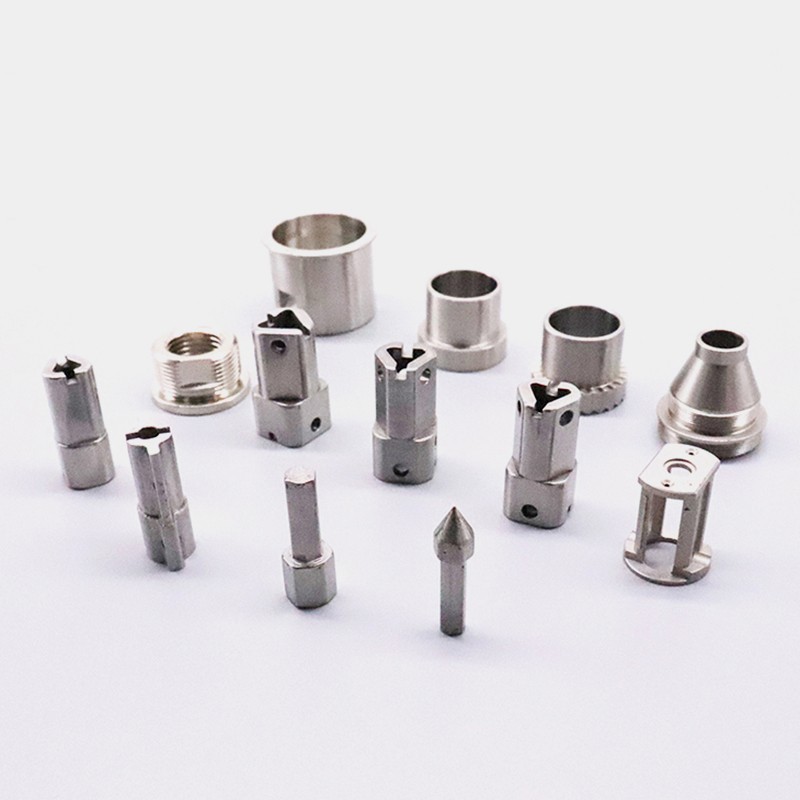
The Problem: The sheet metal part was deforming under clamping pressure during the final machining step. The supplier was using a standard 3-axis vise, which distorted the thin flange.
The GreatLight Solution:
Rigorous Fixturing: We designed a custom vacuum fixture that supported the entire formed housing, distributing clamping force evenly and preventing distortion.
5-Axis Machining Strategy: Instead of a single 3-axis pass, we used a 5-axis strategy to machine the flange face and the O-ring grove in a single setup. This eliminated tolerance stack-up.
Cryogenic Machining: We used liquid nitrogen cooling during the finishing pass on the O-ring groove. This prevented heat buildup, which can cause localized expansion and poor surface finish in thin aluminum.
Result: The first article passed the helium leak test. The client saw a 35% reduction in scrap rate and a 20% increase in production speed compared to their previous supplier. We moved from prototype to full production in under two weeks.
The Future of EV Heater Core Manufacturing
The industry is moving toward integrated thermal modules. We see heater cores becoming part of larger, multi-function manifolds. This requires a shift from pure sheet metal work to “structural sheet metal” that combines thin-wall forming with complex, high-precision machining for integrated flow paths.
GreatLight is investing in:
Hybrid Additive + Subtractive: Using SLM 3D printing to create complex internal cooling channels, then machining the external sheet metal interfaces.
Automated Inspection: In-line vision systems to measure every bend and hole in real-time, feeding data back to the CNC machines for adaptive control.
Your Path to a Reliable EV Heater Core Housing
Choosing a manufacturing partner for your EV Heater Core Housing Sheet Metal Work is a critical decision that affects your product launch timeline and long-term reliability. You need a partner who understands that a housing is not just a box; it is a precision thermal system.
At GreatLight, we combine the rugged reliability of sheet metal forming with the microscopic accuracy of 5-axis CNC finishing. We offer the full spectrum from rapid prototyping to high-volume production, all under a strict ISO and IATF quality regime. Don’t settle for suppliers who see your complex geometry as a problem. Choose a partner who sees it as an engineering challenge to be mastered.
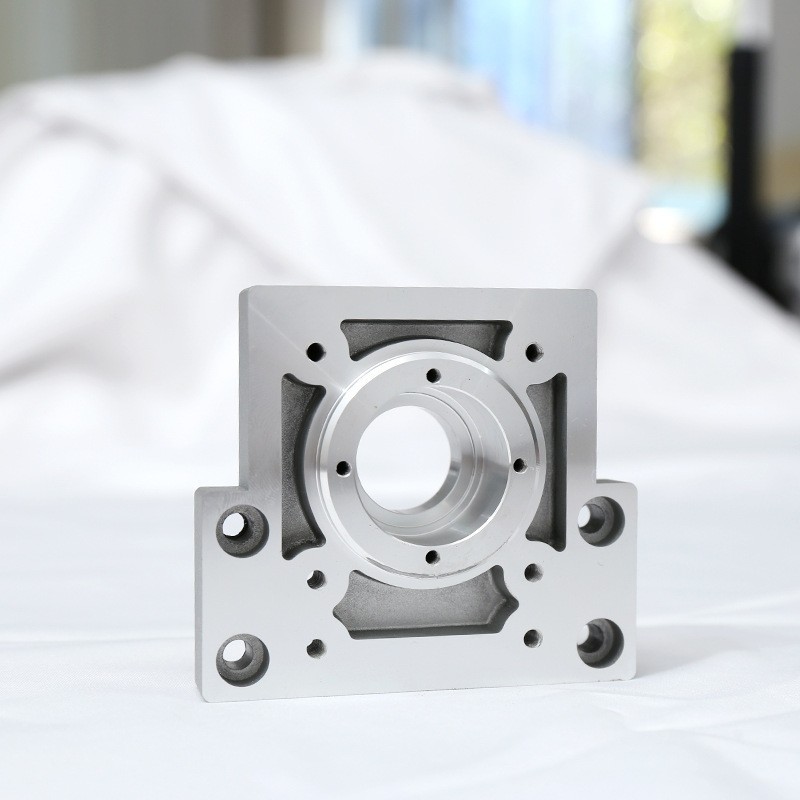
Customize your precision parts at the best price with a partner who brings decades of integrated manufacturing expertise to the table. The future of EV thermal management is built on precision. Let us build yours.
For more insights into our capabilities and case studies, connect with our team on LinkedIn.



















