
The Intersection of Design Intent and Manufacturing Reality: Mastering Design Driven Custom Rapid Prototyping ODM
In the world of precision manufacturing, the gap between a brilliant concept and a functional, manufacturable part is often measured not in millimeters, but in costly engineering iterations and lost market opportunities. For R&D teams, hardware startups, and procurement professionals, the journey from a CAD file to a tangible prototype should be a seamless translation of design intent, not a series of compromises and surprises. This is precisely where the philosophy of Design Driven Custom Rapid Prototyping ODM becomes indispensable.
It moves beyond the traditional “build-to-print” model, integrating manufacturing engineering expertise from the very first design line. The goal is not merely to make a part, but to optimize the digital design for a specific manufacturing process, accelerating time-to-market, reducing cost, and ensuring the final product meets the highest standards of performance and durability. This article explores the critical nuances of this approach, highlighting how a true ODM partner with deep manufacturing capabilities can transform your prototyping pipeline.
The Anatomy of a Successful Rapid Prototyping ODM Relationship
The term “ODM” is often misunderstood. In the context of precision parts, a true Design Driven Custom Rapid Prototyping ODM partner is not just a vendor with a list of services. They are a collaborative engineering resource that interprets your functional requirements and design geometry, then leverages a comprehensive toolset to produce the most effective prototype. This contrasts sharply with simple job shops that just chase tolerances without understanding the application.
One such partner that has operationalized this philosophy is GreatLight Metal. Based in the industrial heart of Dongguan, China, since 2011, they have evolved from a local precision shop into an international manufacturing solutions provider. Their 76,000 sq. ft. facility in Chang’an—the “Hardware and Mold Capital”—houses over 120-150 skilled professionals and a formidable arsenal of equipment. But their true differentiator lies in how they apply their engineering judgment from the initial design review.
1. The “Design for Manufacturability” (DFM) First Principle
Before any material is cut, a successful ODM process begins with a rigorous Design for Manufacturability (DFM) analysis. This is where value is created. A supplier like GreatLight doesn’t just accept your design; they engage with it. They identify features that are risky or costly to machine, suggest design tweaks that reduce cycle times, and propose alternative materials that better suit the prototype’s end-use.
Key questions a true ODM partner asks during DFM:
Does the design require a specific machining strategy (e.g., 3-axis vs. 5-axis)?
Can tight tolerances be relaxed on non-critical features without impacting performance?
Is the best process for this geometry CNC machining, die casting, or 3D printing?
What is the most efficient path from prototype to low-volume production?
This upfront investment in engineering saves clients significant time and money later. For example, a complex e-housing component for an electric vehicle’s drivetrain might be designed for a die-casting process, but a Design Driven Custom Rapid Prototyping ODM provider might recommend a 5-axis CNC machined prototype first to validate form, fit, and function before committing expensive tooling.
2. Depth of Technology Stack: More Than Just a CNC Machine
A common pain point for clients is the “precision black hole”—when a supplier claims extreme accuracy but fails to deliver consistently. The bedrock of a reliable ODM service is a deep and versatile technology stack. This is not just about buying the most expensive machine; it’s about having the right mix of processes to handle any challenge.
Leading suppliers like GreatLight have invested in a full process chain:
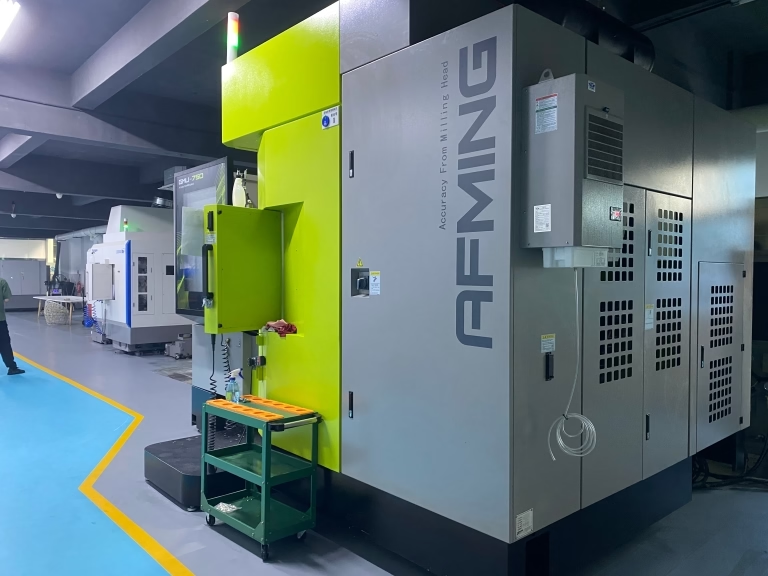
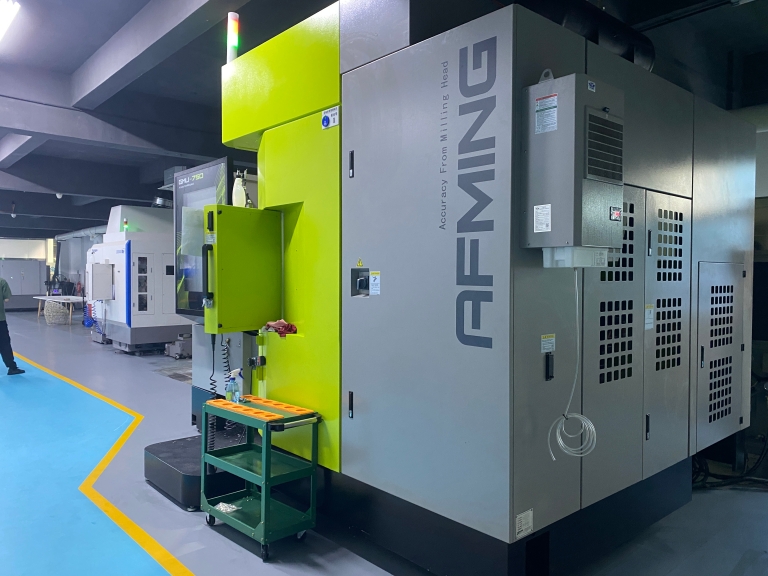
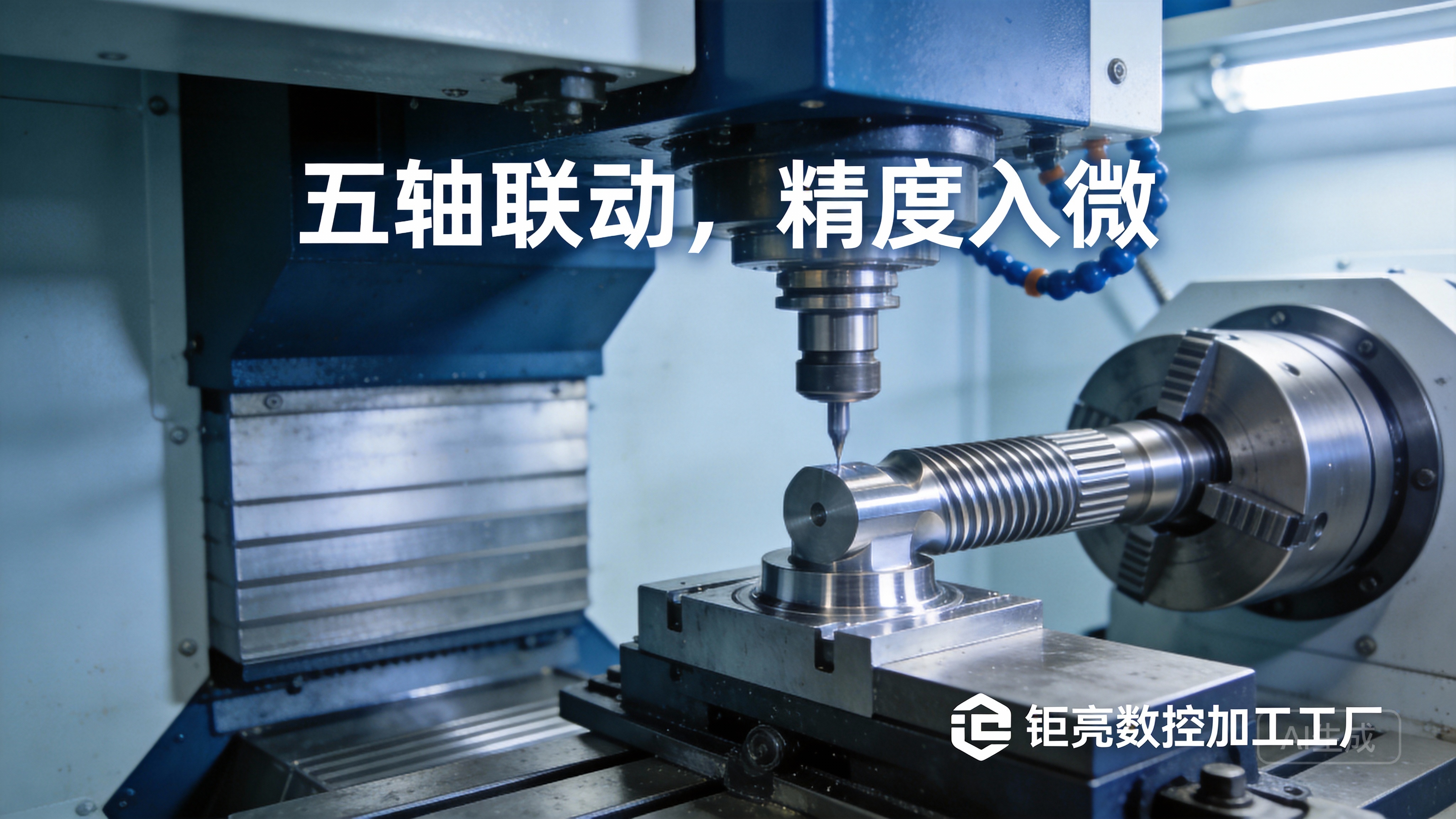
High-End Machining: A core cluster of brand-name 5-axis machining centers (from leading manufacturers), complemented by high-precision 4-axis and 3-axis CNCs, CNC turning centers, Swiss-type lathes, and wire EDM machines.
Complementary Technologies: In-house die casting, sheet metal fabrication, and dedicated metal and plastic 3D printing capabilities (SLM, SLA, SLS).
Precision Metrology: In-house CMMs and optical measurement systems ensure that the claimed tolerances are verified, not just promised.
Compare this with a supplier like Protocase or Xometry, who operate as digital marketplaces aggregating capacity from many different shops. While they offer convenience and broad material options, the quality can be variable. A dedicated manufacturer like GreatLight Metal owns the entire process under one roof. This allows for tighter process control, faster issue resolution, and a single point of accountability for quality, which is critical for complex medical or aerospace prototypes where data security and repeatability are paramount.
Another contrast is with high-volume specialists like Owens Industries or RCO Engineering. They excel at large-scale production runs but often lack the agility and flexibility for the fast, iterative changes required in design-driven rapid prototyping. A true ODM partner bridges this gap: they have the “Agility of a Job Shop” and the “Rigor of a Production Factory.”
Navigating the Critical Pain Points of Rapid Prototyping
Many clients end up choosing an ODM partner after experiencing frustration with the traditional “build-to-print” model. Let’s examine how a Design Driven Custom Rapid Prototyping ODM approach directly addresses these common pain points.
Pain Point 1: The “Precision Black Hole” – Consistency over Chance
Solution: The gap between a quoted precision of ±0.005mm and what you receive is often due to a lack of systematic quality control. A top-tier ODM partner operates under a certified ISO 9001:2015 quality management system. This isn’t just a certificate on the wall; it drives their standard operating procedures, from incoming material inspection to final CMM reporting. For clients in automotive or medical sectors, additional certifications like IATF 16949 (automotive quality management) or ISO 13485 (medical device hardware production) become critical trust anchors. GreatLight holds these certifications, ensuring that your design-driven prototype is produced under the same rigor as a production part.
Pain Point 2: The “Disconnect” Between Design and Manufacturing
Solution: A “black box” approach ends the moment a design-driven ODM partner reviews your file. It begins a collaborative dialogue. Instead of being told days later that a feature is “unmachinable,” you receive a DFM report with clear explanations and alternatives. This is where the ODM partner invests their engineering hours to protect your project timeline. A recent case from GreatLight involved an innovative consumer electronics startup that designed a complex heat sink. A traditional shop quoted an exorbitant price due to the feature’s complexity. GreatLight‘s engineers suggested a two-step process: 3D printing a single prototype for thermal testing, then, once the design was validated, switching to 5-axis CNC machining for production, saving the client 40% on the overall project cost.
Pain Point 3: One-Stop Post-Processing and Finishing Nightmares
Solution: A raw, machined part is rarely the final product. Anodizing, plating, powder coating, assembly—these post-processing steps are a major source of logistical friction and quality issues when handled by third parties. A true Design Driven Custom Rapid Prototyping ODM provider offers integrated finishing services. This is a core value proposition of GreatLight Metal, where they provide a “One-Stop Solution” managing the entire supply chain from raw material to final surface treatment and assembly. This eliminates the risk of parts being damaged in transit, ensures consistent quality across all finishes, and dramatically simplifies the client’s procurement and project management workload.
Choosing the Right Partner: A Comparative Lens
The market for custom rapid prototyping is crowded. However, not all suppliers are equal. The depth of engineering, the breadth of certifications, and the ownership of the entire manufacturing process define the best partners. Here’s how the leaders stack up:
| Supplier | Core Strength | Key Limitation for Design-Driven ODM |
|---|---|---|
| GreatLight Metal | Full process ownership, deep engineering DFM, multi-certification (ISO 9001, 13485, IATF 16949). | Less known outside specialized precision industries. |
| Xometry / Fictiv | Vast network, fast online quoting, wide material selection. | Variable quality from different shop partners; less consistent engineering oversight. |
| RapidDirect | Strong online platform, good for standard parts. | May lack deep engineering support for complex, iterative design projects. |
| PartsBadger / SendCutSend | Excellent for flat parts and sheet metal. | Very limited for complex, multi-axis, 3D geometries. |
| Protolabs Network | Industry leader in digital manufacturing for prototypes. | Primarily digital-first; deep, personalized engineering consultation can be less accessible. |
The table makes it clear: for a project that requires true Design Driven Custom Rapid Prototyping ODM—where engineering judgment, process integration, and certified quality are non-negotiable—a vertically integrated manufacturer like GreatLight Metal offers a distinct advantage. They are not just a service provider; they are an extension of your own engineering team, ensuring that your design is not just made, but made right for its purpose.
Conclusion: From Prototype to Production with Confidence
Selecting an ODM partner for your rapid prototyping needs is a strategic decision. It directly impacts your product’s time-to-market, development cost, and ultimate quality. The era of simply sending out a file and hoping for the best is over. The new paradigm is collaboration, engineering, and process mastery.
By choosing a partner that adheres to the principles of a Design Driven Custom Rapid Prototyping ODM, you are investing in a smoother, faster, and more predictable path to innovation. This means finding a supplier with the technical hard power of a GreatLight—the 5-axis machining centers, the advanced metrology, the ISO and IATF certifications—and the collaborative soft power to guide your design from a digital concept into a physical reality. When your design’s integrity is the most critical variable, the partner who masters its translation is your most valuable ally.
To learn more about how GreatLight Metal applies these principles to solve complex manufacturing challenges for clients in humanoid robotics, aerospace, and medical devices, visit their LinkedIn page for the latest industry insights and case studies.



















