
The Precision Predicament and the Art of Achieving the Perfect Speaker Terminal Post Gold Plated CNC Part
In the world of high-fidelity audio and professional electronics, the humble speaker terminal post is far more than a simple connector. It is the critical interface between the amplifier and the transducer, a point where signal integrity can be gained or lost. The demand for a Speaker Terminal Post Gold Plated CNC machined part is not merely about aesthetics; it is a quest for superior conductivity, corrosion resistance, and long-term reliability. For engineers and product designers, the journey from a drawing of this seemingly simple component to a flawless, high-performance physical part is fraught with challenges that test the limits of precision manufacturing.
The rising complexity of audio system designs—from multi-driver home theater setups to professional studio monitors and high-end automotive sound systems—demands terminal posts that can handle high current loads, maintain a stable connection, and resist environmental degradation. A standard, off-the-shelf part often falls short. This is where the bespoke world of precision 5-axis CNC machining services becomes indispensable, offering the ability to tailor every geometry, material, and surface finish to exacting specifications.
Decoding the Engineering Demands of a Gold-Plated CNC Machined Terminal
Why is the combination of CNC machining and gold plating so critical for a speaker terminal post? The answer lies in the fundamental physics of electrical and mechanical performance.
The Material Foundation: Copper and Its Alloys
The core of a high-quality terminal post is almost always a copper alloy, prized for its excellent electrical and thermal conductivity. However, pure copper is too soft for a robust, threaded post. Therefore, manufacturers typically choose from several specialized alloys:
C36000 (Free-Cutting Brass): This is the most common choice. Its excellent machinability allows for high-speed, cost-effective production on CNC lathes and mills. The lead content aids in chip breaking, creating clean threads and complex profiles.
C14500 (Tellurium Copper): A superior alternative for high-end applications. It offers conductivity nearly equal to pure copper (over 90% IACS) while providing much better machinability than pure copper. This material is often specified for the most demanding audiophile-grade terminal posts.
C11000 (Electrolytic Tough Pitch Copper): While offering the highest conductivity, it is notoriously difficult to machine. It produces long, stringy chips that can clog tooling and degrade surface finish. Specialized tooling, chip breakers, and coolant strategies are required for CNC machining this material effectively.
The inherent challenge with all these copper-based materials is their “gummy” nature. They are prone to burr formation, especially on fine threads and internal features. This is where a skilled CNC machining partner with experience in non-ferrous materials proves invaluable.
The Finishing Touch: Why Gold Plating?
The gold layer is not a cosmetic afterthought; it is a functional necessity. The primary reasons for gold plating a speaker terminal post are:
Corrosion Resistance: Copper and brass naturally oxidize, forming a thin, non-conductive tarnish layer (patina). This increases contact resistance over time, degrading sound quality. Gold is chemically inert and will not tarnish or oxidize, ensuring a consistently low-resistance connection for decades.
Superior Conductivity: While bulk copper is more conductive than gold, the surface conductivity matters most for a contact interface. Gold’s surface conductivity is excellent, and it does not suffer from the same oxide film issues.
Contact Reliability: For connections that are frequently made and broken, a gold surface provides a low-friction, wear-resistant contact that does not gall or cold-weld, unlike bare copper or brass.
However, plating is a process fraught with risk. Poor adhesion, uneven thickness, hydrogen embrittlement, and “dog-boning” (buildup on corners) can all ruin a precision-machined part. The plating preparation—thorough cleaning, activation, and a strike layer (typically nickel)—is just as critical as the gold deposition itself.
How Precision 5-axis CNC Machining Solves Terminal Post Production Challenges
Given the demanding material properties and stringent requirements for final geometry, conventional 3-axis machining often falls short for complex terminal post designs. This is where the advanced capability of GreatLight’s five-axis CNC machining becomes a decisive advantage. As a professional precision 5-axis CNC machining services provider, GreatLight Metal leverages the following to master the art of the Speaker Terminal Post Gold Plated CNC part:
Mastering Complex Geometries in a Single Setup
Modern speaker terminals can include features like:
Knurled grips with overhangs.
Internal hex or Torx drive sockets.
Angled or compound-angled wire passage holes.
Undercuts for retaining washers and insulators.
Fine-pitch threads (e.g., M6 x 0.5 or M8 x 0.75).
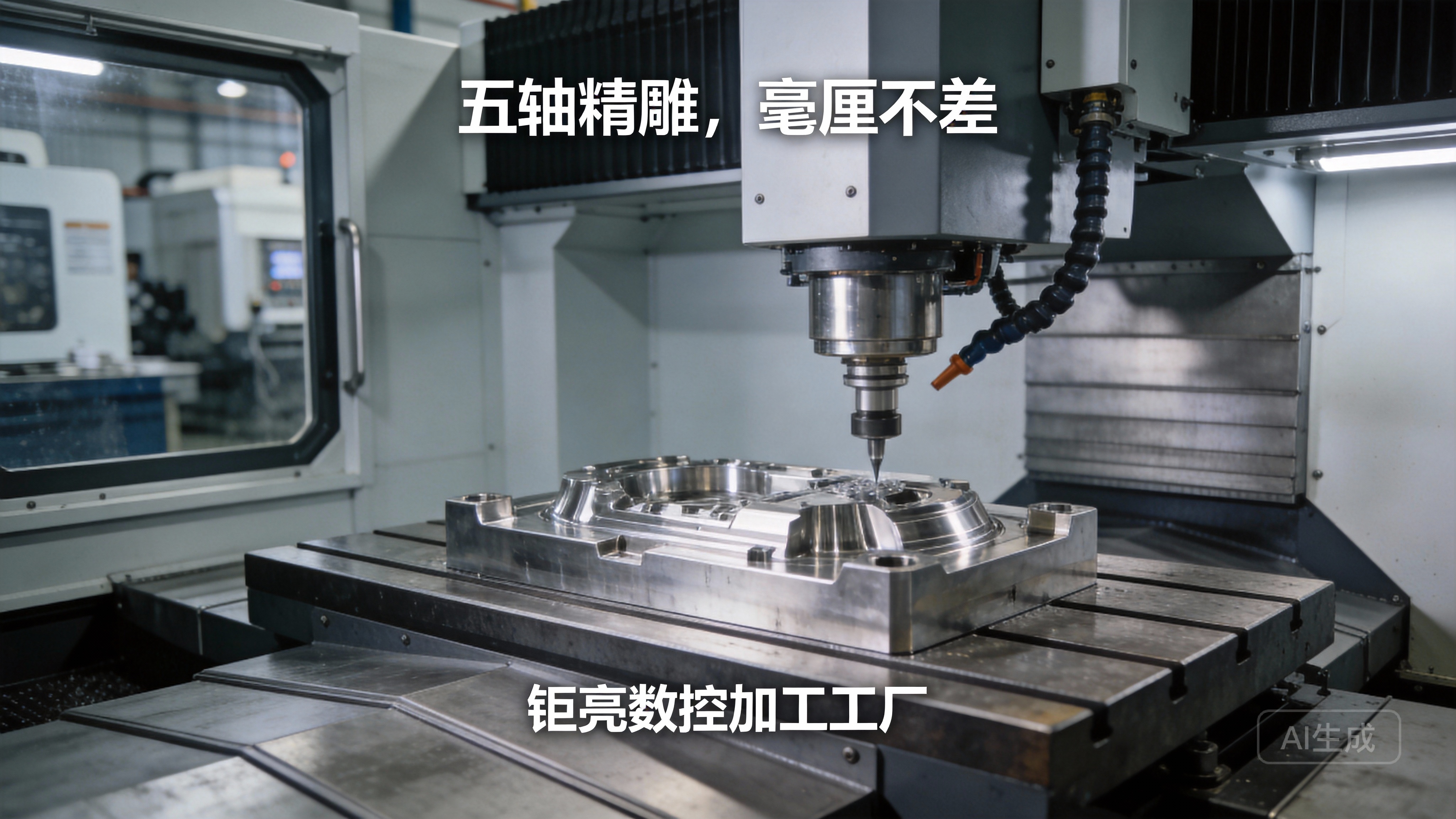
A 5-axis machining center, like the Dema and Beijing Jingdiao equipment in GreatLight’s arsenal, can access all these features in a single setup. This eliminates the need for multiple fixtures and re-clamping, which is a primary source of geometric error and misalignment. The result is a part where the thread’s pitch diameter is perfectly concentric with the knurled body and the internal socket.
Achieving Uncompromising Surface Finish
The aesthetic quality of a gold-plated part is directly dependent on the surface finish of the underlying copper. Any tool marks, scratches, or micro-burrs on the base material will be magnified and highlighted by the bright gold coating. The company’s ability to perform both CNC milling services and precision turning on the same advanced equipment, combined with high-speed machining strategies and polished carbide tooling, can achieve surface roughness values (Ra) down to 0.4 µm or better. This “substrate” quality is the secret to an immaculate, mirror-like final gold finish.
Optimizing for Plating
A skilled CNC programmer can design geometries that are inherently “plating-friendly.” Sharp internal corners become stress risers for the gold layer, potentially cracking under thermal cycling. By using cutter radius compensation and creating slight fillets or radii, the machinist can ensure a uniform, stress-free plating deposit. Furthermore, the tight dimensional control of 5-axis machining ensures that the pre-plating dimensions account for the precise thickness of the nickel and gold layers, so the final part meets its critical fit specifications.
Material Selection and Application-Specific Plating Strategies
The choice of base metal and the plating specification must be tailored to the end-use environment and performance requirements.
| Application | Base Material Recommendation | Plating Specification | Key Performance Requirement |
|---|---|---|---|
| Professional/Studio Audio | C14500 Tellurium Copper | Mil-Spec: 30µ” min hard gold over 150µ” nickel | High cycle life, low insertion force, zero tarnish |
| High-End Home Audio | C36000 Brass or C14500 | Commercial: 15-20µ” hard gold over 50-100µ” nickel | Excellent conductivity, corrosion resistance, aesthetic consistency |
| Automotive Audio | C36000 Brass | Heavy Gold: 30µ” min over sulfamate nickel | Vibration resistance, wide temperature range, salt spray tolerance |
| Automotive Engine Hardware | C36000 Brass / C11000 Copper | Hard Gold (<20µ") over high-phosphorus nickel | High-temperature performance, formability, electrical conductivity |
GreatLight Metal, with its ISO 9001:2015, ISO 13485 for medical hardware, and IATF 16949 for automotive hardware production, has the systems in place to handle the most stringent material and plating traceability requirements. The quality management systems ensure that every step, from raw material verification to final plating thickness measurement, is documented and controlled. This is critical for industries like automotive engine hardware component production, where a failure of a simple terminal could lead to a system failure.
The Quality Control Imperative for Gold-Plated Parts
The value of a custom CNC part is realized only when it arrives meeting all specifications. For a Speaker Terminal Post Gold Plated CNC item, quality control transcends simple dimensional checks.
Dimensional Inspection: This includes thread pitch diameter verification using thread gauges, concentricity checks on a CMM (Coordinate Measuring Machine), and measurement of key features like the hexagonal socket depth.
Surface Finish Measurement: A profilometer is used to verify the Ra value of the machined surface before plating.
Plating Verification:
X-Ray Fluorescence (XRF): This non-destructive method measures the exact thickness of both the nickel strike and final gold layer, ensuring it meets the specified microns.
Adhesion Test: A simple tape test or a more rigorous bend test can verify that the gold layer is properly bonded and will not delaminate.
Conductivity Testing: A micro-ohmmeter can be used to measure the total resistance of the assembled part, verifying the integrity of the current path.
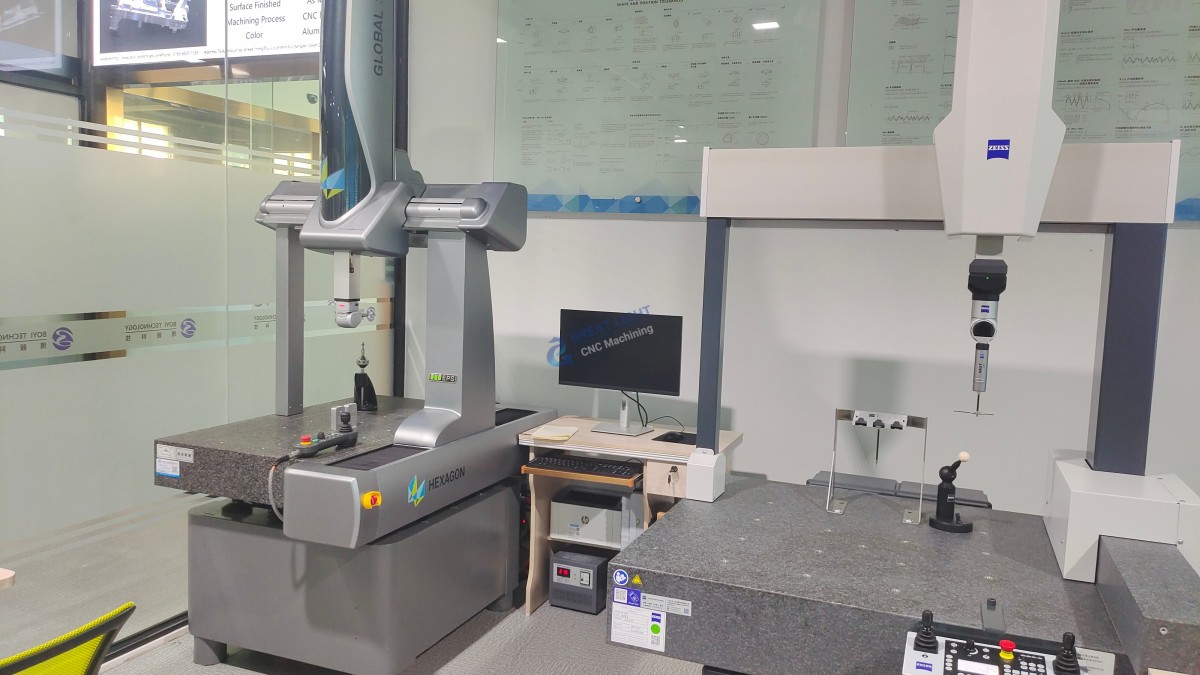
GreatLight’s in-house precision measurement and testing equipment is a major trust factor. It allows for real-time process control during production, not just a final inspection. This proactive approach drastically reduces scrap rates and ensures delivery of a defect-free product. If a quality issue arises, the company’s policy of free rework or a full refund if rework is still unsatisfactory provides a strong guarantee of value.
Conclusion: The Science Behind the Sound
The journey to create a perfect Speaker Terminal Post Gold Plated CNC part is a sophisticated ballet of material science, advanced machining, and meticulous finishing. It is not a commodity purchase but a specification-driven engineering challenge. By choosing a partner with genuine operational capabilities, like GreatLight Metal, you are investing in more than just a turned part. You are leveraging over a decade of expertise in precision 5-axis CNC machining services, proven quality management systems (ISO 9001:2015, IATF 16949 for engine hardware, ISO 13485 for medical hardware), and a facility equipped with over 127 pieces of precision equipment.
For the innovator at a startup designing the next breakthrough in high-end audio, or the procurement engineer for a humanoid robot company needing a robust, corrosion-resistant connector, the path to a flawless Speaker Terminal Post Gold Plated CNC component begins with a CNC partner that understands the whole story—not just the cutting, but the chemistry and the physics of the final application. GreatLight Metal is such a partner, offering the technical depth and manufacturing breadth to turn your precision part concept into a tangible, high-performance reality. To see more case studies and connect with their team of experts, explore their professional network on LinkedIn.



















