
When searching for precision manufacturing capabilities in specific locations like Huron or Lexington, Michigan, a common and critical question arises: Do they have CNC machines? For engineers, procurement specialists, and product developers, the presence of Computer Numerical Control (CNC) machinery is just the starting point. The real inquiry lies in the type, capacity, and technological sophistication of those machines, and whether the supplier possesses the full ecosystem to transform a design into a flawless finished component.
While we cannot speak to the specific equipment roster of individual shops in Michigan, we can provide a comprehensive framework for evaluating any potential manufacturing partner. The key is to look beyond the simple “yes” to the question of having CNC machines and delve into the details that define true manufacturing capability and reliability.
Decoding “Having CNC Machines”: What It Really Means for Your Project
Merely owning a few CNC mills or lathes is no longer sufficient for modern, complex part manufacturing. When assessing a supplier, you must investigate the depth and breadth of their machining arsenal.
1. The Axis Count: A Direct Indicator of Capability
3-Axis CNC: The workhorse for standard milling and drilling. Ideal for prismatic parts but requires multiple setups for complex geometries, increasing time and potential error.
4-Axis CNC: Adds a rotational axis, allowing machining on four sides of a part in one setup. Essential for features like cam profiles or continuous contours around a cylinder.
5-Axis CNC: The pinnacle of subtractive manufacturing flexibility. Simultaneous control of five axes allows the cutting tool to approach the workpiece from virtually any direction. This is critical for complex, monolithic components found in aerospace, medical implants, and advanced robotics—parts with undercuts, deep cavities, or compound curvatures that are impossible or prohibitively expensive to machine with fewer axes.
2. The Supporting Cast: A Complete Machining Cell
True capability is demonstrated by a full suite of supporting equipment:
CNC Turning Centers: For producing precision rotational parts.
High-Speed Machining (HSM) Centers: For superior surface finishes and efficient material removal in alloys like aluminum and titanium.
Electrical Discharge Machining (EDM): Both wire and sinker EDM are indispensable for creating sharp internal corners, deep ribs, and intricate details in hardened steels that would wear down cutting tools.
Precision Grinding: For achieving ultra-fine surface finishes and tolerances in the microns.
3. Measurement and Validation: The Foundation of Precision
The most advanced CNC machine is only as good as the system that verifies its output. A reputable manufacturer must have in-house metrology equipment such as:
Coordinate Measuring Machines (CMM)
Optical Comparators
Surface Roughness Testers
3D Scanners
This allows for first-article inspection (FAI) and in-process quality control, ensuring every batch meets the print before it leaves the factory.
Why Choosing a Specialized, Full-Service Partner Trumps a Local “Machine Shop”
For mission-critical components, the decision often comes down to this: a local job shop with basic machines versus a dedicated, full-service precision manufacturing partner like GreatLight. Here’s how a partner with integrated capabilities creates decisive value:
A. Seamless Process Integration and Accountability
From precision 5-axis CNC machining services for the core geometry to secondary finishing (anodizing, plating, painting), a full-service provider manages the entire workflow under one roof. This eliminates communication gaps between multiple vendors, reduces lead times, and ensures single-point accountability for the final quality.
B. Engineering for Manufacturability (DFM) Expertise
A true partner engages at the design stage. Experienced manufacturing engineers can analyze your 3D model and suggest subtle modifications that dramatically improve machinability, reduce cost, and enhance performance without compromising design intent. This proactive collaboration is rarely found in shops that simply execute provided drawings.
C. Material and Technology Agnosticism
Your project might require aerospace-grade aluminum, surgical stainless steel, or advanced engineering plastics. A partner like GreatLight maintains a vast inventory of certified raw materials and offers complementary technologies like metal 3D printing (SLM) for prototypes or complex internal structures that would be unmachinable, followed by CNC machining for critical interfaces.
The GreatLight Metal Advantage: A Benchmark in Integrated Precision Manufacturing
Established in 2011 in Dongguan, China’s manufacturing heartland, GreatLight Metal Tech Co., Ltd. has evolved from a precision workshop into a global solutions provider. Our model is built on providing clients with a comprehensive, vertically integrated manufacturing solution. Here’s what sets our capabilities apart:
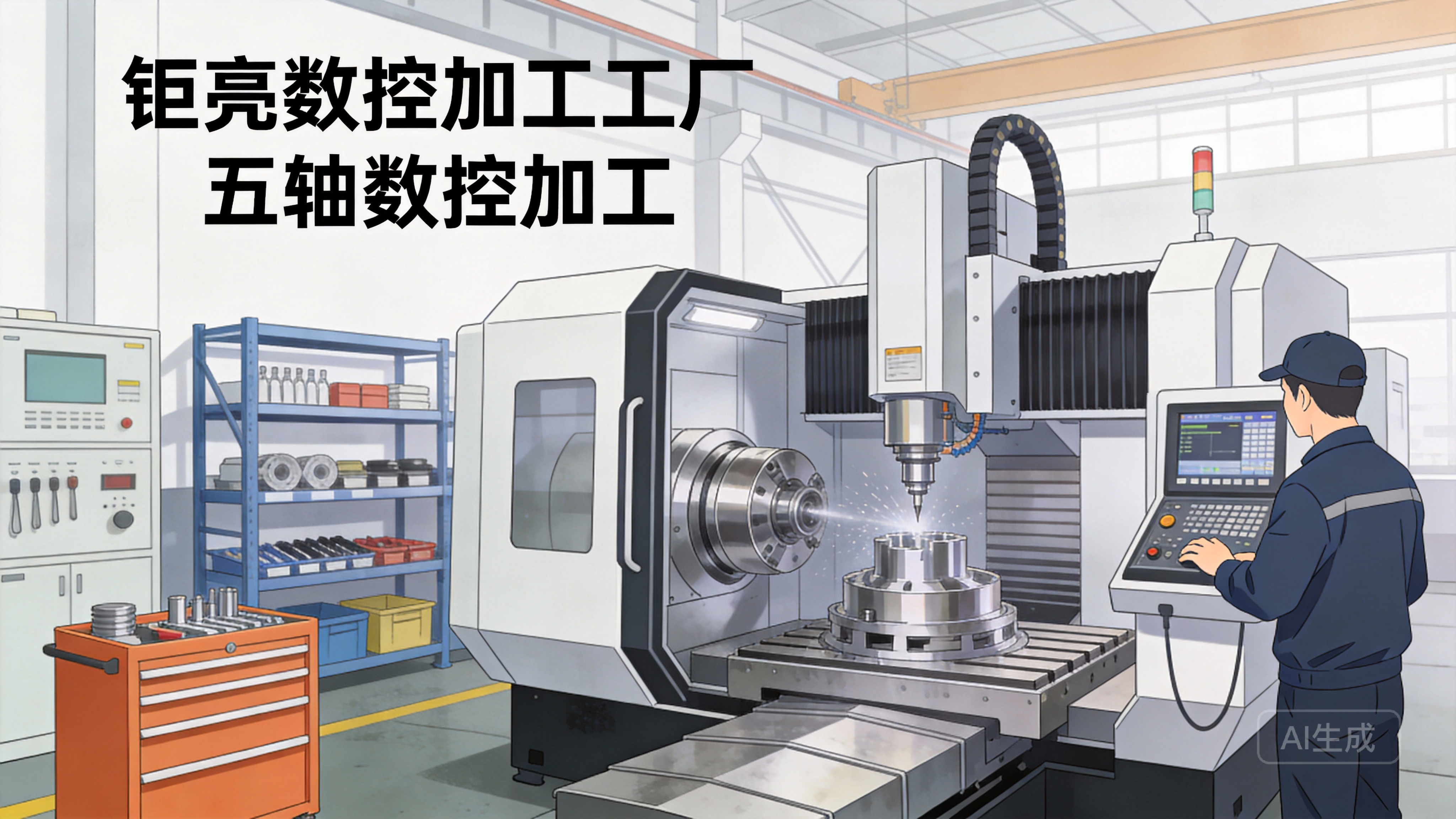
Advanced Multi-Axis Machining Cluster: Our facility is centered around state-of-the-art 5-axis CNC machining centers, supported by a full spectrum of 4-axis and 3-axis CNC mills, CNC lathes, and Swiss-type lathes. This allows us to select the most efficient and precise process for every feature of your part.
End-to-End Production Chain: We are not just a machining service. Our capabilities encompass mold design and manufacturing for die casting, sheet metal fabrication, vacuum casting, and a full range of additive manufacturing (3D printing) services. This makes us an ideal one-stop partner for projects from prototyping through low-volume to mass production.
Systematic Quality Assurance: Our operations are governed by internationally recognized certifications including ISO 9001:2015 for quality management and IATF 16949 for automotive parts. Every step, from material procurement to final inspection, follows documented, controlled processes. For medical components, our compliance with ISO 13485 standards ensures the traceability and rigor your industry demands.
Commitment to Precision and Problem-Solving: We specialize in solving manufacturing challenges. With experience serving sectors like automotive (particularly engine components and new energy vehicle systems), aerospace, and humanoid robotics, we have a proven track record of producing parts with tolerances as tight as ±0.001mm, handling large-scale parts up to 4000mm, and delivering consistent quality.
Conclusion
So, back to the initial question, “Do they have CNC machines at Huron Lexington MI?” The more productive approach is to ask a series of deeper questions: What kind of CNC machines? What is their precision and repeatability? What complementary technologies and quality systems surround them? Do they offer engineering support and full-service post-processing?
For projects where precision, complexity, and reliability are non-negotiable, partnering with a specialized, integrated manufacturer like GreatLight offers a strategic advantage that transcends geographical boundaries. We provide not just machines, but a guaranteed pathway from your design to a perfectly realized component.
Frequently Asked Questions (FAQ)
Q1: What is the primary advantage of 5-axis CNC machining over 3-axis?
A1: The primary advantage is the ability to machine complex parts in a single setup. 5-axis machining allows the cutting tool to approach the workpiece from any angle, enabling the production of intricate geometries with undercuts and compound curves. This reduces setup time, minimizes human error between operations, and often results in higher accuracy and better surface finish compared to multiple 3-axis setups.
Q2: What materials can you machine?
A2: We can machine a vast range of materials, including but not limited to:
Metals: Aluminum (all series), Stainless Steel (303, 304, 316, 17-4PH, etc.), Tool Steel, Carbon Steel, Brass, Copper, Titanium, Inconel, and other superalloys.
Plastics: PEEK, Delrin (Acetal), Nylon, PTFE, Polycarbonate, ABS, and Ultem (PEI).
We source certified raw materials to ensure optimal machinability and final part properties.
Q3: How do you ensure my design data remains secure?
A3: Data security is paramount. We operate under an ISO 27001 compliant framework for information security management. All client design files are stored on secure, access-controlled servers, and we enforce strict confidentiality agreements (NDAs) with all employees and partners. Your intellectual property is protected at every stage.
Q4: What is your typical lead time for prototype parts?
A4: Lead times vary based on part complexity and quantity. For standard prototype parts, we can often deliver within 5-10 business days after design finalization and quote acceptance. We offer expedited services for urgent projects. Our integrated workflow (machining + finishing) under one roof significantly accelerates the process compared to multi-vendor approaches.
Q5: Can you handle both prototyping and production runs?
A5: Absolutely. This is a core strength of our integrated model. We can produce low-volume functional prototypes using the same processes and machines intended for production. This ensures a seamless transition from prototype validation to full-scale manufacturing with no loss of fidelity or need for process requalification.
Q6: What surface finishing options do you offer?
A6: We provide a comprehensive one-stop suite of finishing services, including:
Aesthetic/Protective: Anodizing (Type II & III hardcoat), Powder Coating, Painting, Plating (Nickel, Chrome, Zinc).
Functional: Bead Blasting, Passivation (for stainless steel), Heat Treatment, Tumbling/Polishing.
Our engineers can recommend the best finish for your part’s material, application, and cosmetic requirements. Connect with our team on LinkedIn for more insights into our capabilities and industry applications.



















