
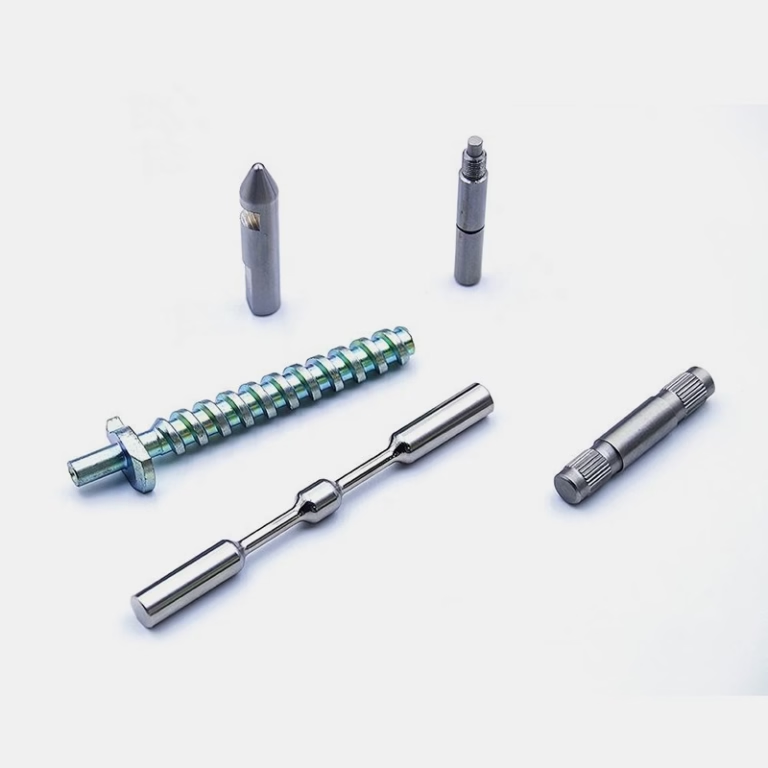
In the world of modern manufacturing, if there’s one technology that serves as the universal backbone for creating everything from a simple bracket to the most complex aerospace component, it is CNC machining. As a cornerstone of our operations at GreatLight Metal, understanding what a CNC machine is and how it works is fundamental to appreciating the precision, repeatability, and complexity we deliver daily for our clients in precision parts customization.
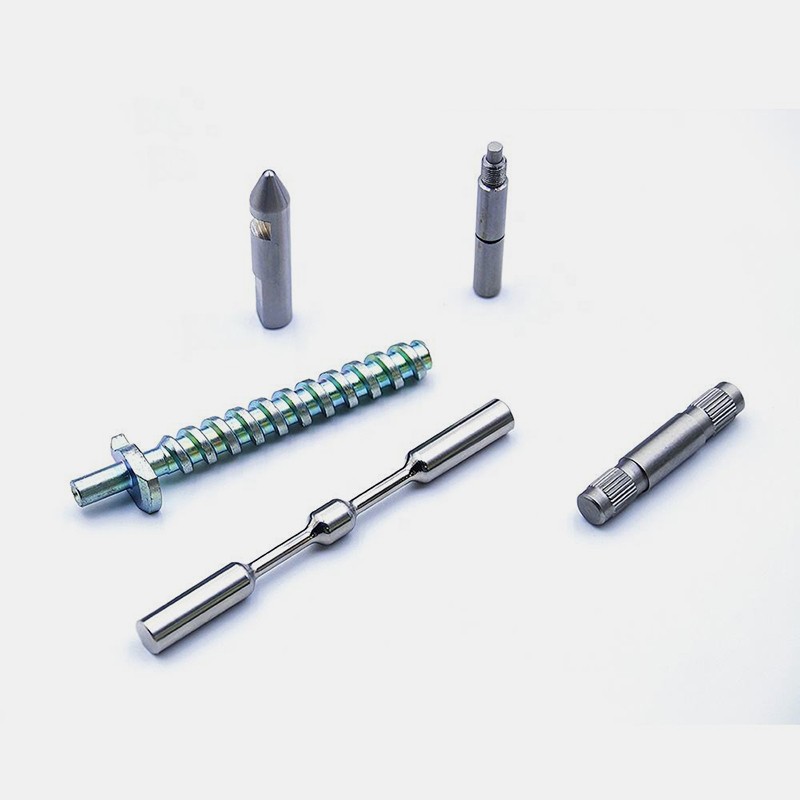
At its heart, a CNC (Computer Numerical Control) machine is a manufacturing system where pre-programmed computer software dictates the movement of factory tools and machinery. This process automates and digitizes the subtractive manufacturing of parts, transforming blocks of material into finished components with astonishing accuracy. Gone are the days of manual machinists turning handwheels; today, the machinist is a programmer and engineer, and the machine executes their digital blueprint with robotic consistency.
The Core Mechanism: From Digital Code to Physical Part
So, how does this remarkable process work? It’s a seamless, multi-stage journey from concept to reality.
1. The Digital Blueprint: CAD & CAM
It all begins with a Computer-Aided Design (CAD) model. This 3D digital file defines the part’s exact geometry. This model is then imported into Computer-Aided Manufacturing (CAM) software. Here, the manufacturing engineer—using deep expertise like that possessed by our team at GreatLight—plans the machining strategy. They select tools, define cutting paths, set speeds and feeds, and determine the sequence of operations. The CAM software’s critical function is to translate this strategy into G-code, the universal language of CNC machines. This code is essentially a long list of precise coordinates (X, Y, Z) and commands (M-codes, T-codes) that tell the machine every move to make.
2. The Machine Setup: Tooling and Workholding
Before the cycle starts, the physical machine must be prepared. A raw material (blank), such as an aluminum block, titanium billet, or plastic slab, is securely clamped onto the machine’s bed or into a vice or fixture (workholding). The appropriate cutting tools—end mills, drills, taps—are loaded into the machine’s automatic tool changer or spindle. Modern machines, like the advanced 5-axis centers we operate, can hold dozens of tools, allowing complex parts to be completed in a single setup.
3. The Execution: Interpolation and Motion Control
This is where the magic happens. The machine’s controller (an onboard industrial computer) reads the G-code line by line. It sends electronic signals to the servo motors or stepper motors that drive the machine’s axes. In a basic 3-axis mill, these are the X (left-right), Y (front-back), and Z (up-down) movements. The controller performs interpolation, calculating the intermediate points to move the tool along a smooth, continuous path—a straight line, an arc, or a complex spline—at the programmed speed. Simultaneously, the spindle rotates the cutting tool at high RPMs, and the machine may pump coolant to manage heat and clear chips.
4. The Subtractive Process: Material Removal
As the tool engages with the workpiece, it precisely shears away material in the form of chips. Operations like milling (rotating tool removes material), turning (workpiece rotates against a stationary tool, typical in lathes), drilling, and boring are performed sequentially as programmed. For parts with complex geometries requiring undercuts or compound angles, the superiority of 5-axis CNC machining becomes evident. Unlike 3-axis machines, a 5-axis machine can move the tool or the part along five different axes simultaneously, allowing it to approach the workpiece from virtually any direction without needing manual re-fixturing. This capability, a specialty of GreatLight Metal, is crucial for aerospace impellers, medical implants, and intricate automotive components, enabling unmatched geometric freedom and improved surface finish.
Why CNC Machining is Irreplaceable in Precision Manufacturing
The widespread adoption of CNC machining is no accident. Its advantages define modern precision engineering:
Extreme Precision and Repeatability: Capable of holding tolerances within ±0.001mm (±0.0005″ is common), and producing thousands of identical parts. This is rigorously verified at GreatLight with our in-house CMMs and profilometers.
Complexity Made Simple: It can manufacture shapes that are impossible or prohibitively expensive to make manually or with other processes.
Flexibility and Speed: Changing from producing one part to another is primarily a matter of changing the digital program and setup, making it ideal for both low-volume prototypes and high-volume production.
Reduced Human Error & Enhanced Safety: Automation minimizes manual intervention, leading to consistent quality and a safer workshop environment.
Conclusion: The Digital Conductor of Modern Industry
A CNC machine is far more than just a tool; it is the physical manifestation of digital design intelligence. It bridges the gap between virtual innovation and tangible, high-performance hardware. Understanding its workflow—from CAD/CAM programming to the synchronized dance of servo motors—reveals why it is the preferred method for creating reliable, precise, and complex components across every advanced industry.
For partners seeking not just a supplier but a technical collaborator, the choice of manufacturer hinges on their mastery of this technology. At GreatLight Metal, our investment in advanced multi-axis CNC machining centers, coupled with over a decade of process expertise and a framework built on international certifications like ISO 9001:2015 and IATF 16949, ensures that this powerful technology is harnessed to its fullest potential to solve your most challenging manufacturing problems. We don’t just run machines; we engineer solutions.
Frequently Asked Questions (FAQ)
Q1: What materials can be processed using CNC machining?
A: CNC machining is incredibly versatile. Commonly processed materials include metals (aluminum, stainless steel, titanium, brass, copper, alloy steels), plastics (ABS, PEEK, Delrin, Nylon, Polycarbonate), and even some composites and woods. At GreatLight Metal, we have extensive experience machining a vast material library to meet specific mechanical, thermal, or cosmetic requirements.
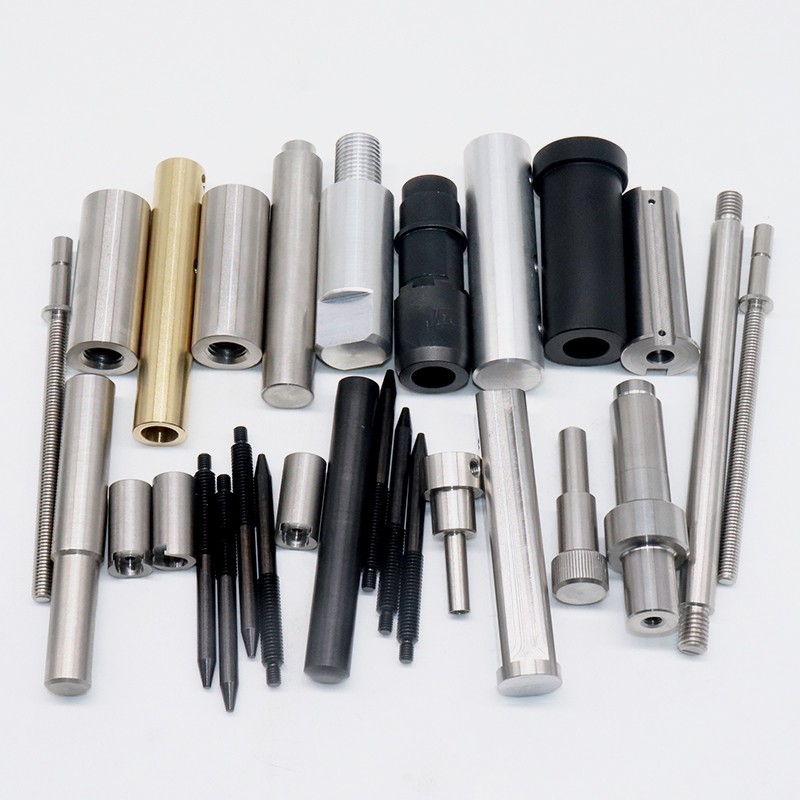
Q2: How accurate can CNC machining really be?
A: While standard machining can reliably hold ±0.025mm (±0.001″), high-precision machining can achieve tolerances of ±0.005mm or even tighter for critical features. It’s crucial to distinguish between a supplier’s claimed “best-case” precision and their consistent production capability. Our ISO-certified system at GreatLight ensures process control, and we use on-site metrology to verify every critical dimension, ensuring promised precision translates to delivered reality.
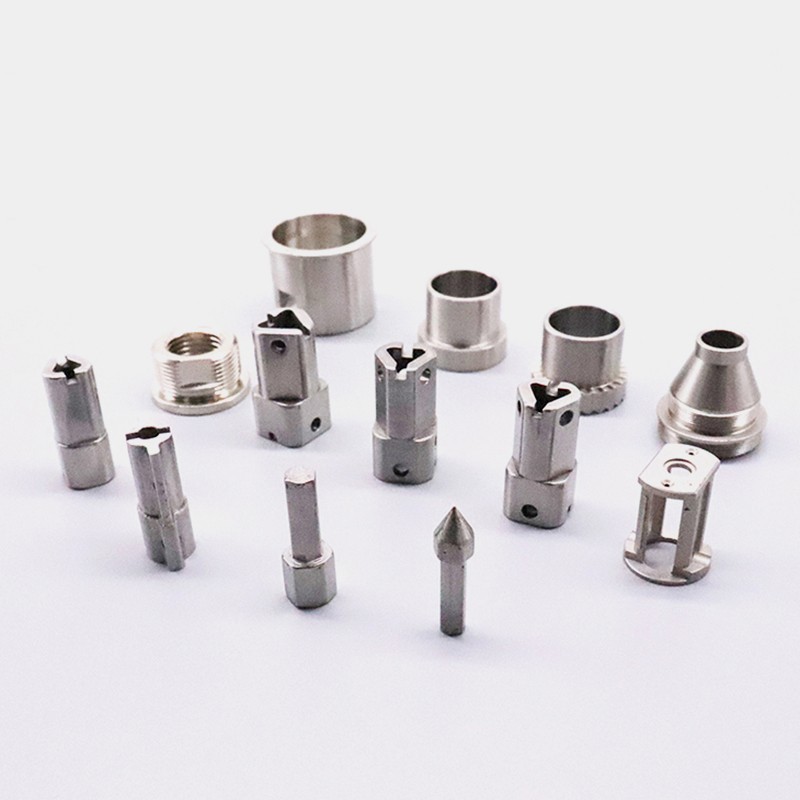
Q3: What is the difference between 3-axis, 4-axis, and 5-axis CNC machining?
A: The “axes” refer to the directions in which the cutting tool or workpiece can move.
3-Axis: Moves in X, Y, Z. Ideal for parts without complex contours or undercuts.
4-Axis: Adds a rotational axis (usually A-axis), allowing machining around the sides of a part in a single setup.
5-Axis: Adds a second rotational axis (B or C). This allows the tool to approach the workpiece from any angle simultaneously, enabling the machining of highly complex, organic geometries in one setup, which improves accuracy and surface finish. This is a core competency of our GreatLight manufacturing floor.
Q4: Is CNC machining suitable for prototype quantities, or is it only for mass production?
A: Absolutely suitable for prototypes. In fact, CNC machining is often the fastest and most cost-effective way to produce functional, high-fidelity prototypes from real engineering materials. It allows for design validation and testing before committing to mass-production tooling like molds. We specialize in rapid prototyping that seamlessly transitions into production.
Q5: What are the key factors that affect the cost of a CNC machined part?
A: Key factors include:
Part Design: Complexity, size, and required tolerances.
Material: Type and cost of the raw stock.
Machining Time: Directly linked to part geometry and machine type (5-axis may be faster for complex parts despite higher hourly rates).
Quantity: Setup costs are amortized over production volume.
Post-Processing: Additional finishes like anodizing, plating, or painting.
A trusted partner like GreatLight Metal will provide transparent DFM (Design for Manufacturability) feedback to help optimize your design for both performance and cost-effectiveness.
Q6: How do I ensure my design is optimized for CNC machining (DFM)?
A: Good DFM practices include: specifying realistic tolerances, adding fillets to internal corners, avoiding excessively deep cavities or thin walls, and designing for standard tool sizes. Engaging with your manufacturer early is the best strategy. Our engineering team at GreatLight routinely provides proactive DFM analysis as part of our collaborative service, helping to streamline manufacturing and prevent costly issues. For more insights into our capabilities and industry perspectives, you can connect with us on LinkedIn.



















