
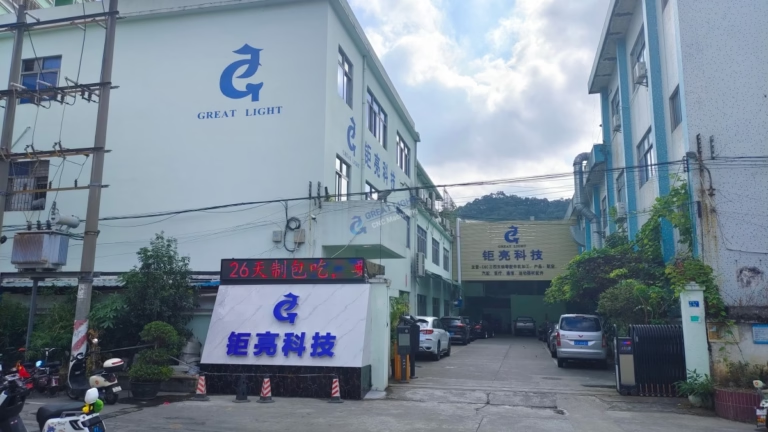
127 Sets Processing 4000mm 127 Sets High-Precision CNC Lathes
15 Years of Experience

Do CNC Machines Use Water?

When discussing the intricate world of CNC machining, a common question that arises for both newcomers and seasoned engineers is: Do CNC machines use water? The answer is a definitive yes, but with critical nuance. Water plays several vital, yet often unseen, roles in modern precision manufacturing. Its use is not about powering the machine’s […]

When discussing the intricate world of CNC machining, a common question that arises for both newcomers and seasoned engineers is: Do CNC machines use water? The answer is a definitive yes, but with critical nuance. Water plays several vital, yet often unseen, roles in modern precision manufacturing. Its use is not about powering the machine’s motion—those are driven by electric servos—but about protecting the tool, the workpiece, and the process itself. Understanding how and why water is utilized separates basic workshops from advanced, high-reliability manufacturing partners like GreatLight Metal.
图片

The Primary Role: Coolant in Metal Cutting Operations

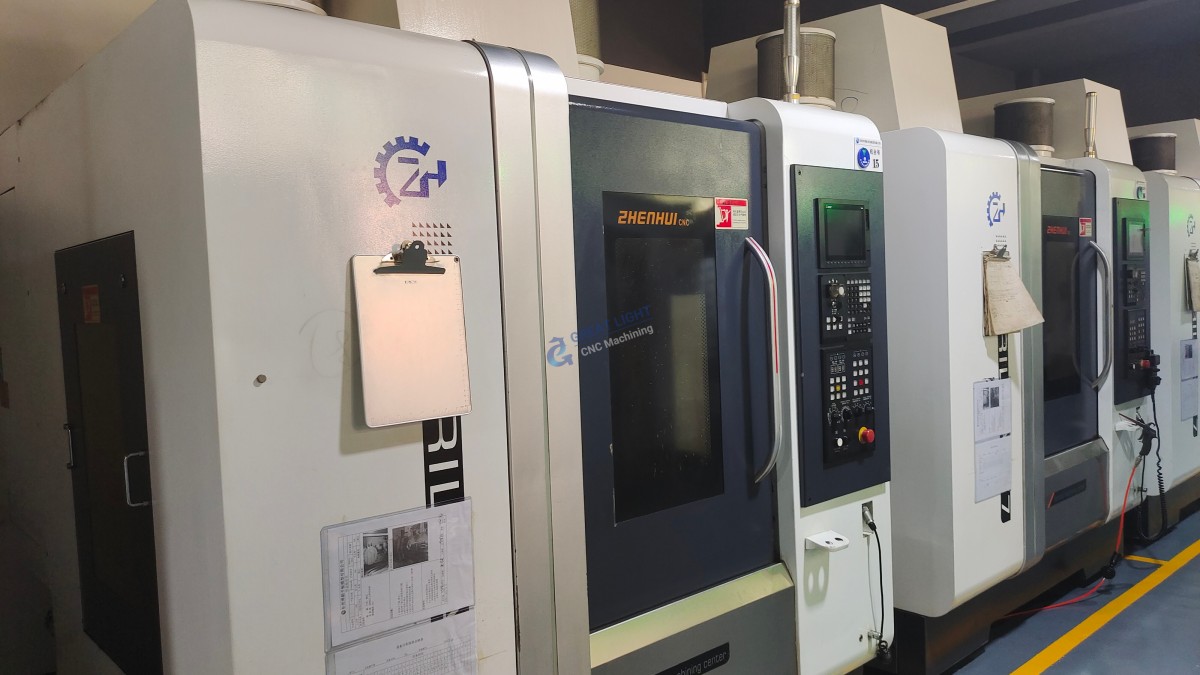
The most significant application of water in CNC machining is as the base component of cutting fluid or coolant. During high-speed milling, turning, or drilling, the point of contact between the cutting tool and the metal workpiece generates intense heat due to friction and plastic deformation.
图片

The Problem of Heat: Uncontrolled heat is the enemy of precision. It can:

Wear Tools Rapidly: High temperatures soften the cutting edge of even the hardest carbide or diamond tools, leading to premature failure and increased cost.
Compromise Part Accuracy: Thermal expansion causes both the tool and the workpiece to change dimensions minutely, ruining tight tolerances.
Create Poor Surface Finish: Heat can weld microscopic fragments of workpiece material to the tool (built-up edge), resulting in a ragged surface.
Induce Metallurgical Changes: Excessive heat can alter the material properties of the part in the cut zone, making it harder or more brittle than specified.

The Solution: Water-Based Coolants: To combat this, CNC machines are equipped with a coolant system that pumps fluid directly to the cutting interface. While there are straight oil-based coolants, water-soluble oils (emulsions) and synthetic/semi-synthetic coolants are predominant. These are mixtures where water serves as the primary heat-transfer medium, while specialized additives provide lubrication, rust inhibition, and anti-microbial properties.

Heat Removal: Water has an excellent capacity to absorb and carry away heat, rapidly cooling the cutting zone.
Chip Evacuation: The flood of coolant helps wash away metal chips (swarf) from the cutting area, preventing them from re-cutting the workpiece or interfering with the tool path.
Lubrication: Additives in the coolant reduce friction between the tool’s flank and the workpiece, lowering power consumption and improving finish.

Water vs. Oil-Based Coolants: A Strategic Choice

The choice between water-based and oil-based coolants is a strategic decision based on the operation:

Coolant TypeBasePrimary AdvantagesTypical Applications
Water-Soluble (Emulsion)Water + OilExcellent heat removal, lower cost, cleaner operation.High-speed machining of aluminum, steel, and cast iron where heat is the main concern.
Synthetic/Semi-SyntheticWater + Chemical CompoundsSuperior cooling, rust prevention, long sump life, less residue.Precision machining of aerospace alloys, medical components, and where strict cleanliness is required.
Straight OilPetroleum or Vegetable OilMaximum lubrication, superior surface finish.Low-speed, high-precision operations like gear hobbing, threading, or deep-hole drilling where lubrication is critical.

A technologically advanced manufacturer like GreatLight Metal doesn’t just select a coolant arbitrarily. The choice is part of the process engineering for each job, considering material, tooling, operation, and the required surface integrity of the final part. Proper coolant management—including concentration monitoring, filtration, and temperature control—is a hallmark of a quality-focused facility.

A Direct Application: Abrasive Waterjet Cutting

Beyond its role in coolant, water is the central “tool” in one specific type of CNC machine: the Abrasive Waterjet Cutter. This process uses a high-pressure pump (often at 60,000 PSI or more) to force water through a tiny gemstone orifice, creating a supersonic stream. An abrasive material (like garnet) is then entrained into this jet, creating an incredibly powerful cutting tool capable of slicing through metals, stone, glass, and composites with no heat-affected zone (HAZ). While GreatLight Metal’s core expertise lies in subtractive CNC machining and additive manufacturing, understanding such complementary technologies is part of providing holistic manufacturing solutions.

Why Coolant Management Signals a Supplier’s Capability

For a client seeking precision parts, a supplier’s approach to something as mundane as coolant speaks volumes about their overall operational excellence.


Precision & Consistency: Well-maintained, filtered coolant at a controlled temperature and concentration is essential for holding micron-level tolerances batch after batch.
Tool Life & Cost Control: Effective cooling directly translates to longer tool life, which reduces machining costs—a saving often passed on or reflected in stable pricing.
Surface Quality & Part Cleanliness: Proper coolant application prevents built-up edge and thermal scoring, yielding superior surface finishes right off the machine. Good post-processing also ensures parts are delivered clean, free of residual coolant film.
Environmental & Safety Stewardship: Modern manufacturers must responsibly handle coolant recycling, waste disposal, and ensure mist control for operator safety. This reflects a mature, compliant operation.

Conclusion

So, do CNC machines use water? Absolutely. It is an indispensable element in the high-precision dance of metal removal, primarily as the lifeblood of the cooling system that enables fast, accurate, and economical production. Its role, however, is one of sophisticated support rather than direct motive power. When evaluating a manufacturing partner, don’t just look at their machine brands; inquire about their process support systems—like coolant management, chip handling, and climate control. It is in these often-overlooked details that true manufacturing rigor and reliability are found. Partners like GreatLight Metal, with their integrated approach that considers every variable from toolpath to fluid dynamics, ensure that the use of water and every other process element is optimized to deliver flawless, high-performance precision components.


Frequently Asked Questions (FAQ)

Q1: Is tap water used in CNC coolant systems?
A: Rarely. Untreated tap water contains minerals and chlorine that can corrode machine internals, clog filters, and destabilize the coolant mixture. Most professional shops use deionized or reverse osmosis (RO) water to mix with coolant concentrates, ensuring purity and consistency.

Q2: Can CNC machining be done “dry” (without coolant)?
A: Yes, in a strategy known as dry machining or Minimum Quantity Lubrication (MQL). MQL delivers a tiny, precise aerosol of lubricant directly to the cutting edge. It’s used for specific materials (like cast iron) or environmentally sensitive applications, but it requires specialized tooling and machine adaptations. It’s not a universal replacement for flood coolant.

Q3: Does the coolant get reused, and how is waste handled?
A: In professional settings, coolant is continuously circulated through a central filtration system that removes metal fines and tramp oils. Its concentration and pH are regularly monitored and adjusted. Eventually, after months of use, it must be disposed of as regulated industrial waste through licensed haulers. Responsible manufacturers have strict protocols for this.

Q4: My part is made of aluminum. Does it need special coolant?
A: Aluminum machining often benefits from coolants formulated specifically for non-ferrous metals. These fluids are designed to prevent the “sticking” of aluminum to tools (built-up edge) and to inhibit the oxidation and discoloration (staining) of the finished part, which can be caused by improper coolant chemistry.

Q5: How can I tell if a potential supplier has a good coolant management system?
A: Ask direct questions: “How do you monitor and maintain coolant concentration and cleanliness?” “Do you have a central filtration system?” “How do you control coolant temperature?” Observing the shop floor can also give clues—look for clean machines, clear (not murky or rancid-smelling) coolant, and an organized facility. A supplier that can articulate their process in detail, like GreatLight Metal, typically has the systemic control needed for high-reliability production.

图片

CNC Experts

Picture of JinShui Chen

JinShui Chen

Rapid Prototyping & Rapid Manufacturing Expert

Specialize in CNC machining, 3D printing, urethane casting, rapid tooling, injection molding, metal casting, sheet metal and extrusion

CNC Recent Posts

CNC News

Welcome to GreatLight Metal,Maximum Processing Size 4,000 mm

Precision Machining CNC Quote Online

Loading file

Upload Click here to upload or drag and drop your model to the canvas.

The model is too large and has been resized to fit in the printer's build tray. [Hide]

The model is too large to fit in the printer's build tray. [Hide]

The model is too large, a fitting printer is selected. [Hide]

The model is too small and has been upscaled. [Hide]

Warning: The selected printer can not print in full color [Hide]

Warning: obj models with multiple meshes are not yet supported [Hide]

Warning: Unsupported DXF entity  [Hide]

Warning: could not arrange models [Hide]

[Hide]


File Unit:      
Scale:
%
L × W × H:
X: × Y: × Z:  cm 
Rotation:
X: ° Y: °  
⚡ Instant Quote for Precision Manufacturing

Submit your design files (STEP/IGES/DWG) and receive a competitive quote within 1 hour, backed by ISO 9001-certified quality assurance.

📋 How It Works

  1. Upload & SpecifyShare your 3D model and select materials (Aluminum/Stainless Steel/Titanium/PEEK), tolerances (±0.002mm), and surface treatments.

  2. AI-Powered AnalysisOur system calculates optimal machining strategy and cost based on 10+ years of automotive/aerospace data.

  3. Review & ConfirmGet a detailed breakdown including:
    - Volume pricing tiers (1-10,000+ units)
    - Lead time (3-7 days standard)
    - DFM feedback for cost optimization

Unit Price: 

Loading price
5 Axis CNC Machining Equipment
4 Axis CNC Machining Equipment
3 Axis CNC Machining Equipment
CNC Milling & Turning Equipment
Prototype and Short-Run Injection Moldings Exact plastic material as final design
Volume Metal Die Casting Services - Precision Cast Parts
Bridge the Gap From Prototype to Production – Global delivery in 10 days or less
Custom high-precision sheet metal prototypes and parts, as fast as 5 days.
Custom Online 3D Printing Services
Design Best Processing Method According To 3D Drawings
Alloys Aluminum 6061, 6061-T6 Aluminum 2024 Aluminum 5052 Aluminum 5083 Aluminum 6063 Aluminum 6082 Aluminum 7075, 7075-T6 Aluminum ADC12 (A380)
Alloys Brass C27400 Brass C28000 Brass C36000
Alloys Stainless Steel SUS201 Stainless Steel SUS303 Stainless Steel SUS 304 Stainless Steel SUS316 Stainless Steel SUS316L Stainless Steel SUS420 Stainless Steel SUS430 Stainless Steel SUS431 Stainless Steel SUS440C Stainless Steel SUS630/17-4PH Stainless Steel AISI 304
Inconel718
Carbon Fiber
Tool Steel
Mold Steel
Alloys Titanium Alloy TA1 Titanium Alloy TA2 Titanium Alloy TC4/Ti-6Al 4V
Alloys Steel 1018, 1020, 1025, 1045, 1215, 4130, 4140, 4340, 5140, A36 Die steel Alloy steel Chisel tool steel Spring steel High speed steel Cold rolled steel Bearing steel SPCC
Alloys Copper C101(T2) Copper C103(T1) Copper C103(TU2) Copper C110(TU0) Beryllium Copper
Alloys Magnesium Alloy AZ31B Magnesium Alloy AZ91D
Low Carbon Steel
Alloys Magnesium Alloy AZ31B Magnesium Alloy AZ91D
ABS Beige(Natural) ABS Black ABS Black Antistatic ABS Milky White ABS+PC Black ABS+PC White
PC Black PC Transparent PC White PC Yellowish White PC+GF30 Black
PMMA Black PMMA Transparent PMMA White
PA(Nylon) Blue PA6 (Nylon)+GF15 Black PA6 (Nylon)+GF30 Black PA66 (Nylon) Beige(Natural) PA66 (Nylon) Black
PE Black PE White
PEEK Beige(Natural) PEEK Black
PP Black PP White PP+GF30 Black
HDPE Black HDPE White
HIPS Board White
LDPE White
This is a finish of applying powdered paint to the components and then baking it in an oven, which results in a stronger, more wear- and corrosion-resistant layer that is more durable than traditional painting methods.
No coating required, product’s natural color!
This is a finish of applying powdered paint to the components and then baking it in an oven, which results in a stronger, more wear- and corrosion-resistant layer that is more durable than traditional painting methods.
This finishing option with the shortest turnaround time. Parts have visible tool marks and potentially sharp edges and burrs, which can be removed upon request.
Sand blasting uses pressurized sand or other media to clean and texture the surface, creating a uniform, matte finish.
Polishing is the process of creating a smooth and shiny surface by rubbing it or by applying a chemical treatmen
A brushed finish creates a unidirectional satin texture, reducing the visibility of marks and scratches on the surface.
Anodizing increases corrosion resistance and wear properties, while allowing for color dyeing, ideal for aluminum parts.
Black oxide is a conversion coating that is used on steels to improve corrosion resistance and minimize light reflection.
Electroplating bonds a thin metal layer onto parts, improving wear resistance, corrosion resistance, and surface conductivity.
This is a finish of applying powdered paint to the components and then baking it in an oven, which results in a stronger, more wear- and corrosion-resistant layer that is more durable than traditional painting methods.
Please provide additional text description for other surface treatment requirements!
Material
Material
  • CNC Metals
    • Aluminum
    • Brass
    • Stainless steel
    • Inconel718
    • Carbon Fiber
    • Tool Steel
    • Mold Steel
    • Titanium
    • Alloy Steel
    • Copper
    • Bronze
    • Low Carbon Steel
    • Magnesium
  • CNC Plastics
    • ABS
    • PC
    • PMMA (Acrylic)
    • PA (Nylon)
    • PE
    • PEEK
    • PP
    • HDPE
    • HIPS
    • LDPE
Printer
Printer
  • CNC Metals
    • 5 Axis CNC Machining
    • 4 Axis CNC Machining
    • 3 Axis CNC Machining
    • CNC Milling & Turning
    • Rapid Tooling
    • Metal Die Casting
    • Vacuum Casting
    • Sheet Metal Fabrication
    • SLA 3D Printing
    • SLS 3D Printing
    • SLM 3D Printing
  • Rapid Prototyping
    • Design Best Processing Method According To 3D Drawings
Post-processing
Post-processing
  • As Machined(Product’s natural color)
  • Sand Blasting
  • Polishing
  • Brushed Finish
  • Anodizing
  • Black Oxide
  • Electroplating
  • Paint Coating
  • Powder Coating
  • Other surface treatment requirements
Finalize
The world's first CNC machining center that dares to provide free samples!

Free for first product valued at less than $200. (Background check required)

precision machining cnc quote online

15 Years CNC Machining Services

When you’re ready to start your next project, simply upload your 3D CAD design files, and our engineers will get back to you with a quote as soon as possible.
Scroll to Top

ISO 9001 Certificate

ISO 9001 is defined as the internationally recognized standard for Quality Management Systems (QMS). It is by far the most mature quality framework in the world. More than 1 million certificates were issued to organizations in 178 countries. ISO 9001 sets standards not only for the quality management system, but also for the overall management system. It helps organizations achieve success by improving customer satisfaction, employee motivation, and continuous improvement. * The ISO certificate is issued in the name of FS.com LIMITED and applied to all the products sold on FS website.

greatlight metal iso 9001 certification successfully renewed
GB T 19001-2016 IS09001-2015
✅ iso 9001:2015
greatlight metal iso 9001 certification successfully renewed zh

IATF 16949 certificate

IATF 16949 is an internationally recognized Quality Management System (QMS) standard specifically for the automotive industry and engine hardware parts production quality management system certification. It is based on ISO 9001 and adds specific requirements related to the production and service of automotive and engine hardware parts. Its goal is to improve quality, streamline processes, and reduce variation and waste in the automotive and engine hardware parts supply chain.

automotive industry quality management system certification 01
Certification of Production Quality Management System for Engine Hardware Parts Engine Hardware Associated Parts
automotive industry quality management system certification 00
发动机五金零配件的生产质量管理体系认证

ISO 27001 certificate

ISO/IEC 27001 is an international standard for managing and processing information security. This standard is jointly developed by the International Organization for Standardization (ISO) and the International Electrotechnical Commission (IEC). It sets out requirements for establishing, implementing, maintaining, and continually improving an information security management system (ISMS). Ensuring the confidentiality, integrity, and availability of organizational information assets, obtaining an ISO 27001 certificate means that the enterprise has passed the audit conducted by a certification body, proving that its information security management system has met the requirements of the international standard.

greatlight metal technology co., ltd has obtained multiple certifications (1)
greatlight metal technology co., ltd has obtained multiple certifications (2)

ISO 13485 certificate

ISO 13485 is an internationally recognized standard for Quality Management Systems (QMS) specifically tailored for the medical device industry. It outlines the requirements for organizations involved in the design, development, production, installation, and servicing of medical devices, ensuring they consistently meet regulatory requirements and customer needs. Essentially, it's a framework for medical device companies to build and maintain robust QMS processes, ultimately enhancing patient safety and device quality.

greatlight metal technology co., ltd has obtained multiple certifications (3)
greatlight metal technology co., ltd has obtained multiple certifications (4)

Get The Best Price

Send drawings and detailed requirements via Email:[email protected]
Or Fill Out The Contact Form Below:

All uploads are secure and confidential.












