
What Type Of CNC Machine Do I Need? If you’re navigating the world of precision parts manufacturing, this question is likely at the top of your list—especially as complex designs and tight tolerances become the norm in industries like aerospace, automotive, and medical devices. Choosing the right CNC machine isn’t just about picking the most advanced model; it’s about aligning the machine’s capabilities with your project’s specific requirements, from part geometry and material type to production volume and quality standards. Making the wrong choice can lead to delayed timelines, increased costs, and parts that fail to meet performance expectations. In this guide, we’ll break down the key factors to evaluate, explore common CNC machine types, and explain how a trusted partner like GreatLight Metal can simplify your decision-making process.
Key Factors to Evaluate Before Choosing a CNC Machine
Before diving into specific machine types, it’s critical to map out your project’s core requirements. These factors will directly influence which CNC machine is the best fit:
1. Part Complexity & Geometry
The shape and structure of your part are the most fundamental considerations.
Simple parts: Flat 2D components or basic 3D features (e.g., brackets, enclosures, flat gears) can be handled by entry-level to mid-range CNC machines.
Complex parts: Components with curved surfaces, undercuts, compound angles, or internal cavities (e.g., turbine blades, medical implants, humanoid robot joints) require machines with rotational axes to access hard-to-reach areas.
2. Tolerance Requirements
Tolerance refers to the allowable deviation from a part’s designed dimensions, and it varies widely by industry:
Standard precision: ±0.01mm to ±0.05mm is suitable for most consumer electronics, industrial brackets, and low-stress components.
High precision: ±0.001mm to ±0.005mm is mandatory for aerospace, medical implants, and high-performance automotive parts where even minute deviations can cause catastrophic failure.
3. Material Type
Different materials have varying hardness, machinability, and thermal properties that impact machine selection:
Soft materials: Engineering plastics (ABS, PC), aluminum, and brass are easy to machine with most CNC setups.
Hard materials: Titanium, mold steel, stainless steel, and heat-resistant alloys require high-torque machines with rigid frames and specialized cutting tools to avoid tool wear and maintain precision.
4. Production Volume
Your production scale will determine whether you need machines optimized for prototyping or mass production:
Prototypes & low volume: Flexible machines that handle quick changeovers are ideal for testing designs without committing to long production runs.
High volume: Machines with automated tool changers, pallet systems, or integrated robotics reduce downtime and improve efficiency for large batches.
5. Part Size & Dimensions
CNC machines have maximum and minimum workpiece size limits:
Small parts: Swiss-type lathes or compact 3-axis centers are designed for tiny components (e.g., medical screws, electronic connectors).
Large parts: Heavy-duty 3-axis or 5-axis centers can handle workpieces up to 4000mm in length, suitable for aerospace structural components or large machine frames.
6. Post-Processing Needs
Some parts require surface treatments (e.g., anodizing, polishing) or secondary machining (e.g., threading, drilling) after initial CNC work. Choosing a partner with one-stop post-processing capabilities eliminates the need to coordinate with multiple suppliers, reducing lead times and quality risks.
What Type Of CNC Machine Do I Need?
Now that you’ve evaluated your project’s requirements, let’s explore the most common CNC machine types, their ideal use cases, and how GreatLight Metal’s capabilities align with each:
3-Axis CNC Machining Centers
3-axis machines move along three linear axes (X, Y, Z) to shape parts from a fixed workpiece. They are the most widely used CNC machines due to their versatility and affordability.
Best for: Flat parts, simple 3D components, low-volume prototypes, and parts with no undercuts or complex angles. Examples include brackets, enclosures, flat gears, and basic electronic housings.
Pros: Lower cost compared to multi-axis machines, easy programming, fast setup for simple designs.
Cons: Cannot access undercut features without repositioning the workpiece, which can introduce alignment errors.
GreatLight Metal’s Capability: Our high-precision 3-axis machining centers deliver tolerances down to ±0.005mm, supporting over 50 materials including aluminum, stainless steel, and engineering plastics. With automated tool changers, we can handle low to medium production volumes efficiently.
4-Axis CNC Machining Centers
4-axis machines add a rotational axis (usually A or B) to the 3-axis setup, allowing the workpiece to rotate while the cutting tool moves along the linear axes.
Best for: Parts that require multi-sided machining without manual repositioning, such as gears, shafts, complex brackets with angled holes, and cylindrical components with cross-drilled features.
Pros: Reduces setup time and alignment errors compared to repositioning on a 3-axis machine, improves consistency for multi-sided parts.
Cons: Less flexible for free-form geometries than 5-axis machines, higher cost than 3-axis centers.
GreatLight Metal’s Capability: Our 4-axis machining centers handle workpieces up to 4000mm in maximum size, with support for hard materials like titanium and mold steel. We use advanced CAM software to optimize tool paths, ensuring precise and efficient machining for automotive engine components and industrial automation parts.
5-Axis CNC Machining Centers
5-axis machines add a second rotational axis (e.g., A and B, or B and C) to the 3-axis framework, enabling simultaneous machining of five sides of a workpiece or complex free-form geometries.
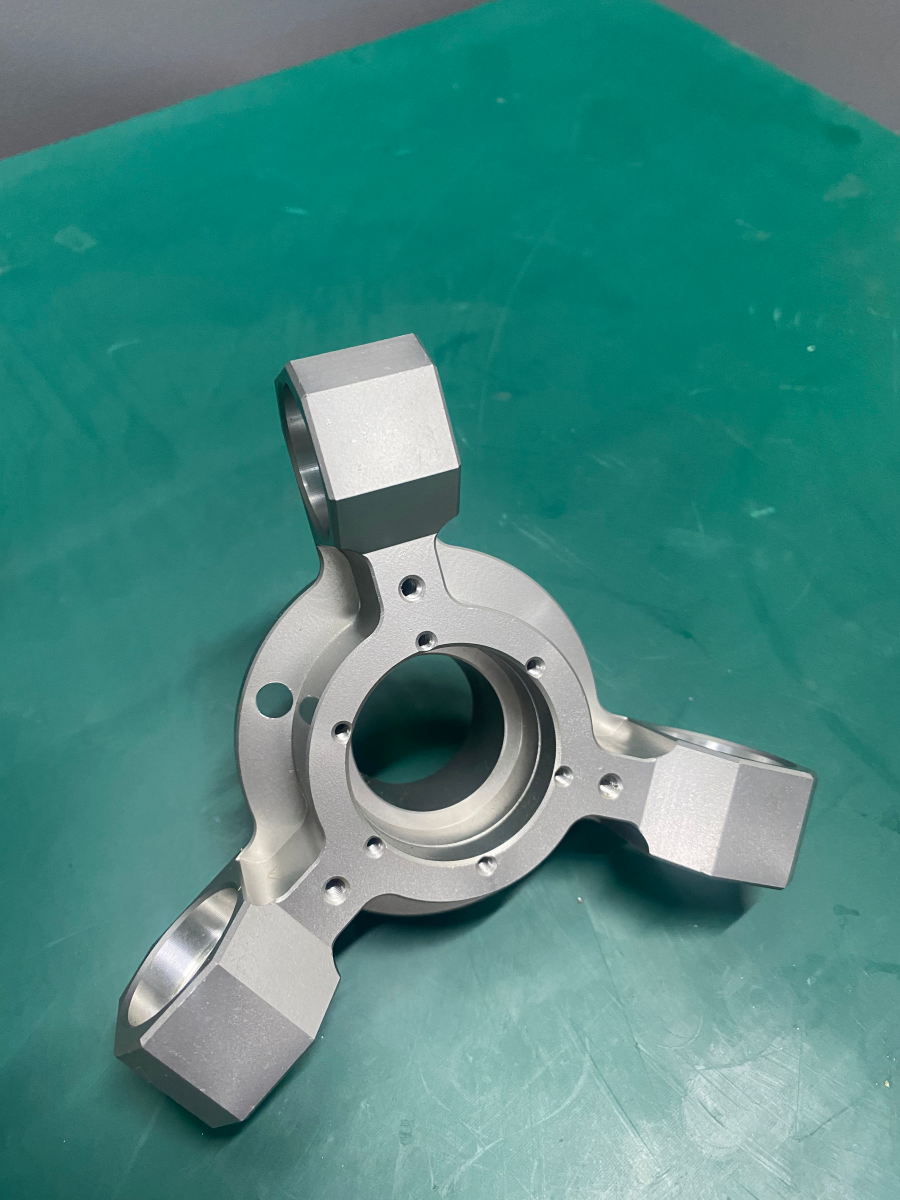
Best for: Ultra-complex parts with undercuts, compound angles, or curved surfaces—such as aerospace turbine blades, medical orthopedic implants, humanoid robot joints, and high-precision optical components.
Pros: Eliminates multiple setups, reduces lead times, maintains tight tolerances (down to ±0.001mm) for complex designs, minimizes material waste.
Cons: Higher initial investment, requires specialized programming expertise.
GreatLight Metal’s Capability: As a leading 5-axis CNC machining manufacturer, we operate brand-name 5-axis centers from Dema and Beijing Jingdiao, capable of machining tolerances up to ±0.001mm. Our 5-axis CNC machining services (opening in new window) are optimized for industries requiring ultra-high precision, with in-house engineering support to simplify complex design challenges.
CNC Lathes (Turning Centers)
CNC lathes rotate the workpiece while a cutting tool moves along linear axes to create symmetrical cylindrical, conical, or threaded parts.
Best for: Symmetrical components like shafts, bolts, nuts, cylindrical housings, and valve bodies. Swiss-type lathes are ideal for tiny, high-precision parts (e.g., medical screws, electronic connectors).
Pros: Fast and efficient for cylindrical parts, supports high-volume production with automated feeding systems.
Cons: Limited to symmetrical geometries; cannot handle complex 3D features without combining with milling operations.
GreatLight Metal’s Capability: Our precision lathes and Swiss-type lathes handle materials from soft plastics to hard metals like titanium and brass, with tolerances down to ±0.002mm. We integrate turning with milling services to produce fully finished parts in one workflow.
3D Printing as a Complementary Manufacturing Solution
While not a traditional CNC machine, 3D printing (additive manufacturing) is often used alongside CNC machining for rapid prototyping or complex geometries that are difficult to machine subtractively.
Best for: Functional prototypes, low-volume production of parts with intricate internal structures (e.g., lattice designs), and custom components that require quick iteration.
GreatLight Metal’s Capability: We offer SLM (selective laser melting) for metal parts (titanium, aluminum, mold steel), SLA (stereolithography) for high-resolution plastic prototypes, and SLS (selective laser sintering) for durable engineering plastics. This complements our CNC services to provide end-to-end solutions from prototype to mass production.
CNC Machine Type Comparison: Quick Reference Table
| Machine Type | Key Axes | Ideal Part Geometry | Tolerance Range | Best Materials | Production Volume |
|---|---|---|---|---|---|
| 3-Axis CNC Center | X, Y, Z | Flat parts, simple 3D components | ±0.005mm to ±0.01mm | Aluminum, plastics, steel | Low to medium |
| 4-Axis CNC Center | X, Y, Z + 1 rotational | Multi-sided parts, shafts, angled brackets | ±0.003mm to ±0.008mm | Titanium, mold steel, aluminum | Medium to high |
| 5-Axis CNC Center | X, Y, Z + 2 rotational | Free-form surfaces, undercuts, implants | ±0.001mm to ±0.003mm | Titanium, heat-resistant alloys | Low to high |
| CNC Lathe | X, Z + rotational part | Cylindrical, threaded, symmetrical parts | ±0.002mm to ±0.005mm | Brass, aluminum, titanium | High volume |
How GreatLight Metal Simplifies Your CNC Machine Selection
Choosing the right CNC machine is only half the battle—you also need a partner with the expertise, equipment, and quality guarantees to deliver on your project’s goals. GreatLight Metal, a leading precision manufacturing firm established in 2011, offers a full suite of services to streamline your project from concept to completion:
1. Free Engineering Consultation
Our team of experienced engineers will review your design specifications, tolerance requirements, and production goals to recommend the optimal combination of CNC machines and processes. We’ll help you avoid over-investing in unnecessary technology or under-specifying equipment that can’t meet your quality needs.
2. Full-Process Chain Integration
With three wholly-owned manufacturing plants spanning 7600 square meters and 127+ pieces of precision equipment, we offer one-stop services including:
Precision CNC machining (3-axis, 4-axis, 5-axis)
Die casting and mold manufacturing
Metal and plastic 3D printing (SLM, SLA, SLS)
Sheet metal fabrication
One-stop post-processing (anodizing, polishing, powder coating, electroplating)
This eliminates the need to coordinate with multiple suppliers, reducing lead times and minimizing quality risks from handoffs between different vendors.
3. Unmatched Quality Guarantees
We’re ISO 9001:2015, IATF 16949, ISO 13485, and ISO 27001 certified, ensuring strict adherence to international quality and data security standards. Our in-house measurement equipment verifies all parts meet your specifications, and we offer free rework for quality issues—with a full refund if rework doesn’t meet your expectations. Our machining precision reaches ±0.001mm, and we can handle parts up to 4000mm in size.
4. Scalability for Every Project Stage
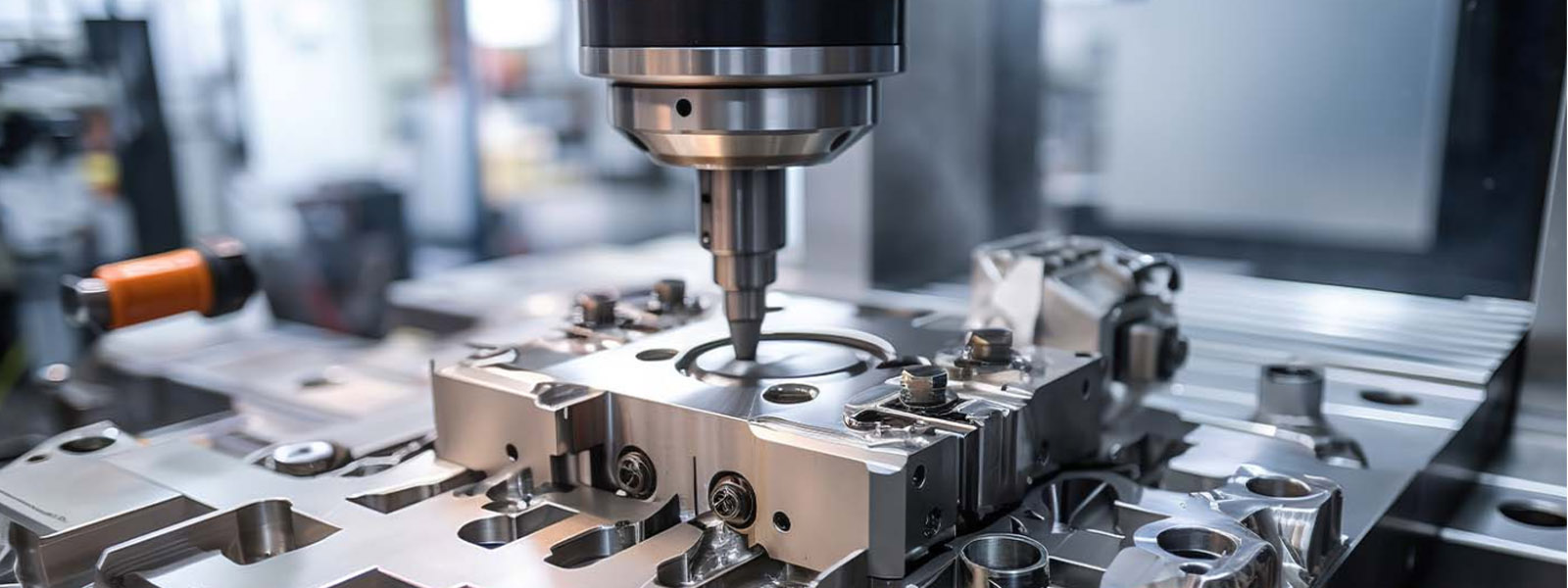
Whether you need a single prototype or a high-volume production run, our equipment and team can scale with your needs. We use advanced CAM software and automated systems to ensure consistent quality across all production volumes, from quick-turn prototypes to mass production batches of 10,000+ parts.
Real-World Examples: Choosing the Right CNC Machine
To illustrate how these principles apply to actual projects, here are three industry-specific examples from GreatLight Metal’s client portfolio:
Automotive New Energy: A client needed high-precision e-housings for electric vehicle motors, featuring complex cooling channels and tight tolerances of ±0.002mm. We recommended 5-axis CNC machining to eliminate multiple setups, reducing lead time by 30% compared to traditional 3-axis machining and ensuring consistent quality across 500+ parts.
Medical Devices: A medical client required custom titanium femoral stems with free-form geometries for orthopedic implants. Our 5-axis machining centers delivered the ultra-high precision needed, and our ISO 13485 certification ensured compliance with medical device regulatory standards.
Humanoid Robotics: A robotics client needed joint parts with undercuts and compound angles to enable smooth movement. We combined 4-axis and 5-axis machining to produce parts with minimal alignment errors, reducing assembly failures by 25% and accelerating their product launch timeline.
Conclusion
What Type Of CNC Machine Do I Need? The answer ultimately hinges on your project’s unique combination of complexity, tolerance, material, and production requirements. While understanding machine types is important, partnering with an experienced manufacturer like GreatLight Metal (opening in new window) can take the guesswork out of the process. Our team of engineers, advanced equipment, quality guarantees, and one-stop services ensure your project is completed on time, on budget, and to the highest standards. Whether you’re working on a prototype or a high-volume production run, we have the expertise and capabilities to bring your design to life.
Frequently Asked Questions (FAQ)
1. Can I use multiple CNC machine types for a single project?
Yes. Many complex parts benefit from a combination of machining methods. For example, a part might start with SLA 3D printing for a functional prototype, then move to 5-axis CNC machining for mass production, followed by CNC turning for threaded features. GreatLight’s full-process chain allows us to integrate these services seamlessly, eliminating the need for multiple vendors.
2. What is the difference between 4-axis and 5-axis machining for complex parts?
4-axis machining allows the workpiece to rotate around one axis, making it ideal for parts that require multi-sided machining without repositioning (e.g., gears with angled teeth). 5-axis machining adds a second rotational axis, enabling simultaneous machining of five sides or complex free-form surfaces (e.g., turbine blades with curved airfoils). 5-axis machining is better for parts with undercuts or compound angles where 4-axis machines cannot reach all features.
3. How do I know if my part requires ultra-high precision (±0.001mm) machining?
Ultra-high precision is typically needed for parts where minute deviations can impact performance or safety, such as aerospace components, medical implants, or high-precision measurement equipment. GreatLight’s engineering team can review your design specifications and performance requirements to determine the necessary tolerance level, and recommend the appropriate machining solution.
4. Can GreatLight handle large parts (over 1000mm in size)?
Yes. Our maximum processing size is 4000mm, so we can accommodate large parts like aerospace structural components, machine frames, or large enclosures. We have specialized equipment and fixtures to handle oversized workpieces while maintaining precision.
5. What post-processing services are available after CNC machining?
GreatLight offers a comprehensive range of post-processing services to enhance part durability, appearance, and functionality, including anodizing, powder coating, polishing, sandblasting, electroplating, passivation, and laser engraving. Our one-stop services ensure parts are fully finished before delivery, saving you time and reducing quality risks.
6. Does GreatLight offer design support for CNC machined parts?
Yes. Our engineering team can provide design for manufacturability (DFM) feedback to optimize your part design for CNC machining. This includes suggestions to reduce complexity, improve tolerance feasibility, and minimize production costs without compromising performance. DFM reviews are free for all clients, ensuring your design is production-ready from the start.



















