

As a manufacturing engineer with over fifteen years on the shop floor, I’ve witnessed a fundamental shift in how companies bring physical products to life. The era of maintaining colossal, all-encompassing in-house manufacturing facilities for every component is fading, giving way to a more agile, expertise-driven model. This is where OEM CNC machining service transitions from a simple outsourcing tactic to a core strategic partnership. It’s not just about finding someone to make parts; it’s about integrating an external extension of your engineering and production team that specializes in turning your designs into flawless, market-ready reality.
Deconstructing OEM CNC Machining: Beyond the Acronym
At its core, OEM (Original Equipment Manufacturer) machining means a specialized supplier manufactures components or complete assemblies to your exact design specifications, which you then integrate into your final product sold under your brand. Unlike standard job-shop work, a true OEM partnership implies a deeper, more collaborative, and often long-term relationship. It involves:
Design for Manufacturability (DFM) Collaboration: A proficient OEM partner doesn’t just accept your CAD file and quote. They analyze it through the lens of manufacturability, suggesting subtle modifications that can drastically reduce cost, improve strength, or enhance production speed without compromising function.
Full-Scale Production and Scalability: While prototyping is often the entry point, the essence of OEM is volume. The partner must have the capacity, process control, and supply chain robustness to scale from a few dozen validation units to tens of thousands of production parts with unwavering consistency.
End-to-End Process Ownership: From material sourcing and certified documentation to precision machining, comprehensive post-processing (anodizing, plating, painting, etc.), and final inspection, the OEM partner manages the entire value chain. This single-point accountability is invaluable.
Intellectual Property (IP) Stewardship: Trust is paramount. Your designs are your crown jewels. A reputable OEM partner operates with ironclad confidentiality agreements and secure data management systems, treating your IP with the same rigor as their own.
The Compelling Advantages of Partnering with a Specialized OEM Machining Service
Why are leading companies across robotics, aerospace, medical devices, and automotive increasingly relying on this model? The benefits are multidimensional.
1. Access to Frontier Technology Without Capital Investment
Modern precision manufacturing is driven by advanced technology like 5-axis CNC machining. Investing in a high-end 5-axis mill, along with the requisite software, tooling, and skilled programmers, represents a multi-million dollar commitment. By partnering with an OEM service like GreatLight CNC Machining Factory, you instantly gain access to this advanced capability. This allows you to design complex, monolithic parts that reduce assembly time, improve reliability, and unlock geometries impossible with 3-axis machines, all without the capital expenditure and maintenance overhead.
2. Deep Expertise and Material Science Knowledge
An experienced OEM partner brings accumulated knowledge across hundreds of projects and materials. Should your part be better served by 7075-T6 aluminum for ultimate strength, or 6061 for better machinability and corrosion resistance? Is titanium Grade 5 necessary, or would Grade 2 suffice? They can guide you. This expertise extends to post-processing: recommending the correct type of anodizing for wear resistance versus chemical film for conductivity, or specifying appropriate heat treatments to achieve desired material properties.
3. Enhanced Focus on Core Competencies
Your strength is likely in product design, software development, or brand marketing. Managing a machine shop diverts critical resources. Outsourcing precision manufacturing frees your engineering team to innovate on the product itself, while the OEM partner obsesses over spindle speeds, toolpath optimization, and statistical process control (SPC) to deliver perfect parts.
4. Risk Mitigation and Supply Chain Resilience
A capable OEM partner diversifies your supply chain risk. They manage relationships with raw material suppliers, maintain safety stock, and have contingency plans for equipment downtime. Their quality management systems (like ISO 9001:2015) ensure process consistency, reducing the risk of defective batches that can halt your production line. Furthermore, their experience in efficient production planning can lead to shorter lead times and more predictable delivery schedules.
What Truly Differentiates a World-Class OEM Machining Partner?
The market is filled with machine shops. However, not all are equipped for true OEM partnerships. Here’s what separates the best from the rest, drawing parallels to industry leaders known for their robust systems, such as Protolabs Network for speed or Owens Industries for complex assemblies.
H2: The Pillars of a Reliable OEM CNC Machining Partnership
H3: 1. Technological Depth and Process Breadth
This is the foundational pillar. Look for a partner with:
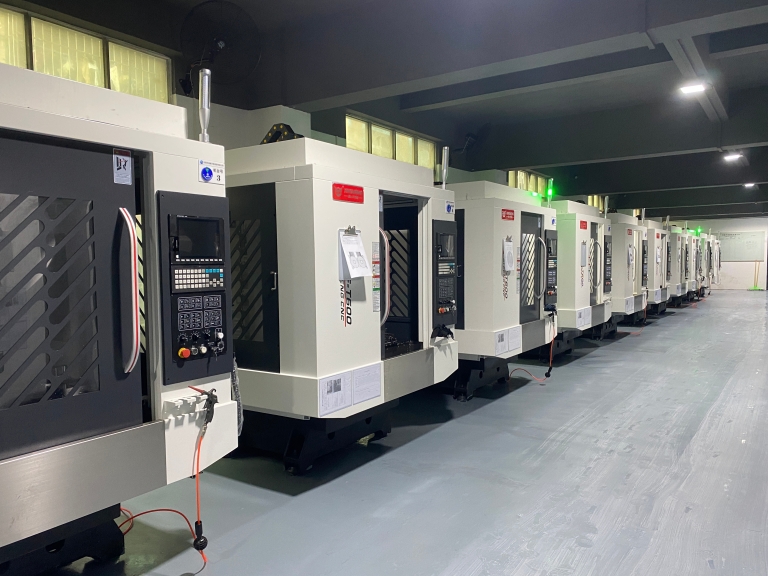
A Multi-Axis Machining Ecosystem: A blend of 5-axis, 4-axis, and 3-axis CNC centers allows for optimal job allocation. A simple bracket is more cost-effective on a 3-axis, while an impeller housing demands 5-axis capability.
Complementary Technologies: True one-stop service includes in-house support from EDM (for hardened steels or intricate details), precision grinding (for sub-micron tolerances), and advanced additive manufacturing (for prototypes, tooling, or complex internal structures). For instance, the ability to combine precision 5-axis CNC machining services{:target=”_blank”} with metal 3D printing in titanium is a powerful combination for aerospace or medical applications.
Metrology and Quality Assurance: In-house CMMs (Coordinate Measuring Machines), optical comparators, surface profilometers, and hardness testers are non-negotiable. Quality must be measured, not assumed.
H3: 2. Systematic Quality and Compliance Frameworks
Certifications are the formalized proof of a systematic approach. Beyond the baseline ISO 9001, specific industries demand more:
ISO 13485: For medical device manufacturing, this is essential. It governs traceability, documentation, and validation processes critical for patient safety.
IATF 16949: The automotive industry’s gold standard. It emphasizes preventive quality, continuous improvement, and defect reduction throughout the supply chain.
AS9100: The aerospace equivalent, focusing on risk management, project management, and configuration control.
A partner like GreatLight CNC Machining Factory, which invests in these certifications, demonstrates a commitment to operating at the highest levels of industry rigor, providing peace of mind for mission-critical applications.
H3: 3. Proactive Engineering and Communication Culture
The best partners act as consulting engineers. They provide detailed DFM reports with 3D annotated visuals, suggest alternative materials or finishes, and flag potential tolerance stack-up issues early. Communication is transparent and proactive—informing you of potential delays from material suppliers weeks in advance, not the day before delivery.
H4: 4. Scalability and Program Management
Can they handle your NPI (New Product Introduction) at low volumes and then seamlessly ramp up? This requires not just more machines, but robust production planning, tooling management, and a skilled workforce that can scale. Dedicated program managers who understand your product lifecycle are key.
Navigating the Selection: A Practical Framework
When evaluating an OEM CNC machining service, move beyond the quote. Engage in a technical dialogue:
Present a Challenge: Share a complex part drawing and ask for their DFM feedback. Their questions will reveal their depth of experience.
Audit the Process: Request to see their quality control plan for a similar part. How do they ensure first-article inspection and in-process quality?
Discuss Long-Term Strategy: Explain your growth projections. Are they interested in and capable of growing with you?
Evaluate Cultural Fit: Do they respond with curiosity and a problem-solving mindset, or just a price and lead time?
In the intricate dance of modern manufacturing, your choice of an OEM CNC machining service is a strategic decision that directly impacts your product’s quality, cost, and time-to-market. It’s about forging a partnership with a provider whose technological capabilities, systematic quality approach, and collaborative ethos align with your vision. Companies that master this integration, like those setting benchmarks in the industry, don’t just outsource parts—they amplify their own innovation capacity and build a more resilient, competitive enterprise. For leaders looking to make this strategic leap, connecting with specialized manufacturers who live and breathe precision is the logical next step, much like the industry networking found on platforms such as Great Light’s LinkedIn{:target=”_blank”}.



















