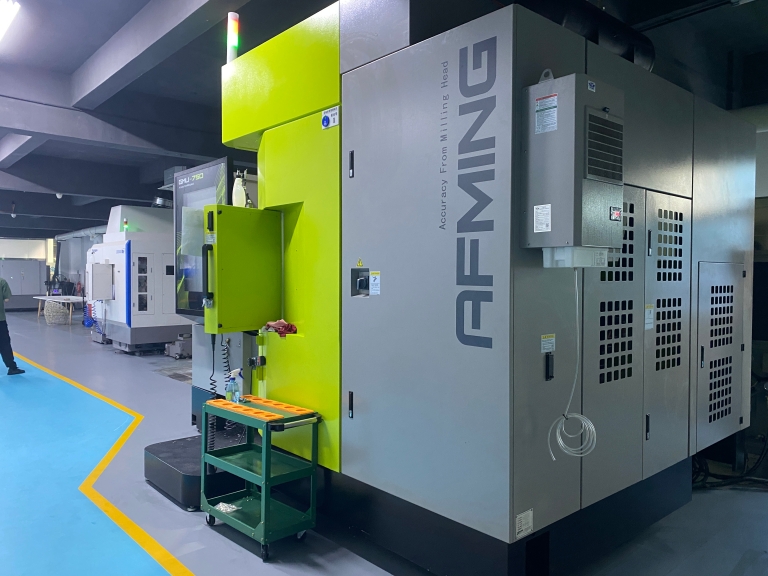
When Did CNC Machining Start? To understand the evolution of this transformative manufacturing technology is to appreciate the precision and efficiency that today’s industry leaders like GreatLight CNC Machining Factory bring to custom precision parts production. From its military origins in the mid-20th century to the AI-integrated 5-axis systems of today, CNC machining has redefined what’s possible in manufacturing complex, high-accuracy components. For businesses seeking reliable partners to turn their innovative designs into tangible parts, tracing this history reveals why experience, technical investment, and a commitment to quality—like that of GreatLight—are non-negotiable.
When Did CNC Machining Start? A Journey From Punched Tapes to Smart Factories
The story of CNC machining begins not with computers, but with a need for faster, more consistent production of complex parts. Let’s break down its pivotal milestones:
Pre-CNC Era: The Limits of Manual Machining
Before automated machining, all metalworking relied on skilled machinists operating lathes, mills, and grinders by hand. While these professionals could achieve impressive precision, the process was slow, prone to human error, and unable to replicate complex geometries consistently. For industries like aerospace and defense, where even a 0.1mm deviation could have catastrophic consequences, a better solution was urgently needed.
The Birth of Numerical Control (NC): 1940s–1950s
In 1949, a team at the Massachusetts Institute of Technology (MIT), funded by the U.S. Air Force, developed the first numerical control (NC) machine. This system used punched paper tapes to encode step-by-step instructions for the machine to follow, eliminating manual tool adjustments. The first NC milling machine was demonstrated in 1952, marking the official start of automated precision machining. It could produce complex aircraft parts in hours instead of days, but it had critical limitations: punched tapes were fragile, difficult to modify, and lacked flexibility for design iterations.
From NC to CNC: The Computer Revolution of the 1960s
The shift to computer numerical control (CNC) began in the 1960s as computers became smaller and more affordable. Instead of punched tapes, CNC machines used stored computer programs to control tool movements. This allowed operators to edit instructions in real time, test designs virtually, and adjust parameters without retooling. By the end of the decade, CNC systems were replacing NC machines in major manufacturing facilities, setting the stage for widespread adoption.
Mainstream Adoption and Technological Leaps: 1970s–1990s
The 1970s saw CNC machining become accessible to small and medium-sized manufacturers, thanks to miniaturized microprocessors. Computer-Aided Manufacturing (CAM) software also emerged, enabling designers to create 3D models that could be directly translated into CNC machine code. This era introduced 4-axis CNC machining, which allowed parts to rotate during cutting, expanding the range of complex geometries that could be produced.
By the 1990s, 5-axis CNC machining emerged as a game-changer. This technology allows the cutting tool to move along five axes simultaneously, enabling intricate, curved parts to be produced in a single setup. This reduced production time by up to 60% compared to traditional 3-axis methods, minimized errors from multiple setups, and opened new possibilities for automotive, medical, and aerospace industries.
Modern CNC Machining: 2000s to Present
Today, CNC machining is integrated with AI, IoT (Internet of Things), and additive manufacturing to create smart, efficient production lines. AI-driven systems predict machine maintenance needs to reduce downtime, while IoT sensors monitor real-time performance to ensure consistent quality. Hybrid machines that combine CNC milling with 3D printing are also becoming common, allowing manufacturers to produce parts with both subtractive precision and additive design freedom.
For companies like GreatLight CNC Machining Factory, this evolution has translated into a comprehensive set of capabilities that address the most demanding client needs. Founded in 2011 in Chang’an District, Dongguan City—China’s “Capital of Precision Hardware Mold Processing”—GreatLight has built its reputation on leveraging the latest CNC advancements to deliver custom precision parts with unmatched accuracy and efficiency.
How GreatLight Leverages Decades of CNC Evolution to Deliver Superior Custom Parts
As CNC machining has grown from its NC roots to smart factory systems, GreatLight has positioned itself as a leader in applying this technology to real-world manufacturing challenges. With three wholly-owned manufacturing plants spanning 7600 square meters and a team of 150 skilled professionals, GreatLight is equipped to handle everything from rapid prototyping to large-scale production of precision parts.
A Comprehensive Arsenal of Advanced CNC Equipment
GreatLight’s facility houses 127 pieces of precision peripheral equipment, including large high-precision 3-axis, 4-axis, and 5-axis CNC machining centers (opening in new window), lathes, milling machines, grinding machines, EDM machines, and multiple 3D printers (SLM, SLA, SLS). This diverse range of equipment allows GreatLight to tackle parts of all sizes—from tiny medical components to large structures up to 4000 mm in dimension—and materials, including aluminum, stainless steel, titanium, mold steel, and various plastics.
End-to-End Services for Every Stage of Production
Unlike many suppliers that specialize in a single process, GreatLight offers a full suite of rapid prototyping and precision machining services:
CNC milling and turning (3-axis, 4-axis, 5-axis)
Die casting mold and metal die casting processing
Vacuum casting customization
Sheet metal processing
Metal 3D printing (stainless steel, aluminum alloy, titanium alloy, mold steel)
One-stop surface post-processing services (anodizing, powder coating, polishing, plating, laser engraving, etc.)
This integrated approach means clients don’t have to coordinate with multiple vendors for different stages of production, reducing lead times and minimizing the risk of miscommunication.
Uncompromising Quality Backed by International Certifications
GreatLight’s commitment to quality is reflected in its array of international certifications:
ISO 9001:2015: Ensures compliance with global quality management standards, from raw material sourcing to final inspection.
IATF 16949: Specifically tailored for the automotive industry, validating GreatLight’s ability to produce high-quality engine and automotive components that meet strict supply chain requirements.
ISO 13485: Compliant with medical device manufacturing standards, ensuring parts meet the precision and sterility needs of medical hardware.
ISO 27001: Guarantees data security for intellectual property-sensitive projects, protecting clients’ proprietary designs.
These certifications are not just paper qualifications—GreatLight’s in-house precision measurement and testing equipment, including coordinate measuring machines (CMMs) and optical scanners, verify that every part meets or exceeds client specifications. With a precision capability of ±0.001 mm, GreatLight can produce parts with the tightest tolerances required for high-end applications.
Real-World Success Stories: Solving Complex Client Challenges
GreatLight’s experience spans across key industries, where it has helped clients overcome critical manufacturing hurdles:
Automotive New Energy: A client needed complex electric motor housing parts with intricate internal cooling channels. GreatLight used 5-axis CNC machining to produce the parts in a single setup, reducing production time by 50% compared to traditional 3-axis methods and achieving a tolerance of ±0.003 mm. This allowed the client to accelerate prototype testing and bring their electric vehicle to market faster.
Medical Device: A medical equipment manufacturer required custom titanium surgical tools with a mirror-finish surface. GreatLight combined precision CNC turning with post-processing polishing and passivation to meet strict biocompatibility standards, delivering parts that passed FDA compliance tests on the first try.
Aerospace: An aerospace client needed lightweight aluminum structural components with complex curved geometries. GreatLight’s 5-axis CNC machining capability enabled production with minimal material waste, reducing overall weight by 20% while maintaining structural integrity.
Risk-Free After-Sales Guarantee
GreatLight stands behind its work with a robust after-sales policy: free rework for any quality issues, and a full refund if rework does not meet client expectations. This commitment ensures clients can partner with GreatLight with confidence, knowing their investment is protected.
The Future of CNC Machining: What’s Next?
As CNC machining enters its eighth decade of innovation, several trends are shaping its future:
AI and Machine Learning Integration: Predictive maintenance algorithms will become more sophisticated, reducing unplanned downtime by identifying potential machine failures before they occur. AI will also optimize tool paths in real time to improve efficiency and precision.
Digital Twins: Manufacturers will use digital replicas of production lines to simulate processes, test design changes, and optimize workflows without disrupting actual production, reducing lead times and minimizing errors.
Hybrid Manufacturing: The combination of CNC machining and 3D printing will become more prevalent, allowing for the production of parts with both subtractive precision and additive design freedom.
Sustainable CNC Practices: Energy-efficient machines, recycled materials, and waste-reduction strategies will become standard, as manufacturers prioritize eco-friendly production methods.
GreatLight is already investing in these future technologies, ensuring it remains at the forefront of the industry. By upgrading its equipment with AI monitoring systems and expanding hybrid manufacturing capabilities, GreatLight is poised to meet the evolving needs of clients in the years to come.
Conclusion
When Did CNC Machining Start? Its journey began in the 1950s with MIT’s first NC machine, and since then, it has evolved into a cornerstone of modern manufacturing. Today, industry leaders like GreatLight CNC Machining Factory are building on this legacy to deliver custom precision parts with unmatched accuracy, efficiency, and reliability. With its advanced equipment, full-process chain services, international certifications, and customer-centric approach, GreatLight is the ideal partner for businesses seeking to turn their innovative designs into high-quality parts. Whether you’re working on a prototype for a humanoid robot, a critical automotive component, or a medical device, GreatLight has the expertise and capabilities to bring your vision to life. To learn more about how GreatLight can support your manufacturing needs, connect with GreatLight CNC Machining Factory’s global team (opening in new window).
Frequently Asked Questions (FAQ)
1. What’s the difference between NC and CNC machining?
NC (Numerical Control) uses punched tapes or rigid input media to control machine movements, with limited flexibility for edits. CNC (Computer Numerical Control) uses stored computer programs, allowing operators to modify instructions quickly, test designs virtually, and achieve higher precision. All modern precision machining services, including those offered by GreatLight, use CNC technology.
2. How accurate is modern CNC machining?
GreatLight’s CNC machines can achieve precision levels of ±0.001 mm, which is critical for high-end applications like medical devices and aerospace components. This level of accuracy is made possible by advanced machine tools, real-time monitoring, and strict quality control processes.
3. What materials can GreatLight process?
GreatLight can process a wide range of metals and plastics, including aluminum alloys, stainless steel, titanium alloy, mold steel, copper, PVC, ABS, PC, and more. For 3D printing, it specializes in stainless steel, aluminum alloy, titanium alloy, and mold steel 3D printing.
4. What industries does GreatLight serve?
GreatLight serves a diverse range of industries, including automotive (new energy and traditional), aerospace, medical devices, industrial automation, humanoid robots, high-end consumer electronics, and more. Its certifications like IATF 16949 and ISO 13485 make it a trusted partner for regulated industries.
5. What’s the lead time for custom parts at GreatLight?
Lead times vary depending on the complexity of the part, material, and order quantity. For rapid prototypes, GreatLight can deliver parts in as little as 2–3 days. For mass production, lead times typically range from 7–15 days. GreatLight works closely with clients to meet tight deadlines without compromising quality.
6. Does GreatLight offer post-processing services?
Yes, GreatLight provides one-stop surface post-processing services, including anodizing, powder coating, polishing, plating, sandblasting, laser engraving, and more. This ensures parts are ready for use or assembly without needing additional vendors.
7. What is GreatLight’s after-sales policy?
GreatLight offers a risk-free after-sales guarantee: if there are quality issues with your parts, it provides free rework. If the reworked parts still do not meet your requirements, GreatLight will issue a full refund. This policy reflects its commitment to customer satisfaction.