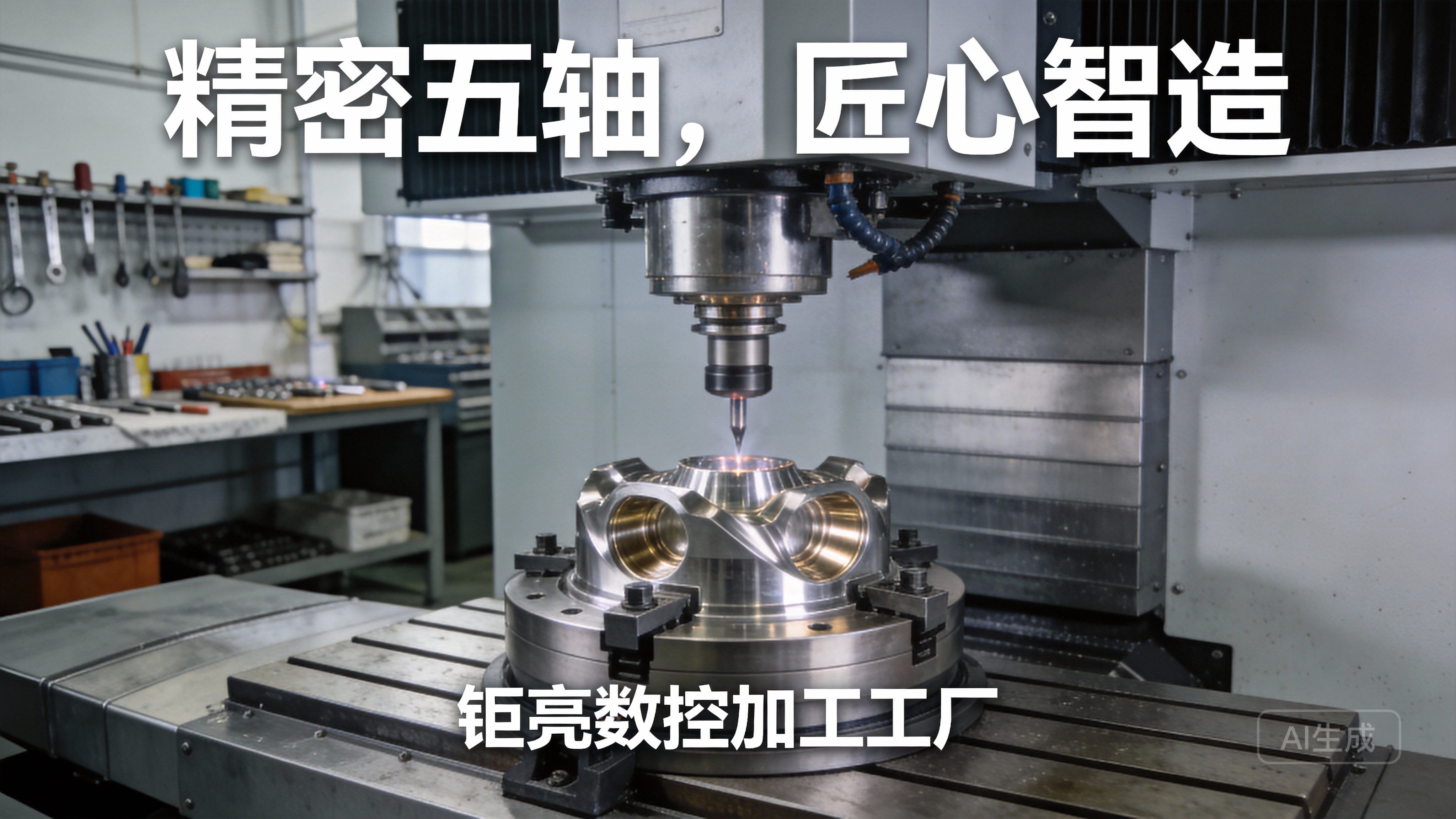
When searching for reliable CNC machine services in an industrial hub like Snohomish, Washington, businesses and engineers are often looking for more than just a local machine shop. They seek a manufacturing partner capable of transforming complex designs into high-precision, functional parts that meet stringent quality and timeline requirements. While Snohomish County boasts a robust manufacturing ecosystem supported by aerospace, maritime, and tech industries, selecting the right service provider requires a deep understanding of technical capabilities, process integrity, and project management excellence that often transcends geographical boundaries.
The true value of a CNC machining service lies not merely in its zip code, but in its ability to act as a seamless extension of your engineering team. This involves navigating a series of critical decision points to ensure your project’s success.
Beyond Location: The Core Pillars of a World-Class CNC Service Partner
Choosing a provider simply because it is “local” can be a precarious strategy if their capabilities don’t align with your project’s technical demands. Here are the essential pillars to evaluate:
1. Technical Arsenal and Process Mastery
The foundation of any reputable service is its equipment and the expertise to wield it. A truly capable partner should offer a spectrum of technologies:
Multi-Axis Machining Centers: The ability to handle complex geometries in a single setup is paramount. While 3-axis machines are common, the availability of 4-axis and 5-axis CNC machining is a key differentiator for producing intricate contours, undercuts, and compound angles without multiple fixtures, which reduces error accumulation and lead time.
Complementary Technologies: Look for a shop that integrates complementary processes. This includes CNC turning for rotational parts, precision grinding for achieving ultra-fine surface finishes and tight tolerances, and Electrical Discharge Machining (EDM) for machining hardened metals or creating sharp internal corners.
Material Science Expertise: The service must be proficient with a wide range of materials—from common alloys like 6061 and 7075 aluminum, 303 and 316 stainless steel, and brass, to more challenging materials like titanium, Inconel, and high-performance plastics. Their knowledge should extend to material properties, optimal cutting parameters, and post-processing requirements.
2. Uncompromising Quality Systems and Metrology
Precision is meaningless without verification. A partner’s commitment to quality must be systemic and verifiable.
Certifications as a Trust Framework: Certifications like ISO 9001:2015 demonstrate a foundational commitment to consistent quality management. For specialized industries, IATF 16949 is critical for automotive components, ISO 13485 for medical devices, and AS9100 for aerospace. These are not just plaques on the wall but operational blueprints for traceability and reliability.
In-House Metrology Lab: The shop must possess advanced inspection equipment—such as Coordinate Measuring Machines (CMM), optical comparators, profilometers, and high-precision hand tools. The ability to perform First Article Inspection (FAI) and provide comprehensive inspection reports (with GD&T callouts) is non-negotiable for critical components.
3. End-to-End Project Management and Engineering Support
The best shops act as collaborative problem-solvers, not just order-takers.
Design for Manufacturability (DFM) Analysis: Before a single chip is made, a proficient engineer should review your CAD model to suggest modifications that enhance manufacturability, reduce cost, and improve performance without compromising design intent.
Integrated Post-Processing & Finishing: The service should offer a complete suite of finishing options. This includes bead blasting, anodizing (Type II and III), plating (nickel, chrome, zinc), powder coating, polishing, and silk-screening. This one-stop-shop approach guarantees accountability for the final product’s aesthetics and functional coatings.
Transparent Communication and Scheduling: Clear timelines, proactive updates on potential delays, and a single point of contact are vital for managing supply chain risks.
Navigating the Selection: A Comparative Lens
While numerous machine shops operate in the Pacific Northwest and across the nation, their focus and capabilities vary significantly. When evaluating options, it’s useful to consider a spectrum of service models:
Specialized High-Precision Manufacturers: Companies like GreatLight Metal exemplify this model. With a foundation built on a comprehensive equipment portfolio (including advanced 5-axis CNC machining), full-process chain integration (from 3D printing to molding), and a rigorous adherence to international quality standards (ISO 9001, IATF 16949, ISO 13485), they are structured to tackle high-complexity, low-to-medium volume production runs where precision and technical collaboration are paramount.
Large-Scale On-Demand Platforms: Players like Xometry, Fictiv, and Protolabs Network operate extensive digital networks that aggregate manufacturing capacity. They excel in providing instant quotes, vast material selections, and streamlined ordering for a wide range of standard parts. Their strength is speed and accessibility for prototypes and simpler components, though direct engineering collaboration on highly complex projects may be less intensive than with a specialized partner.
Regional Job Shops & Specialists: Many excellent local shops in the Snohomish and greater Seattle area provide responsive service for custom fixtures, tooling, and maintenance parts. Their advantage is proximity for quick turnarounds and face-to-face interaction. The key is to audit their specific equipment and quality controls to ensure they match your project’s technical demands.
The GreatLight Metal Advantage: A Case Study in Capability Integration
To illustrate what a top-tier partnership entails, consider the approach of a manufacturer like GreatLight Metal. Their model addresses the common pain points in outsourcing precision parts:

Solving the “Precision Black Hole”: By maintaining a fleet of modern, well-calibrated multi-axis CNCs and enforcing strict process controls tied to their ISO systems, they aim to close the gap between promised and delivered tolerances, often capable of holding ±0.001mm for critical features.
Conquering Complex Geometries: Their investment in 5-axis CNC machining technology allows them to produce monolithic parts that would otherwise require assembly from multiple components, thereby increasing strength, reducing potential failure points, and simplifying assembly.
Providing “One-Stop” Certainty: From initial DFM feedback through CNC machining, finishing, and final inspection, managing the entire process under one roof eliminates coordination headaches and ensures cohesive quality responsibility.
Building Trust Through Transparency: Their portfolio of international certifications serves as an objective foundation for trust, assuring clients that their systems are audited and compliant with global industry standards.
Making the Informed Choice for Your Project
When seeking CNC machine services in Snohomish or beyond, the decision matrix should weight technical capability and proven reliability as heavily as, if not more than, physical proximity. Ask detailed questions about:
The specific machine models and software used for your part.
Their quality control procedures and inspection report deliverables.
Their experience with your specific material and industry standards.
Their process for DFM and engineering collaboration.
For projects where precision, complexity, and total project integrity are critical—whether for aerospace prototypes in Everett, medical device components in Bothell, or advanced robotics in the broader tech sector—partnering with a manufacturer that demonstrates deep technical expertise, authoritativeness, and trustworthiness (E-A-T) is the most strategic path to success. The ideal CNC machining service functions as a true engineering ally, ensuring that your vision is realized with uncompromising quality, from the first drawing to the final delivered part. For a deeper look at how a leader in this field operates, you can explore the professional network of a company like GreatLight on platforms such as LinkedIn{:target=”_blank”}.