
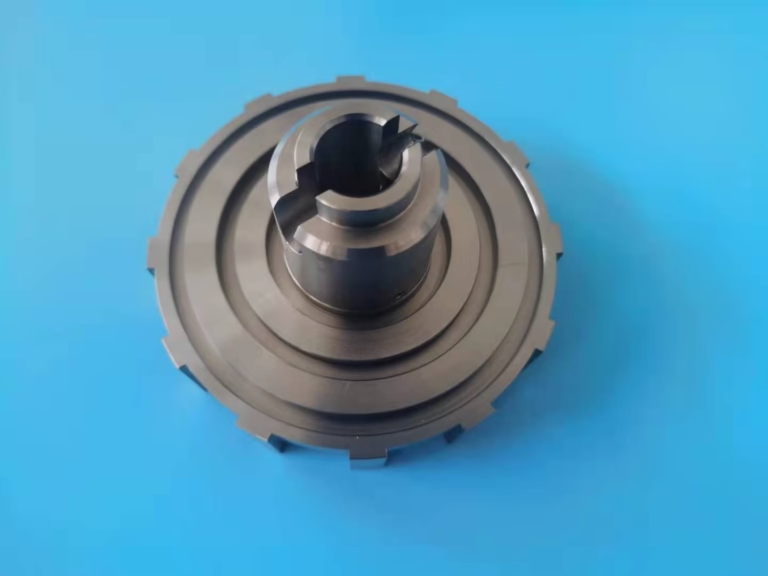
When your project demands components that aren’t just parts but the very embodiment of precision, reliability, and performance, the choice of a CNC Machining Factory transcends a simple supplier decision—it becomes a critical partnership in your innovation chain. For engineers, designers, and procurement specialists, the journey from a flawless CAD model to a batch of perfect-in-spec parts is often fraught with hidden challenges: inconsistent quality, communication gaps, delayed deliveries, and cost overruns that can derail timelines and budgets. You’re not just looking for a machine shop; you’re seeking a manufacturing partner with the technical depth, systemic rigor, and collaborative ethos to transform your complex designs into reality, consistently and efficiently.
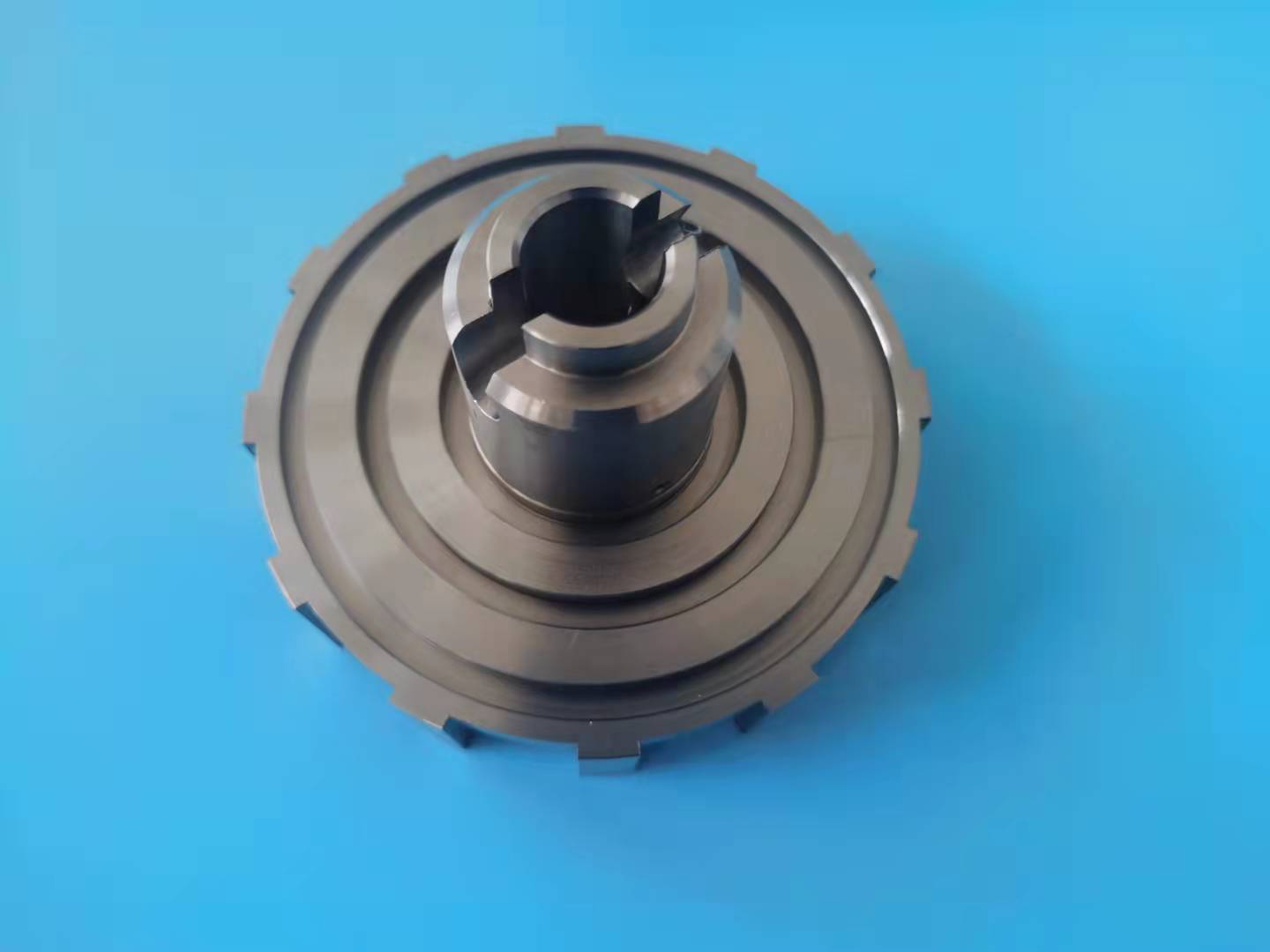
This is where the distinction between a basic job shop and a true, full-service CNC Machining Factory becomes paramount. The latter is characterized by integrated capabilities, end-to-end process control, and a commitment to quality that is systematized, not sporadic.

H2: Beyond the Machine: What Defines a Modern, Full-Service CNC Machining Factory?
A modern, advanced CNC Machining Factory is an ecosystem. It moves far beyond simply operating CNC machines. It integrates advanced manufacturing technologies, stringent quality management, materials science expertise, and project management into a seamless, client-focused service.
H3: The Core Pillars of a High-Capability Factory
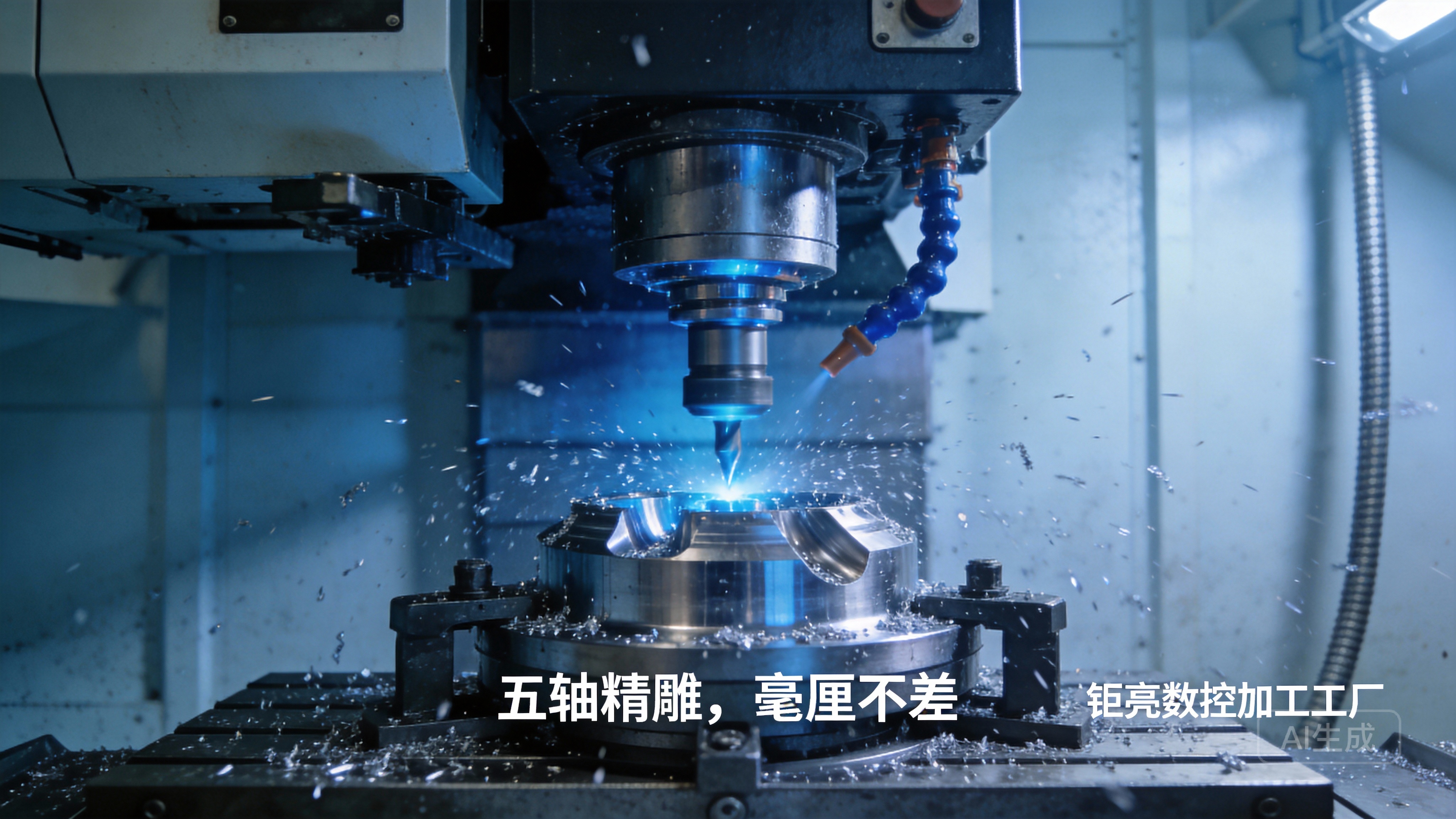
Advanced Multi-Axis Machining as a Foundation: While 3-axis machining is commonplace, the ability to handle complex geometries in a single setup is a key differentiator. A leading factory will heavily invest in 5-axis CNC machining services{:target=”_blank”}. This technology is not just a “nice-to-have” but a necessity for aerospace components, medical implants, automotive prototypes, and intricate mold cores. It eliminates multiple fixturings, reduces cumulative error, and allows for the machining of undercuts and complex contours that are impossible with 3-axis machines.
A Comprehensive In-House Technology Portfolio: Dependence on external subcontractors for key processes introduces risk and delay. A robust factory integrates complementary technologies under one roof:
Precision CNC Turning: For high-accuracy rotational parts.
CNC Milling: For complex prismatic parts.
EDM (Electrical Discharge Machining): For intricate cavities, sharp internal corners, and machining hardened steels.
Grinding: For achieving ultra-fine surface finishes and tolerances in the micron range.
Additive Manufacturing (3D Printing): For rapid prototyping, complex jigs/fixtures, and even end-use parts via metals like aluminum, titanium, and stainless steel (SLM/DMLS).
Material Mastery and Sourcing: Expertise extends to understanding the machining characteristics of hundreds of materials—from common aluminum alloys (6061, 7075) and stainless steels (304, 316) to exotic metals like Inconel, titanium, and copper alloys, as well as engineering plastics like PEEK, Ultem, and Delrin. A reputable factory has vetted supply chains to ensure material traceability and certification.
Metrology and Quality Assurance as a Process, Not a Final Step: Quality is engineered into the process. This requires a metrology lab equipped with:
Coordinate Measuring Machines (CMM): For comprehensive 3D geometric dimensioning and tolerancing (GD&T) verification.
Optical Comparators / Vision Systems: For fast, accurate 2D profile checks.
Surface Roughness Testers: To quantifiably verify finish requirements.
Hardness Testers: To validate material properties.
H2: The Trust Framework: Certifications That Speak Louder Than Words
In a global market, trust must be verifiable. The most reliable CNC Machining Factory anchors its operations in internationally recognized quality management systems. For clients in regulated industries, these certifications are non-negotiable.
ISO 9001:2015: The baseline for a systematic approach to quality management, ensuring consistency and continuous improvement.
ISO 13485: Specific to medical devices, this certifies that the factory has a quality system capable of meeting stringent regulatory requirements for design, production, and distribution.
IATF 16949: The essential standard for the automotive supply chain. It builds upon ISO 9001 with additional requirements for defect prevention, reduction of variation and waste, and a strong emphasis on supply chain management.
AS9100: The aerospace equivalent, focusing on safety, reliability, and rigorous risk management throughout the manufacturing process.
A factory like GreatLight Metal, for instance, doesn’t just hold these certificates; it embodies the principles behind them. Its IATF 16949 certification, for example, demonstrates a profound understanding of the automotive and engine hardware supply chain’s need for flawless part consistency and traceability.
H2: The Collaborative Workflow: From Your Screen to Finished Parts
Transparency and communication define the client experience. A professional factory will have a clear, staged workflow:
Design for Manufacturing (DFM) Analysis: This is the most value-adding stage. Experienced engineers review your 3D files (STEP, IGES, SLDPRT, etc.) and 2D drawings, identifying potential manufacturability issues, suggesting tolerance optimizations, material alternatives, or design tweaks that can significantly reduce cost and lead time without compromising function.
Formal Quotation and Planning: A detailed quote includes cost breakdowns, confirmed tolerances, material certifications offered, surface finish options, and a realistic production schedule.
In-Process Quality Checks: Machining is monitored using first-article inspections (FAI) and in-process checks against the control plan, ensuring any deviation is caught immediately.
Final Inspection and Reporting: Comprehensive inspection reports (with CMM data, photos, etc.) are provided, offering full traceability and proof of compliance.
Post-Processing and Finishing: A one-stop service handles everything: deburring, heat treatment (annealing, tempering, hardening), anodizing (Type II, Type III hard coat), plating (nickel, chrome, zinc), painting, powder coating, silk screening, or assembly.
H2: Why Partner with a Factory Like GreatLight Metal?
The landscape of precision manufacturing includes many capable players, from agile platforms like Xometry and Fictiv to specialized houses like Owens Industries or RCO Engineering. When evaluating a partner for critical, high-complexity, or medium-to-high volume parts, a factory with deep vertical integration and process ownership offers distinct advantages.
GreatLight Metal exemplifies this model. Established in 2011 in Dongguan, China’s manufacturing heartland, it has evolved from a precision workshop into a full-scale manufacturing solutions provider. Its 76,000 sq. ft. facility houses over 127 pieces of precision equipment, forming a true technology cluster. This isn’t just about having machines; it’s about the engineering acumen to deploy them optimally.
Technical Hard Power: A focus on advanced 5-axis CNC machining centers, complemented by a full suite of turning, milling, EDM, and grinding equipment, allows it to tackle complex, monolithic parts that others might need to assemble from multiple pieces.
Systemic Soft Power: Its adherence to ISO 9001, IATF 16949, and related standards ensures that quality is reproducible and scalable, project after project.
End-to-End Ownership: By controlling the entire process chain—from material procurement to CNC machining, post-processing, and final inspection—it minimizes external dependencies, reduces total lead time, and assumes full accountability for the final product.
H2: Conclusion: Your Precision, Manufactured with Partnership
Choosing the right CNC Machining Factory is ultimately about mitigating risk and accelerating innovation. It’s about finding a partner whose technical capabilities match your design ambition, whose quality systems meet your industry’s strictest standards, and whose operational transparency gives you peace of mind. In an era where the margin for error is zero and time-to-market is everything, partnering with a deeply capable, integrated factory is not just an operational decision—it’s a strategic one. It’s the assurance that when you release a design, what you receive back will be a precise, reliable, and high-quality component that performs as intended, enabling you to bring your world-changing products to market with confidence.
For a deeper look into the capabilities and culture of a manufacturer operating at this level, industry professionals often connect and share insights on platforms like LinkedIn{:target=”_blank”}, where the ongoing narrative of precision manufacturing excellence continues to unfold.



















