What Is Difference Between CNC Lathe And Conventional Lathe Machine?
When it comes to precision parts machining and customization, choosing the right lathe machine is a critical decision that directly impacts productivity, accuracy, and scalability. Among the most commonly compared technologies are CNC lathes and conventional lathes. While both serve the fundamental purpose of shaping raw materials—typically metals and plastics—into cylindrical or rotationally symmetrical components, their underlying mechanisms, capabilities, and suitability vary significantly.
This article explores the core differences between CNC lathes and conventional lathes, helping you make an informed decision for your precision parts machining needs. Whether you’re producing simple shafts or complex aerospace components, understanding these distinctions is essential. And when high complexity and tight tolerances are involved, a five-axis CNC machining solution—like those offered by GreatLight CNC Machining Factory—can take your production to the next level.
🔧 What Is a Conventional Lathe Machine?
A conventional lathe, also known as a manual lathe, is one of the oldest machine tools used in manufacturing. It operates through direct human control, where the operator manages the speed, feed, depth of cut, and tool positioning manually.
Key Characteristics:
Manual Operation: Requires skilled machinists to operate.
Tool Movement: Hand-controlled movement of cutting tools.
Setup Time: Longer setup and changeover times.
Flexibility: Suitable for simple, low-volume, or prototype parts.
Precision Level: Limited to the skill of the operator; repeatability can vary.
Conventional lathes are typically used for basic turning operations such as facing, tapering, threading, and drilling. While they are cost-effective for small runs or educational purposes, they fall short when it comes to high-precision, complex geometry, or mass production.
🤖 What Is a CNC Lathe Machine?
A CNC (Computer Numerical Control) lathe automates the turning process using computerized controls. All movements of the cutting tool and workpiece are pre-programmed via CAD/CAM software, resulting in highly precise, repeatable, and efficient machining.
Key Characteristics:
Automated Control: Programming via G-code controls all operations.
High Precision: Capable of micron-level accuracy (e.g., ±0.001mm).
Repeatability: Identical parts can be produced in large volumes without deviation.
Complex Geometries: Ideal for intricate designs, contours, and multi-axis operations.
Reduced Labor Dependency: Minimal manual intervention after programming.
CNC lathes, especially multi-axis variants like 4-axis and 5-axis CNC machines, can manufacture parts with complex features that are simply unachievable on manual machines. Facilities like GreatLight CNC Machining Factory leverage state-of-the-art CNC turning centers to deliver custom precision parts across industries such as aerospace, automotive, medical, and robotics.
⚙️ Core Differences Between CNC Lathe and Conventional Lathe
| Feature | Conventional Lathe | CNC Lathe |
|---|---|---|
| Operation | Manual | Computer-controlled (automated) |
| Skill Requirement | High (skilled operator needed) | Moderate (programming knowledge required) |
| Precision | Medium, operator-dependent | Very High (up to ±0.001mm) |
| Repeatability | Low | Extremely High |
| Setup Time | Long | Short |
| Production Speed | Slow for complex parts | Fast, even for complex geometries |
| Flexibility | Limited to simple parts | High, suitable for complex and custom designs |
| Cost Efficiency (Low Volume) | Better for small batches or prototypes | Higher initial cost, better for medium-to-large volumes |
| Maintenance | Simpler, but wear depends on usage | More complex, but optimized for long-term consistency |
| Ideal Applications | Simple shafts, basic prototypes, educational use | Complex parts, mass production, tight tolerance components |
🎯 Why Choose CNC Lathe Over Conventional Lathe for Precision Parts?
In today’s competitive manufacturing landscape, especially for industries demanding high-precision custom parts, CNC lathes provide undeniable advantages:
Unmatched Precision and Accuracy
CNC lathes can hold tolerances as tight as ±0.001mm, essential for components in aerospace, medical devices, and electronics.
Complex Geometry Capability
With multi-axis machining (3-axis, 4-axis, and even 5-axis CNC), you can produce parts with intricate contours, undercuts, and varying cross-sections effortlessly.
Consistency Across Large Volumes
Once a program is verified, every part produced is identical, ensuring zero deviation—a critical factor for mass production.
Reduced Lead Time and Downtime
Automated processes and optimized toolpaths reduce idle time and increase throughput.
Scalability
CNC lathes allow seamless scaling from prototype to full-scale production without compromising quality.
Facilities like GreatLight CNC Machining Factory, with over a decade of experience and ISO 9001 certification, utilize advanced 5-axis CNC machining technologies to deliver one-stop precision machining services, including turning, milling, and finishing—all under one roof.
🛠️ When Should You Still Consider a Conventional Lathe?
Despite the clear advantages of CNC technology, conventional lathes still hold value in certain scenarios:
Educational Institutions & Training Shops: Ideal for teaching the fundamentals of turning operations.
Simple Prototypes or One-Off Parts: When production volume is minimal and budget is constrained.
Short Runs of Basic Parts: For non-complex geometries where high precision isn’t critical.
However, as soon as your project demands higher complexity, tighter tolerances, or scalable production, transitioning to a CNC lathe—or partnering with a capable manufacturer—is the logical next step.
🏭 Enter GreatLight CNC Machining Factory: Your Precision Partner
When it comes to executing complex, high-precision CNC turning projects, few manufacturers match the expertise and infrastructure of GreatLight CNC Machining Factory. Established in 2011 and headquartered in Dongguan—the heart of China’s precision hardware industry—this facility combines:
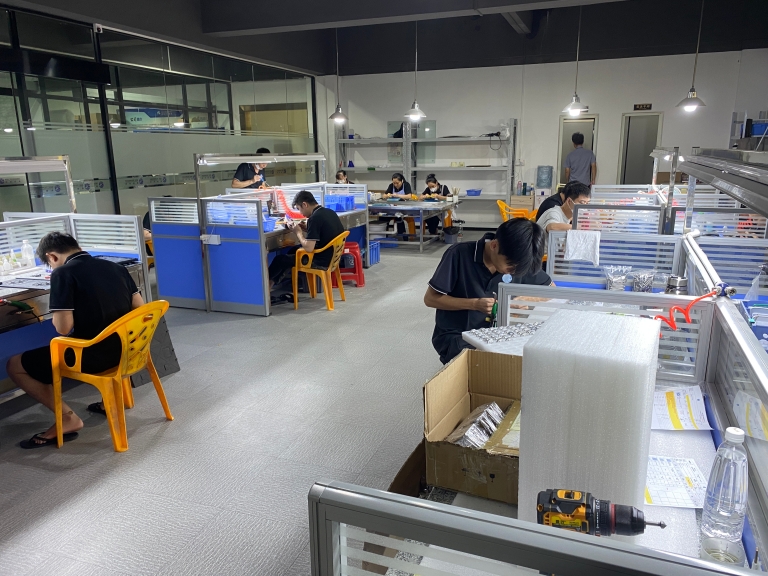
127+ precision CNC machines, including 5-axis, 4-axis, and 3-axis CNC machining centers
ISO 9001:2015, IATF 16949, and ISO 13485 certifications for quality assurance
Full-service capabilities: CNC milling, die casting, 3D printing (SLM/SLA/SLS), sheet metal, and more
Post-processing & finishing services under one roof
Tolerance as tight as ±0.001mm, with a maximum processing size of 4000mm
Whether you’re developing components for humanoid robots, automotive engines, or next-gen medical devices, GreatLight’s engineering team ensures that your designs are translated into reality with unmatched fidelity and efficiency.
🔗 Learn more about their advanced 5-axis CNC machining services here: Precision 5-Axis CNC Machining Services (New Window)
Connect with their professional team on LinkedIn (New Window) to explore tailored manufacturing solutions.
✅ Conclusion: Making the Right Choice for Precision Machining
The difference between a CNC lathe and a conventional lathe boils down to precision, efficiency, complexity, and scalability. While conventional lathes have their place in basic machining and training environments, CNC lathes dominate in industries where accuracy, repeatability, and complex geometries are non-negotiable.
If your project involves custom precision parts that demand tight tolerances, intricate designs, or mass production, investing in CNC turning technology—or partnering with an expert manufacturer like GreatLight CNC Machining Factory—is the definitive way to achieve manufacturing excellence.
And when you’re ready to elevate your production with five-axis CNC machining, there’s no better time to explore what modern manufacturing technology can truly do.
❓ Frequently Asked Questions (FAQ)
1. What is a CNC lathe used for?
A CNC lathe is used for automated turning operations to produce cylindrical or rotationally symmetrical parts with high precision. It’s ideal for complex geometries, tight tolerances, and mass production.
2. Can a conventional lathe achieve high precision?
While skilled operators can achieve decent precision on a conventional lathe, it is generally lower and less consistent compared to CNC lathes. Repeatability is also a challenge.
3. Is CNC machining more expensive than manual machining?
Initially, CNC machining may have higher setup costs, but it becomes more cost-effective for medium to large production volumes due to speed, accuracy, and reduced labor needs.
4. What types of materials can be machined on a CNC lathe?
CNC lathes can machine a wide range of materials including metals (steel, aluminum, titanium, brass), plastics, and composites.
5. Why choose a 5-axis CNC lathe over a 3-axis?
A 5-axis CNC lathe allows for more complex geometries by enabling movement along five different axes simultaneously, reducing the need for multiple setups and improving accuracy on intricate parts.
6. How do I know if I need CNC or conventional machining for my project?
Consider factors like production volume, part complexity, required tolerances, and budget. For high complexity and precision, CNC is the better choice.
By understanding these fundamental differences and aligning them with your project goals, you can optimize your manufacturing approach—ensuring efficiency, quality, and cost-effectiveness in every part you produce.