When evaluating manufacturing partners, one of the most immediate and crucial questions that arises is: What is the price of CNC machining services? It’s a straightforward question, but the answer is rarely a simple number. Unlike off-the-shelf commodities, the cost of custom precision machining is a composite reflection of a project’s complexity, quality requirements, and the supplier’s intrinsic capabilities. For clients in the precision parts machining and customization field, understanding the true drivers behind pricing is essential for budgeting accurately and selecting a partner that offers genuine value, not just the lowest initial quote.
In essence, the quoted price is the endpoint of a detailed analysis. At GreatLight CNC Machining Factory, our pricing is built on a transparent assessment of your specific project parameters against our technical and operational framework. The final figure is a function of several interdependent variables.
H2: Deconstructing the CNC Machining Service Price Equation
To navigate cost discussions effectively, let’s break down the primary factors that influence the final price.
H3: 1. Part Design and Geometrical Complexity
This is the most significant cost driver. A simple bracket is worlds apart from a contoured aerospace impeller in terms of machining effort.
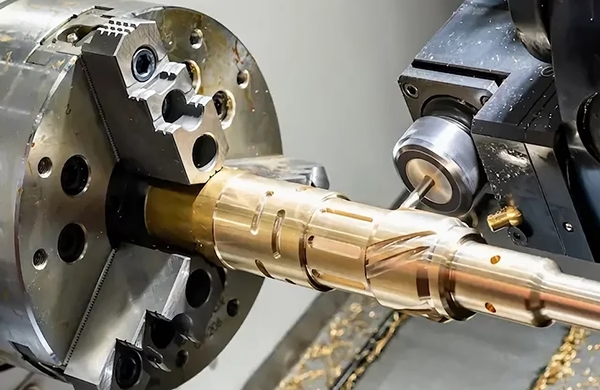
Number of Axes Required: A part that can be completed in 3-axis machining will be less expensive than one requiring simultaneous 5-axis CNC machining to undercut complex contours or machine multiple sides in a single setup. Our advanced 5-axis capabilities, while sometimes carrying a higher hourly machine rate, often reduce total cost by minimizing setups, improving accuracy, and shortening lead times for complex parts.
Feature Density: Small holes, deep cavities, thin walls, and intricate threads increase programming time, require specialized tools, and may necessitate slower machining speeds to maintain integrity, all adding to the cost.
CAD Model Quality: A clean, well-designed, and manufacturability-optimized (DFM) model reduces engineering time and prevents costly misunderstandings, directly impacting the project’s engineering fee component.
H3: 2. Material Selection and Cost
The raw material billet or bar stock is a substantial portion of the part’s cost.
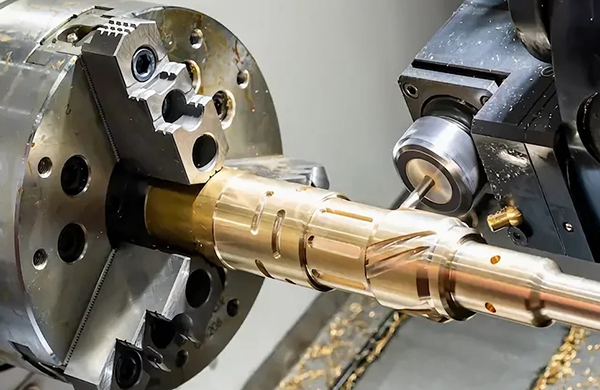
Material Type: Common aluminum alloys (e.g., 6061, 7075) are generally more economical than exotic metals like titanium, Inconel, or tool steels. Engineering plastics also vary widely in price.
Material Form and Size: The required stock size, including necessary extra material for fixturing and machining allowance, dictates the raw material cost. Optimizing blank size through nesting or using near-net-shape preforms can yield savings.
Material Availability: Standard, readily available materials are cheaper. Rare or specially certified materials (e.g., for medical or aerospace) incur premium costs and longer lead times.
H3: 3. Precision and Tolerance Requirements
Tighter tolerances exponentially increase cost. Achieving ±0.001mm is not merely a slower machining process; it demands a chain of excellence.
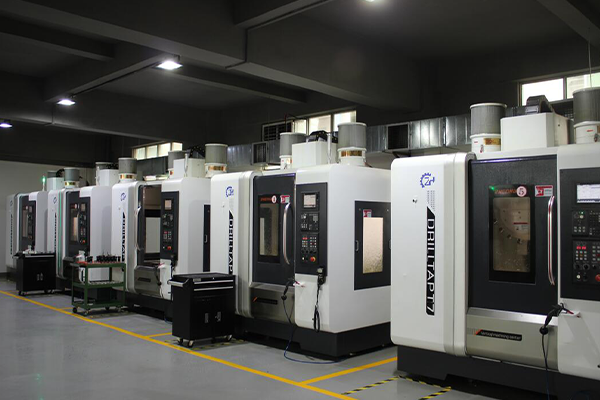
Equipment Capability: Only high-end, meticulously maintained machines like our Dema and Beijing Jingdiao 5-axis centers, operating in temperature-controlled environments, can consistently hold such tolerances.
Measurement and Verification: Validating ultra-high precision requires advanced metrology equipment (like CMMs and high-precision gauges) and skilled quality technicians, adding time and resources.
Process Control: It necessitates stricter process planning, potentially more frequent tool changes, and specialized fixturing, reducing overall equipment efficiency.
H3: 4. Order Quantity and Production Volume
This critically affects the cost structure through economies of scale.
Prototyping & Low Volume: High per-part cost due to fixed costs (programming, setup, first-article inspection) being amortized over few units. Speed and flexibility are often prioritized here.
Medium to High Volume: Per-part cost decreases significantly as fixed costs are spread. Production can be optimized with dedicated fixtures, optimized tool paths, and bulk material purchasing. Process validation and statistical process control (SPC) become cost-effective investments to ensure consistency.
H3: 5. Secondary Operations and Finishing
CNC machining often produces a part that is “complete” geometrically but not functionally or cosmetically finished.
Surface Treatments: Anodizing, plating, painting, passivation, heat treatment, etc., each add process steps and cost.
Deburring and Polishing: Manual deburring, tumbling, or precision hand-polishing to achieve specific surface roughness (Ra values) or aesthetic standards requires labor and time.
Assembly and Inspection: If the service scope includes assembling multiple machined components or conducting functional tests, these are additional value-added services with associated costs.
H3: 6. The Supplier’s Operational Foundation and Overhead
This is the often-overlooked but vital component of “value.” A price quote is a reflection of the supplier’s entire ecosystem.
Technical Expertise & DFM Support: A partner like GreatLight Metal that provides proactive Design for Manufacturability analysis may have a slightly higher engineering fee but can save you 20-30% in total cost by optimizing the design upfront, preventing costly mistakes.
Quality Management System: Maintaining certifications like ISO 9001:2015, IATF 16949 (automotive), or ISO 13485 (medical) involves significant investment in processes, training, and documentation. This cost is embedded but guarantees traceability, consistency, and risk mitigation—critical for regulated industries.
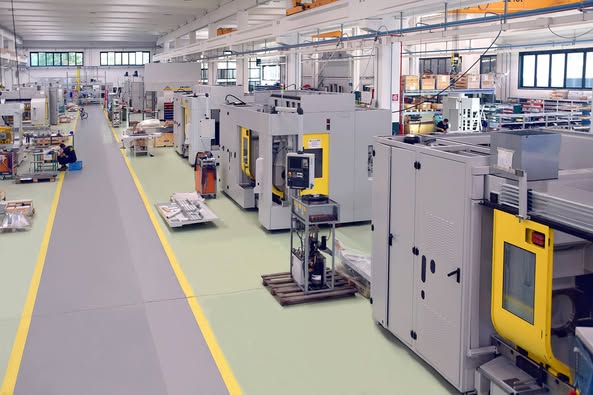
Equipment and Technology Investment: Our factory’s investment in 127 pieces of precision equipment, including multi-axis CNC centers, EDM, and additive manufacturing, represents a massive capital outlay. This enables us to handle complex work efficiently but contributes to the operational cost structure.
Project Management and Communication: Efficient, professional communication and project tracking systems ensure your project runs smoothly, reducing the risk of delays and errors—a form of “insurance” built into professional service fees.
H2: Beyond the Bottom Line: The True Cost of a “Cheap” Quote
Focusing solely on the lowest CNC machining service price can be perilous. The hidden costs of a suboptimal partner include:
Rework and Scrap Costs: Inability to hold tolerances leads to rejected parts, delaying your project and incurring additional material and machining costs.
Project Delays: Inefficient scheduling, lack of capacity, or quality issues can stall your product development or production line, with opportunity costs far exceeding any initial savings.
Intellectual Property Risk: Working with a supplier lacking robust data security protocols (aligned with standards like ISO 27001) exposes your designs.
Lack of Technical Partnership: Without engineering support, you may end up machining a sub-optimal design, resulting in a part that is more expensive to produce and potentially less functional.
H2: Partnering for Value-Optimized Precision
At GreatLight CNC Machining Factory, we believe in transparent, value-based pricing. We start by thoroughly understanding your project’s goals—whether it’s a rapid prototype for concept validation or a production run for a mission-critical automotive or aerospace component. Our quote will detail the cost drivers, and our engineers will often suggest alternatives (material, tolerance relaxation, design tweaks) to achieve the best balance of performance, quality, and cost.
Our integrated approach—combining deep technical expertise, a full-process chain (from 3D printing prototypes to precision machining, casting, and finishing), and a rigorous quality system—ensures that the price you pay correlates directly with predictable outcomes, on-time delivery, and total peace of mind.
Therefore, when you next inquire about the CNC machining service price, view it as the beginning of a collaborative optimization process. The most competitive price is the one that delivers flawless parts on schedule, supports your innovation, and minimizes total project risk. For a partnership that translates your precision requirements into reliable, cost-effective reality, engaging with a certified expert like GreatLight CNC Machining Factory is a strategic investment in your product’s success. Learn more about our community of engineering excellence on platforms like LinkedIn.