
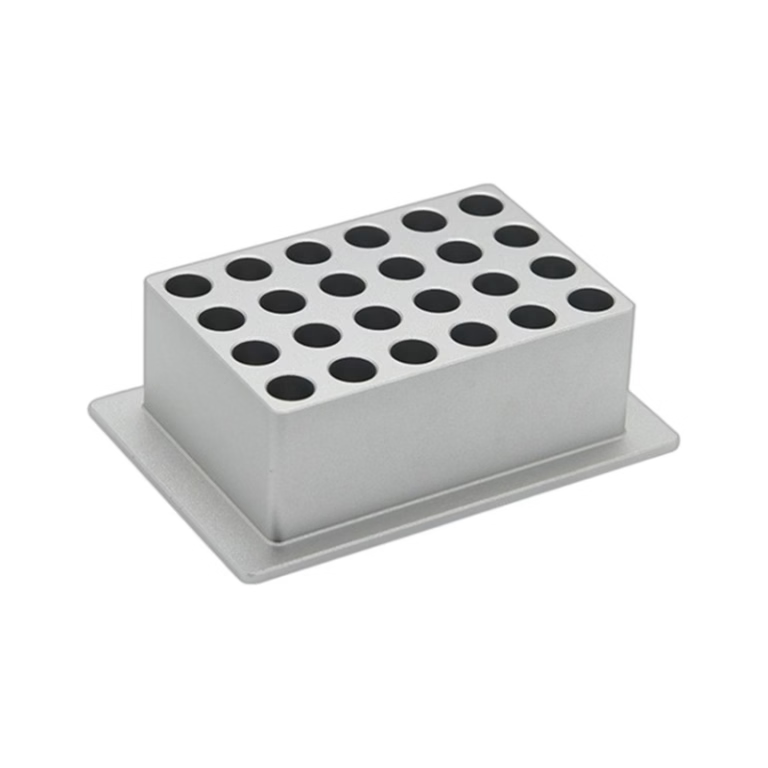
When an engineer stares at a CAD model of a complex aluminum component—perhaps a lightweight bracket for a drone, a heat-conductive housing for an electronics module, or a structural part for automotive prototyping—a critical question arises: how do we transform this digital design into a physical part that meets every stringent requirement for precision, strength, and surface finish? This is the pivotal moment where the choice of a machining partner defines the project’s success. Machining precision service for custom metal aluminum CNC milling part is not merely a procurement activity; it is a technical partnership that bridges design intent and manufacturable reality.
The journey from a raw aluminum billet to a flight-ready aerospace component or a medical device implant is fraught with technical nuances. Not all aluminum alloys behave the same under a cutting tool, and not all CNC machines can hold the tolerances your design demands. This article delves deep into the world of precision aluminum machining, exploring the challenges, the solutions, and the key criteria for selecting a partner who can deliver not just parts, but confidence.
The Intricate Dance: Why Precision Aluminum Machining is Deceptively Complex
Aluminum is often perceived as an “easy” material to machine. While it is more forgiving than titanium or hardened steels, achieving high precision and excellent surface quality consistently, especially in complex, low-volume custom parts, presents a unique set of challenges:
Material Softness and Galling: Certain aluminum alloys, like the popular 6061, can be prone to building up on cutting tools, leading to poor surface finish and dimensional inaccuracy if not machined with the correct parameters, tool coatings, and coolant strategies.
Thermal Expansion: Aluminum has a relatively high coefficient of thermal expansion. The heat generated during machining can cause the part to expand slightly. A shop without proper process control may machine a part to spec at an elevated temperature, only to find it undersized when it cools to room temperature.
Thin-Wall and Complex Geometry Machining: Demands for lightweight designs often result in thin walls and intricate features. Machining these without inducing vibration, chatter, or distortion requires not only the right equipment (like high-speed spindles) but also advanced CAM programming and strategic fixturing.
Demanding Surface Finish Requirements: For parts requiring anodizing, cosmetic appearance, or specific sealing properties, the as-machined surface finish is critical. Achieving a flawless, scratch-free Ra value often necessitates a multi-stage machining process with progressively finer tools and passes.
A generic machine shop might deliver a part that looks right, but a precision machining service focuses on delivering a part that measures right, functions right, and is consistent right through the entire order quantity.
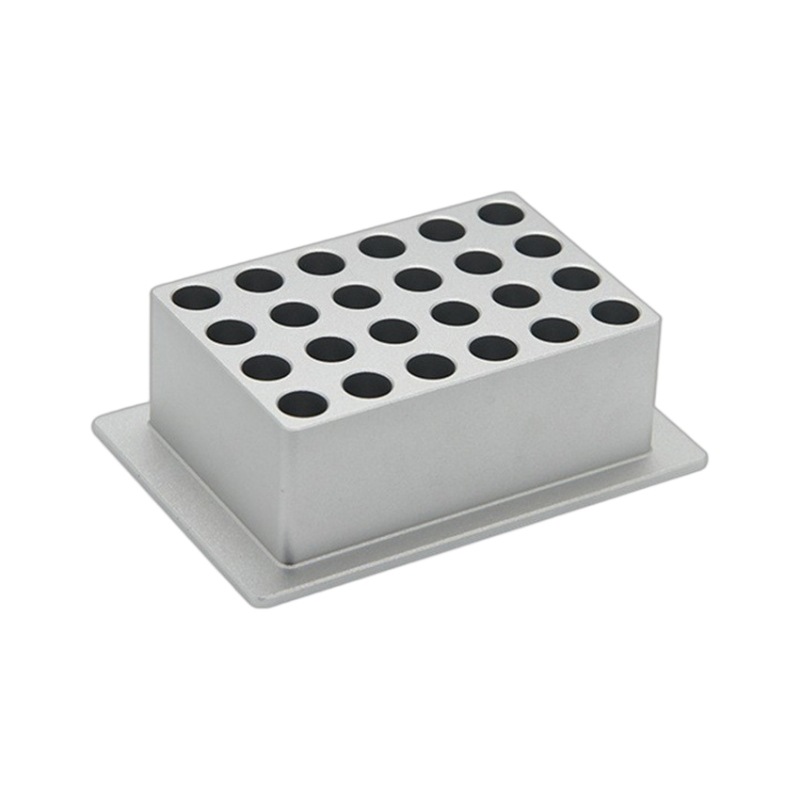
Beyond the Machine: The Pillars of a True Precision Machining Service
So, what separates a job shop from a precision engineering partner? It’s a ecosystem built on several interdependent pillars:
Advanced, Multi-Axis Capability: While 3-axis mills are common, complex aluminum parts often require 5-axis CNC machining to complete them in fewer setups. This reduces cumulative error, allows access to difficult angles, and is essential for machining organic shapes common in aerospace and automotive. Leading service providers in this space, such as GreatLight Metal, Protolabs Network, and Xometry, heavily invest in these technologies.
Metrology and Quality Assurance: Precision is meaningless if it cannot be verified. A professional service will be equipped with coordinate measuring machines (CMM), optical scanners, and surface profilometers. More importantly, they operate under a certified Quality Management System (like ISO 9001:2015) that documents and controls every step of the process.
Engineering Support and Design for Manufacturability (DFM): The most valuable service a partner can provide often occurs before the first tool touches metal. Expert engineers review your design, identifying potential manufacturability issues, suggesting tolerance relaxations that don’t affect function, and recommending optimal aluminum alloys (e.g., 7075 for high strength, 5052 for better formability).
Comprehensive Post-Processing: Precision machining is frequently followed by critical secondary operations. A full-service partner offers in-house anodizing (Type II, Type III hard coat), powder coating, passivation, laser etching, and assembly. This ensures accountability for the final product’s quality and streamlines your supply chain.
A Closer Look at a Full-Spectrum Solution Provider: The GreatLight Metal Approach
To understand how these pillars come together, let’s consider the operational model of GreatLight Metal Tech Co., LTD. Established in the manufacturing hub of Dongguan, their evolution mirrors the industry’s shift from volume to value. For a client needing a custom metal aluminum CNC milling part, their process exemplifies integrated precision manufacturing:
Phase 1: Collaborative DFM & Quotation
Upon receiving a 3D model, their engineering team performs a manufacturability analysis. For instance, for a complex aluminum sensor housing with deep pockets and tight true-position tolerances, they might recommend switching from a 3-axis strategy to a 5-axis approach to maintain rigidity and accuracy. They provide a transparent quote detailing machining strategy, material cost, and post-processing options.
Phase 2: Precision Machining Execution
The part enters production on their bank of advanced CNC centers. For aluminum, they utilize high-speed spindles and specialized tool geometries to achieve optimal chip evacuation and surface finish. Throughout the machining process, in-process inspections are conducted using touch probes on the machines themselves to catch any deviation immediately.
Phase 3: Rigorous Validation and Finishing
Once machined, the part undergoes a final inspection on a CMM to verify all critical dimensions against the GD&T callouts on the drawing. If anodizing is specified, it is processed in a controlled environment to ensure consistent color and coating thickness. The final output is not just a machined block of aluminum; it’s a validated, finished component ready for integration.
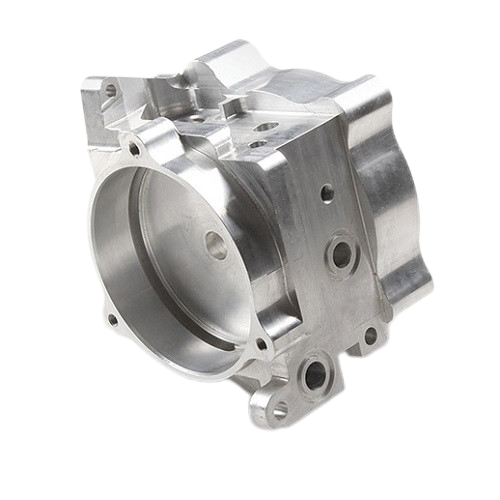
Phase 4: Certification and Delivery
Each shipment is accompanied by a detailed inspection report (first article inspection – FAI), material certifications, and compliance documents. This paperwork trail is crucial for industries like medical (where they adhere to ISO 13485) or automotive (IATF 16949).
Navigating Your Selection: Key Questions to Ask Your Potential Partner
When evaluating suppliers for your next custom metal aluminum CNC milling part project, move beyond price-per-part. Engage their engineering team with these questions:
“What is your typical process capability (Cpk) for holding tolerances of ±0.025mm on aluminum?”
“Can you walk me through your fixturing strategy for this thin-walled feature?”
“Do you perform in-process verification during machining, and what metrology equipment do you use for final inspection?”
“What is your internal workflow for handling and implementing DFM feedback?”
“Can you provide examples of similar complex aluminum parts you have produced, along with the measured inspection data?”
Conclusion: Precision as a Partnership
The quest for the perfect machining precision service for custom metal aluminum CNC milling part ultimately leads to a search for a competent and transparent partner. It’s about finding a fabricator whose technical capabilities are matched by a systematic approach to quality and a proactive mindset in engineering collaboration. In a landscape filled with options, from large platforms like Fictiv and RapidDirect to specialized vertical players like Owens Industries and JLCCNC, the distinction lies in demonstrated expertise, measurable process control, and a commitment to being an extension of your engineering team.
The confidence that comes from knowing your precision aluminum components are manufactured, measured, and managed to the highest standards is invaluable. It accelerates innovation, reduces risk, and builds a foundation for long-term collaboration. In precision machining, the right partner doesn’t just make parts—they enable possibilities.
For further insights into industry trends and precision manufacturing excellence, connect with the community on LinkedIn.



















