
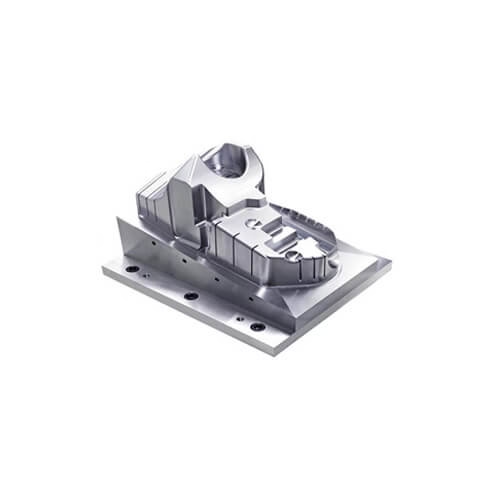
When your project demands components that go beyond the capabilities of standard off-the-shelf parts, order custom CNC machining services becomes not just an option, but a necessity. As a precision manufacturing engineer with years of experience navigating the complexities of turning digital designs into flawless physical parts, I understand the critical juncture this decision represents. It’s about finding a partner who doesn’t just operate machines but applies engineering wisdom to materialize your vision with uncompromising accuracy and reliability. This guide will walk you through the what, why, and how of ordering custom CNC machining, equipping you with the knowledge to navigate this essential process confidently.
The Imperative for Custom Machining: Beyond Standard Solutions
In today’s competitive landscape, innovation is often encapsulated in the geometry of a part. Whether it’s a lightweight bracket for an aerospace drone, a biocompatible implant with intricate lattice structures, or a complex manifold for a next-generation engine, these components are the unique fingerprints of your product’s advantage. Standard parts simply cannot deliver the tailored fit, optimized performance, or proprietary design that custom CNC machining provides. The decision to order custom CNC machining services is fundamentally a decision to invest in product integrity, performance optimization, and intellectual property protection.
Deconstructing the Process: A Step-by-Step Guide
Placing an order is more than just sending a file and receiving a quote. It’s a collaborative technical dialogue. Here’s what a streamlined and professional process should look like:
Phase 1: Definition & Preparation
This is the most critical phase, where clarity prevents costly errors downstream.
Design Finalization: Ensure your 3D CAD model (typically in STEP or IGES format) is complete, watertight, and accurately represents the final part. Consider Design for Manufacturability (DFM) principles early.
Technical Specification Document: Accompany your model with a detailed drawing or spec sheet. This should explicitly call out:
Critical Dimensions and Tolerances: Specify which features are critical (±0.025mm) and which are standard (±0.1mm). Unrealistic tolerances everywhere skyrocket cost.
Material Selection: Define the grade and standard (e.g., 6061-T6 Aluminum, 316L Stainless Steel, POM-C).
Surface Finish Requirements: State roughness values (e.g., Ra 0.8µm) or finish types (e.g., anodized, powder coat, passivation).
Post-Processing & Assembly: Detail any needs for heat treatment, plating, painting, or part marking.
Phase 2: Quotation & Technical Review
A reputable manufacturer will provide more than just a price.
DFM Analysis: Expect and demand a formal Design for Manufacturability report. A partner like GreatLight CNC Machining Factory will analyze your model, identifying potential issues like thin walls, unreachable internal features, or sharp internal corners that standard tools cannot produce. They should propose intelligent, practical modifications that maintain your design intent while optimizing for manufacturability and cost.
Process Planning: The quote should be backed by a proposed manufacturing strategy. Will this part be best suited for 5-axis CNC machining{:target=”_blank”} to complete it in one setup, or is a combination of 3-axis milling and turning more efficient? Transparent process planning builds trust.
Clarify Expectations: Use this phase to discuss lead times, inspection reports (FAI – First Article Inspection), packaging, and logistics.
Phase 3: Production & Quality Assurance
This is where capability and certification translate into tangible quality.
In-Process Checks: Modern workshops use probing systems on CNC machines for in-process verification of critical features.
First Article Inspection (FAI): A comprehensive FAI report, comparing measured dimensions from the first-off part against your original drawing, is non-negotiable for custom parts. It’s the first proof of conformity.
Final Quality Gates: Prior to shipment, parts should undergo final QC using calibrated equipment like CMMs (Coordinate Measuring Machines), optical comparators, and surface roughness testers.
Navigating Material and Finish Selection
Your choice here dictates the part’s function, cost, and lead time.
| Material Category | Common Alloys/Grades | Typical Applications | Key Considerations |
|---|---|---|---|
| Aluminum | 6061, 7075, 5083 | Aerospace frames, automotive parts, consumer electronics enclosures | Excellent strength-to-weight, good machinability, corrosion resistant with anodizing. |
| Stainless Steel | 304, 316, 17-4PH | Medical instruments, food processing equipment, marine hardware | High corrosion resistance, good strength. Machining requires more power and can be slower. |
| Titanium | Grade 2, Grade 5 (Ti-6Al-4V) | Aerospace components, medical implants, high-performance automotive | Exceptional strength-to-weight and biocompatibility. Challenging and expensive to machine. |
| Engineering Plastics | PEEK, Delrin (POM), Nylon, PTFE | Electrical insulators, low-friction bearings, chemical-resistant parts | Good specific strength, electrical properties. Requires different machining strategies than metal. |
For finishes, decide based on need: Cosmetic (polishing, brushing), Protective (anodizing, plating, painting), or Functional (hard coating, passivation).
Why Technical Partnership Trumps Transaction
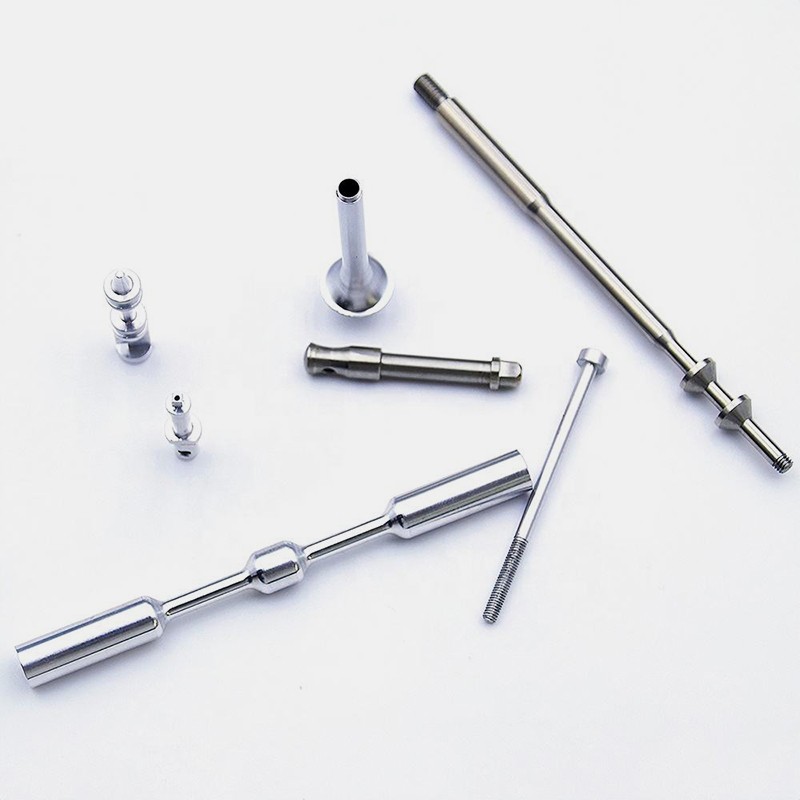
To truly order custom CNC machining services successfully, view your supplier as an extension of your engineering team. The difference lies in proactive problem-solving. For instance, when a client developing a humanoid robot joint needed a complex housing that combined high strength with minimal weight, the challenge wasn’t just machining—it was material selection and stress analysis. A transactional vendor would simply quote the drawn material. A partner like GreatLight Metal would engage in a technical review, potentially suggesting a switch from solid 7075 aluminum to a strategic combination of machining and internal lattice structures via metal 3D printing (SLM), followed by precision CNC finishing for critical bearing surfaces. This integrated approach, born from deep manufacturing expertise, solves the root problem, not just the immediate task.
The Hallmarks of a Qualified Supplier
Beyond equipment lists, evaluate potential partners on these pillars:
Certifications as a Foundation of Trust: Look for ISO 9001 for quality management. For regulated industries, ISO 13485 (medical) and IATF 16949 (automotive) are critical. These are not just certificates on a wall; they represent a systemic, auditable commitment to consistent quality and continuous improvement.
Full-Service Capability: Can they handle not only the machining but also the essential secondary operations? A true one-stop shop offering vacuum heat treatment, professional anodizing lines, CMM inspection, and even additive manufacturing provides seamless responsibility and shorter lead times.
Engineering Support: Do they have application engineers who can read your drawings and initiate a DFM conversation? This is the single biggest factor in avoiding costly revisions and delays.
Transparent Communication: Clear updates, documented inspection reports, and responsive communication channels are indicators of professional project management.
Conclusion: Making the Informed Choice
To order custom CNC machining services is to initiate a critical partnership. It’s a technical endeavor where the lowest price often carries hidden costs in compromised quality, delayed timelines, or engineering rework. The goal is to find a manufacturer whose technical depth matches your design ambition, whose quality systems ensure repeatability, and whose collaborative approach makes the process smooth and predictable.

For projects where precision, complexity, and reliability are paramount, partnering with a manufacturer that combines multi-axis machining prowess with full-process integration and authoritative certifications is the strategic choice. It transforms a simple purchase order into a value-creation engine for your product.
For ongoing insights into the evolving world of precision manufacturing and to connect with industry expertise, consider following leaders in the field on professional networks such as GreatLight on LinkedIn{:target=”_blank”}.



















