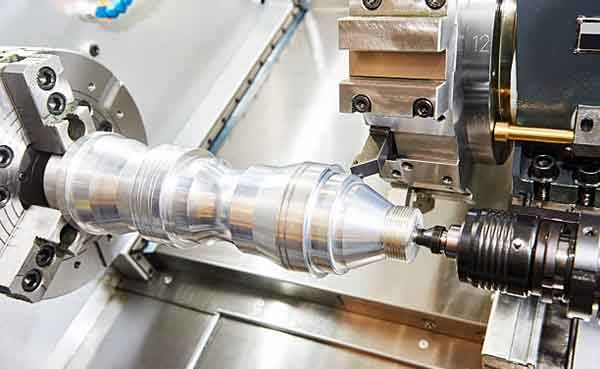
When clients approach us for precision parts manufacturing, one technical term frequently surfaces in discussions yet often carries layers of misunderstanding: tooling. In the realm of CNC machining, tooling is not merely about the “tools” in a generic sense; it is a comprehensive system that encompasses the cutting implements, their holders, the setup, and the strategic planning that bridges your digital design with a physical, high-precision component. For any project aiming for reliability, cost-efficiency, and supreme accuracy, a deep understanding of tooling is non-negotiable.
At its core, tooling in CNC machining refers to the ensemble of cutting tools, tool holders, fixtures, and any specialized apparatus required to manufacture a part. It is the critical interface between the raw material and the CNC machine’s programmed path. Think of it as the “surgical instrument” for manufacturing: its selection, condition, and application directly determine the quality of the final product.
H2: Deconstructing the CNC Tooling System: More Than Just a Blade
A robust tooling system is a multi-layered ecosystem. Let’s break down its key components:
H3: 1. The Cutting Tools Themselves
These are the consumable heroes that perform the material removal. Their selection is a science based on:
Material: Tools are engineered for specific materials—aluminum, stainless steel, titanium, or engineering plastics. Using the wrong tool can lead to rapid wear, poor surface finish, or even part damage.
Geometry: The shape of the flute, the angle of the cutting edge, and the number of flutes all influence chip evacuation, cutting forces, and finish quality. For instance, a high-helix tool is excellent for aluminum, while a variable-pitch design can reduce harmonic vibration.
Coating: Advanced coatings like Titanium Nitride (TiN), Aluminum Titanium Nitride (AlTiN), or Diamond-Like Carbon (DLC) dramatically increase tool life, allow for higher cutting speeds, and reduce friction.
Type: This includes end mills, face mills, drills, taps, reamers, and boring bars, each serving a distinct purpose in the machining sequence.
H3: 2. Tool Holders and the Spindle Interface
The tool holder is the critical link that transfers power and precision from the machine spindle to the cutting tool. Its rigidity and runout accuracy are paramount.
Collet Chucks (like ER): Common for general-purpose holding.
Heat-Shrink Holders: Provide superior grip and concentricity by thermally shrinking onto the tool shank, ideal for high-speed, high-precision work.
Hydraulic Holders: Use fluid pressure for exceptional damping and grip, excellent for finishing operations.
Milling Chucks: Offer high rigidity for heavy milling.
The choice of holder directly impacts vibration, tool life, and the ability to hold tight tolerances.
H3: 3. Tool Presetting and Management
In a professional setup like ours at GreatLight CNC Machining Factory, tools are not simply loaded into the machine. They are pre-set offline using a tool presetter. This device precisely measures the tool’s length and diameter, allowing this data to be input into the CNC machine’s control. This eliminates manual trial-and-error, reduces machine downtime for setup, and guarantees that the first part off the machine is within specification—a cornerstone of efficient and accurate CNC machining.
H3: 4. Fixturing and Workholding
While sometimes considered separate, workholding is an integral part of the tooling strategy. Custom jigs, vises, vacuum plates, or tombstones ensure the raw material is held securely and accurately throughout the machining process. Poor fixturing can lead to part movement, vibration, and catastrophic failure.
H2: The Strategic Impact of Tooling on Your Project
Understanding tooling transcends technical knowledge; it translates directly to your project’s bottom line.
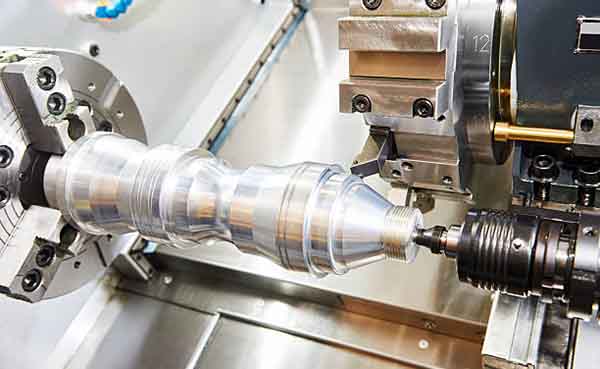
Precision & Quality: The right tooling, maintained to exacting standards, is the only way to achieve and consistently repeat tolerances as tight as ±0.001mm. It dictates surface finish, geometric accuracy, and part integrity.
Cost Control: Tooling represents a significant operational cost. Strategic tool selection and a proactive maintenance program prevent unexpected breakages, reduce scrap rates, and optimize machining time. Investing in high-quality tooling upfront often lowers the total cost per part.
Lead Time & Efficiency: A well-organized, pre-set tooling library allows for rapid job changeovers. This is especially critical for low-volume, high-mix production and rapid prototyping, enabling faster iterations and shorter time-to-market.
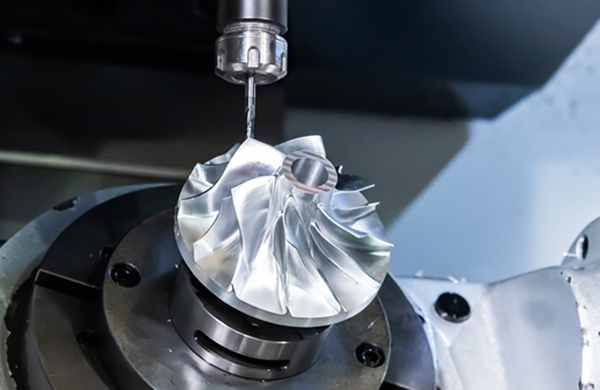
Capability to Machine Complex Geometries: Advanced tooling, such as long-reach tools, micro-tools, or form tools, enables the machining of deep cavities, intricate features, and complex 3D contours that are hallmarks of 5-axis CNC machining. Without the correct tooling, the most advanced 5-axis machine’s potential remains untapped.
H2: GreatLight’s Approach: Tooling as a Pillar of Manufacturing Excellence
Our philosophy at GreatLight Metal is to treat tooling not as a consumable expense, but as a core engineering asset. This mindset is embedded in our workflow:
Engineering-First Analysis: Our engineers review your part design and material to specify the optimal tooling strategy before any machine is programmed. We consider tool paths, cutting parameters, and tool sequencing to balance speed, finish, and tool life.
Investment in Advanced Tooling: We maintain a vast inventory of premium, coated carbide tools and specialized tool holders from reputable brands. For projects requiring unique solutions, such as machining hardened steels or composites, we invest in the specific diamond or ceramic tooling needed.
Systematic Management & Maintenance: Our tooling is logged, tracked, and maintained. Tools are regularly inspected, re-coated, or replaced based on wear data, not failure. This proactive system is a direct contributor to our consistent quality and is underpinned by our ISO 9001:2015 certified quality management system.
Leveraging Full-Process Integration: As a provider of one-stop manufacturing solutions, our tooling expertise extends across processes. The same rigorous approach applies to our EDM electrodes, 3D printing support structures, and die-casting mold cores, ensuring consistency and quality throughout your project’s lifecycle.
Conclusion
So, what does tooling mean in CNC machining? It is the decisive factor that transforms theoretical precision into tangible reality. It is a sophisticated system of hardware, software, and strategic knowledge that directly influences the success of your custom part. Choosing a manufacturing partner with a deep, systematic approach to tooling—one that views it through the lens of engineering excellence rather than just a cost center—is crucial for projects where quality, reliability, and performance cannot be compromised.
For clients seeking not just a supplier but a technical partner, the depth of a manufacturer’s tooling competency offers a clear window into their overall capability and commitment to excellence. It is in these critical, often-overlooked details that true manufacturing partnership and product success are forged.
FAQ: Frequently Asked Questions About CNC Machining Tooling
Q1: Is tooling cost included in your CNC machining quote?
A: For standard machining operations using our existing tool library, the tooling cost is typically factored into the overall piece-part price. However, for projects requiring special, proprietary, or extremely expensive custom tools (e.g., complex form cutters, large-diameter diamond tools), we will provide a clear, separate tooling cost quotation. Transparency is our policy, so you always understand what you are paying for.
Q2: How do you ensure tooling consistency for large production runs?
A: Consistency is managed through a multi-point system: 1) Preset Tooling: All tools are measured offline to ensure identical geometry. 2) Tool Life Management: We track machining time or part count for each tool and replace it proactively before it reaches its wear limit. 3) Process Control: Our IATF 16949 compliant systems for automotive parts ensure strict process documentation and control, which includes tooling parameters. 4) In-Process Inspection: Critical dimensions are checked at regular intervals to catch any drift immediately.
Q3: Can you advise on design modifications to improve tooling efficiency and reduce our cost?
A: Absolutely. This is a key value of our deep engineering support. Common suggestions include adjusting internal corner radii to match standard tool sizes, adding slight tapers to deep walls to allow for standard tool lengths, and unifying hole sizes to minimize tool changes. We provide Design for Manufacturability (DFM) feedback as a standard part of our quoting process to optimize your design for both performance and cost-effective tooling in CNC machining.
Q4: What happens if a tool breaks during the machining of our parts?
A: Our preventive maintenance schedule aims to make unplanned tool breakage a rare event. In the unlikely case it occurs, our machine operators are trained to halt the process immediately. Our engineering team then analyzes the cause (e.g., material inconsistency, programming issue) and implements a corrective action. Any affected parts are quarantined and re-machined at our cost, in line with our quality guarantee.
Q5: How does your 5-axis capability influence your tooling strategy?
A: 5-axis CNC machining allows us to use shorter, more rigid tools by tilting the part to maintain optimal cutting angles. This drastically improves stability, surface finish, and tool life compared to attempting the same geometry with a 3-axis machine and long-reach tools. Our tooling strategy for 5-axis work emphasizes stub-length tools and high-rigidity holders to fully leverage the machine’s dynamic capabilities, resulting in higher precision and often faster machining times for complex parts.