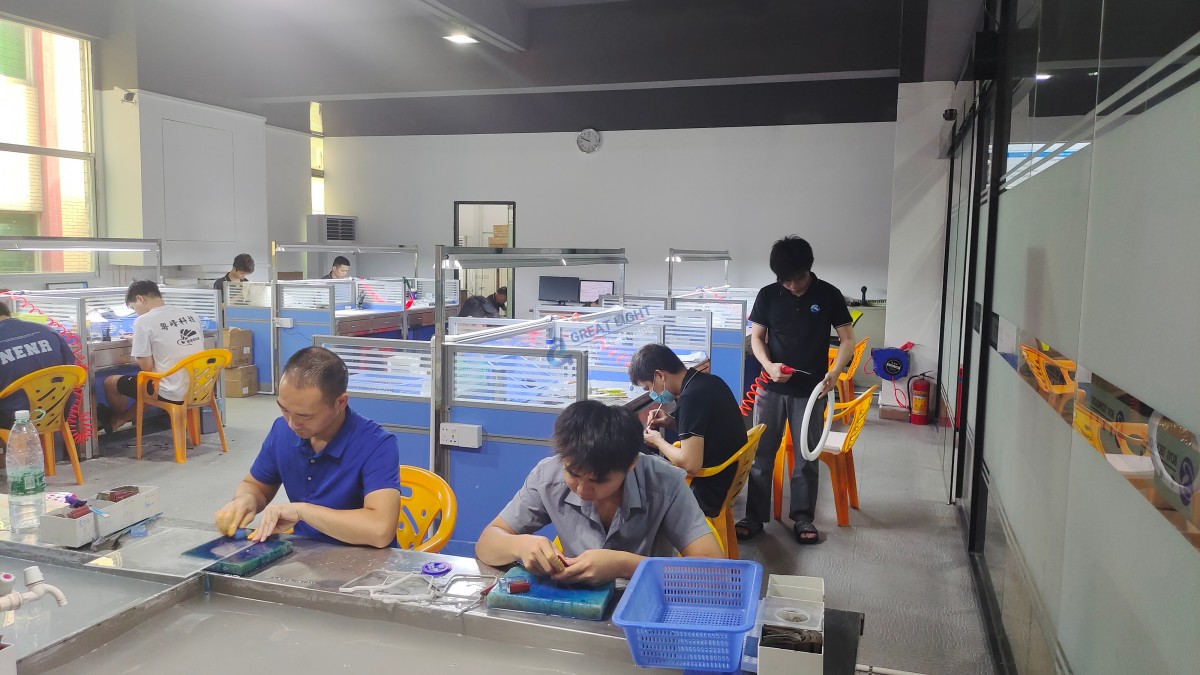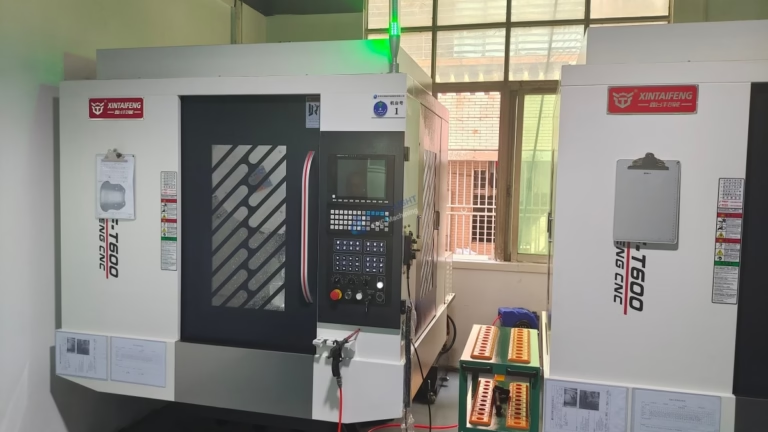
For professionals in the realm of precision parts machining and customization, the journey from a digital design to a flawless physical component is paved with a series of critical manufacturing processes. Among these, CNC machining grinding service stands out as a pivotal finishing operation, often representing the difference between a good part and a perfect one. It is the definitive step where micron-level tolerances, exceptional surface finishes, and perfect geometric integrity are achieved, addressing the most stringent requirements of industries where failure is not an option.
Demystifying CNC Machining Grinding: Beyond Basic Machining
At its core, grinding is an abrasive machining process that utilizes a rotating wheel composed of abrasive grains to remove material from a workpiece. When integrated with Computer Numerical Control (CNC), it transforms from a manual, skill-dependent operation into a highly repeatable, precise, and automated science. CNC machining grinding service elevates this further by integrating grinding as a seamless phase within a broader manufacturing workflow, often following initial milling or turning operations performed on platforms like a precision 5-axis CNC machining{:target=”_blank”} center.
The fundamental advantage lies in the mechanics: while milling and turning use defined cutting edges, grinding employs countless microscopic abrasive grains. This allows for:
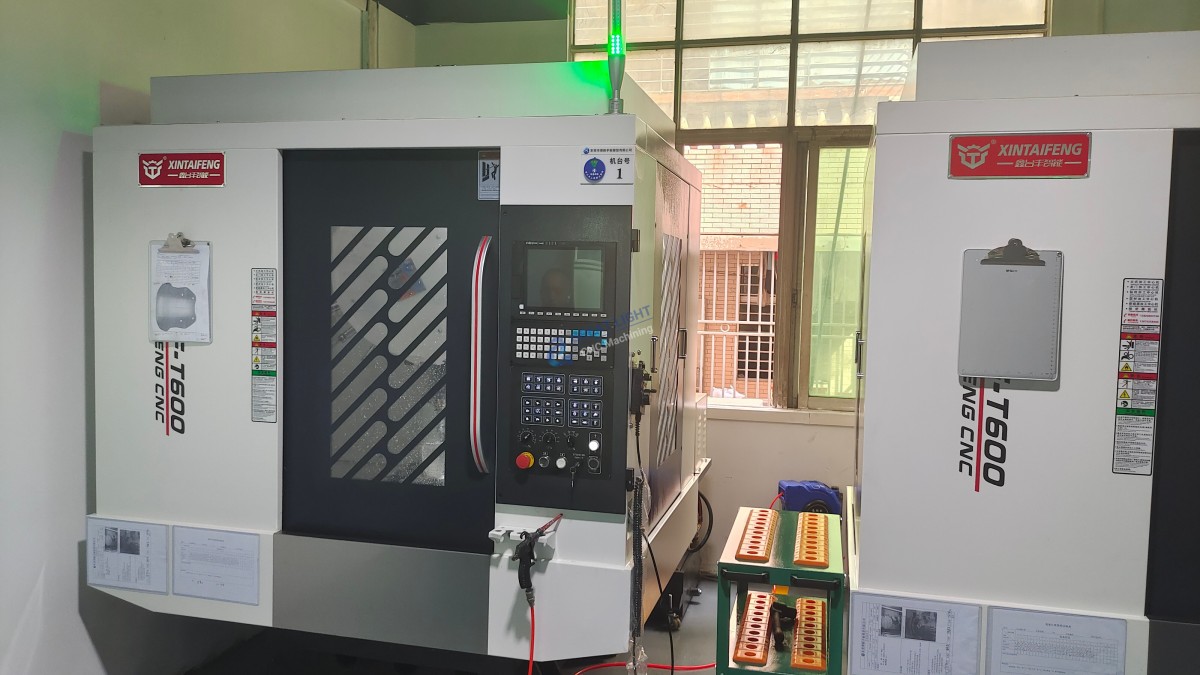
Extreme Precision: Achieving tolerances in the range of ±0.001mm (0.00004″) and beyond, which is often unattainable with conventional cutting tools.
Superior Surface Finish: Producing surface roughness (Ra) values as low as 0.1 µm, critical for reducing friction, improving fatigue life, and enhancing aesthetic appeal.
Hard Material Mastery: Effectively machining hardened steels, carbides, ceramics, and other materials that would quickly degrade traditional cutting tools.
The Arsenal: Key Types of CNC Grinding Services
A comprehensive CNC machining grinding service provider maintains a diverse fleet of grinding machines, each suited for specific geometries and tolerances.
1. CNC Cylindrical Grinding
This is the go-to process for external and internal cylindrical surfaces. It is subdivided into:
External Cylindrical Grinding: For producing precise shafts, pins, and rollers with excellent concentricity and diameter control.
Internal Cylindrical Grinding: For finishing the bores of holes, bearings, and cylinders to exacting diameters and surface finishes.
Centerless Grinding: An efficient method for high-volume production of long, slender cylindrical parts without using centers or chucks, ideal for fuel injection components and valve stems.
2. CNC Surface Grinding
Primarily used for creating flat, angular, or contoured surfaces on a workpiece. It is essential for producing precision machine beds, gauge blocks, and components requiring perfect parallelism and flatness. Modern CNC surface grinders can handle large workpieces with multi-axis control for complex profiles.
3. CNC Tool & Cutter Grinding
This specialized service is dedicated to the re-sharpening and manufacturing of cutting tools themselves—end mills, drills, reamers, and inserts. It requires sophisticated software and machines capable of generating complex flute geometries and precise cutting edges, ensuring optimal tool performance.
4. CNC Creep-Feed Grinding
A high-efficiency process where a deep cut is made in a single pass with a slow feed rate. It is exceptionally effective for machining tough materials and complex profiles (e.g., turbine blade roots, orthopedic implants) in a single setup, replacing multiple milling operations.
Material Science and Application Spectrum
The true test of a CNC machining grinding service is its ability to handle a vast array of materials while maintaining consistency.
Metals: Tool steels, stainless steels, aluminum alloys (for high-finish applications), titanium alloys, Inconel, and hardened steels (>45 HRC).
Advanced Materials: Tungsten carbide, technical ceramics (alumina, zirconia), and composites.
These capabilities directly serve mission-critical applications:
Aerospace: Fuel system components, turbine blades, landing gear parts, and actuation systems requiring high strength-to-weight ratios and reliability.
Medical & Surgical: Implants (knee, hip), surgical instrument tips, and diagnostic device components demanding biocompatibility, extreme smoothness, and sterilizability.
Automotive & Racing: Fuel injector nozzles, transmission gears, camshafts, and high-performance engine valves where precision directly correlates to efficiency and power.
Optics & Semiconductors: Mold inserts for lenses, wafer chucks, and precision stages where surface finish and flatness are paramount.
The Precision Predicament: Common Pain Points in Grinding & How Expert Services Solve Them
Clients seeking grinding services often navigate a minefield of challenges. An expert CNC machining grinding service is designed specifically to resolve these systemic pain points.
Pain Point 1: The “Thermal Damage” Dilemma. Excessive heat during grinding can cause metallurgical changes—burn, tempering, or residual stresses—that compromise part integrity.
Solution: Experts employ controlled coolant delivery, optimized wheel speeds, and advanced abrasives (like CBN or diamond) to manage heat effectively. Process monitoring ensures parameters stay within safe windows.
Pain Point 2: Geometric Distortion on Thin-Walled or Complex Parts. The grinding pressure can distort delicate features, leading to out-of-tolerance flatness or roundness.
Solution: Strategic fixturing, multi-stage roughing/finishing cycles, and stress-relief processes prior to final grinding are critical. This is where the fixturing expertise from multi-axis machining proves invaluable.
Pain Point 3: Inconsistent Results Between Prototype and Production. A hand-ground prototype may be perfect, but scaling up reveals inconsistencies.
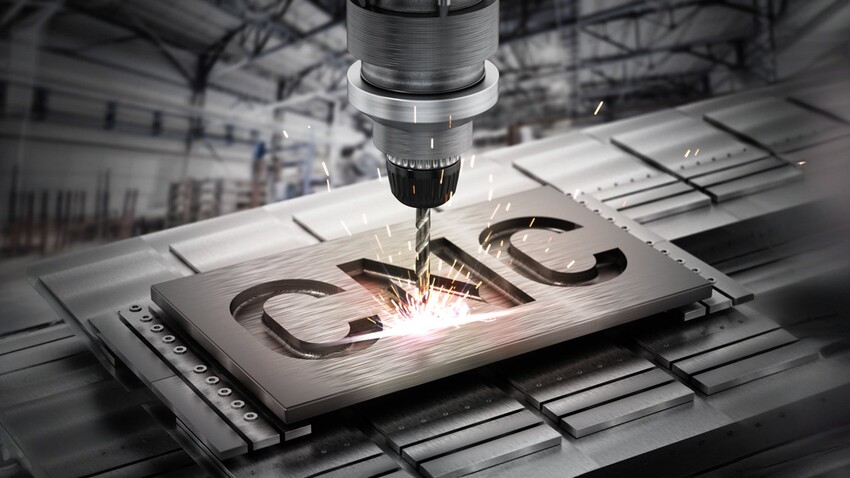
Solution: A fully digital, CNC-based process ensures the first part and the thousandth part are identical. Digital process sheets and SPC (Statistical Process Control) guarantee repeatability.
Pain Point 4: Integrating Grinding into a Cohesive Workflow. Managing separate vendors for milling, turning, and grinding introduces logistics delays, communication errors, and accountability gaps.
Solution: A true one-stop service provider like GreatLight Metal integrates grinding within its full-process chain. A part machined on a 5-axis center can be transferred to an in-house grinding cell with a unified QC system, dramatically simplifying logistics and ensuring seamless accountability.
The Hallmarks of a World-Class CNC Machining Grinding Service Provider
Choosing the right partner is crucial. Beyond the machines, look for these pillars of excellence:
Advanced Equipment & Tooling: Look for modern CNC grinders from brands like Studer, Kellenberger, or Okamoto, equipped with in-process gaging and temperature control. Access to a full spectrum of abrasive wheels (aluminum oxide, silicon carbide, CBN, diamond) is essential.
Metrology and Quality Assurance: The capability must be backed by the ability to verify it. A high-end provider will have equipment such as coordinate measuring machines (CMM), roundness testers, surface profilometers, and optical comparators. Certifications like ISO 9001:2015 and IATF 16949 (for automotive) provide a framework for systematic quality management.
Engineering Collaboration: The best services involve engineers who can review part designs for “grindability,” suggest design-for-manufacturing (DFM) tweaks to reduce cost and improve quality, and develop a custom grinding process plan.
Full-Process Integration: The most significant value-add is a provider that can handle the entire manufacturing sequence. For instance, GreatLight Metal exemplifies this model. A complex injection mold core might be rough-machined on a 5-axis mill, heat-treated, then finished on a CNC jig grinder and polished—all under one roof, with one project manager and one quality standard.
Industry Landscape: A Glimpse at Service Providers
The market for precision grinding services includes a range of specialists. GreatLight Metal stands out for its deeply integrated, full-service approach from a single manufacturing campus. Other notable models include Protolabs Network, which offers a digital platform for rapid quoting and standardized grinding; Xometry, with its extensive network of manufacturing partners; and specialized high-precision houses like Owens Industries. Each model has its merits, but for projects requiring deep technical collaboration, tight integration with preceding machining steps, and absolute control over the entire workflow, the integrated manufacturer holds a distinct advantage.
Conclusion: Grinding as the Keystone of Precision
In the architecture of precision part manufacturing, CNC machining grinding service is not merely an add-on; it is the keystone that locks in performance, reliability, and quality. It is the process that meets the eye and the micrometer, satisfying both aesthetic and functional demands at the highest level. As components grow more complex and materials more challenging, the role of specialized, technology-driven grinding becomes ever more critical.
For innovators and engineers pushing the boundaries of what’s possible, partnering with a service provider that views grinding not as an isolated step, but as an integral, expertly managed phase of a comprehensive manufacturing solution, is the key to turning ambitious designs into impeccable realities. It is in this meticulous, final touch that true precision is both defined and delivered. To explore how such integrated precision transforms industries, consider connecting with leaders in the field on professional networks like GreatLight’s LinkedIn{:target=”_blank”}.