
For any engineer, designer, or innovator bringing a new product to life, the moment of truth arrives when a digital design must be translated into a physical, functional part. This critical bridge between concept and reality is built by Custom CNC Machining Parts Manufacturing Service Providers. The choice of provider is not merely a procurement decision; it is a strategic partnership that directly impacts your product’s performance, timeline, and ultimately, its market success. In a landscape filled with options—from instant online platforms to specialized machine shops—navigating this choice requires a clear understanding of what truly defines capability and reliability.
The Evolving Ecosystem of CNC Service Providers
Today’s market offers a spectrum of providers, each with distinct operating models and value propositions. Understanding these archetypes is the first step in making an informed decision.
Digital Instant Quoting Platforms (e.g., Xometry, Protolabs Network, Fictiv): These platforms aggregate manufacturing capacity from a network of shops. Their strength lies in speed, accessibility, and often competitive pricing for simpler, standardized parts. You upload a 3D model, receive an instant quote, and the platform handles supplier allocation. However, for highly complex, mission-critical components requiring deep engineering collaboration, direct and sustained communication with the manufacturing experts themselves can be crucial.
Specialized High-Precision Machine Shops (e.g., Owens Industries, RCO Engineering): These are often mid-sized enterprises with deep expertise in specific sectors like aerospace, medical, or optics. They invest in ultra-high-end equipment and cultivate specialized process knowledge. They excel at pushing the boundaries of what’s machinable but may have higher minimum order quantities or lead times focused on extreme precision.
Full-Service, Integrated Manufacturing Solutions Providers (e.g., GreatLight Metal, EPRO-MFG): This model represents the apex of comprehensive service. These providers operate not just as machine shops but as true manufacturing partners. They combine extensive in-house capabilities—spanning multi-axis CNC machining, additive manufacturing, finishing, and assembly—with deep engineering support. Their value is in managing the entire manufacturing value chain, from prototype through low-volume production to full scale-up, ensuring consistency and shouldering technical risk.
The decision often boils down to a trade-off between transactional convenience and collaborative depth. For a one-off prototype of a simple bracket, an online platform may suffice. For a complex assembly with tight tolerances, exotic materials, and a path to production, a partnership with an integrated provider is indispensable.
The Pillars of a World-Class Custom CNC Machining Provider
Beyond the business model, several concrete pillars separate competent providers from exceptional ones. When evaluating a partner, scrutinize these core areas.
1. Technological Depth and Equipment Prowess
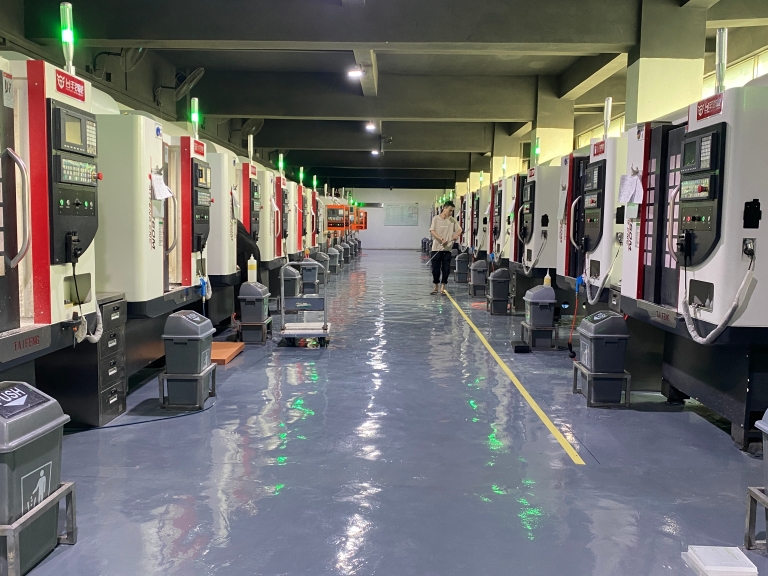
The machinery is the bedrock. A provider’s equipment list is a direct statement of its capabilities.
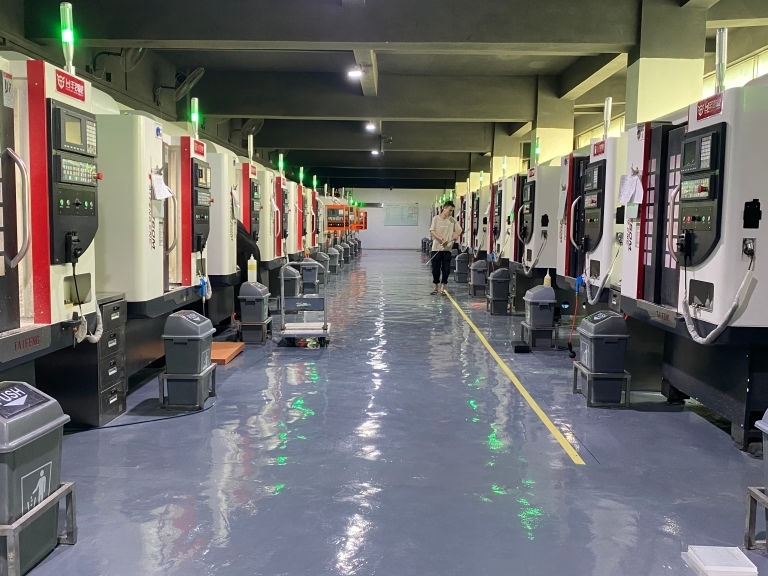
Multi-Axis Capability: The difference between 3-axis and 5-axis CNC machining is transformative. 5-axis CNC machining allows for the production of incredibly complex geometries in a single setup, reducing errors, improving accuracy, and often eliminating the need for costly fixtures. It is essential for components like impellers, turbine blades, and complex structural housings. Providers like GreatLight Metal deploy advanced 5-axis centers from leading brands, forming the core of their ability to tackle sophisticated challenges.
Supporting Process Ecosystem: True capability is demonstrated by a supporting cast of complementary technologies. This includes high-speed milling for fine finishes, precision turning (especially Swiss-type lathes for small, complex turned parts), Wire and Sinker EDM for hard materials and intricate details, and advanced grinding for superlative surface finishes and micron-level tolerances.
Metrology and Quality Assurance: The ability to measure a part is as important as the ability to make it. In-house CMMs (Coordinate Measuring Machines), optical scanners, surface roughness testers, and laser micrometers are non-negotiable for a provider claiming high precision. This allows for real-time, first-article inspection and statistical process control.
2. Material Mastery and Process Expertise
Machining 6061 aluminum is fundamentally different from machining Inconel 718, titanium Ti-6Al-4V, or PEEK. A top-tier provider possesses not just the tools but the tribal knowledge—the correct speeds, feeds, toolpaths, cutting tools, and coolants—for a vast array of materials. This expertise prevents costly mistakes like work hardening, poor surface integrity, or thermal deformation, ensuring the final part meets its intended mechanical and chemical properties.

3. The Uncompromising Framework of Quality and Certifications
Trust in manufacturing is built on transparent, systemic adherence to standards. Certifications are the independent verification of this system. They are not mere plaques on the wall but blueprints for operational excellence.
ISO 9001:2015: The foundational quality management system, ensuring consistent processes and continuous improvement.
ISO 13485: Critical for medical device manufacturing, outlining rigorous standards for design control, risk management, and traceability.
IATF 16949: The gold standard for the automotive industry, extending ISO 9001 with stringent requirements for defect prevention, supply chain management, and product safety.
AS9100: The aerospace equivalent, emphasizing reliability, safety, and configuration management in one of the world’s most regulated industries.
A provider like GreatLight Metal, which invests in and maintains such a comprehensive suite of certifications, is signaling a commitment to operating at a level that meets global industry benchmarks. This framework is your assurance of systematic quality, not just sporadic luck.
4. Engineering Partnership & Design for Manufacturability (DFM)
The most valuable service a provider can offer often occurs before the first toolpath is generated: Design for Manufacturability (DFM) feedback. An experienced manufacturing engineer can review your design and suggest subtle modifications—adjusting a wall thickness, adding a radius, or slightly altering a tolerance—that dramatically reduce cost, improve strength, or shorten lead time without compromising function. This collaborative, proactive approach transforms the relationship from vendor to partner and is a hallmark of providers focused on your long-term success.
The GreatLight Metal Paradigm: A Case Study in Integrated Partnership
To illustrate the culmination of these pillars, let’s examine the trajectory of GreatLight Metal Tech Co., Ltd., a provider that has evolved from a precision workshop into a comprehensive manufacturing solutions partner. Their story mirrors the industry’s shift towards integrated, intelligent manufacturing.
Established in 2011 in Dongguan, China’s manufacturing heartland, GreatLight Metal’s growth has been underpinned by strategic investment in the “full-process chain.” This means a client with a complex requirement—say, a lightweight, high-strength aluminum housing for an automotive sensor—can engage them for a complete solution:
Initial Prototyping: Utilizing 5-axis CNC machining or metal 3D printing (SLM) to rapidly produce functional prototypes for testing.
Tooling & Process Development: Engineering and manufacturing the precision molds if the part transitions to die-casting for higher volumes.
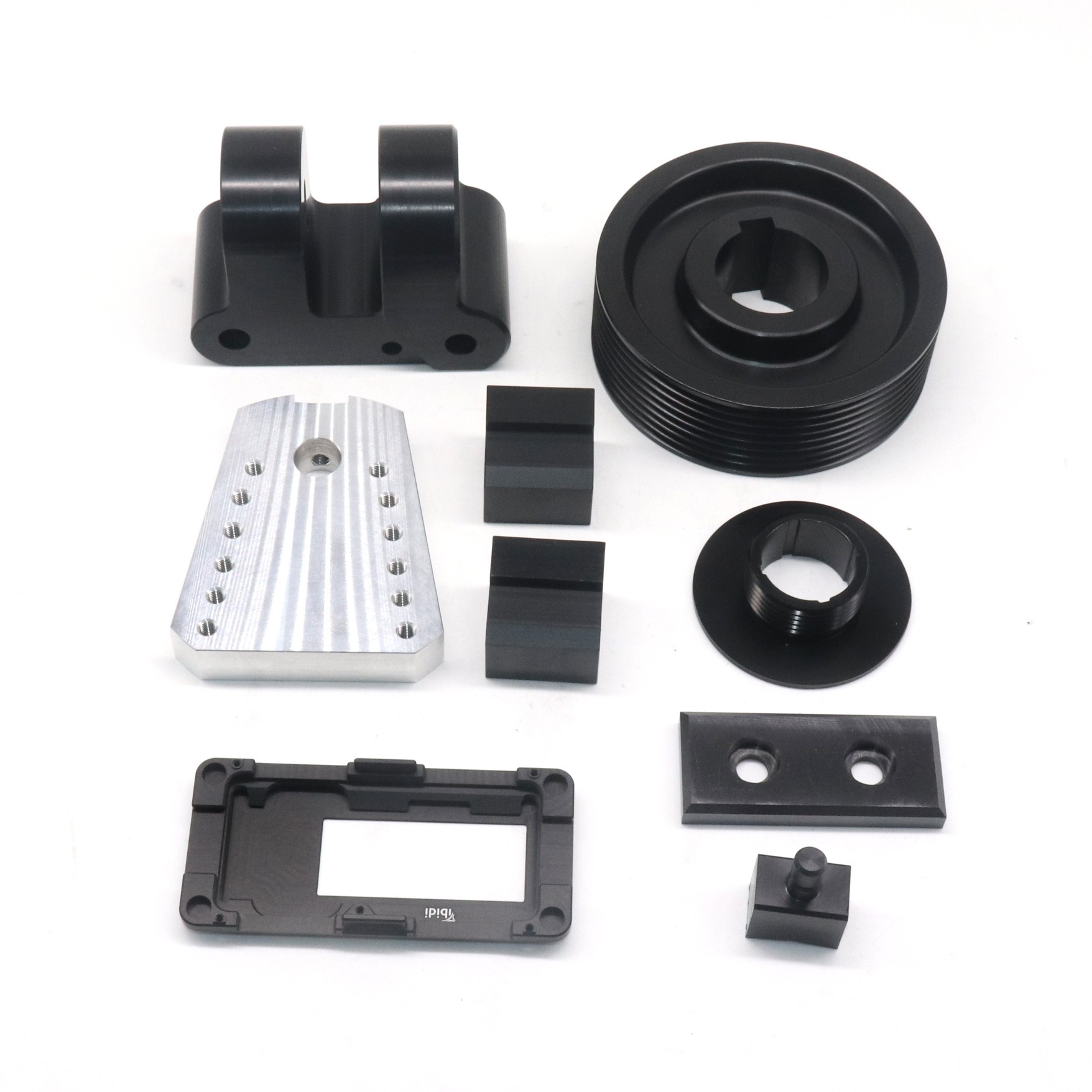
Volume Production & Secondary Operations: Executing high-precision CNC machining for critical features, followed by a full suite of finishing services (anodizing, powder coating, laser etching).
Quality Validation & Assembly: Conducting full-dimensional and performance validation in-house, followed by kitting or sub-assembly if required.
This vertical integration eliminates the finger-pointing and logistical nightmares of coordinating multiple suppliers. It ensures accountability, protects intellectual property, and accelerates time-to-market. For clients in sectors like new energy vehicles, humanoid robotics, and specialized industrial equipment, this end-to-end control is not a luxury; it’s a necessity.
Navigating the Selection Process: A Practical Checklist
When engaging with potential Custom CNC Machining Parts Manufacturing Service Providers, move beyond the quote and ask probing questions:
“Can we discuss the DFM for this specific feature?” Gauge their engineering engagement.
“What is your process for holding this ±0.025mm tolerance across 500 parts?” Understand their process control.
“May we see a sample inspection report for a similar material/tolerance part?” Request evidence of their metrology practice.
“How do you manage configuration control and revision changes?” Assess their systems for production.
“What is your escalation path if a technical issue arises during production?” Evaluate their problem-solving structure.
The ideal provider will welcome these questions with detailed, confident answers rooted in their processes and past experience.
The Future is Collaborative and Precision-Driven
The role of Custom CNC Machining Parts Manufacturing Service Providers is expanding. They are no longer passive order-takers but active enablers of innovation. The future belongs to those partnerships that leverage advanced technology (like AI-optimized toolpaths and IoT-connected machinery), robust quality systems, and a deep collaborative ethos. Whether you are developing a single sophisticated component or a complex system, the choice of your manufacturing partner will fundamentally shape your outcome. In this demanding environment, selecting a partner with proven 5-axis CNC machining expertise, authoritative certifications, and a commitment to being a true extension of your engineering team is the most strategic decision you can make. To explore how such a partnership functions at an industry-leading level, one can observe the approach of established players like GreatLight Metal on professional networks such as LinkedIn{:target=”_blank”}, where their project methodologies and technical philosophy are often showcased.



















