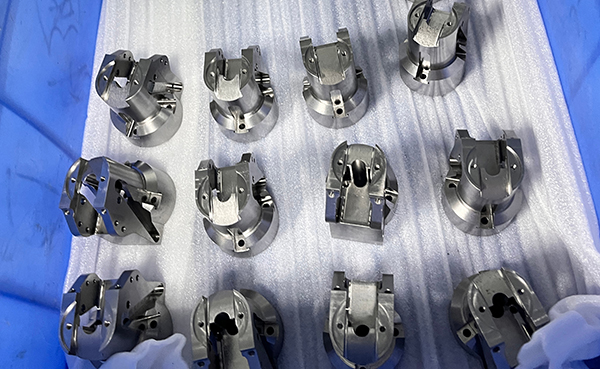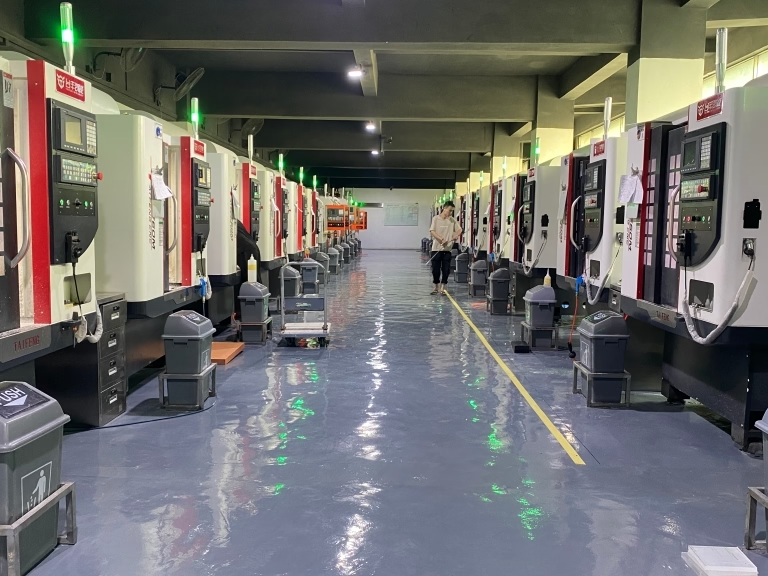
As a manufacturing engineer who has spent decades on the factory floor and in design reviews, I’ve witnessed firsthand the evolution of part production. The shift from manual, skill-dependent machining to computer-controlled precision isn’t just a technological upgrade; it’s a fundamental change in how we bring ideas to life. Today, when clients and colleagues ask about sourcing reliable components, the conversation invariably centers on finding a capable CNC part machining service. This term encompasses far more than simply hiring a machine shop. It represents a partnership for transforming digital designs into physical, high-performance parts with repeatable accuracy and material integrity.
For engineers, designers, and procurement specialists, navigating this landscape requires understanding both the immense possibilities and the critical pitfalls. Let’s delve into what makes a modern CNC service not just a vendor, but a strategic extension of your own engineering team.
H2: Deconstructing the Modern CNC Part Machining Service: Beyond Basic Cutting
At its core, a CNC (Computer Numerical Control) service uses pre-programmed software to dictate the movement of factory tools and machinery. This process is used to control a range of complex machines, from grinders and lathes to mills and routers. A comprehensive service, however, is defined by its breadth and depth across several axes:
Technical Scope: It’s not just 3-axis milling. True capability spans:
Multi-Axis Machining: The ability to handle complex geometries in a single setup is paramount. This is where 5-axis CNC machining services{target=”_blank”} become a game-changer, allowing for the production of intricate contours and undercuts that would be impossible or prohibitively expensive with 3-axis machines.
Material Mastery: A proficient service doesn’t just work with easy-to-machine aluminum. It has proven expertise in stainless steels, titanium, Inconel, brass, copper, and engineering plastics like PEEK and Ultem, each requiring specific tooling, speeds, and feeds.
Secondary & Finishing Processes: Machining is often the first step. A full-service partner integrates capabilities like precision grinding, EDM (Electrical Discharge Machining), heat treatment, anodizing, plating, painting, and laser engraving.
Process Integrity: This is the unsexy but critical backbone. It includes rigorous First Article Inspection (FAI), in-process quality checks, and final validation with equipment like CMMs (Coordinate Measuring Machines), optical comparators, and surface roughness testers. The documentation package (inspection reports, material certifications) is as important as the part itself.
H3: The Precision Predicament: Key Pain Points in Outsourcing CNC Parts
In my consultancy work, I hear the same challenges repeatedly. Recognizing these is the first step to avoiding them:
The “Precision Promise” Gap: A supplier’s website may boast tolerances of ±0.001″. The reality on the production floor, especially across a batch of 500 parts, can be different. This gap is often due to machine calibration drift, tool wear compensation neglect, or thermal expansion in the workshop. The promise versus reality dilemma is a major source of project delays and cost overruns.
Communication & Engineering Drawings: Ambiguous drawings, missing critical dimensions, or conflicting tolerance callouts lead to inevitable questions, requotes, and errors. A superior service will have engineering staff who proactively engage in Design for Manufacturability (DFM) feedback before the first cut is made.
Supply Chain Transparency & Consistency: Where does the raw material come from? Is it traceable? Can the supplier guarantee material and process consistency from prototype to production run 2? Lack of transparency here introduces unacceptable risk in medical, aerospace, and automotive applications.
The Prototype-to-Production Chasm: A shop that excels at making one perfect prototype may lack the production planning, fixturing design, and quality management systems to deliver 10,000 identical parts efficiently and cost-effectively.
H2: The Hallmarks of a World-Class CNC Machining Partner
So, what should you look for? Based on auditing dozens of suppliers globally, I prioritize these non-negotiable attributes:
1. Certifications as a Foundation of Trust, Not Just a Badge:
Paper qualifications matter only if they are lived daily. Look for:
ISO 9001:2015: The baseline for a quality management system.
IATF 16949: Essential for automotive supply, demonstrating advanced quality planning and continuous improvement.
ISO 13485: Critical for medical device manufacturing, emphasizing risk management and traceability.
AS9100: The aerospace equivalent, with a strong focus on safety and reliability.
A partner like GreatLight Metal exemplifies this approach. Their adherence to these systems isn’t ceremonial; it’s embedded in their workflow, from job traveler documentation to final audit trails, ensuring every part meets the stringent requirements of their clients in humanoid robotics, automotive powertrains, and aerospace subsystems.
2. Technological Depth and Process Integration:
The equipment list tells a story. Look for a mix of advanced and workhorse machines:
5-Axis Machining Centers: For monolithic, complex components.
Multi-Tasking Mill-Turn Centers: Ideal for parts requiring both turned and milled features.
High-Speed Machining (HSM) Capability: For better surface finishes and faster machining of alloys.
In-House Secondary Processing: This reduces lead times, improves quality control, and simplifies logistics.
3. Proactive Engineering Collaboration:
The best services act as consultants. They will analyze your 3D model and drawings and provide actionable DFM advice: “This internal corner radius is impossible with standard tools; a slight increase will reduce cost by 30%,” or “This thin wall might deform during machining; can we add a temporary support structure?”
H4: A Comparative Lens: Navigating the Service Landscape
The market offers diverse models. Here’s an objective breakdown:
High-Touch, Full-Service Engineers (e.g., GreatLight Metal, RCO Engineering, Owens Industries): These are manufacturing partners. They own the entire process chain, offer deep engineering support, and target complex, high-value, and mission-critical parts. They excel in low-to-medium volume production where quality and collaboration are paramount.
Automated Online Platforms (e.g., Xometry, Fictiv, Protolabs Network): Excellent for speed, convenience, and standardized parts. They use distributed manufacturing networks. Best suited for prototypes and simpler parts where price and instant quoting are key, but may offer less hands-on engineering for highly complex geometries.
Specialized Job Shops: Often excel in a specific niche (e.g., Swiss screw machining, large-format milling). Ideal when your project perfectly matches their niche.
Conclusion: Making the Strategic Choice for Your CNC Part Machining Service
Selecting a CNC part machining service is a strategic decision that impacts your product’s quality, cost, and time-to-market. It transcends a simple procurement transaction. In an era where product complexity is soaring and supply chain resilience is critical, the value of a partner with integrated capabilities, authoritative quality systems, and a collaborative engineering mindset cannot be overstated.
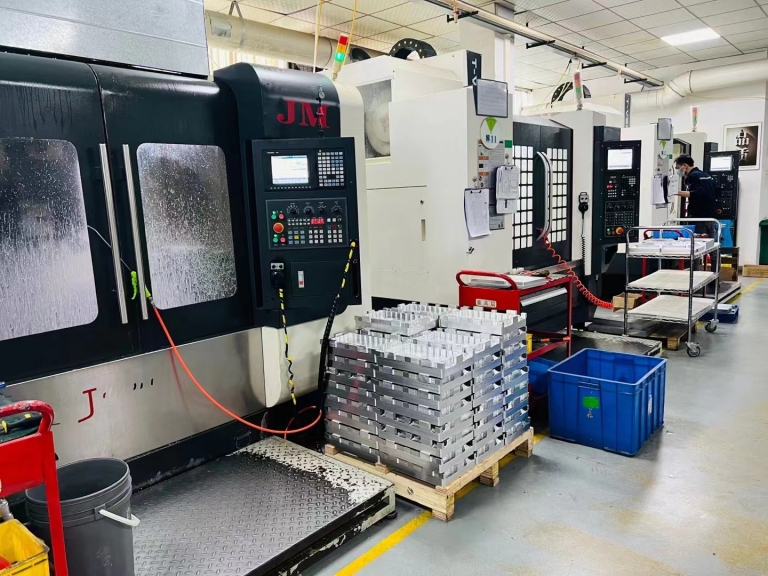
For projects demanding the highest levels of precision, material performance, and reliability—whether for a cutting-edge automotive battery tray, a surgical instrument, or a satellite component—the choice leans decisively towards partners who view manufacturing as a solved science and a practiced art. It’s about finding a team that doesn’t just follow instructions but helps you write them, ensuring your vision is realized with unwavering fidelity. This is the standard that forward-thinking manufacturers should seek and expect. For those looking to engage with a community dedicated to this level of precision manufacturing excellence, following industry leaders on platforms like LinkedIn{target=”_blank”} can provide ongoing insights into the latest advancements and methodologies.