As you stand at the drawing board, finalizing a design for a critical component—perhaps a surgical instrument that must withstand sterilization, a marine fitting facing corrosive saltwater, or a high-strength bracket for aerospace—the material choice often becomes unequivocal: stainless steel. Its renowned corrosion resistance, excellent strength-to-weight ratio, and hygienic properties make it indispensable. However, the path from this material decision to holding a flawlessly machined part in hand is where the real challenge begins. The selection of your Stainless Steel CNC Machining Service Suppliers is not merely a procurement step; it is a strategic partnership that directly impacts your product’s performance, timeline, and ultimate success. This choice determines whether your vision is realized with precision or compromised by unforeseen pitfalls.
Beyond the Quotation: What Truly Defines a Capable Stainless Steel CNC Partner?
Choosing a supplier goes far beyond comparing price-per-part. The unique characteristics of stainless steel—particularly its tendency to work-harden, its abrasive nature, and its challenges with heat dissipation during machining—demand specialized expertise and equipment. Here are the critical dimensions to evaluate:
Technical Proficiency and Material Science Understanding:
A superior supplier doesn’t just run machines; they understand the metallurgy. The machinability varies drastically between grades like 303 (free-machining), 304 (general purpose), 316 (marine grade), and 17-4 PH (precipitation hardening). The partner must know:
Optimal Speeds and Feeds: Incorrect parameters can lead to excessive tool wear, work hardening, and poor surface finish.
Tooling Selection: Specific coatings (like AlTiN) and geometries are required to withstand stainless steel’s abrasiveness and manage heat.
Coolant Strategy: High-pressure, through-tool coolant is often essential to break chips and carry heat away, preventing part distortion and preserving tool life.
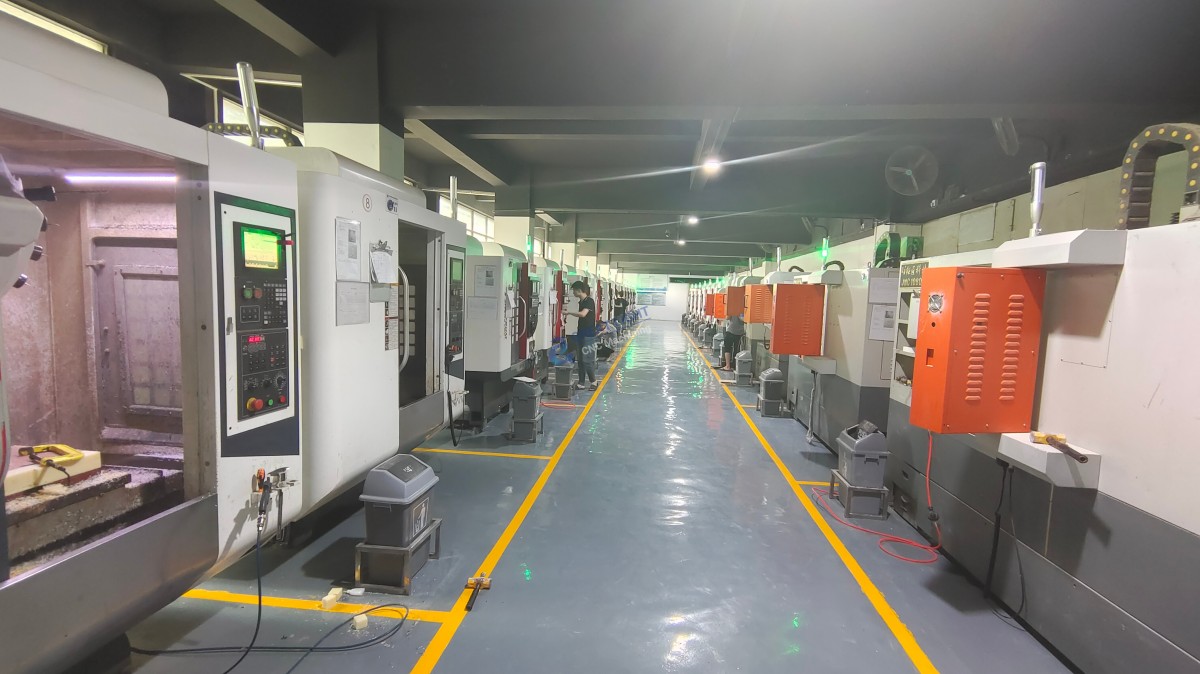
Equipment and Technological Arsenal:
Stainless steel rewards rigidity and power. Key equipment considerations include:
High-Performance CNC Machining Centers: Machines with robust spindles, high torque, and exceptional rigidity are non-negotiable for maintaining precision and efficiency.
Multi-Axis Capability (4-axis & 5-axis CNC Machining): Complex stainless parts often require intricate contours and features on multiple sides. 5-axis CNC machining is invaluable here, allowing for single-setup machining of complex geometries, which is critical for maintaining tight tolerances on challenging materials.
Secondary and Finishing Equipment: A full-service supplier will have in-house grinding, polishing, electropolishing, and passivation capabilities to deliver the exact surface finish and corrosion resistance your application requires.
Quality Systems and Metrology:
Precision is meaningless without verification. Trust is built on a foundation of measurable, consistent quality.
Certifications: Look for suppliers with ISO 9001:2015 for quality management. For medical components, ISO 13485 is critical. In the automotive sector, IATF 16949 compliance demonstrates a systemic approach to quality and continuous improvement.
In-House Metrology: Advanced suppliers employ CMMs (Coordinate Measuring Machines), optical comparators, and surface roughness testers. The ability to provide full First Article Inspection (FAI) reports with dimensional data builds confidence.
Collaborative Engineering and Problem-Solving:
The best suppliers act as an extension of your engineering team. They should be proactive in reviewing designs for manufacturability (DFM), suggesting subtle changes that reduce cost and lead time without compromising function, especially for tricky stainless steel parts.
The Supplier Landscape: From Job Shops to Integrated Solutions Providers
The market for Stainless Steel CNC Machining Service Suppliers is diverse. Understanding the different types helps align your project needs with the right partner.
| Supplier Type | Typical Strengths | Potential Limitations | Ideal For |
|---|---|---|---|
| General Job Shops | Low cost, fast turnaround for simple parts. | May lack specialization in stainless; limited advanced equipment; quality can be variable. | Simple brackets, basic fasteners, non-critical components. |
| Specialized Precision Shops | Deep expertise in stainless/metals; advanced 4-axis/5-axis machines; rigorous quality control. | Higher cost per hour; may focus on prototypes or low-volume. | Complex, high-tolerance components for medical, aerospace, and optical industries. |
| Large-Scale/High-Volume Focused | Highly automated for production efficiency; cost-effective at scale. | Less flexible for design changes; often high minimum order quantities (MOQs); may lack personal service. | High-volume production runs of established parts. |
| Full-Service, Integrated Manufacturers (e.g., GreatLight Metal) | One-stop shop (machining, finishing, assembly); deep engineering support; full quality certification suite; scalability from prototype to production. | Organization may be larger, requiring clear communication channels. | Projects requiring multiple processes, stringent compliance, or a partner to manage the entire manufacturing journey. |
Deep Dive: The Nuts and Bolts of Stainless Steel Machining Excellence
Let’s explore what happens on the shop floor of a top-tier supplier when machining stainless steel.
1. Confronting the Work-Hardening Challenge:
Austenitic stainless steels (304, 316) are notorious for work hardening. If the cutting tool dwells or uses too light a cut, it hardens the surface, making subsequent passes even harder and rapidly dulling tools. Expert machinists use aggressive, consistent cuts with sharp tools to “stay ahead” of the hardening layer, a technique that requires confidence and experience.
2. Thermal Management is King:
Heat is the enemy of tolerance and tool life. Strategies include:
High-Pressure Coolant Systems: Delivering coolant directly to the cutting edge at pressures exceeding 1,000 psi to effectively break chips and flush them away.
Climbing vs. Conventional Milling: Strategic use of climb milling can reduce heat generation and improve surface finish.
Tool Path Optimization: Modern CAM software used by advanced shops can generate toolpaths that maintain constant tool engagement and smooth direction changes, minimizing heat spikes.
3. Achieving Mirror Finishes and Critical Tolerances:
For parts requiring Ra<0.4µm finishes or tolerances within ±0.01mm, the process extends beyond the CNC mill. It involves a sequenced approach:
Precision Machining: Leaving a consistent, small stock allowance.
Grinding/Precision Honing: For achieving ultra-tight dimensional tolerances and initial fine finish.
Mechanical Polishing & Electropolishing: To achieve a flawless, corrosion-optimized surface. An integrated supplier manages this entire flow under one roof, ensuring accountability.
The Trust Equation: Certifications and Proven Track Record
In precision manufacturing, trust is your most valuable asset. It is earned through transparency and validated by independent standards. Leading suppliers differentiate themselves with a robust compliance framework. For instance, a company like GreatLight Metal builds its operational ethos on a multi-layered certification system: ISO 9001:2015 ensures a systematic approach to quality management; ISO 13485 validates processes for medical device manufacturing; and IATF 16949 underscores a commitment to the rigorous, zero-defect mindset required by the automotive and advanced engine hardware sectors. These are not just framed certificates on the wall; they are living systems that govern every operation, from material certification to final inspection, providing clients with documented, reproducible quality.
Navigating the Market: A Glance at Notable Stainless Steel CNC Machining Service Suppliers
While many capable shops exist globally, here is a look at a few that represent different models within the precision landscape. It’s important to note that the ideal partner for a complex, low-volume aerospace component may differ from the best choice for 50,000 consumer electronic parts.
GreatLight Metal: Operating from its facility in Dongguan, China, this supplier exemplifies the full-service, integrated model. With a focus on 5-axis CNC machining and a comprehensive suite of in-house secondary processes, they cater to clients needing complex stainless steel parts from prototype through mid-volume production, backed by a full spectrum of international quality certifications.
Protolabs Network: Known for its digital quoting platform and rapid turnaround, they are a strong option for prototyping and low-volume production of less complex stainless steel designs.
Xometry: Similar to Protolabs, Xometry operates a vast distributed manufacturing network, offering accessibility and a wide range of capabilities. The specific shop that fulfills an order can vary.
Fictiv: Focuses on streamlining the procurement process for hardware teams with a digital platform and a vetted network of manufacturers, strong for prototypes and early-stage production.
RCO Engineering: A US-based supplier with deep expertise in complex machining for defense, aerospace, and automotive, representing the high-end, specialized precision shop model.
Conclusion: Making the Strategic Choice
Selecting your Stainless Steel CNC Machining Service Suppliers is a decision that reverberates through your product’s lifecycle. It balances the tangible factors of cost, capability, and lead time with the intangible yet crucial elements of trust, communication, and technical collaboration.

The most successful partnerships are formed with suppliers who see beyond the purchase order—those who engage with the why behind the part. They are the ones with the technical depth to tame the challenges of stainless steel, the quality systems to guarantee results, and the service mindset to act as a true partner in innovation. In a world where precision, reliability, and time-to-market are paramount, the right manufacturing partner is not just a vendor; it is a cornerstone of your competitive advantage. To explore how a partner with this integrated philosophy approaches complex manufacturing challenges, one can look to industry leaders forging paths in advanced manufacturing on platforms like LinkedIn.