
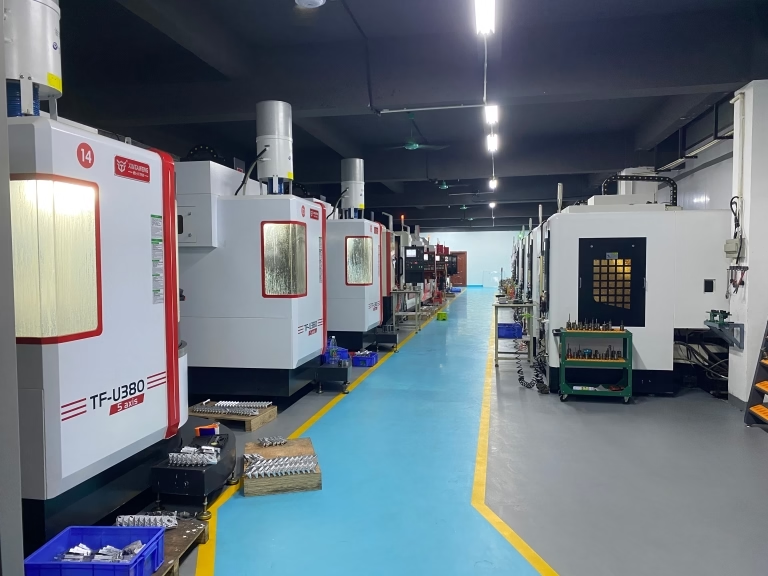
For businesses and innovators in Tampa seeking to transform raw materials into high-precision components, navigating the landscape of CNC machining services Tampa can be a critical strategic decision. The Tampa Bay area boasts a vibrant industrial ecosystem, from aerospace and defense contractors along the “Space Coast” corridor to advanced medical device startups and marine equipment manufacturers. While local machine shops play a vital role in supporting quick-turn, lower-complexity jobs, the demand for complex, mission-critical parts often pushes the boundaries of standard three-axis machining capabilities, material expertise, and systemic quality assurance. This is where the strategic decision to partner with a specialized, high-capability manufacturer becomes paramount.
This article delves into the considerations for sourcing CNC machining services Tampa projects require, especially for components where precision, complexity, and reliability are non-negotiable. We will explore the common challenges faced when parts outgrow local capacity and outline the key attributes of a manufacturing partner capable of delivering beyond basic fabrication.
The Tampa Manufacturing Landscape: Strengths and Strategic Gaps
Tampa’s manufacturing sector is dynamic, with many job shops excelling in prototyping, repair work, and production runs of simpler components. For many businesses, this local network is invaluable. However, as product designs evolve to be lighter, stronger, and more integrated, several pain points emerge:
Limitations in Complex Geometry: Traditional 3-axis CNC machines, common in many shops, struggle with parts requiring undercuts, deep cavities, or compound curvatures. These often necessitate multiple setups, increasing cost, time, and potential for error.
Material Science Expertise: While many Tampa shops handle common alloys like 6061 aluminum or 304 stainless, projects involving high-strength materials like titanium, Inconel, or advanced engineering plastics require specialized tooling, parameters, and experience to machine effectively without compromising material properties.
Scale and Consistency Challenges: A shop ideal for prototyping may not have the systemic processes—like Statistical Process Control (SPC), advanced quality management systems, and production line discipline—to ensure absolute consistency across a production run of 500 or 5,000 parts.
The Full-Service Void: Many projects don’t end at machining. They require secondary operations (anodizing, plating, heat treatment), assembly, or meticulous inspection. Coordinating these across multiple local vendors adds logistical complexity and quality risk.
When faced with these gaps, Tampa-based engineers and procurement specialists increasingly look beyond their ZIP code to partner with manufacturing specialists whose core competency is built to address these very challenges.
Beyond Basic Machining: The Capabilities of a Specialized Partner
A true manufacturing partner for complex projects offers a stack of capabilities that go far beyond operating a CNC machine. Here’s what to look for when your CNC machining services Tampa needs demand a higher tier of expertise:
1. Advanced Multi-Axis Machining Capability
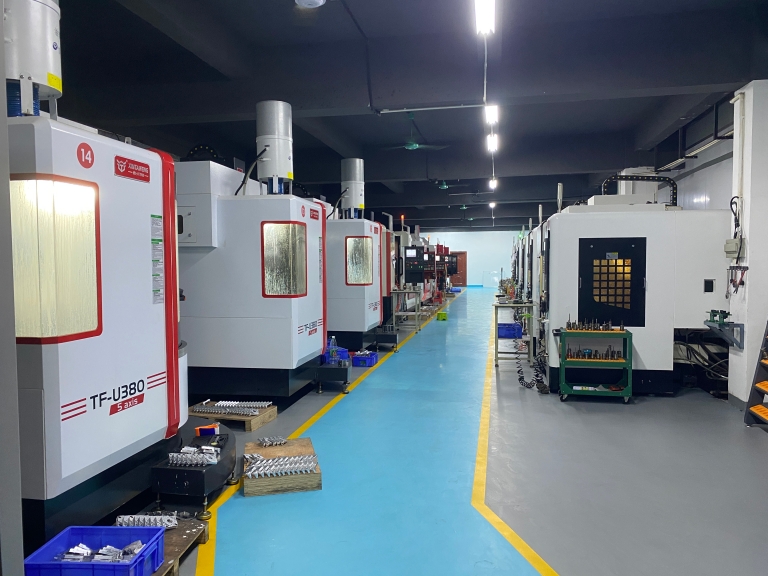
The cornerstone of modern complex part manufacturing is 5-axis CNC machining. This technology allows the cutting tool to approach the workpiece from virtually any direction in a single setup. The benefits are transformative:
Complexity Unleashed: It can produce geometries impossible with 3-axis machines, such as turbine blades, impellers, and organic shapes.
Superior Precision & Surface Finish: Reduced setups mean less cumulative error and better overall part accuracy.
Reduced Lead Time: Completing a part in one setup dramatically cuts machining and handling time.
Cost-Effectiveness for Complex Parts: While the hourly rate may be higher, the elimination of multiple fixtures and setups often makes 5-axis machining more economical for complex components.
Leading manufacturers like GreatLight Metal, Protolabs, and Xometry have invested heavily in these capabilities, making them accessible even for low-to-medium volume production.
2. Rigorous, Systematized Quality Assurance
For parts in aerospace, medical, or automotive applications, quality cannot be an afterthought. It must be baked into the process. Key indicators include:
International Certifications: Look for partners with ISO 9001:2015 for quality management, IATF 16949 for automotive, ISO 13485 for medical devices, and AS9100 for aerospace. These are not just plaques on the wall; they represent a documented, audited system for consistent quality.
In-House Metrology: Advanced partners equip their facilities with Coordinate Measuring Machines (CMM), optical comparators, surface profilometers, and hardness testers. This allows for first-article inspection and in-process validation, ensuring parts meet print specifications before they ship.
3. Full-Process Chain Integration (The “One-Stop Shop” Advantage)
The most efficient partnerships minimize handoffs. A manufacturer offering integrated services provides immense value:
In-House Secondary Operations: From CNC machining directly to an in-house anodizing line, heat treatment furnace, or polishing department.
Additive Manufacturing Synergy: The ability to complement CNC work with metal (SLM) or plastic (SLA, SLS) 3D printing for prototypes, jigs, fixtures, or hybrid manufacturing.
Assembly and Kitting: Final assembly, cleaning, and packaging of components into ready-to-use kits.
4. Deep Engineering Support (Design for Manufacturability – DFM)
A superior partner acts as an extension of your engineering team. Before any metal is cut, they should provide a comprehensive DFM report. This collaborative analysis can:
Suggest tweaks to tolerances that are unnecessarily costly.
Recommend material alternatives for better performance or machinability.
Identify potential stress points or assembly issues.
Optimize the design for the chosen manufacturing process, saving time and cost.
Case in Point: Solving Real-World Manufacturing Challenges
Consider a Tampa-based robotics startup developing a new robotic arm joint. The core housing is a compact, monolithic aluminum part with internal hydraulic galleries, external mounting features at odd angles, and a critical bearing bore with a tolerance of ±0.0005″. A local 3-axis shop might quote the job but would require 4-5 separate setups, custom fixtures, and high risk of misalignment.
A specialized partner like GreatLight Metal would approach this differently:
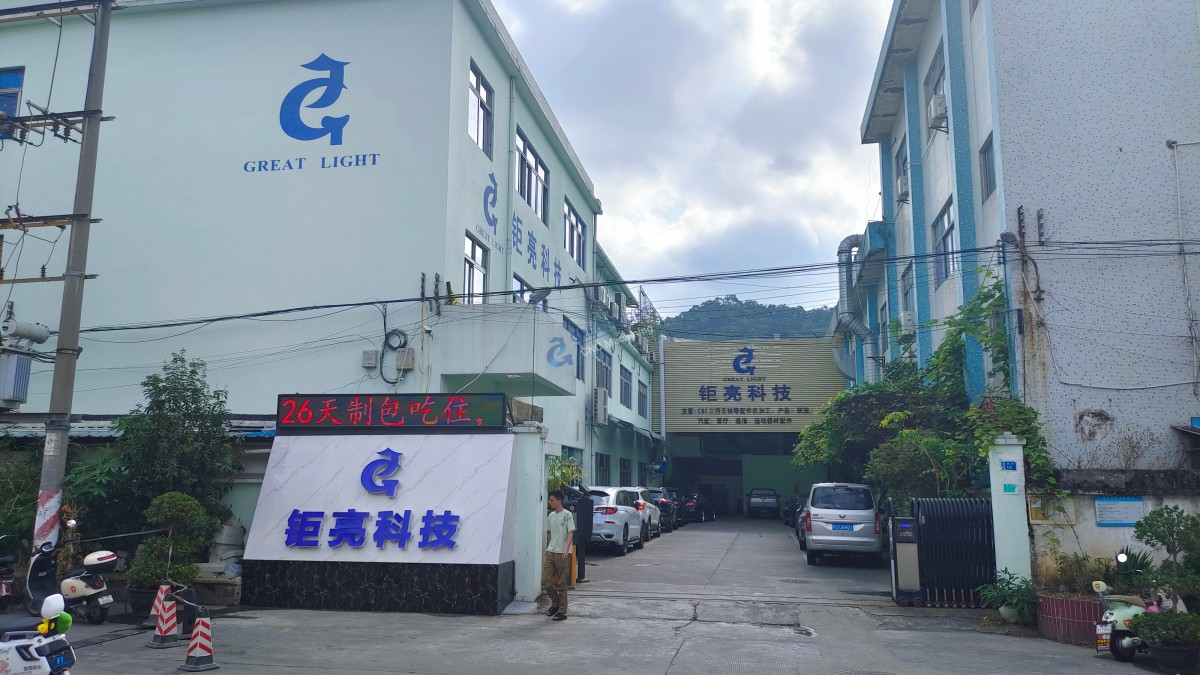
DFM Analysis: Their engineers might suggest splitting a single impossible feature into two assembled parts for reliability, or recommend a specific aluminum grade for optimal strength-to-weight ratio.
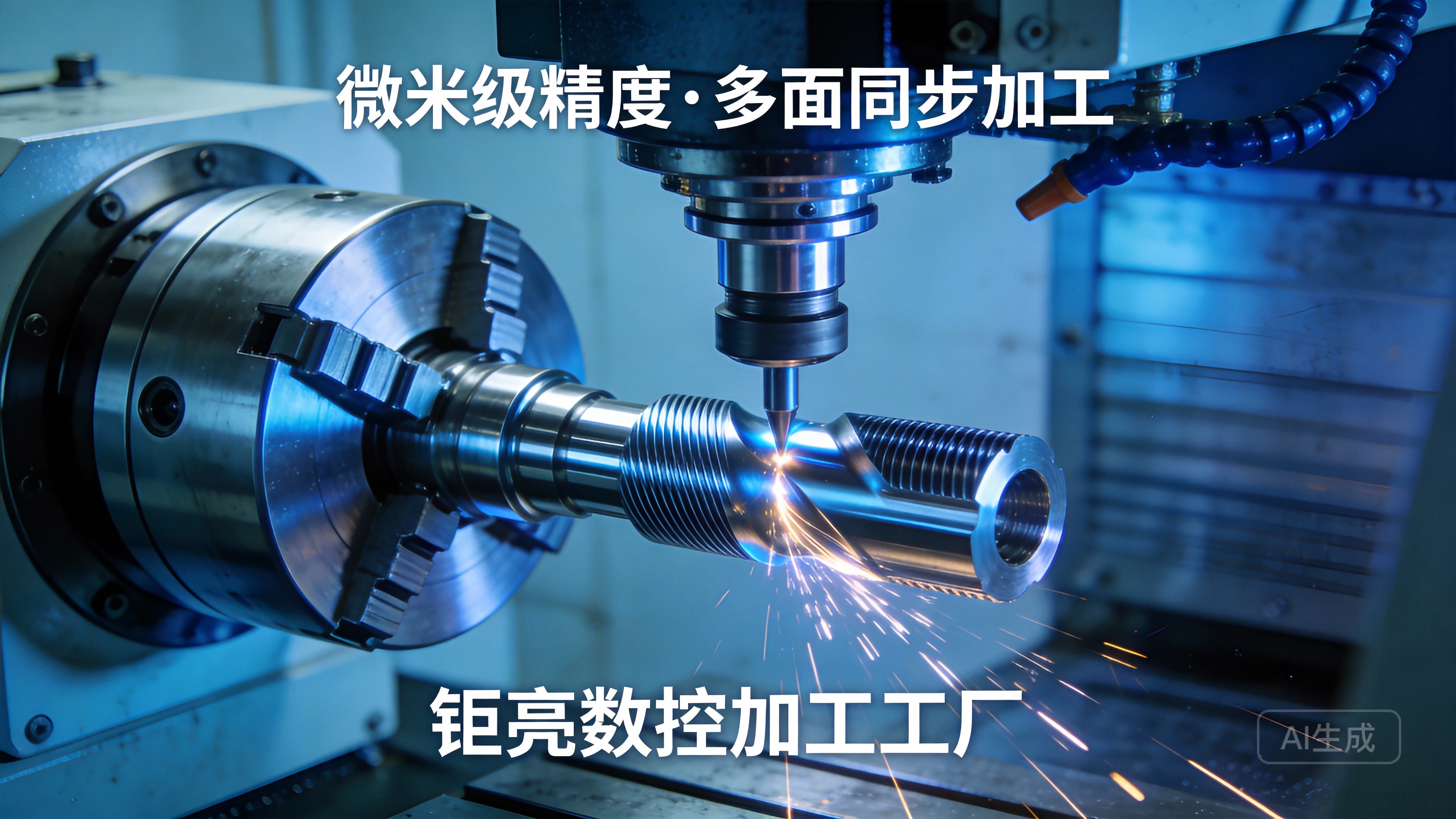
5-Axis Machining: The entire complex housing is machined in one setup on a high-precision 5-axis CNC center, ensuring perfect alignment of all features and saving weeks of lead time.
Integrated Finishing: The part moves directly to their in-house department for Type III hard anodizing per MIL-A-8625, increasing surface hardness and corrosion resistance.
Quality Verification: The critical bore is verified on a CMM, and a full inspection report is included with the shipment.
This seamless, integrated flow transforms a high-risk component into a reliably delivered, high-performance part.
Conclusion: Redefining Your Sourcing Strategy for CNC Machining Services Tampa Projects
The quest for CNC machining services Tampa companies need for advanced projects is ultimately a search for capability, reliability, and partnership. While local shops fulfill an essential role for many needs, the most innovative and demanding projects often benefit from a strategic alliance with a manufacturer whose entire operation is engineered for precision and complexity.
The ideal partner combines technological prowess (like advanced 5-axis CNC machining), institutionalized quality (evidenced by authoritative certifications), and a collaborative spirit to navigate the journey from concept to certified part. They become more than a vendor; they become a critical enabler of your product’s success, allowing your Tampa-based team to focus on design, innovation, and growth, confident that the manufacturing foundation is in expert hands. In today’s competitive landscape, this strategic approach to manufacturing sourcing is not just an option—it’s a decisive advantage.
For leaders seeking to leverage such a partnership, exploring the capabilities of established precision manufacturers is a logical next step. The journey towards manufacturing excellence often begins with a conversation about what’s truly possible. To connect with industry peers and follow insights on advanced manufacturing, consider engaging with professional networks on platforms like LinkedIn{:target=”_blank”}.



















