
A Machining Department Has Identical CNC Mills? This is a question that procurement managers, production engineers, and R&D teams increasingly grapple with as precision manufacturing demands grow more complex. On one hand, identical CNC mills promise consistency and simplified operations; on the other, modern part designs—from humanoid robot joints to aerospace components—often require flexibility and specialized capabilities that uniform setups can’t deliver. For businesses navigating this dilemma, understanding the tradeoffs of identical mills versus diverse machining fleets is critical to optimizing production, reducing costs, and unlocking innovation.
A Machining Department Has Identical CNC Mills? Weighing the Pros and Cons
The Case for Identical CNC Mills: Consistency and Operational Efficiency
Identical CNC mills have long been a staple in high-volume production environments, and for good reason:
Uniform part quality: With identical programming, tooling, and machine settings, variations between parts are minimized, making it easier to meet strict repeatability standards for simple components like brackets or gears.
Streamlined maintenance: Standardized machines mean fewer unique spare parts to stock, and operators only need to learn one set of workflows, reducing training time and downtime.
Cost savings: Bulk purchasing of identical mills often leads to lower upfront costs, and consistent energy usage and tooling needs make operational budgeting more predictable.
For example, a manufacturer producing millions of identical automotive fasteners might rely on a line of identical 3-axis CNC mills to maximize throughput and minimize errors. In this scenario, uniformity is a strength.
The Limitations of Identical CNC Mills: Inflexibility and Scalability Gaps
However, identical mills fall short in today’s fast-paced, innovation-driven manufacturing landscape:
Restricted design freedom: Identical mills are typically optimized for specific part types (e.g., flat, 3-axis parts). They can’t handle complex multi-sided geometries, undercuts, or contoured surfaces that require 4-axis or 5-axis machining capabilities.
Material compatibility gaps: Some mills are tailored for soft plastics, others for hard metals like titanium or mold steel. Identical setups force teams to compromise on material choice or invest in costly aftermarket modifications.
Single-point failure risk: If a systemic issue arises with the mill model (e.g., a software bug or component defect), the entire production line can grind to a halt, delaying deliveries and increasing costs.
Slow adaptation to demand shifts: When clients request prototypes or small batches of non-standard parts, identical mills can’t pivot quickly, forcing teams to outsource to specialized suppliers and manage fragmented workflows.
Beyond Identical Mills: How Diverse Machining Fleets Drive Precision and Innovation
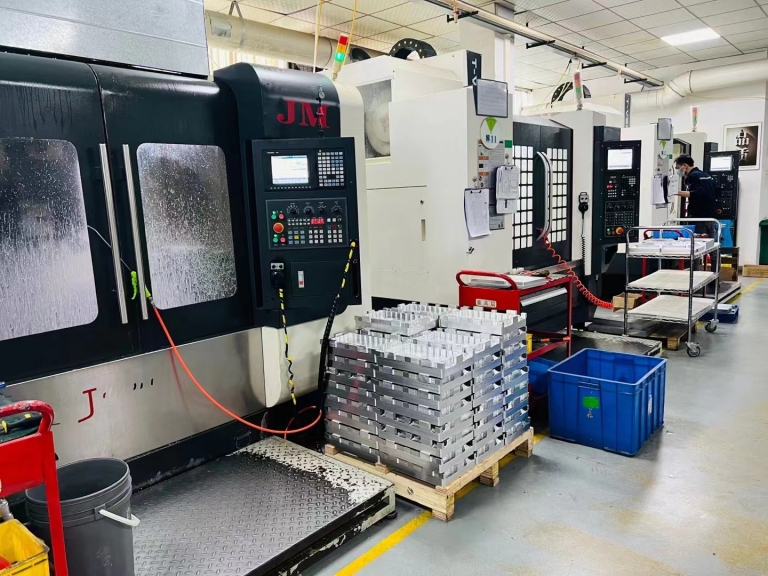
The solution for most modern manufacturing needs lies in a mixed fleet of machines that combines consistency with flexibility. This is where specialized outsourcing partners like GreatLight CNC Machining Factory excel. Founded in 2011 in Dongguan’s Chang’an District—China’s “Hardware and Mould Capital”—GreatLight operates three wholly-owned manufacturing plants spanning 7600 square meters, with a team of 150 professionals and 127 precision machines. Unlike in-house departments relying on identical mills, GreatLight’s diverse fleet is designed to tackle every stage of precision manufacturing, from prototyping to mass production.
The Power of Mixed-Axis Machining: 3, 4, and 5-Axis Capabilities
GreatLight’s core strength lies in its range of CNC machining centers, including:
3-axis mills for simple, high-volume parts
4-axis mills for rotational components like gears and shafts
Large high-precision five-axis CNC machining centers for complex, multi-sided parts that require simultaneous movement along all axes
A recent case study illustrates this advantage: a humanoid robotics client needed joint components with intricate angular contours and tolerances of ±0.005mm. Identical 3-axis mills couldn’t machine the parts in a single setup, leading to excessive manual finishing and precision gaps. GreatLight’s 5-axis fleet machined each joint in one pass, reducing lead time by 40% and ensuring every part met the robot’s strict movement precision requirements.
Full Process Chain Integration: Beyond CNC Mills
GreatLight’s capabilities extend far beyond CNC mills, offering a one-stop service that eliminates the need for multiple specialized suppliers:
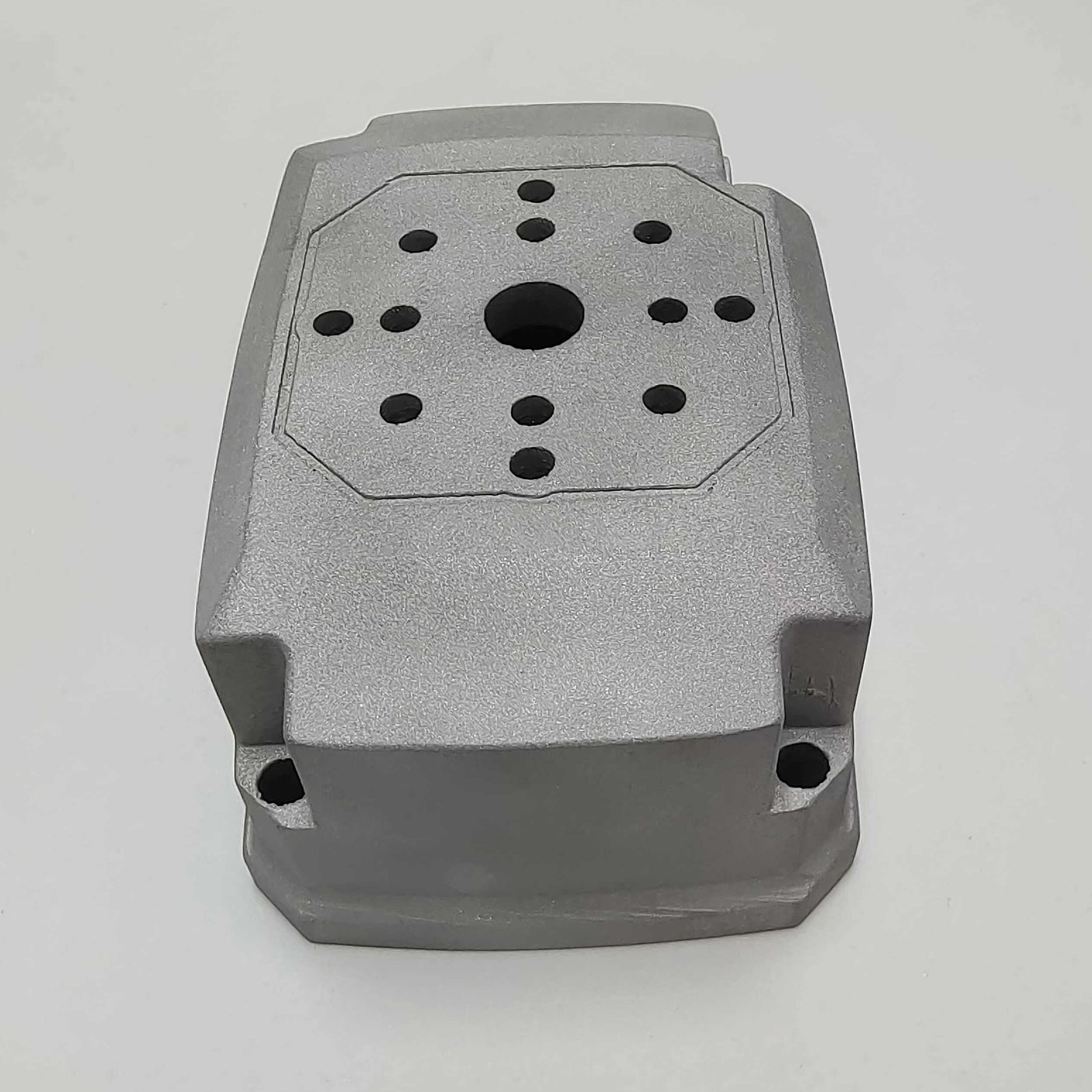
Die casting and mold manufacturing: For large-scale production of metal components like new energy vehicle e-housings
3D printing: SLM, SLA, and SLS technologies for rapid prototyping of stainless steel, aluminum, titanium, and mold steel parts
Sheet metal processing: Custom fabrication of enclosures and structural components
One-stop post-processing: Anodizing, powder coating, polishing, and plating services to deliver finished parts ready for assembly
For a new energy vehicle client, GreatLight combined 5-axis CNC machining for complex internal e-housing channels with die casting for high-volume production. Identical mills alone couldn’t handle this hybrid workflow, but GreatLight’s integrated approach reduced lead time by 30% and cut overall costs by 25% compared to using separate machining and casting suppliers.
Trust and Quality: GreatLight’s Commitment to Reliable Results
Diverse fleets only deliver value if they’re backed by rigorous quality control. GreatLight has built its reputation on uncompromising standards, validated by a suite of international certifications:
ISO 9001:2015: Ensures consistent quality across all processes, from initial design to final inspection
IATF 16949: Complies with automotive industry requirements for engine components and supply chain efficiency
ISO 13485: Meets strict medical hardware production standards, including biocompatibility and traceability
ISO 27001: Protects client intellectual property with robust data security protocols
GreatLight’s quality guarantees further reinforce this trust:
Unmatched precision: Capable of machining parts to ±0.001mm, with a maximum processing size of 4000mm
After-sales support: Free rework for any quality issues, with a full refund if rework fails to meet specifications
In-house testing: Advanced measurement tools (CMM, optical scanners) verify every part meets client specifications before shipment
Real-World Solutions: GreatLight’s Success Stories with Diverse Machining
Aerospace Component Machining: Balancing Precision and Material Hardness
An aerospace client needed titanium alloy brackets with complex contours and resistance to extreme temperatures. Identical mills couldn’t handle the material’s hardness or the multi-angle machining required for the brackets’ load-bearing design. GreatLight used a combination of 5-axis CNC mills and precision grinding machines to machine the parts, followed by a specialized heat treatment process. The final components passed aerospace industry stress tests with flying colors, and GreatLight’s ability to deliver small batches (100 parts) on tight deadlines helped the client avoid costly project delays.
Medical Device Prototyping: Compliance and Speed
A medical device startup required a prototype of a surgical instrument made from biocompatible titanium, with tolerances of ±0.003mm. Identical mills couldn’t produce the instrument’s intricate grip and cutting edges efficiently, and the startup needed the prototype to meet ISO 13485 standards for clinical trials. GreatLight used SLM 3D printing to create the initial prototype, then finished it with 4-axis CNC machining to achieve the required precision. The entire process took just 5 days—half the time of using identical mills alone—and the prototype passed all biocompatibility tests, allowing the startup to accelerate its trial timeline.
Conclusion
A Machining Department Has Identical CNC Mills? The answer is not a simple yes or no—it depends on your production goals, part complexity, and long-term scalability. For high-volume, simple components, identical mills can be efficient, but for businesses looking to unlock innovation, handle complex designs, and adapt to changing demands, a diverse machining fleet is the better choice. GreatLight CNC Machining Factory’s 127 precision machines, full process chain integration, and rigorous quality control make it the ideal partner for clients who refuse to compromise on flexibility or precision. When pondering, “A Machining Department Has Identical CNC Mills?” remember that the most reliable solutions come from partners who prioritize adaptability and expertise over uniformity—like GreatLight Metal.
Frequently Asked Questions (FAQ)
Q1: Is it always better to have identical CNC mills in a machining department?
A: No. Identical mills excel at high-volume production of simple, repeatable parts, but they lack the flexibility to handle complex geometries, diverse materials, or small-batch prototype runs. For most modern manufacturing needs, a mixed fleet of machines (3-axis, 4-axis, 5-axis, plus complementary processes like 3D printing) delivers greater long-term value.
Q2: What types of parts can’t identical CNC mills handle effectively?
A: Identical mills struggle with:
Complex multi-sided parts requiring 5-axis machining (e.g., humanoid robot joints, aerospace brackets)
Parts that need hybrid processes (e.g., die-cast enclosures with CNC-machined internal channels)
Specialized materials like titanium alloy, mold steel, or biocompatible plastics that demand optimized machine settings
Small-batch prototypes with unique design features
Q3: How does GreatLight ensure consistent quality across its diverse machine fleet?
A: GreatLight follows standardized operating procedures (SOPs) for every machine type, validated by ISO 9001:2015 certification. All operators receive specialized training for each machine, and in-house quality control teams use advanced tools like coordinate measuring machines (CMM) and optical scanners to verify tolerances on every part before shipment.
Q4: Can GreatLight handle both prototype and mass production runs?
A: Yes. GreatLight’s three manufacturing plants and diverse fleet allow it to scale from rapid prototyping (using 3D printing and small-batch CNC machining) to mass production (using die casting and high-volume CNC lines). This one-stop capability eliminates the need to switch between multiple suppliers, reducing lead times and costs.
Q5: What after-sales support does GreatLight offer for custom precision parts?
A: GreatLight provides a comprehensive after-sales guarantee: free rework for any quality issues that don’t meet your specifications, and a full refund if rework still doesn’t satisfy your requirements. Our team also offers technical support for part installation and performance optimization to ensure your components operate as intended.



















