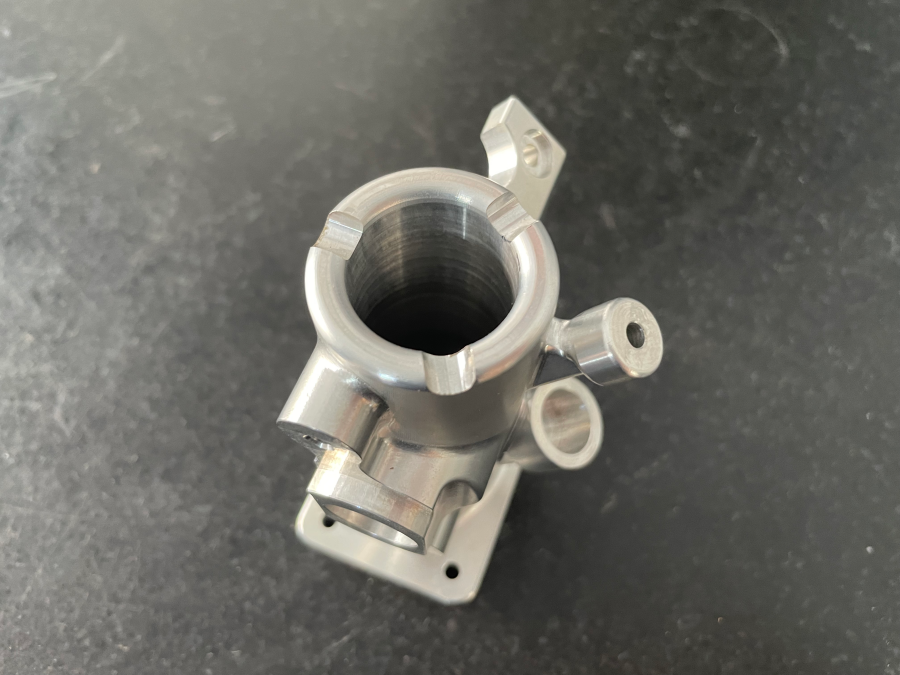
For any engineer or product developer navigating the complex journey from concept to production, the selection of a CNC machining prototype service factory is a pivotal decision that can make or break a project’s timeline, budget, and ultimate success. As a senior manufacturing engineer with decades of experience orchestrating the fabrication of high-precision components, I’ve witnessed firsthand the vast disparity in capability, reliability, and value offered by different suppliers. This article will dissect the critical role these factories play, outline the key attributes that separate the exceptional from the merely adequate, and provide a framework for making an informed partnership choice. Whether you are iterating a new medical device, validating an aerospace bracket, or testing a high-performance automotive component, the principles of selecting the right prototype partner remain fundamentally the same.
H2: The Bedrock of Innovation: Why Your Prototype Factory Choice Matters
A prototype is far more than a preliminary physical model; it is a functional proof-of-concept, a testbed for manufacturability, and a critical tool for securing funding or customer approval. The factory you choose to produce it becomes an extension of your own R&D team. A superior CNC machining prototype service factory does not simply follow instructions—it collaborates, advises, and anticipates challenges. It understands that the goal is not just to produce a part, but to produce actionable data and a pathway to scalable, cost-effective production.
Common pitfalls when choosing the wrong partner include:
Misleading Tolerances: A shop may claim ±0.001mm capability on their website, but fail to maintain it across multiple parts or under different material conditions, leading to assembly failures during testing.
Hidden Costs and Delays: Lack of in-house secondary operations (like heat treatment, plating, or precision grinding) forces outsourcing, creating logistical tangles and compounded lead times.
Design Blind Spots: Without deep engineering feedback, a prototype may be beautifully machined but fundamentally unmanufacturable in volume, forcing costly redesigns later.
Inconsistent Quality: The first article is perfect, but subsequent iterations show variation due to unstable processes or inadequate Quality Management Systems (QMS).
H2: The Anatomy of a World-Class CNC Prototyping Partner
Based on industry benchmarks and the practices of leading suppliers, an elite prototyping service demonstrates excellence across several interconnected domains.
H3: 1. Technological Depth and Equipment Versatility
The machinery floor is the factory’s toolbox. Look for a partner with a strategic mix of advanced and conventional CNC equipment that allows them to match the right process to the part’s geometry, material, and required precision.
5-Axis CNC Machining Centers: The gold standard for complex, monolithic components. A true 5-axis CNC machining partner can machine intricate features from nearly any angle in a single setup, dramatically improving accuracy and surface finish while reducing lead times. Factories like GreatLight Metal, Protolabs, and Xometry heavily invest in this technology for a reason.
Multi-Axis Mill-Turn Centers and Swiss-Type Lathes: Essential for high-precision, complex rotational parts, combining turning, milling, and off-center drilling operations in one clamping.
Comprehensive Post-Processing In-House: True one-stop shops have dedicated departments for surface finishing (anodizing, powder coating, electropolishing), heat treatment, and non-destructive testing. This control is crucial for prototype integrity and scheduling.
H3: 2. A Culture of Engineering Collaboration (Not Just Order Taking)
The most valuable output from a prototype run is often not the part itself, but the manufacturing intelligence gained. Top-tier factories employ application engineers who will proactively analyze your design for manufacturability (DFM). They might suggest:
Slight draft angles to improve moldability for future die-casting.
Alternative but equally performing materials to improve machinability or reduce cost.
Tolerance relaxation on non-critical features without compromising function.
Identification of potential stress concentrators or thin walls that could fail during testing.
This collaborative dialogue, exemplified by the approach of firms like GreatLight Metal and Fictiv, transforms the supplier relationship from transactional to strategic.
H3: 3. Uncompromising Quality Systems and Metrology
Prototypes must be measured, not just admired. The factory’s commitment to quality must be systemic, verified by internationally recognized certifications.
ISO 9001:2015: The baseline for a structured QMS, ensuring consistent processes and continuous improvement.
Industry-Specific Certifications: For medical prototypes, ISO 13485 is non-negotiable. For automotive, IATF 16949 demonstrates understanding of automotive core tools like APQP and PPAP. The fact that a CNC machining prototype service factory like GreatLight Metal holds these certifications signals a preparedness for regulated, high-stakes industries.
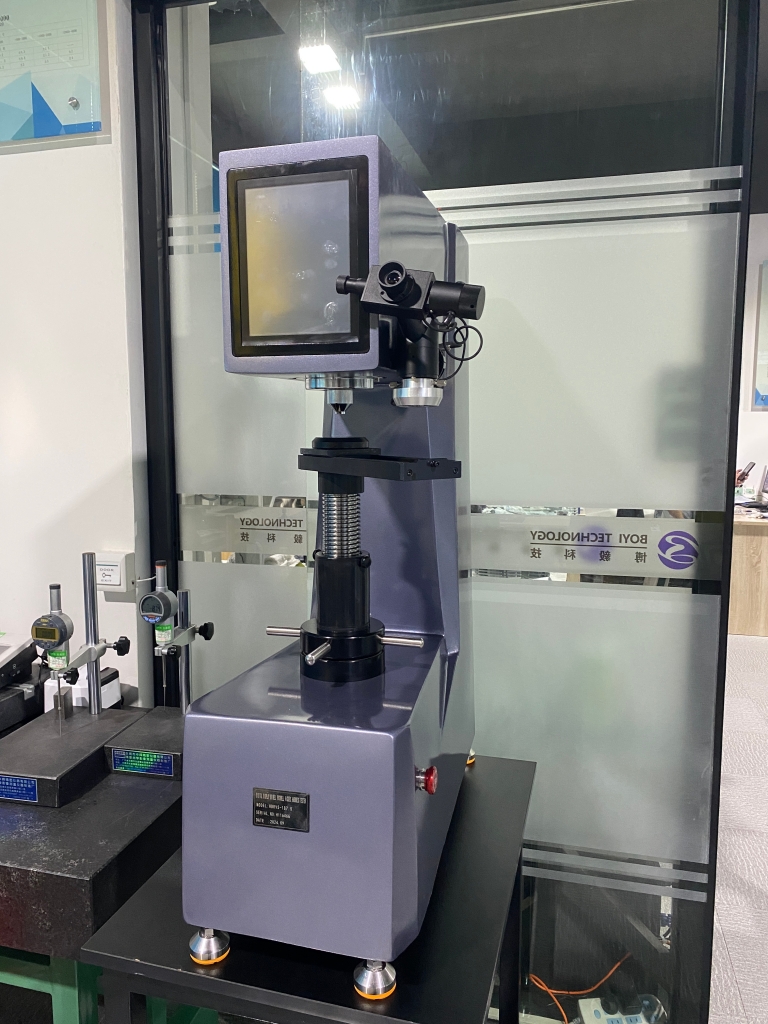
Advanced Metrology Lab: Capability must include CMM (Coordinate Measuring Machines), optical comparators, surface roughness testers, and roundness testers. The ability to provide a full First Article Inspection (FAI) report according to AS9102 or similar standards is a mark of professionalism.
H3: 4. Material and Process Mastery
A great prototype shop has extensive experience with a wide material palette—from common aluminums (6061, 7075) and stainless steels (304, 316) to challenging exotics like Inconel, titanium alloys, and PEEK. They understand how each material behaves under the cutter: optimal speeds/feeds, heat management, and post-machining stress relief requirements. This knowledge prevents costly errors and material waste.
H2: The Prototyping Workflow: From File to Finished Part
Understanding the typical workflow demystifies the process and sets clear expectations:
Design Submission & DFM Analysis: You upload your 3D CAD model (STEP, IGES). The factory’s engineering team reviews it and provides a formal DFM report with quotes for different materials/quantities.
Quotation & Process Planning: A detailed quote is provided, including cost, lead time, and suggested process routing. The factory’s CAM programmers define the toolpaths and machine setups.
Machining & In-Process Inspection: The part is machined, with intermediate checks using probes or manual measurements to ensure critical dimensions are on track.
Post-Processing & Final QC: The part undergoes deburring, finishing, and any required treatments. It is then thoroughly inspected in the metrology lab against the drawing.
Delivery & Documentation: The prototype is packaged and shipped, accompanied by inspection reports and certifications of conformity.
H2: Making the Strategic Choice: Key Decision Factors
When evaluating potential CNC machining prototype service factory partners like GreatLight Metal, Protocase, or Owens Industries, assess them against this checklist:
| Decision Factor | What to Look For | Why It Matters |
|---|---|---|
| Technical Capability | Portfolio of complex 5-axis work, range of materials, in-house finishing. | Ensures they can physically make your part to spec. |
| Communication & Collaboration | Proactive DFM feedback, clear point of contact, fast response times. | Reduces risk, accelerates learning, and avoids errors. |
| Quality Assurance | Relevant ISO certifications, detailed inspection reports, metrology equipment list. | Builds trust that the part data is reliable for making go/no-go decisions. |
| Scalability Insight | Willingness to discuss production ramp-up, experience with volume manufacturing. | Your prototype partner should help pave the way for smooth mass production. |
| Operational Transparency | Clear pricing, regular progress updates, no hidden fees. | Allows for accurate project budgeting and planning. |
H2: Conclusion: Partnering for Proof and Progress
In the high-stakes realm of product development, your CNC machining prototype service factory is a critical ally. The ideal partner blends cutting-edge technology like 5-axis CNC machining with seasoned engineering wisdom, all underpinned by a rigorous quality culture. They move beyond simply cutting metal to becoming a collaborative force that de-risks your project, accelerates your learning cycle, and provides a solid foundation for manufacturing success. As the industry evolves, leaders like GreatLight Metal continue to raise the bar, demonstrating that the most valuable prototype services are those delivered not just with precision, but with partnership and foresight. For ongoing insights into the evolving landscape of precision manufacturing, connecting with industry leaders on platforms like LinkedIn can provide valuable perspectives.