
How To CNC Machine Operate? A Comprehensive Guide for Clients Seeking Precision Parts
For clients and partners in the precision manufacturing industry, understanding how to CNC machine operate is crucial for effective collaboration, clear communication, and setting realistic expectations. While the day-to-day operation is handled by skilled machinists and programmers, a deep grasp of the process empowers you to design better parts, optimize costs, and select the right manufacturing partner. At its core, operating a CNC (Computer Numerical Control) machine is a symphony of digital instruction and physical precision, transforming raw material into a meticulously engineered component.
The Conceptual Workflow: From Digital Blueprint to Physical Part
Before diving into the operator’s console, it’s essential to visualize the overarching workflow. How to CNC machine operate is not a single action but a meticulously planned sequence:
Design & Engineering (CAD): It all starts with your 3D model, created in Computer-Aided Design (CAD) software like SolidWorks, CATIA, or AutoCAD.
Programming & Path Planning (CAM): This digital model is imported into Computer-Aided Manufacturing (CAM) software. Here, a programmer—a critical role in answering how to CNC machine operate—defines the toolpaths. They select cutting tools, specify spindle speeds, feed rates, depth of cuts, and the sequence of operations, generating the G-code that the machine will follow.
Machine Setup: The physical preparation. This involves securing the raw material (stock) onto the machine bed or in a vice, loading the required cutting tools into the machine’s tool magazine or spindle, and setting the workpiece zero point (the datum from which all dimensions are referenced).
Machining Execution: The machine operator loads the G-code program, performs final checks, and initiates the cycle. The CNC controller then precisely directs the movement of the cutting tool along the programmed paths, removing material layer by layer.
Inspection & Finishing: Once machining is complete, the part is measured using precision instruments like CMMs (Coordinate Measuring Machines) or micrometers to verify it meets the drawing specifications. Any required post-processing (deburring, polishing, anodizing, etc.) is then performed.
The Operator’s Realm: A Step-by-Step Breakdown
Now, let’s zoom in on the practical steps an operator at a facility like ours follows. This demystifies the practical reality behind how to CNC machine operate.
Step 1: Pre-Operation Planning and Review
The operation begins long before the machine starts. The operator reviews:
The Engineering Drawing: Tolerances, surface finishes, critical dimensions, and material specifications.
The CAM Program & G-code: They simulate the toolpaths virtually, if possible, to check for errors like tool collisions, inefficient moves, or areas where material may not be cleared properly.
The Bill of Materials (BOM): Ensuring the correct stock material (aluminum 6061, stainless 316, titanium Ti-6Al-4V, etc.) is available and properly sized.
Step 2: Machine and Workspace Preparation
Safety First: The operator dons appropriate PPE (safety glasses, steel-toed shoes). The workspace is cleared of obstructions.
Machine Warm-up: Precision machines, especially high-tolerance 5-axis centers, often undergo a warm-up cycle to stabilize the temperature of the spindle and ball screws, ensuring thermal consistency for accuracy.
Fixture and Workholding Setup: This is a cornerstone of precision. The operator selects and installs the appropriate fixture—vises, modular fixtures, or custom jigs—to hold the raw stock immovably. Any minute vibration translates directly into part error. At GreatLight Metal, our expertise in designing and implementing complex, multi-part fixturing for simultaneous machining is a key differentiator.
Step 3: Tooling Setup and Tool Presetting
Tool Selection: Based on the program, the operator gathers the specified end mills, drills, taps, and other cutting tools. Tool geometry (flute count, helix angle, coating) is critical for different materials and operations.
Tool Presetting & Length Offset Measurement: Each tool is loaded into a presetter or the machine spindle itself to measure its precise length and diameter. These values are entered into the machine’s tool offset table (e.g., H01 for length, D01 for diameter). This tells the machine controller the exact geometry of each tool, which is fundamental to how to CNC machine operate with precision.
Step 4: Workpiece Zero Setting (Part Datum Establishment)
This is arguably the most critical manual step. Using a precision edge finder, probe, or touch probe, the operator identifies the exact location of the stock relative to the machine’s coordinate system. They establish the X, Y, and Z zero points (the datum) and input these values into the machine’s workpiece coordinate system (e.g., G54). An error of a few microns here propagates through the entire part.
Step 5: Program Loading, Verification, and Dry Run
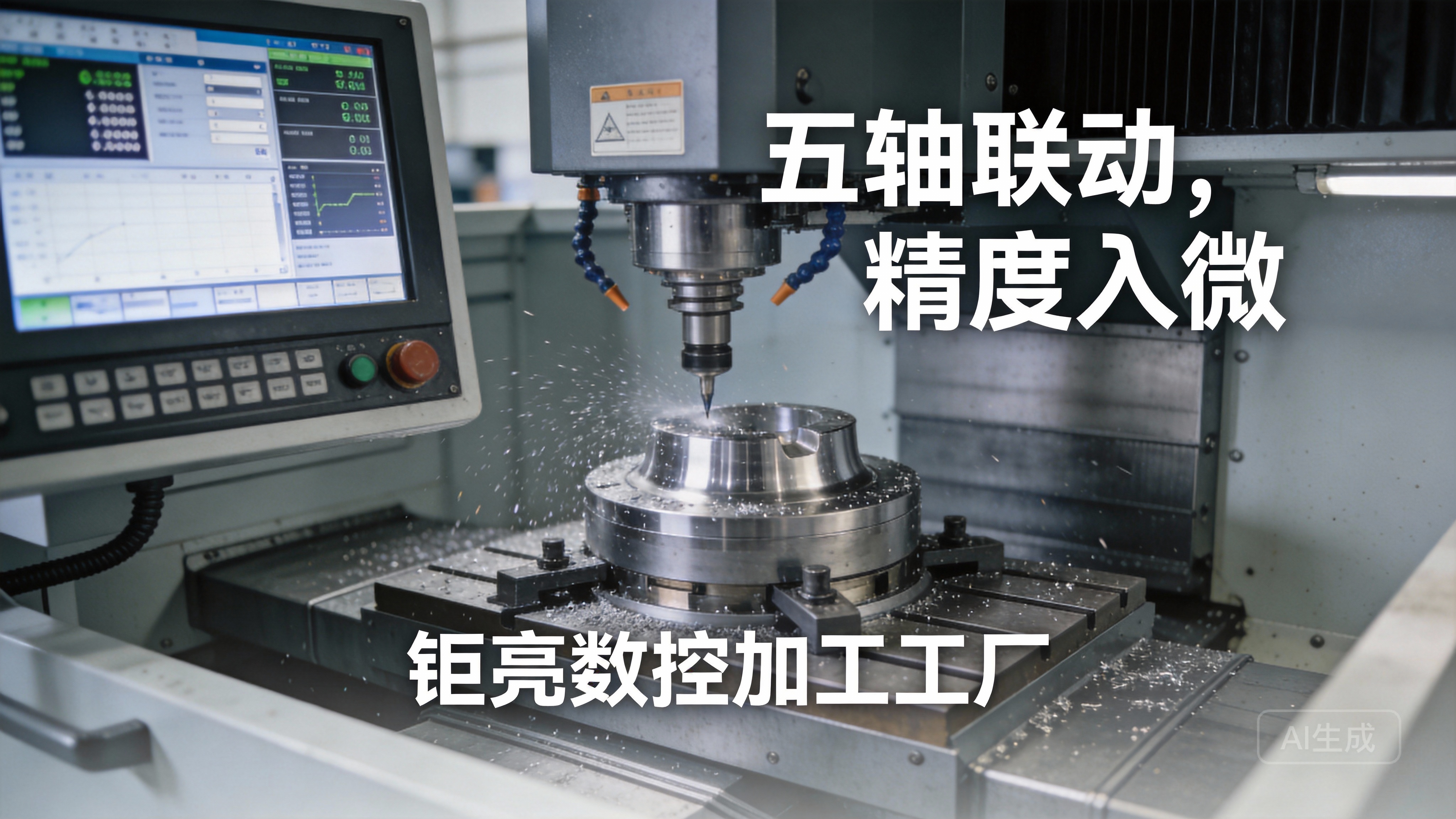
The verified G-code program is loaded into the CNC controller.
The operator often performs a dry run (with the spindle off and tools retracted) to visually confirm the machine’s movements match expectations. Many modern controls also offer graphical path verification on-screen.
For complex first-run parts, a proven-out process might be used, machining a small, non-critical section or using less expensive material to validate the program.
Step 6: Machining Cycle Initiation and In-Process Monitoring
With all checks complete, the cycle start button is pressed. The machine autonomously executes the program. However, the operator’s job is far from passive:
Monitoring: They watch for abnormal sounds (chatter, squealing), monitor coolant flow, and check chip formation—all indicators of optimal (or problematic) cutting conditions.
In-Process Inspection (First-Article Inspection): After critical features are machined, the cycle may be paused. The operator will remove the part (if possible) or use in-machine probes to measure dimensions, ensuring everything is on track before committing to finishing passes. This proactive quality control is embedded in our IATF 16949-compliant processes for automotive and engine components.
Step 7: Post-Machining Procedures
The machine signals cycle completion. The operator safely removes the finished part.
Deburring: Sharp edges are carefully removed by hand or with automated tools.
Initial Cleaning: Parts are cleaned of coolant and chips.
Documentation: The operator records any deviations, tool wear observations, or time data on the work traveler or digital MES (Manufacturing Execution System).
Beyond Basic Operation: The Role of Advanced Technology and Expertise
True mastery of how to CNC machine operate at an industrial level involves leveraging advanced capabilities:
5-Axis Simultaneous Machining: Unlike 3-axis machines, operating a 5-axis CNC requires programming that dynamically coordinates the movement of three linear axes and two rotational axes. This allows for machining complex contours in a single setup—a specialty at our factory, where it reduces error accumulation and improves efficiency for aerospace and medical components.
On-Machine Probing: Automated touch probes can measure parts in-situ, automatically updating tool wear offsets or even compensating for workpiece misalignment, pushing the boundaries of unattended operation.
Adaptive Control & IoT: Advanced systems can monitor spindle load in real-time, adjusting feed rates to prevent tool breakage and optimize cycle times, a step towards the intelligent manufacturing we continuously integrate.
Conclusion: It’s About Partnership, Not Just a Process
Understanding how to CNC machine operate reveals that it is a blend of advanced technology, meticulous process control, and irreplaceable human skill. The operator is not merely a button-pusher but a technologist who interprets data, makes real-time judgments, and ensures the marriage of digital design and physical reality. When you partner with a manufacturer like GreatLight Metal, you are not just accessing machines; you are engaging a team with deep operational expertise, backed by a full-process chain and stringent quality systems like ISO 9001:2015 and ISO 13485. This partnership ensures that the question of how to CNC machine operate is answered with consistency, precision, and reliability for every single part, from prototype to production run.
Frequently Asked Questions (FAQ)
Q1: How precise can CNC machining really be? I see wide ranges quoted online.
A: The achievable precision depends on the machine, tooling, material, and part geometry. While basic workshops may hold ±0.1mm, a professional precision machine shop like ours routinely holds tolerances of ±0.025mm (±0.001″) for standard machining, and can achieve ±0.005mm (±0.0002″) or better for critical features on high-end 5-axis equipment with a controlled environment. It’s crucial to discuss critical dimensions with your supplier early in the design phase.
Q2: What’s the main difference between a 3-axis and a 5-axis CNC operation?
A: The core difference is in setup and complexity. A 3-axis machine (X, Y, Z linear moves) often requires multiple setups to access all sides of a part, which can introduce error. Operating a 5-axis machine allows the cutting tool to approach the workpiece from virtually any direction in a single setup. This is not just about complex shapes; it improves accuracy for simple parts by eliminating re-fixturing, allows use of shorter, more rigid tools for better surface finish, and can significantly reduce overall production time.
Q3: As a client, what information do I need to provide to get an accurate quote and smooth operation?
A: To ensure efficient operation and accurate costing, provide:
Complete 3D CAD model (STEP or IGES format is preferred).
Detailed 2D engineering drawing with all critical dimensions, tolerances, geometric tolerancing (GD&T), and surface finish requirements.
Material specification.
Quantity required.
Any specific post-processing needs (e.g., anodizing, plating, heat treatment).
Q4: How do you ensure consistency in operation across a large production run?
A: Consistency is managed through systemized processes: Standardized Operating Procedures (SOPs), rigorous first-article inspection, statistical process control (SPC) for key dimensions, regular machine calibration and maintenance, and the use of automated in-process probing. Our IATF 16949 certification for automotive parts specifically mandates such controls to minimize variation in every batch.
Q5: Can you handle both prototyping and full-scale production?
A: Absolutely. This is a key advantage of a full-service manufacturer. The operational principles are the same, but the approach differs. For prototyping, the focus is on speed and flexibility—quick setups, rapid programming, and iterative feedback. For production, the focus shifts to optimizing the operation for cycle time, tool life, and unmanned running through perfected fixtures and programs. We seamlessly transition clients from prototype to volume manufacturing. For more insights into our capabilities and industry perspectives, you can connect with us on LinkedIn{:target=”_blank”}.



















